





 Portuguese
  English
  Spanish
  4 min of reading
  0 comments


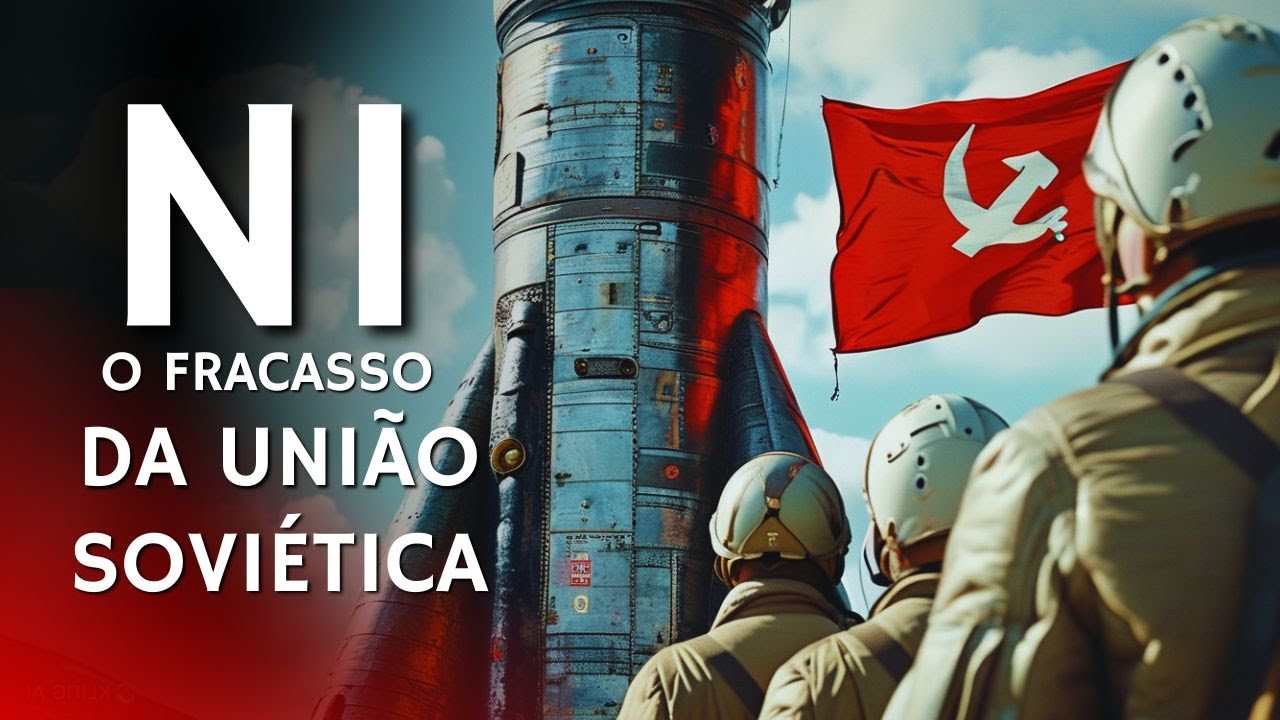
The N1 Was the Titanic Rocket of the Soviet Union, Weighing Over 2,700 Tons, That Tried to Rival NASA and Ended in Historical Failures.
In the 1960s, the space race was at its peak. The Soviet Union had taken its boldest steps, putting the first satellite in orbit (Sputnik, in 1957) and the first human in space (Yuri Gagarin, in 1961). But when American President John F. Kennedy announced the goal of sending astronauts to the Moon by the end of the decade, the game changed.
Moscow could not fall behind. It was in this context that the N1 project was born, a super heavy rocket intended to put the Soviet Union on par with NASA and ensure communist triumph in the lunar race.
The Soviet Titan of 2,700 Tons
The N1 was a colossus. With 105 meters in height, 17 meters in diameter, and 2,735 tons of total mass, it was one of the largest rockets ever built.
-
Friends have been building a small “town” for 30 years to grow old together, with compact houses, a common area, nature surrounding it, and a collective life project designed for friendship, coexistence, and simplicity.

-
This small town in Germany created its own currency 24 years ago, today it circulates millions per year, is accepted in over 300 stores, and the German government allowed all of this to happen under one condition.

-
Curitiba is shrinking and is expected to lose 97,000 residents by 2050, while inland cities in Paraná such as Sarandi, Araucária, and Toledo are experiencing accelerated growth that is changing the entire state’s map.

-
Tourists were poisoned on Everest in a million-dollar fraud scheme involving helicopters that diverted over $19 million and shocked international authorities.


For comparison, the Saturn V, which took American astronauts to the Moon, was 110 meters tall and weighed 2,900 tons.

The N1’s distinguishing feature was its first stage: a set of 30 NK-15 engines working in synchronization.
It was a risky solution, chosen because the Soviet Union did not have, at the time, high-power engines equivalent to the American F-1. The strategy seemed ingenious but exponentially increased the chances of failure.
The Secret Behind the Project
Unlike the Apollo program, the development of the N1 was shrouded in absolute secrecy. The project was under the responsibility of the legendary engineer Sergei Korolev, considered the “father of the Soviet space program.”
After Korolev’s death in 1966, the project was managed amidst internal disputes, political pressures, and lack of resources.
While NASA invested billions in technology, testing, and infrastructure, the Soviets faced budgetary difficulties and could not afford an extensive testing campaign. This resulted in a rocket that was practically never tested on the ground in full configuration before official flights.
The Launches and the Explosions
Between 1969 and 1972, the Soviet Union attempted to launch the N1 four times. All resulted in failure:
- February 21, 1969 (N1-3L): the rocket lost power seconds after takeoff and fell back, destroying the launch pad.
- July 3, 1969 (N1-5L): just 17 seconds after takeoff, the N1 exploded in a fireball releasing energy equivalent to a small nuclear bomb. It was one of the largest aerospace disasters ever recorded.
- June 27, 1971 (N1-6L): the rocket reached 50 km in altitude before failing and being destroyed.
- November 23, 1972 (N1-7L): the last flight also ended in an explosion, burying Soviet hopes of reaching the Moon once and for all.
None of the four launches were successful, and the program consumed billions of rubles in resources of the time.
The Failure Against American Success
While the Soviet Union amassed failures, the United States achieved its goal. On July 20, 1969, Neil Armstrong and Buzz Aldrin walked on the Moon, consolidating NASA’s supremacy in the space race.
The contrast was devastating for Moscow: just days earlier, the N1 had exploded in one of the greatest aerospace tragedies ever seen.
The failure of the N1 sealed the Soviet defeat in the lunar race. In 1976, the program was officially terminated, and the remaining structures of the rocket were dismantled.
The Legacy of the N1 and the Rebirth of Soviet Engines
Despite the failure, the N1 left important lessons. Its NK-15 engines evolved into more reliable versions, such as the NK-33, which decades later would be used in Russian space programs and even exported to the United States, adapted for rockets like Antares.
In addition, the gigantism of the N1 inspired future projects of super heavy rockets, showing that scale and power were possible — albeit with enormous technical challenges.
A Disaster Hidden for Decades
For years, the Soviet Union denied or concealed the failures of the N1. Only in the 1980s, after the political opening of glasnost, did the details of the explosions come to light. Until then, the world knew very little about the extent of the Soviet attempts to reach the Moon.
Today, the N1 is remembered as one of the greatest failures in aerospace engineering, but also as a symbol of technological boldness in times of extreme geopolitical rivalry.
The N1 was the Soviet Union’s greatest bet to beat the United States in the lunar race. Weighing over 2,700 tons and with colossal power, it could have changed the course of history. But without adequate testing, pressured by internal disputes, and launched in haste, it became the protagonist of one of the greatest space disasters in history.
In the end, the Soviet titan never fulfilled its mission. Its image, however, remains alive as the rocket that almost took the red flag to the Moon — but exploded before reaching space.










Seja o primeiro a reagir!