





 Portuguese
  English
  Spanish
  3 min of reading
  0 comments


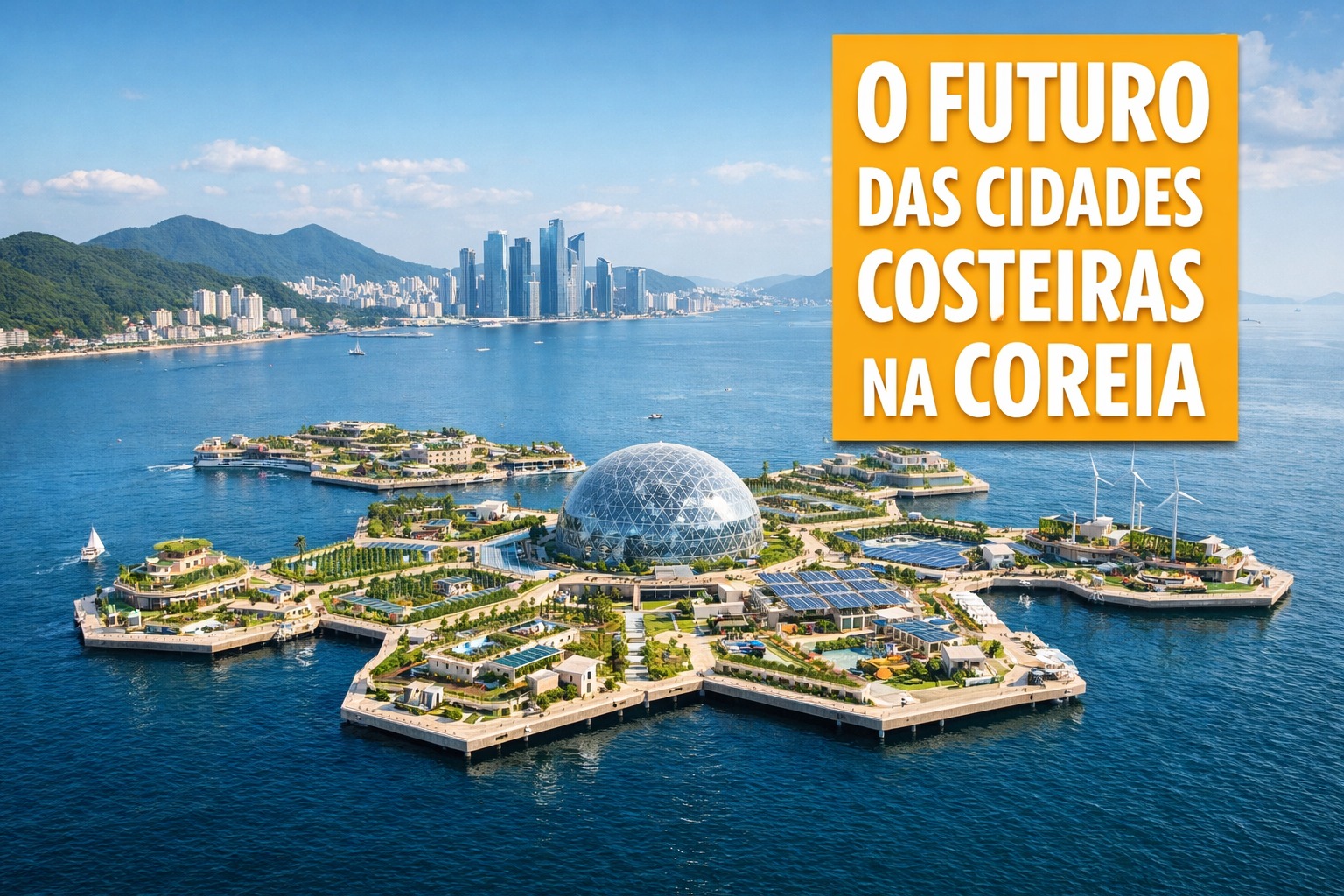
Oceanix Project in Busan Proposes Sustainable Hexagonal Platforms, Self-Healing Lime, and Integrated Energy, Water, and Food Systems, Creating a Resilient Urban Model Capable of Growing Over the Ocean Without Destructive Landfills
The floating city of Busan, South Korea, emerges as the world’s first global prototype of resilient urbanism envisioned by the Oceanix group. The proposal is ambitious and straightforward: to create sustainable platforms capable of adjusting to ocean variations while providing urban infrastructure for thousands of people.
Rather than resisting the forces of the sea, the project begins from a different logic, that of intelligent adaptation to environmental changes.
Biorock Replaces Traditional Concrete
At the heart of the initiative is Biorock technology, chosen to form the base of the platforms. Unlike conventional concrete, the method uses low-voltage electric currents that attract marine minerals to steel structures.
-
The bizarre train that uses Cold War jet fighter engines to blast air at over 1,000 km/h, melting ice walls and freeing frozen tracks in minutes where ordinary machines would take hours.

-
Japan is transforming dirty diapers from babies and the elderly into an ambitious and surprising project that could forever change the way the world deals with one of the most difficult types of waste to dispose of.

-
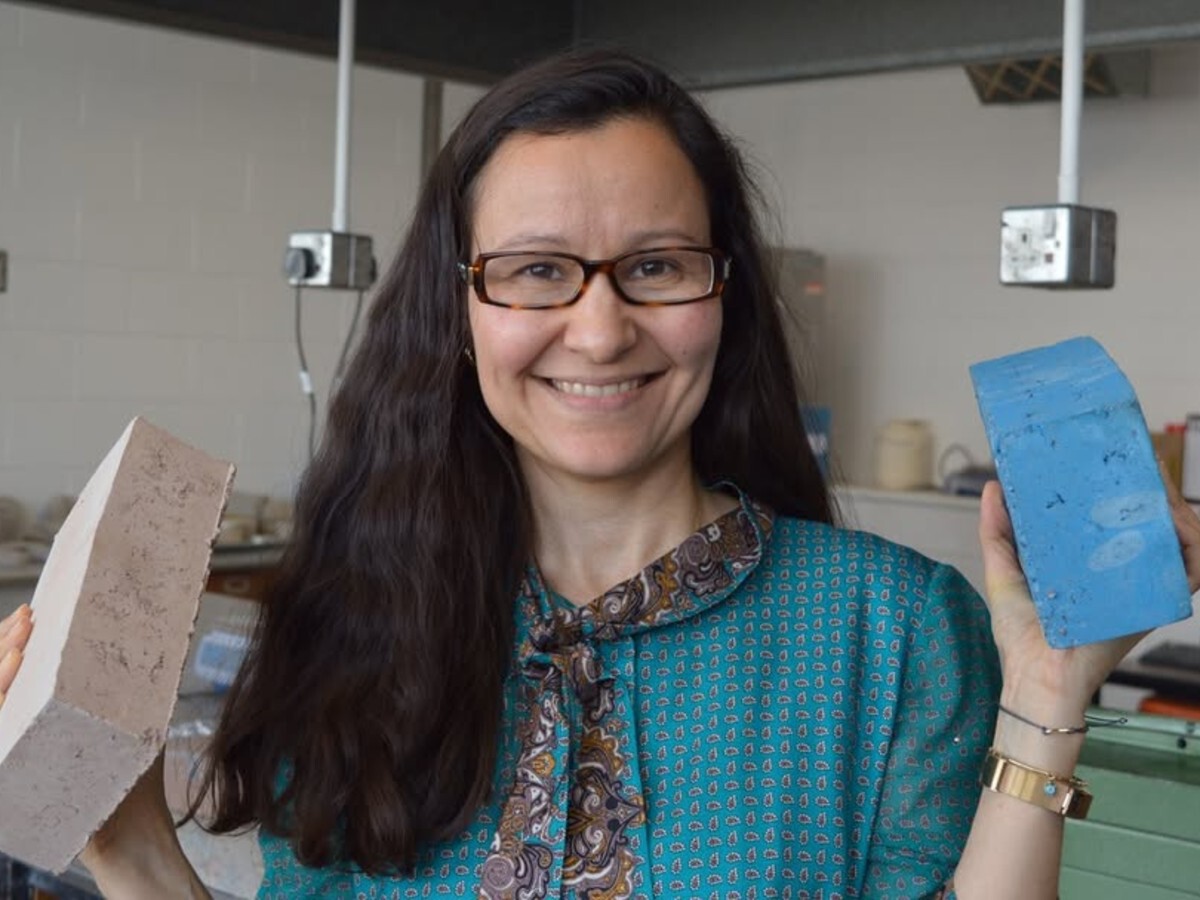
Goodbye to waste: a Brazilian created a revolutionary brick that uses construction debris, has already entered the markets of the United Kingdom and the USA, and promises to shake up the global construction industry.
-
China has created a mass-produced hypersonic missile that costs the same as a Tesla, and this is changing everything in modern warfare because the United States cannot defend itself without spending millions.

The result is the formation of lime with a rare characteristic in construction: the ability to self-repair and become stronger over time.
In addition to structural resistance, the material plays a significant environmental role. By acting as an artificial reef, it helps regenerate local marine life.
The infrastructure is no longer just a physical support but acts as an active element in the preservation of the coastal ecosystem.


Modular Design Allows Organic Expansion
The urban structure was designed to be modular. Hexagonal platforms of 2 hectares each can be connected according to population demand.
This arrangement allows Busan to grow over the water without the need for destructive landfills. The city, in this concept, does not impose itself on the environment but evolves flexibly.
For Brazil, projects like this resonate with a concerning reality. Coastal population data from IBGE indicate that millions of Brazilians live in risk areas.
Among the targeted cities, metropolitan areas like Recife and Rio de Janeiro feature regions at risk of flooding by 2050.
In this context, the Busan model appears as a relevant study for future adaptations along Brazilian coastlines.
Self-Sufficiency and Zero Waste in the Project
The project was also designed to achieve 100% self-sufficiency. The proposal includes zero waste, solar energy, closed-loop water systems, desalination, and gray water recycling.
Food production occurs through aeroponic and hydroponic farms installed within the modules.
Compared to traditional terrestrial urbanism, the floating model reduces external dependencies. While conventional cities rely on energy networks and long-distance transportation, Busan bets on renewable generation and vertical urban agriculture.
Waste, instead of going to landfills, integrates into a circular economy system.
UN-Habitat Supports Global Model
The initiative in Busan is a result of a partnership between the local government, Oceanix, and the UN-Habitat program. The goal is to establish a replicable model in vulnerable cities like Jakarta, Miami, and African metropolitan areas.
The proposal transcends borders and points to a new urban approach in response to rising sea levels.
The initial prototype for 12,000 people represents the first phase of this transformation. Busan reinforces an idea that until recently seemed utopian: perhaps the future of coastal cities lies less in holding back the ocean and more in learning to coexist with it.
Behind the scenes of the project, experts see not only architectural innovation but a paradigm shift in housing and climate.
With information from BMC News.





Seja o primeiro a reagir!