





 Portuguese
  English
  Spanish
  4 min of reading
  0 comments


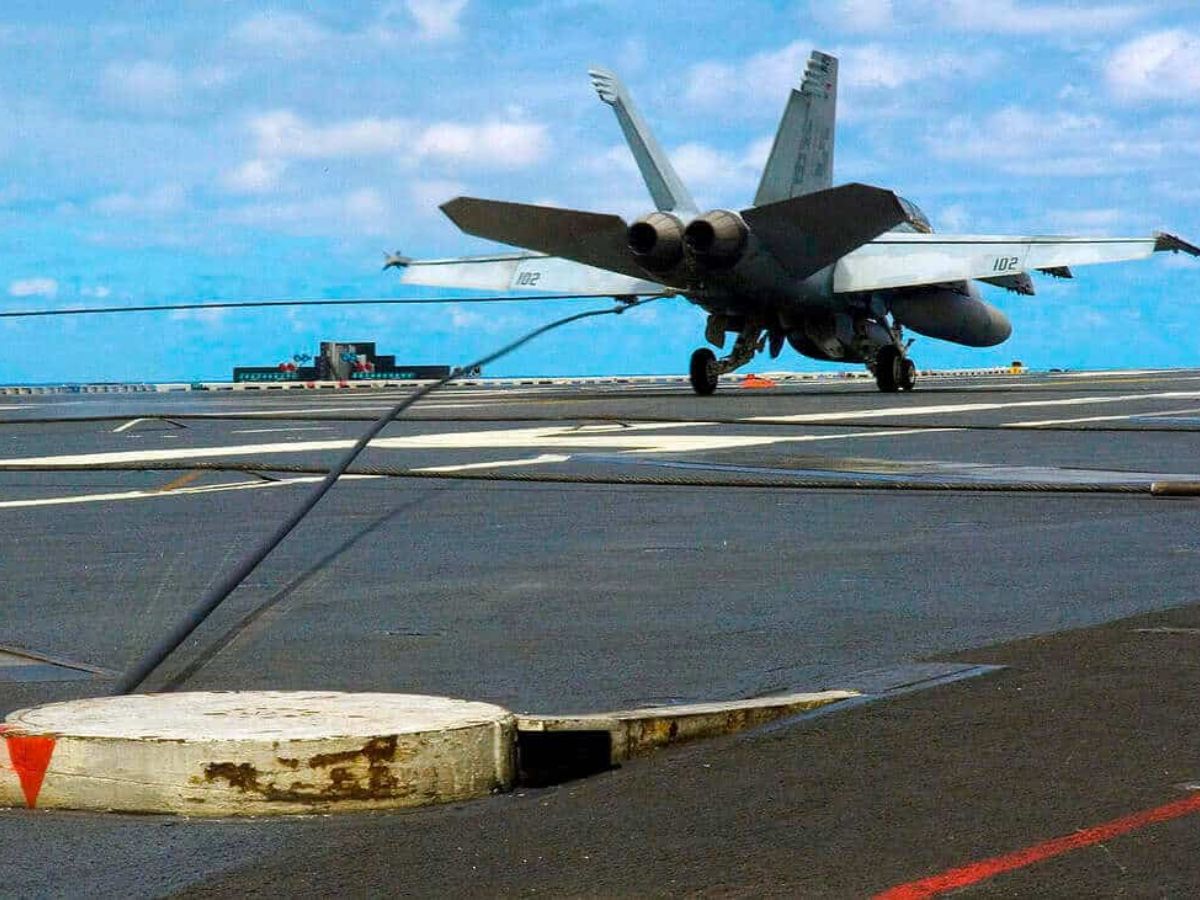
Know The Technology And Precision Required For A Fighter To Land On An Aircraft Carrier, One Of The Maneuvers With The Arresting Hook Of A Naval Fighter Most Difficult And Dangerous In Military Aviation
The arresting hook of a naval fighter is the centerpiece of one of engineering’s most impressive operations: landing on an aircraft carrier. The maneuver requires a pilot to “catch” one of four steel cables on a moving deck while the aircraft approaches at about 240 km/h. The goal is to stop a jet weighing tens of tons in less than two seconds, over a distance of less than 100 meters.
This abrupt stop subjects pilots to extreme forces and tests the limits of technology. The braking system has evolved drastically since the early days of naval aviation, shifting from simple ropes with sandbags to complex electromagnetic engines. Understanding how this system works is diving into the pinnacle of precision and power in military aviation.
The Challenge Of Landing, Arresting Hook Of A Naval Fighter, A Moving Target On A Runway Of Only 90 Meters
Landing on an aircraft carrier with the arresting hook of a naval fighter is considered the hardest task for a naval pilot. The “runway” is only between 90 and 150 meters long and is not static. The ship rolls with the waves and moves forward at about 55 km/h, making the touchdown point a constantly moving target. The margin for error is minimal.
-
How to build a floating island from scratch with reeds, giant blocks, and stakes in the lake in a process that needs to be repeated almost every day.

-
A forgotten cord on the floor of a basement in Vienna leads a plumber to a box containing 30 kilograms of gold with Mozart’s face, hidden before World War II. The treasure, worth 2.3 million euros, was just centimeters away from a worker who ignored the sign a day earlier.

-
A couple buys an old chalet, breaks the kitchen floor for renovation, and finds over a thousand coins of gold and silver hidden since the English Civil War over 4 centuries ago.

-
Rigid bags with their days numbered: new trend prioritizes comfort in 2026.


During the deceleration, which occurs over a distance of 90 to 96 meters, the pilot experiences forces that can reach 4 G. This means feeling four times the weight of their body. Strong winds and the turbulence generated by the ship itself add even more complexity, requiring continuous adjustments and millimeter precision.
The Evolution Of The Hook, From Sandbags In 1911 To The Problematic F-35C
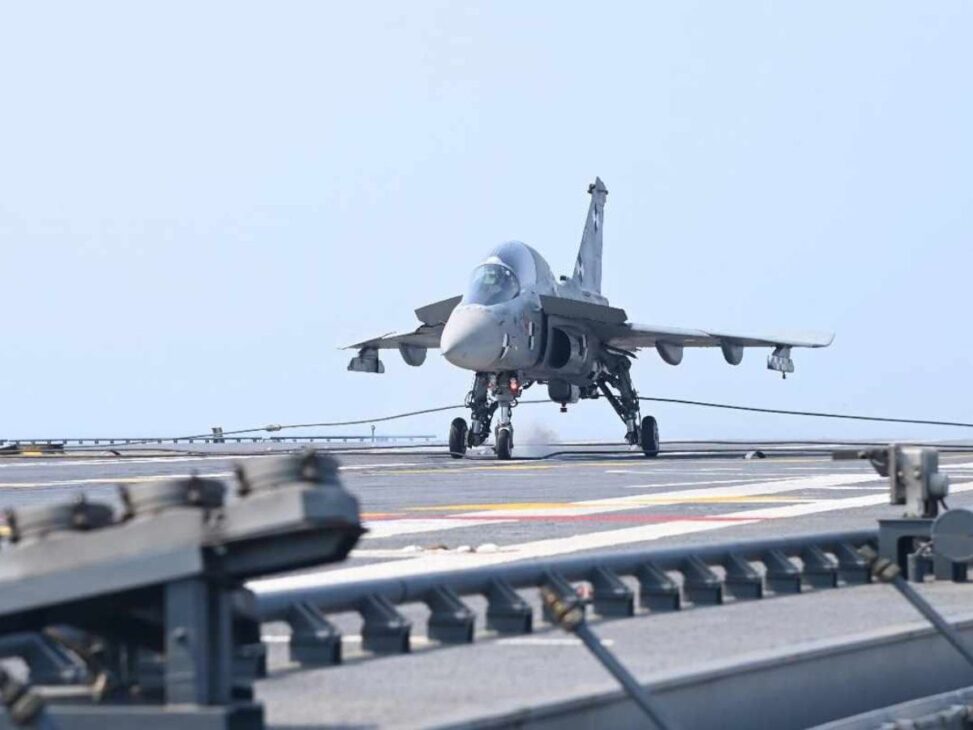
The concept of the arresting hook of a naval fighter was born on January 18, 1911. Pilot Eugene Ely used hooks attached to the landing gear to catch ropes tied to sandbags, successfully performing the first landing on a ship, the USS Pennsylvania. Since then, the design has evolved significantly.
An important advancement was the installation of the “stinger” type, developed by Grumman, which positioned the hook at the tail of the aircraft to reduce the risk of the propeller hitting the deck. More recently, the development of the F-35C faced significant challenges with the design of its hook. The initial design failed to catch the cables consistently, requiring a complex engineering revision to fix the issue.
The Target Of The Pilot That Is Replaced Every 125 Landings
On the deck of an aircraft carrier, there are typically four parallel steel cables, spaced about 15 meters apart. Made of high-strength steel with a core of oiled hemp for lubrication, these cables have a diameter of 25 to 35 mm. Pilots are trained to aim for the third cable, considered the safest target.
Due to the immense forces they endure, the arresting cables suffer extreme wear. On American aircraft carriers, they are replaced every 125 landings. The exchange process is optimized to be quick, taking only two to three minutes to minimize flight operation downtime.
The Transition From Hydraulic Engines To Electromagnetic (AAG)
When the hook catches the cable, the aircraft’s energy is transferred to the braking engines located beneath the deck. For decades, these systems were hydraulic, designed to absorb up to 64.4 megajoules of energy. They operate by forcing a piston through a fluid, creating resistance to stop the plane.
The latest technology, present in Gerald R. Ford-class aircraft carriers, is the Advanced Arresting Gear (AAG). This system is turbo-electric and uses electromagnetic engines, providing a smoother and more controlled deceleration. The AAG reduces stress on the aircraft structure, requires less maintenance, and has self-diagnostic capabilities, representing a significant technological leap.
The Importance Of The “Meatball” And Accelerating When Landing
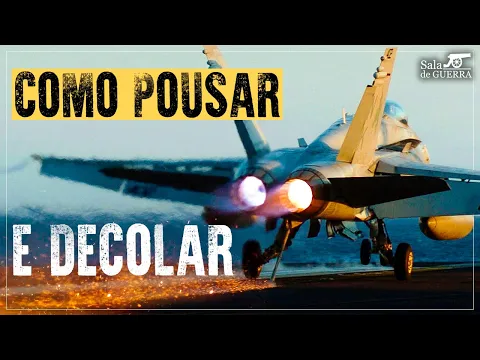

To assist in the approach, pilots rely on the Landing Signal Officer (LSO) and a lighting system called the “meatball.” It consists of an amber light that, when aligned with green lights, indicates that the aircraft is on the correct glide slope.
Unlike a conventional landing, on the aircraft carrier the pilot does not reduce power on touchdown. On the contrary, the moment the wheels touch the deck, the pilot accelerates to full power. This is a crucial safety measure.
If the arresting hook of a naval fighter fails to catch the cable (a maneuver known as a “bolter”), the engine will already be at full power so the aircraft can safely take off again.








Seja o primeiro a reagir!