





 English
  Francês
  Alemão
  Italiano
  Japonês
  Norueguês
  Portuguese
  Spanish
  3 min of reading


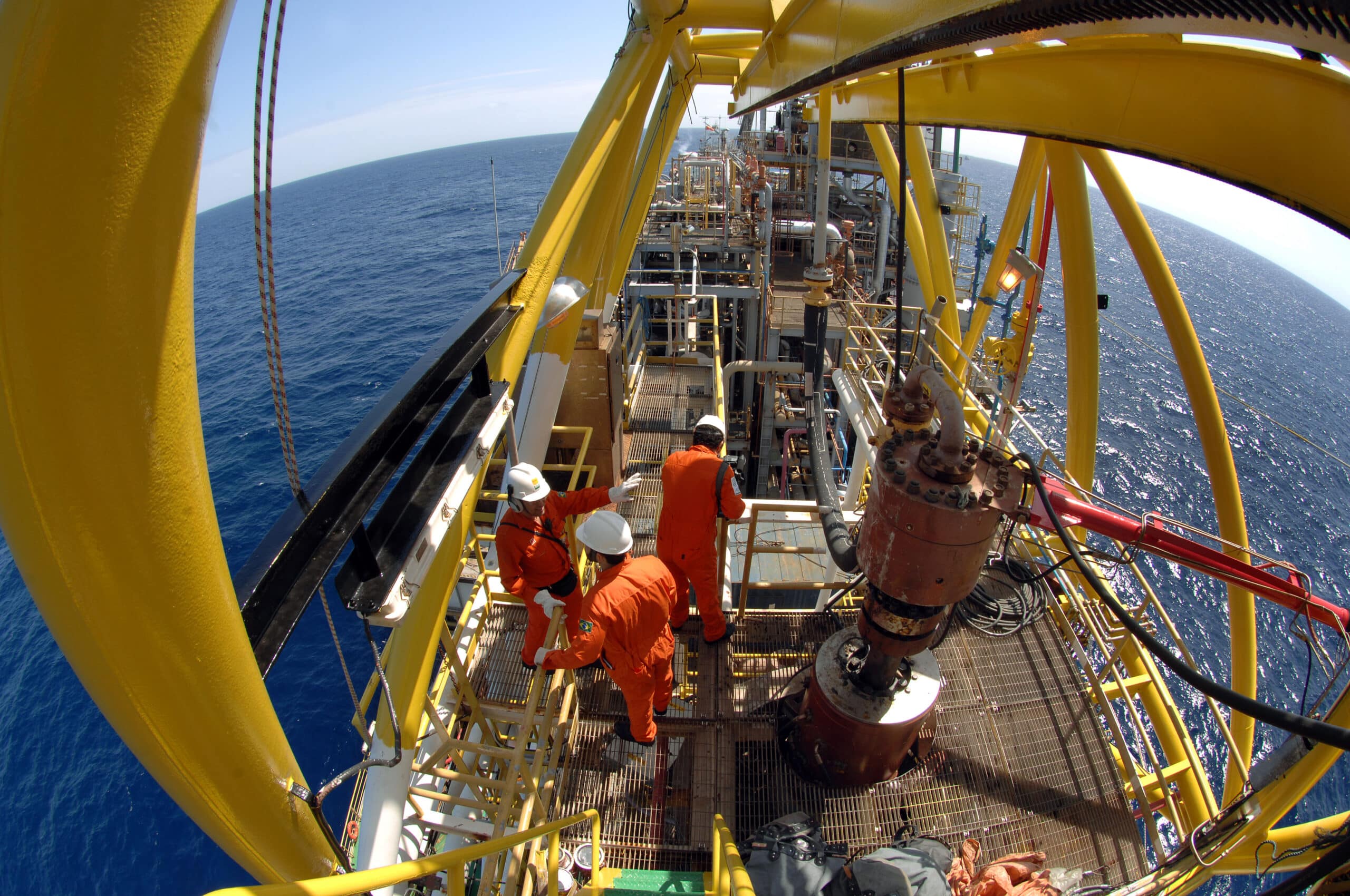
Petrobras Plans to Install Three New Platforms and Interconnect More Than 100 Oil Wells by 2027 as Part of Its Campos Basin Renewal Plan.
Petrobras announced in a material fact to the market on May 3 that it will invest US$ 16 billion (more than R$ 80 billion at the current exchange rate) in the Campos Basin renewal plan, with a forecast to install three new platforms and interconnect more than 100 wells in the area over the next five years. With more than 40 years of history and two awards received from the Offshore Technology Conference (OTC) for technological advances in the Marlim (1992) and Roncador (2001) fields, the Campos Basin maintains its prominent position as an innovation hub and looks to the future: today it is the stage for the world’s largest offshore industry revitalization project. This statement was made by Petrobras Executive Director of Strategy, Eduardo Bordieri, who presented, on Tuesday (05/03), the company’s main investments for the area during the Offshore Technology Conference (OTC).
According to the report, in the coming years, Petrobras will adopt new technologies for revitalization of mature assets in the area and decommissioning of its oil platforms – which is the process of deactivating units when they reach the end of their life cycle. “In 2021, the Campos Basin accounted for about 25% of Petrobras’s total production. The company projects to reach, in 2026, a volume of 900,000 barrels of oil equivalent (boe) in that basin, with the start of production from three new systems. This volume represents about three times the production we would achieve if we had not invested in the new platforms. In other words: without the new projects, our future production in the basin would be 300,000 boe,” explained Bordieri.
Three New Oil Platforms Planned by 2026
Petrobras plans to install three new FPSO-type platforms (floating production, storage, and offloading systems) in the region in the coming years. The FPSOs Anita Gabribaldi and Anna Neri will be installed in the Marlim field and will have the capacity to produce up to 150,000 barrels per day (bpd) combined. The third unit planned is the Maria Quitéria, in Jubarte, in the Parque das Baleias complex, in the Espírito Santo portion of the Campos Basin, with a capacity of 100,000 bpd.
-
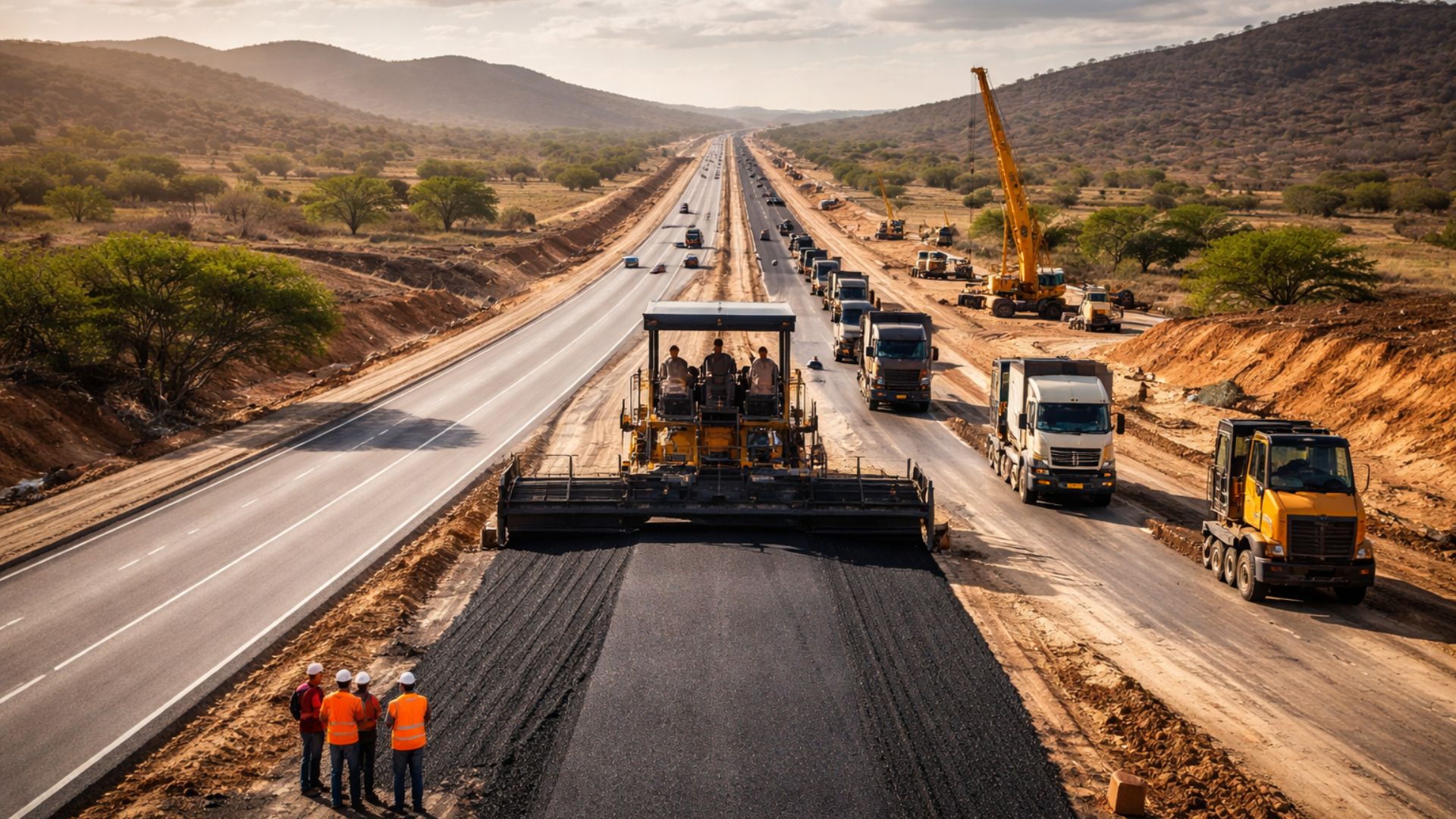
Government unlocks R$ 554 million for a highway that has been requested for decades and accelerates the duplication of BR.
-
Without bricks, without cement, and without endless construction: the cardboard house that is assembled in modules and can be moved.

-
Billions of barrels on the equatorial margin could lead Amapá to double its oil production in Brazil — the state aims to enter the route of companies in the Campos Basin, attract investments, and boost jobs and businesses in the oil and gas sector.
-
Without bricks, without cement, and without endless construction: the cardboard house that is assembled in modules and can be moved.

The basin has accumulated a series of significant results. For comparison, Petrobras set a national record there for the time taken to construct a deep-water well, reaching the mark of 35 days in the Marlim field, in the Campos Basin. For comparison, the previous record in the country was 44 days, set in 2021 in the Golfinho field, in the Espírito Santo Basin. In Marlim, the historical average for the construction of wells over the past 20 years was 93 days, indicating a reduction of 63% in this timeframe. “This performance demonstrates our economic resilience in well projects, as well as our technological advancements in new well models, which are faster and more optimized than conventional ones,” said Bordieri.
According to its Strategic Plan 2022-2026, Petrobras aims to add a volume of 20 billion boe to its reserves by 2030, with 5 billion boe coming from the assets operated by Petrobras in the Campos Basin. This projection is the focus of the strategic program called RES-20, which is entirely dedicated to expanding the company’s reserves.








Seja o primeiro a reagir!