





 Portuguese
  English
  Spanish
  5 min of reading
  1 comment


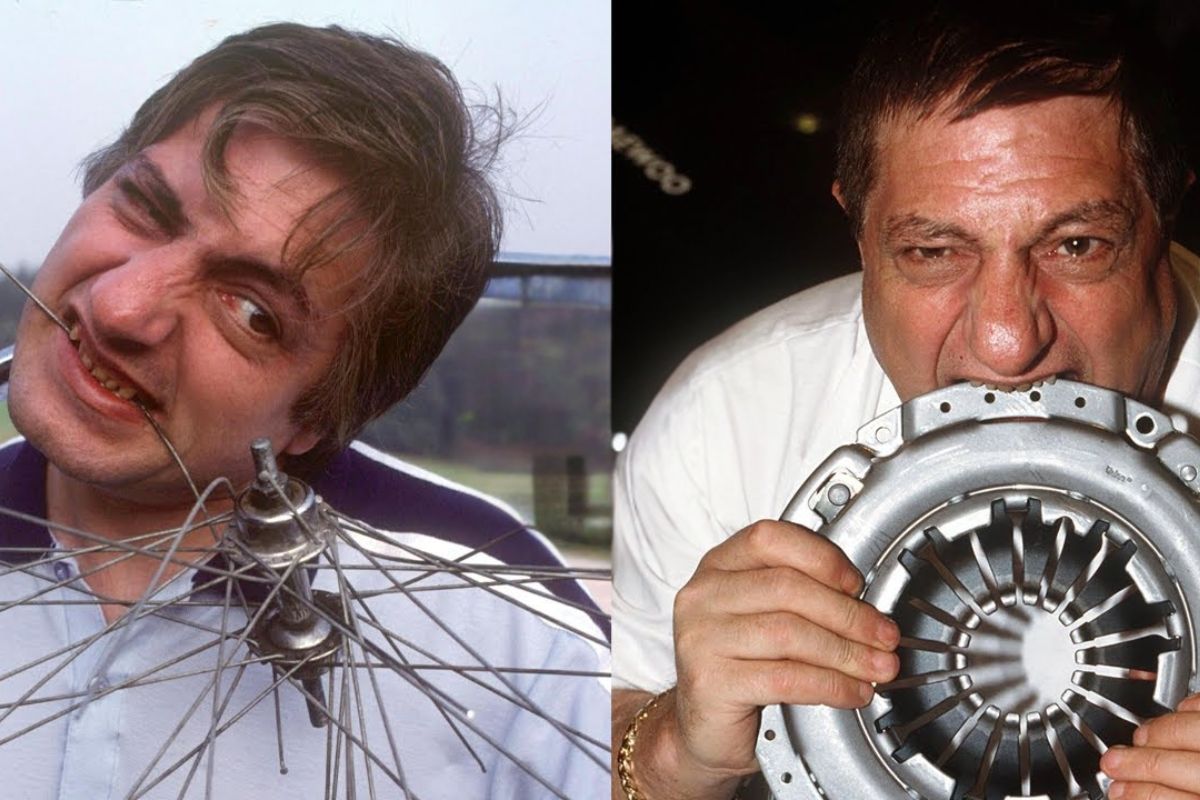


Between 1950 and 2007, the man who ate metal, Michel Lotito, transformed bicycles, shopping carts, beds, chandeliers, and even a Cessna airplane into meals, lived with an armored stomach, shocked doctors in X-rays, and became an extreme case in the records of the Guinness World Records, inspiring studies, questions, fascination, and prolonged fear
Born in 1950, in France, Michel Lotito grew up as an apparently ordinary boy until, at the age of nine, a glass broke in his mouth and he accidentally swallowed the shards. Instead of suffering a medical disaster, he reported enjoying the experience, which marked the starting point of the story of the man who ate metal and opened the door to one of the most unusual diets ever documented.
Throughout the following decades, Lotito systematically began to incorporate metal and glass objects into his daily life. Between the 1970s and 2000, the man who ate metal built a career based on public performances where he chewed and swallowed parts of bicycles, shopping carts, beds, chandeliers, and even car parts, always in front of audiences that mixed incredulity, curiosity, and discomfort. In 2007, at the age of 57, he died of natural causes, consolidating the transformation of his life into a case study and bizarre legend.
Childhood, The Accident With Glass, and The Origin of The Man Who Ate Metal

Biographical accounts indicate that the trajectory of the man who ate metal began unexpectedly, even in childhood.
-
Spain surprises the world by erecting 62 artificial dunes, mixing sand with natural remains of posidonia, and causing the structure to lose only 1.4% of its volume in 1 year.

-
With 16 Bulava missiles, improvements in acoustic stealth, and a design focused on silent patrols, Russia’s nuclear submarine was born to ensure Moscow’s invisible retaliation and has become one of the pillars of its maritime strength.

-
‘Populous’ city in Rio among the worst in Brazil in national ranking and exposes silent development crisis.

-
Couple buys house in the South Zone of São Paulo, opens a hidden door in the garage, and finds a secret wine cellar with dozens of old wines forgotten since the 1970s.

During a domestic incident, a glass broke in his mouth, and he ended up swallowing glass fragments.
Instead of causing severe perforations or hemorrhages, the episode left no significant sequels, which led Michel Lotito to test new limits of his own body.
From there, he began to experiment with small pieces of glass and metal under observation, gradually increasing the amount and variety of materials.
In no time, the man who ate metal developed a routine of ingesting objects that, in any other organism, would be immediately associated with the risk of perforating the esophagus, stomach, and intestines.
For doctors, the mere fact that he survived already represented a challenge to traditional explanations about the digestive system.
Diet of Bicycles, Shopping Carts, Beds, Chandeliers, and Even a Cessna Airplane

The list of objects consumed by Michel Lotito was recorded in detail.
According to records of performances and later compilations, the man who ate metal ingested 18 bicycles, 15 shopping carts, 6 chandeliers, 2 beds, a pair of skis, and even the coffin prepared for his funeral.
Each item was carefully dismantled, cut into small pieces, and consumed over long periods.
The most symbolic case was that of a small Cessna aircraft, similar to those used in light aviation.
Lotito took about two years to chew and swallow the entire airplane, from the metal skin to the internal parts, always accompanied by water to help swallow the parts.
The ingestion was gradual, distributed in small daily portions, as if it were an extended menu.
The spectacle was documented with photographs, videos, and accounts from those who closely followed the process.
The Physiology of The Armored Stomach and The Daily Consumption of Metal

To understand how the man who ate metal managed to survive, doctors subjected Michel Lotito to imaging tests, including X-rays that clearly showed the accumulation of metallic fragments inside his stomach.
The reports indicated an extraordinarily thick lining in the organ and exceptionally strong digestive juices, capable of wearing down metal pieces along their passage through the digestive system.
Estimates indicated that he could consume up to about 900 grams of metal per day without immediate complications.
In practical terms, this meant almost 2 pounds of highly sharp material circulating through a pathway designed for ordinary food.
For the medical community, the man who ate metal became an extreme example of anatomical and physiological variation, difficult to replicate and unlikely to repeat.
Documentation, Guinness World Records, and The Construction of The Public Legend
Public interest intensified in the 1980s when Michel Lotito’s name began to appear in the editions of the Guinness World Records.
In 1984, the man who ate metal was recognized as the holder of the largest and most extensive diet ever recorded, receiving classifications related to the concept of extreme omnivore, for consuming materials completely outside conventional food classification.
Television programs, documentaries, and live demonstrations showcased scenes of him chewing on car parts, components of home appliances, and various metal objects, always under basic supervision. X-rays shown in reports displayed the stomach filled with fragments, visually reinforcing the uniqueness of the case.
The exposure helped to consolidate the image of Monsieur Mangetout, or Mr. Eat Everything, as a figure that seemed to challenge the very logic of human biology.
Domestic Behind-The-Scenes, Risks, and Discomfort in Daily Life
Despite the tone of curiosity and spectacle, the routine of the man who ate metal was not without problems.
Behind-the-scenes accounts indicate that Michel Lotito’s wife was concerned about the silent risks of the practice, especially at the final stage of digestion.
As gastric acid corroded the edges of the metal pieces, the material passed through the system and was expelled at high speed, which turned even the act of using the bathroom into a moment of potential danger.
The wear on the toilet porcelain, mentioned almost anecdotally, illustrates the degree of physical impact of this lifestyle.
Even with the ability to process metal, the organism remained subject to mechanical shocks and little-documented side effects.
The contrast between the public image of resilience and private concerns reinforces the perception that the case involved substantial risks, even if not always visible to the public.
Decline of Career, Death in 2007, and The Legacy of The Man Who Ate Metal
As the years went by, the pace of performances decreased.
In the final stages of his life, Michel Lotito no longer maintained the same level of metal consumption in public, although he still participated in occasional events.
The man who ate metal died in 2007, at 57 years old, of natural causes, and not due to an acute episode directly related to the ingestion of objects, which further reinforced the aura of mystery surrounding his physiology.
The Guinness World Records, while recalling the character, highlighted the unique nature of his journey and the lack of equivalent cases documented with the same level of proof.
Amidst scientific fascination, repulsion, and popular curiosity, the man who ate metal remains a liminal figure between entertainment and pathology, remembered both for the absurdity of his diet and for the consistency with which he maintained it for decades.
In light of such an extreme story as that of the man who ate metal, do you see this case more as a medical phenomenon to be studied or as a type of spectacle that should never have been encouraged?








Que seria uma morte “natural” aos 57 anos???