





 Portuguese
  English
  Spanish
  3 min of reading
  25 comments


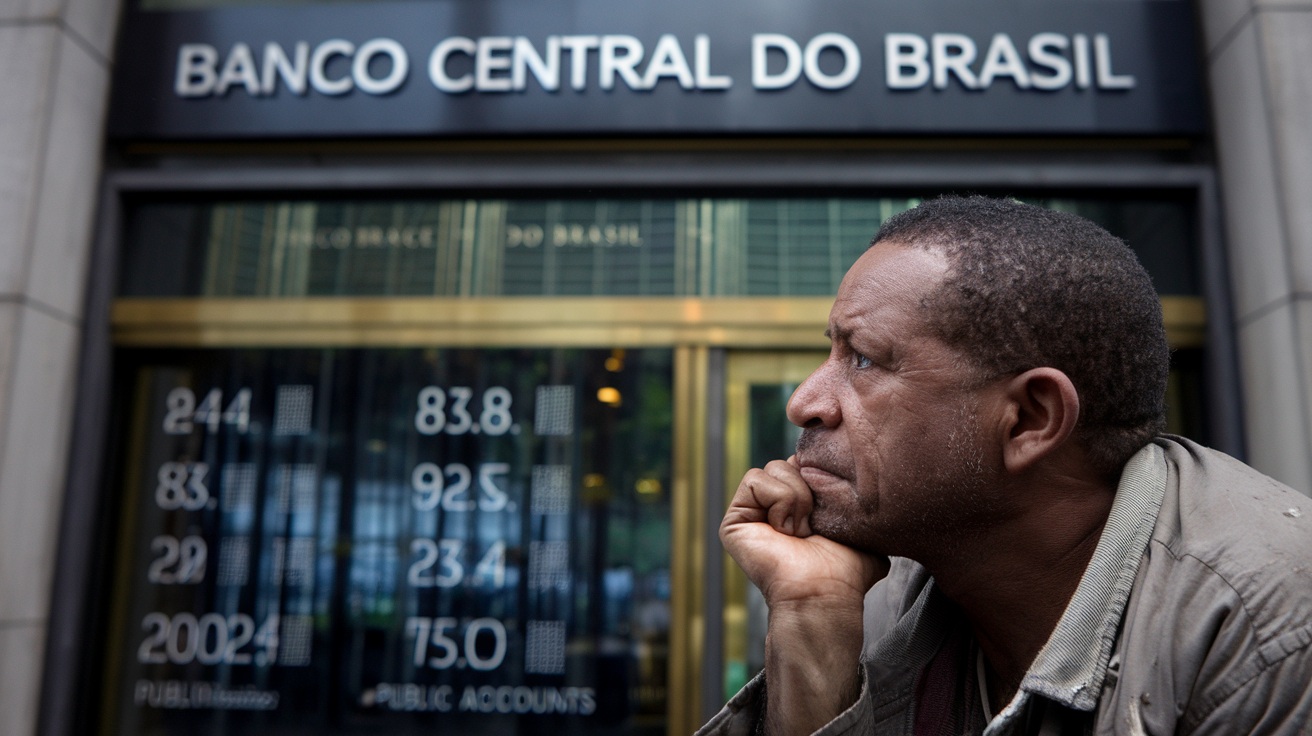


Discover How High Tax Revenues Contrast With the Fiscal Deficit
The year 2024 will mark a period of extremes in the history of the Brazilian economy. On one hand, we have seen record tax collection, reaching levels never recorded before.
On the other hand, the fiscal deficit has hit new records, highlighting the government’s inability to balance its accounts. This contradiction between high tax revenues and a growing deficit reflects serious structural problems in the country’s economic management.


Record Tax Collection in Numbers
During the first ten months of 2024, the government collected over R$ 2 trillion in taxes, with monthly averages exceeding R$ 200 billion. According to data from gov.br, each month brought new records, notably January, which collected R$ 280 billion, and October, which reached R$ 247 billion. This performance was driven by measures such as increased tax rates, the creation of new taxes, and enhanced enforcement.
-
A new Brazilian shopping center worth R$ 400 million will be built in an area equivalent to more than 4 football fields, featuring 90 stores, 5 cinemas, a supermarket, a college, and parking for 1,700 cars, potentially generating 3,000 jobs.

-
Larger than entire cities in Brazil: BYD is building a 4.6 km² complex in Bahia with a capacity for 600,000 vehicles per year, but the discovery of 163 workers in conditions analogous to slavery has shaken the entire project.

-
With an investment of R$ 612 million, a capacity to process 1.2 million liters of milk per day, Piracanjuba inaugurates a mega cheese factory that increases national production, reduces dependence on imports, and repositions Brazil on the global dairy map.

-
Brazilian city gains industrial hub for 85 companies that is equivalent to 55 football fields.


Although the government argues that these measures are necessary to fund social programs and investments, the results have not been positive. The population feels the burden of these taxes, while the expected positive impact is not reflected in economic growth.
Why Does the Deficit Continue to Grow?
Even with unprecedented tax collection, public accounts remain in the red. In 2024, the fiscal deficit accumulated between January and September reached R$ 155.2 billion, surpassing the deficit of R$ 94.3 billion from the same period in 2023. Projections indicate that the nominal deficit could approach R$ 1 trillion by the end of the year.
The main problem lies in the government’s excessive spending, which has significantly increased with programs such as pensions, high salaries, and social services. These expenditures not only fail to stimulate economic growth but also create an imbalance that directly affects investor confidence and the financial market.
The Role of the Central Bank and the Crisis of Confidence
The current economic situation also highlights the role of the Central Bank. To contain the surge of the dollar, which surpassed R$ 6.19, the institution was forced to sell part of its international reserves, burning through approximately R$ 190 billion in just a few days. However, these measures were not sufficient to stabilize the currency, further exacerbating the crisis of confidence in the market.
Both domestic and foreign investors are withdrawing their funds from Brazil due to the lack of economic planning and political instability. This capital outflow accelerates the fiscal imbalance, increasing the government’s dependence on internal debt.
Projections for 2025 are not optimistic. Experts point out that the next year, being pre-election, will bring even more economic challenges. The risk of increased public spending for electoral purposes is high, which could worsen the fiscal deficit and inflation.
The government will need to implement more effective measures to control the deficit and restore investor confidence. This includes spending cuts, greater transparency in economic management, and a more responsible fiscal policy.
The record tax collection in 2024, far from being a relief, exposed the weaknesses of Brazilian economic management. The inability to balance revenues and expenditures, combined with a crisis of confidence in the market, places the country in a delicate situation. The question remains: will the government be willing to make the necessary adjustments to avoid a collapse in 2025?










Olá pessoal,
Sou a AD Gradum, um credor de empréstimos privados. Oferecemos empréstimo rápido de Natal a uma taxa de juro muito baixa de 3%, por isso contacte-nos através do nosso
email:{adgradum7@gmail.com} WhatsApp: +1 864 344 5998 para mais informações sobre esta oferta de empréstimo.
Cumprimentos
AD Dradum.
Em 1:]lugar…,tudo que o governo arrecada 50 a 55%,vai para a união…,o restante qm arrecada são estados e municípios e em 2:),qm aumenta o juros da dívida pública não é o governo é o banco central
Vendo os comentários aqui postados, concluí-se o nível do povo brasileiro, lastimável, não é atoa que chegamos a essa situação, e nada indica que haverá mudanças com melhorias, o conteúdo da nação brasileira não tem como mudar de uma hora para outra. Ladeira abaixo até o fim do Brasil, ou dssse governo desastrado.