





 Portuguese
  English
  Spanish
 7 min of reading
  19 comments


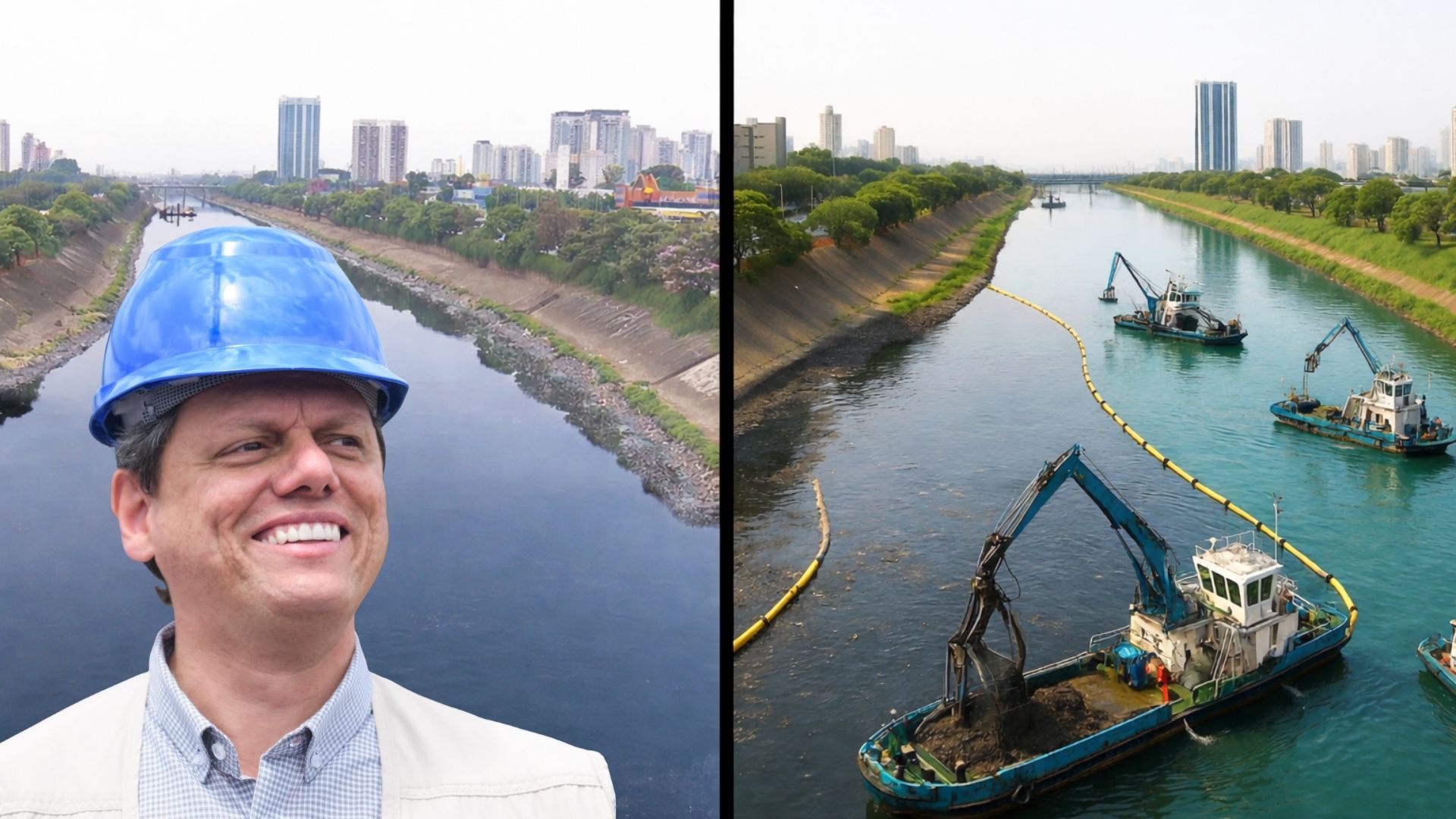


Billion-Dollar Project Brings Sanitation, Dredging, and Flood Control Actions to Combat Pollution and Flooding in the Main River of São Paulo, with Goals by the End of the Decade and Direct Effects on Urban Routine, According to Official Data from the State Government.
Recovering the Tietê River in the stretch of the capital of São Paulo has come to be treated as a continuous process of basic infrastructure, based on operational routines and permanent maintenance.
The strategy involves a sequence of actions that need to operate in an integrated manner, from connecting properties to the collector network to treating sewage and removing sediments from the riverbed.
This set includes connecting homes and businesses, transporting sewage through collectors and interceptors, operating treatment stations, and the periodic dredging of the river, factors that directly influence flooding and water quality.
-
The section of Serra da Rocinha on BR-285 is now open in Timbé do Sul: 50 m tensioned curtains and top-down technique stabilize the slope, with a stairway duct controlling the water.
-
Scientists use sawdust mixed with clay to create a lighter brick, promising efficient thermal insulation and impressing by transforming waste into a solution for construction.

-
With a DNA shape, this bridge in Singapore draws attention in modern architecture and surprises tourists by transforming a simple crossing into an unforgettable visual experience in the urban heart.
-
Giant underwater pipeline begins to take shape with a R$ 134.7 million project at the Port of Santos: the 1.7 km structure uses 12-meter and 700 mm pipes to supply water to 450,000 people in Guarujá.

The main axis of this policy is the IntegraTietê program, launched in March 2023 by the government of the State of São Paulo, according to official information.
According to the data released, the initiative foresees an investment of R$ 15.3 billion by 2026, with expansion to over R$ 23.5 billion by 2029, including sanitation, dredging, flood management, monitoring, and environmental actions in tributaries.
Spring of Tietê and the Path to the Interior of the Country
The Tietê River springs in Salesópolis, in the Serra do Mar, just a few kilometers from the Atlantic Ocean, but flows in the opposite direction to the coast.
Along its path, it crosses the Metropolitan Region of São Paulo, receives various tributaries, and cuts through the capital before moving to the interior of the state.
The journey ends at the confluence with the Paraná River, after crossing densely populated urban areas and regions with different levels of environmental pressure.
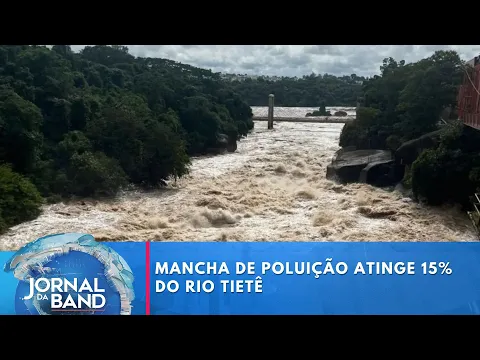

This geographical configuration helps explain the centrality of the Tietê in discussions about urbanization, sanitation, and drainage in the largest metropolis in the country.
In the capital, the river concentrates impacts associated with intense land occupation and urban impermeabilization, while experts point out that infrastructure has not always kept pace with the city’s growth.
Recurring Floods and Impacts of Urban Expansion
Between the 1980s and 1990s, floods in the Tietê Marginal and the Pinheiros Marginal became recurrent and began to be part of the city’s daily life.
The floods interrupted important routes and affected the operation of buses and trains, even in situations with no extreme rainfall.
In floodplain areas, homes and businesses coexisted with frequent overflows, resulting in material losses and emergency evacuations of families.
With the advancement of urbanization, vulnerability intensified, driven by population density and the occupation of areas naturally prone to flooding.
An emblematic episode occurred on February 10, 2020, when Greater São Paulo recorded, in about three hours, rainfall close to half of what was expected for the entire month.
Data from the National Institute of Meteorology indicated that it was the highest accumulation recorded in February in decades.
Structure and Logic of the IntegraTietê Program
The conception of IntegraTietê follows a technical principle adopted by specialists in sanitation and urban drainage.
Merely removing sediments is not enough if sewage continues to flow into watercourses, just as expanding collection without ensuring adequate transportation and treatment limits results.
For this reason, the program organizes actions that need to advance in a coordinated manner, from the street to the treatment stations.

Additionally, the planning includes drainage works and flood protection structures, integrated into the sanitation system.
The expected effects are monitored by indicators of urban daily life, such as the reduction of overflows after rainfall and the decrease of odors in critical areas.
Another observed parameter is the presence of mud in areas that usually flood, especially after heavy rainfall events.
Technicians involved in the program emphasize that these results depend on operational continuity, as irregular connections or maintenance failures can compromise progress.
Household Connections and Sewage Collection
The connection of homes and businesses to the collector network is treated as a central stage of the process, as it defines whether sewage will be directed to treatment or discharged directly into streams.
When the infrastructure is already available, the priority becomes increasing the number of connected properties, in a gradual and continuous effort.
The goal is to reduce discharges resulting from nonexistent, irregular, or damaged connections, which still affect water quality.
In parallel, neighborhood collectors and interceptors expand the transportation capacity of the system, functioning as underground structures along streams and the Tietê itself.
The captured sewage is directed to the treatment stations, and, according to sector technicians, the gains depend on the alignment between household connections and installed transportation capacity.
When this balance does not occur, operational bottlenecks or system idleness arise.
Treatment Stations and Operational Stability
Another front involves the continuous operation of sewage treatment stations, considered essential for reducing the organic load discharged into rivers.

The efficiency of the system depends both on the installed capacity and the regularity of the flow received throughout the day.
The improper entry of rainwater into the sewage network is identified as a factor of instability, especially during storm periods.
Among the main structures of the system is the Barueri Sewage Treatment Station, one of the largest in the metropolitan set.
Technical data indicate an installed capacity of approximately 16 thousand liters per second, equivalent to 57.6 million liters per hour.
This volume illustrates the scale of the operation needed to treat the sewage generated in the Metropolitan Region of São Paulo.
Dredging and Expansion of Drainage Capacity
In the drainage axis, dredging acts on the removal of sediments from the riverbed and its tributaries, expanding the drainage section.
The measure helps reduce the risk of overflows, especially during periods of heavy rainfall.
Since the beginning of IntegraTietê, the São Paulo government reported the removal of 2.3 million cubic meters of sediments from the Tietê River and associated watercourses.
According to the released data, this volume is equivalent to 164,285 truckloads, which helps to dimension the scale of the operation.
Experts emphasize that dredging does not eliminate the problem definitively, as sediment accumulation tends to recur.
Therefore, the effect depends on periodic actions, continuous monitoring, and control of factors such as erosion and irregular disposal.
Polders, Gates, and Flood Management

In floodplain regions, structures such as polders and gates are part of the flood protection system.
During flood peaks, these structures allow temporary isolation of certain areas, retaining water and later returning it to the river.
The process uses pumps to control the water level when river conditions allow.
For residents and merchants, the performance of these structures is evaluated by objective indicators, such as the reduction of water invasions in properties.
Also taken into account are the number of days of interruption of commercial activities and the decrease in damage to vehicles and inventories.
The effectiveness of the system, however, depends on regular operation and maintenance, as technical failures can compromise performance during peak demand moments.
Monitoring Water Quality
Water quality data show point improvements along the Tietê, although critical stretches remain in the basin.
In the monitoring conducted by the SOS Atlantic Forest Foundation, the so-called pollution stain showed recent retreat.
The extent decreased from 207 kilometers in 2024 to 174 kilometers in 2025, a reduction of 15.9%, according to the survey.
The result indicates improvement in certain segments of the river, but the study points out that large parts of the Tietê still present quality classified as regular, poor, or terrible.
Only a few points reach standards considered good, according to the criteria adopted by the organization.
Scale of Investments and International Comparison
The volume of resources involved helps to dimension the complexity of IntegraTietê, which includes interventions not always visible to those circulating around the marginal.
In the international comparison cited in public documents, a de-pollution plan for the Tagus River in Lisbon was estimated at 800 million euros in 2009, according to information released at that time.
In the Brazilian context, the scale of dredging also draws attention when compared to other large-scale interventions.
In Santa Catarina, beach nourishment works in Itapoá anticipated the use of large volumes of sediments, with 5.8 million cubic meters, according to official data from the state government.
As IntegraTietê encompasses collection, transportation, treatment, dredging, and flood control, results depend on the simultaneous execution of these fronts.
Technical data indicate that isolated advances tend to produce limited effects, while coordination between stages increases impacts on the most sensitive points of the basin.
With billion-dollar investments, sanitation goals by the end of the decade, and interventions distributed throughout the basin, the discussion remains open.
What concrete changes still need to occur in neighborhoods, streams, and local systems for the Tietê River to stop concentrating critical indicators and begin to present more stable standards of water quality?








DIFÍCIL DE ACREDITAR AQUINEM OSASCO TODOS OS CORREGOS ESTÃO RECEBENDO ESGOTO
Pessoas que criticam teremos sempre. Veja o Rio Sena em Paris. Não é só um problema nosso. Agora que Guarulhos está trabalhando para sanear o esgoto que também vai pro Tietê. A sociedade também não colabora e acha que um Governador que precisa resolver um problema tão complexo o fará em 4 anos. Além de todos os outros problemas estruturais que se arrastam por anos. Teriamos que apoiar e não achar que todos são ****, apesar de saber q ue é a maioria.
A despoluição do Tietê é valida e necessária, mas tem que fazer campanhas pra poder educar o cidadãos de são Paulo pra entender que rio não é lixo, é água que é a nossa sobrevivência, e parar de jogar lixo no rio e nas ruas TB, lixo na rua acaba nas galerias pluviais e conseguintemente no rio !! Agora governador precisamos de uma ou mais usinas de dessalinização no litoral de sp pra poder resolver a falta de água na capital já passou da hora de algum governador fazer isso !!!