





 Portuguese
  English
  Spanish
  3 min of reading
  3 comments


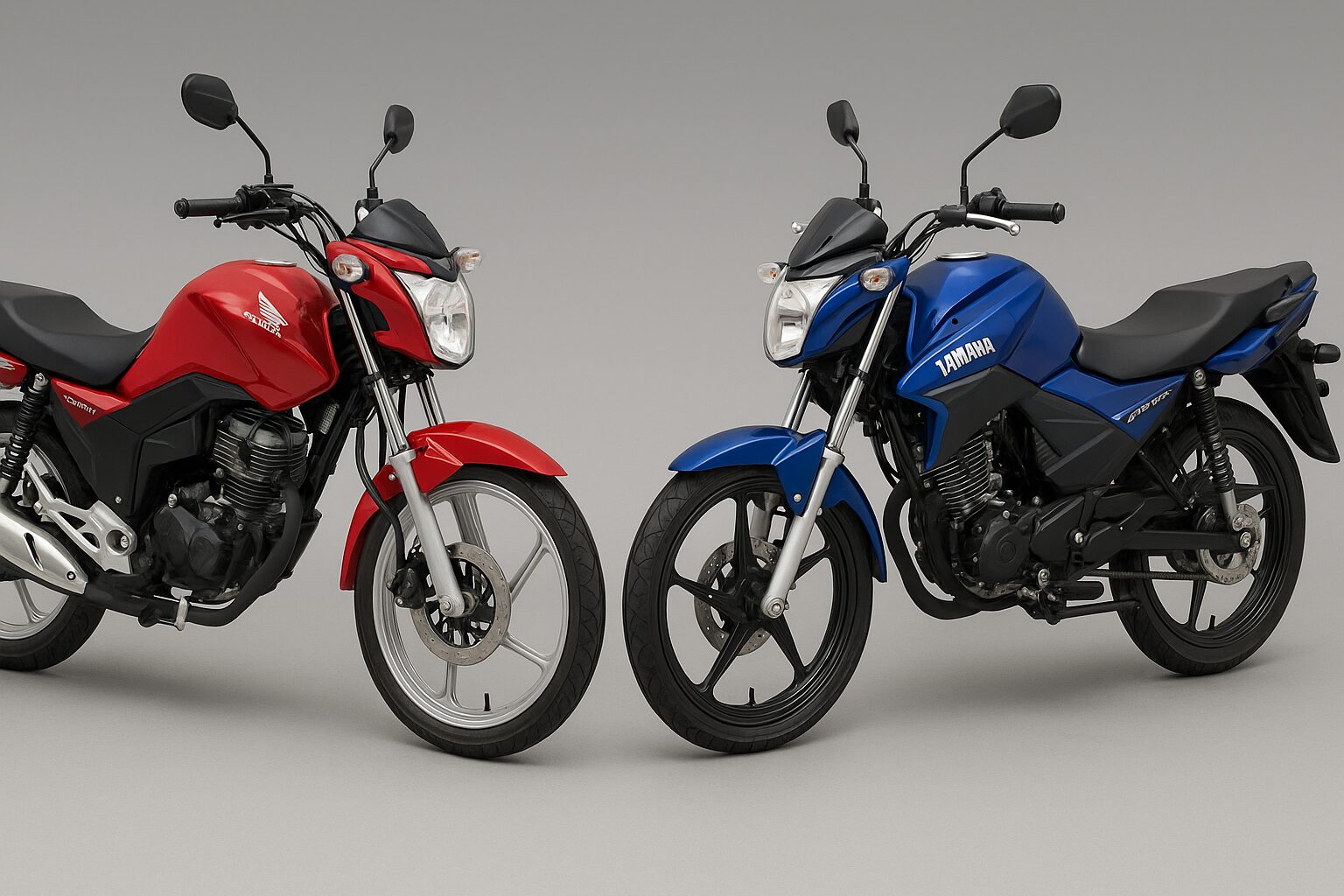

Honda and Yamaha Have Competed for Over 50 Years in the Motorcycle Market in Brazil — But a Combination of Innovation, Consortiums, and Expansion Gave a Clear Advantage to the Industry Leader
When it comes to motorcycles in Brazil, two names immediately come to mind: Honda and Yamaha. The Japanese brands arrived in the country almost simultaneously in the early 1970s and have been in competition ever since. Despite the intense rivalry, Honda has gained a broad and consistent advantage over its competitor.
Arrival of the Brands in Brazil
Yamaha was the pioneer between the two, arriving in Brazil in 1970. In 1974, it launched the first motorcycle produced in national territory, the RD 50.
Honda landed in the country just a year later, in 1971, and only began manufacturing its own bike on Brazilian soil in 1976. Nonetheless, Honda quickly stood out with an important differentiator: the 4-stroke engine.
-
Italian researchers have detected what appears to be a second Sphinx buried under the sands of Egypt, and satellite scans reveal a gigantic underground megastructure hidden beneath the Giza Plateau for over 3,000 years.

-
There are 4,223 drums and 1,343 metal boxes concreted with 50-centimeter walls that store the radioactive waste from Cesium-137 in the worst radiological accident in Brazil, just 23 kilometers from Goiânia, with environmental monitoring every three months.

-
Giant Roman treasure found at the bottom of Lake Neuchâtel in Switzerland reveals an advanced trade system, circulation of goods, and armed escort in the Roman Empire about two thousand years ago.

-
He buried 1,200 old tires in the walls to build his own self-sufficient house in the mountains with glass bottles, rainwater, and an integrated greenhouse.

The Advantage of the Silent Engine
From the beginning, Honda imported bikes with a 4-stroke engine. The first of these was the C110, a small bike that already used this technology.
At that time, almost all motorcycles — including Yamaha’s RD 50 — used 2-stroke engines. While efficient, these engines were noisy and emitted a lot of smoke.
This made the public look more favorably on Honda’s models. The combination of lower noise and less pollution appealed to consumers and helped the brand build a positive image from the start.
Strategies That Made a Difference
According to automotive consultant and CEO of Mobiauto, Sant Clair Castro Jr., the market entry strategy was one of the key points for Honda’s success. In addition to bringing a more modern product, the brand was proactive in offering conveniences to consumers.
In 1981, Honda launched its consortium system in Brazil. A year later, Yamaha began offering the same type of service, but was already at a disadvantage. The consortium made it easier to access motorcycles, allowing more people to realize the dream of owning their own vehicle.
Expansion of the Store Network
With success in sales and a strengthened image, Honda grew throughout the country. Today, the brand has 1,119 sales points and authorized technical assistance. Yamaha, on the other hand, has 559 establishments. This difference shows how Honda managed to expand more rapidly and reach more regions.
Honda vs Yamaha: Market Share
Honda’s dominance is also reflected in the registration numbers. Since the early 2000s, the brand has led the motorcycle market in Brazil by a large margin.
In many years, it maintained about 70% market share, varying between 60% and 80%. Yamaha, on the other hand, remains in second place with approximately 12% market share.
Even with a loyal fan base and competitive products, Yamaha has never managed to take the lead from Honda. The gap built over the decades is significant, both in commercial presence and sales participation.
Future Possibilities for Yamaha
Despite the current scenario, the possibility of change in the future cannot be ruled out. Yamaha still has room to grow in Brazil. To do so, significant investment, time, and well-crafted strategies will be necessary.
The loyalty of Brazilians to Honda, built since the first models with 4-stroke engines up to affordable consortiums and an extensive network of stores, will not be easy to overcome. The red brand has consolidated a success story that continues to be impactful today.
With information from AutoPapo.








O que a reportagem não menciona, é o acordo feito entre a Honda e o Governo Militar, proibindo a Yamaha de comercializar motores 4 tempos por longos 20 anos. Isso fez a Honda abrir vantagem no mercado de motocicletas atrasando qualquer concorrência.
O povo brasileiro é muito ****, Maria vai com as outras, a qualidade, conforto e durabilidade da Yamaha da show, que tem uma Yamaha sabe que estou falando.
A vantagem da Honda não foi aquela apresentada pela reportagem, a grande vantagem da Honda era a de ser muito, mas muito mais conhecida que a Yamaha por conta das suas importadas: CB 750 four, CB 400 four, entre outras enquanto a Yamaha trazia o que para o Brasil??? Trazia órgãos…