





 Portuguese
  English
  Spanish
  3 min of reading
  1 comment


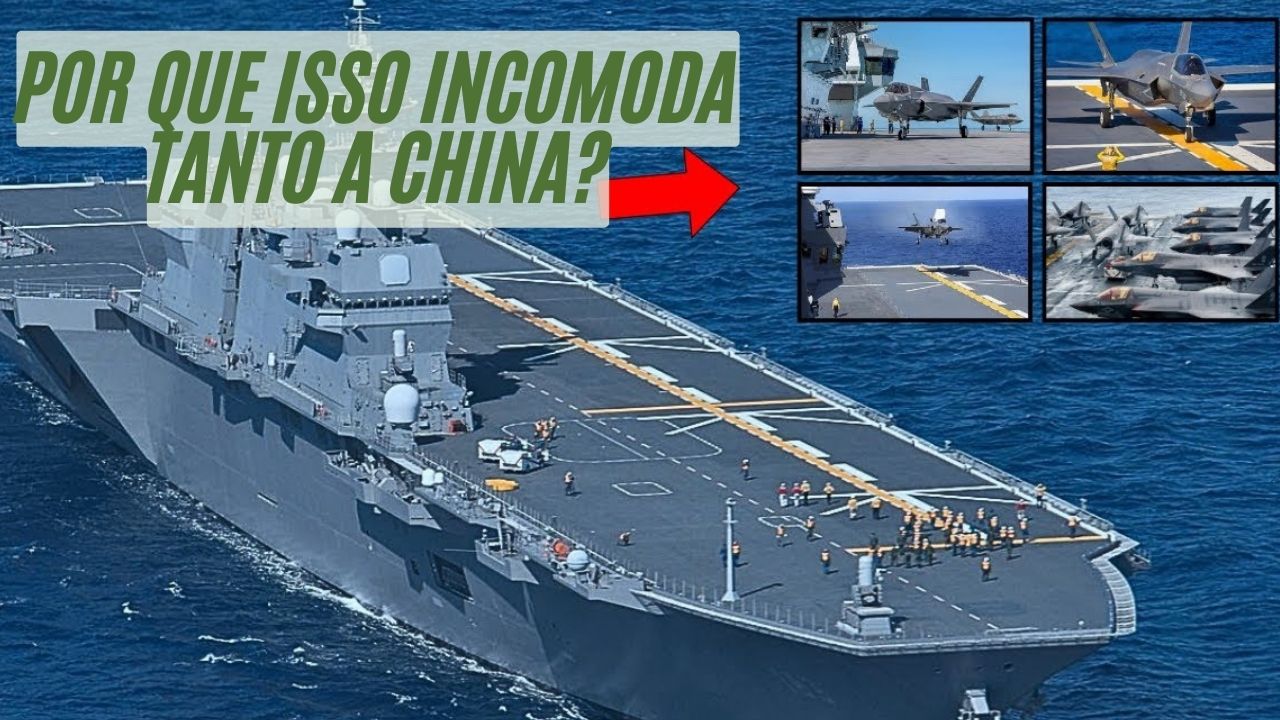

Who Would Have Thought That, After Decades of Silence, Japan Would Return to Dominate the Seas with Japanese Aircraft Carriers? This News Is Causing a Stir, Especially in China, Which Sees This Movement as a True Spark for Old Rivalries and Strategic Tensions. Japan, Which Since the End of World War II Limited Itself to a Defensive Policy, Is Now Preparing to Operate New Aircraft Carriers – and China Is Watching, Concerned About What This Could Mean for the Future of Security in the Pacific.
Japan, over the past few years, has slowly changed its defensive posture, marked by a pacifist constitution imposed after World War II. During the conflict, Japanese aircraft carriers were symbols of naval power and an expansionist strategy in the Pacific. After the defeat, however, Japan committed itself to maintaining a limited military force, focused exclusively on self-defense. This scenario, however, began to change with the modernization of its equipment, including the Kaga and the Izumo, initially built as “helicopter destroyers”, but now undergoing adaptations to operate F-35B fighter jets.
These changes have gained momentum mainly due to the growing pressure from perceived threats from China and North Korea. The Kaga, which entered service in 2017, already exhibited many features of a traditional aircraft carrier, such as a continuous flight deck and hangars for aircraft. But it was only in 2018 that the Japanese government officially announced that these ships would be adapted to accommodate short takeoff and vertical landing combat aircraft, acquired from the United States.
Autonomous Japanese Aircraft Carriers
The modernization project is underway and will be completed in two phases, with the first focused on adapting the flight deck and the second focused on internal reconfiguration. With this upgrade, Japanese aircraft carriers will gain the capability to operate autonomously on prolonged combat missions, expanding their presence in the Pacific, including in disputed areas such as the Senkaku Islands, where Japan maintains a territorial dispute with China.
-
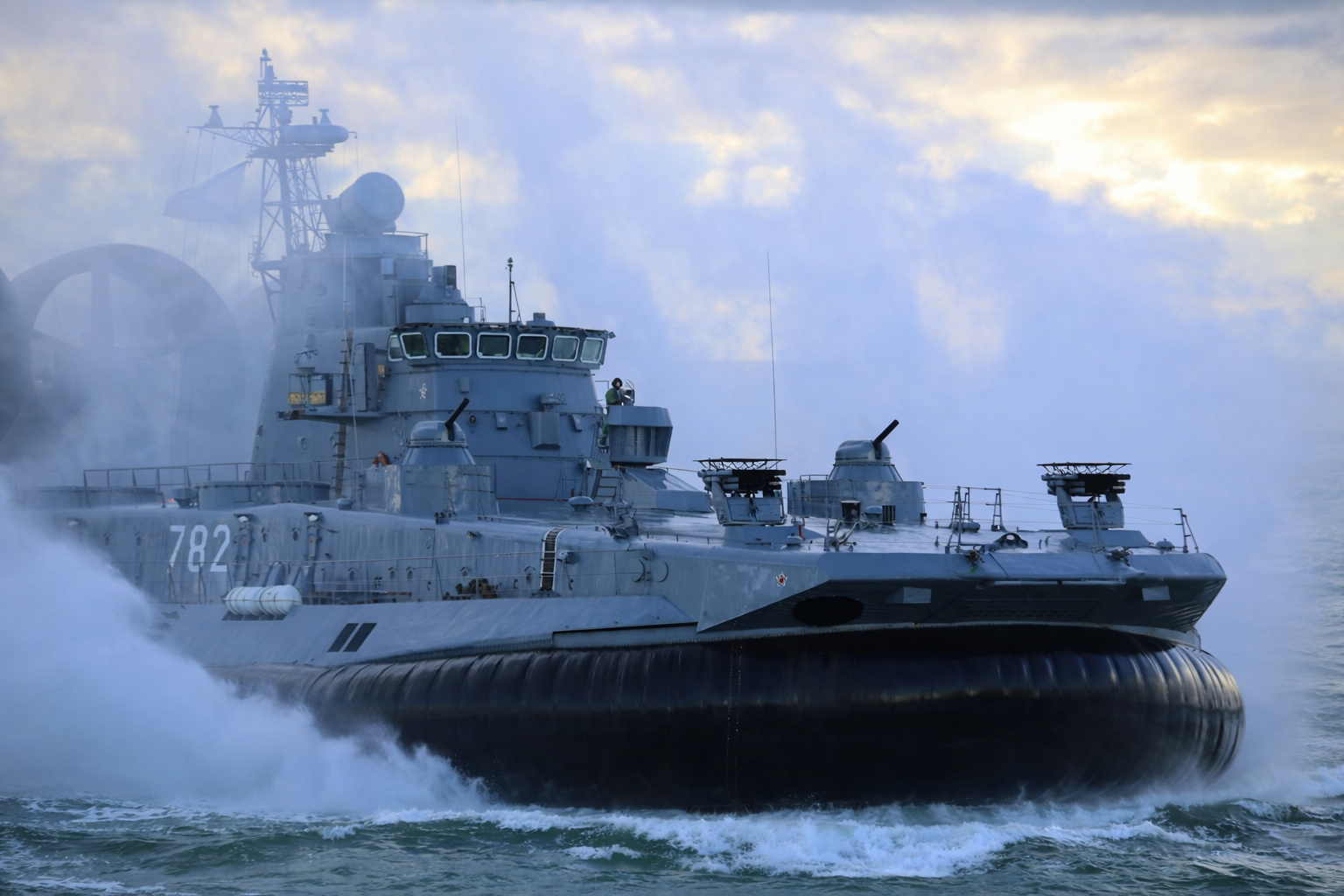
Classified as a “amphibious monster” weighing 555 tons, 57 meters long, and featuring three propellers with a diameter of 5.5 meters, the Zubr is the largest military hovercraft ever built, capable of transporting 3 tanks or 500 soldiers at speeds exceeding 100 km/h over water, ice, and sand, and China has resumed production of it to project power in the South China Sea.
-
The U.S. Army receives the first Black Hawk helicopter that can fly without pilots, be controlled by a tablet, and even land on its own during high-risk missions.

-
With 11,000 tons and sensors capable of hunting submarines at long distances, the Type 055 has become one of the most feared floating arsenals of the Chinese navy.

-
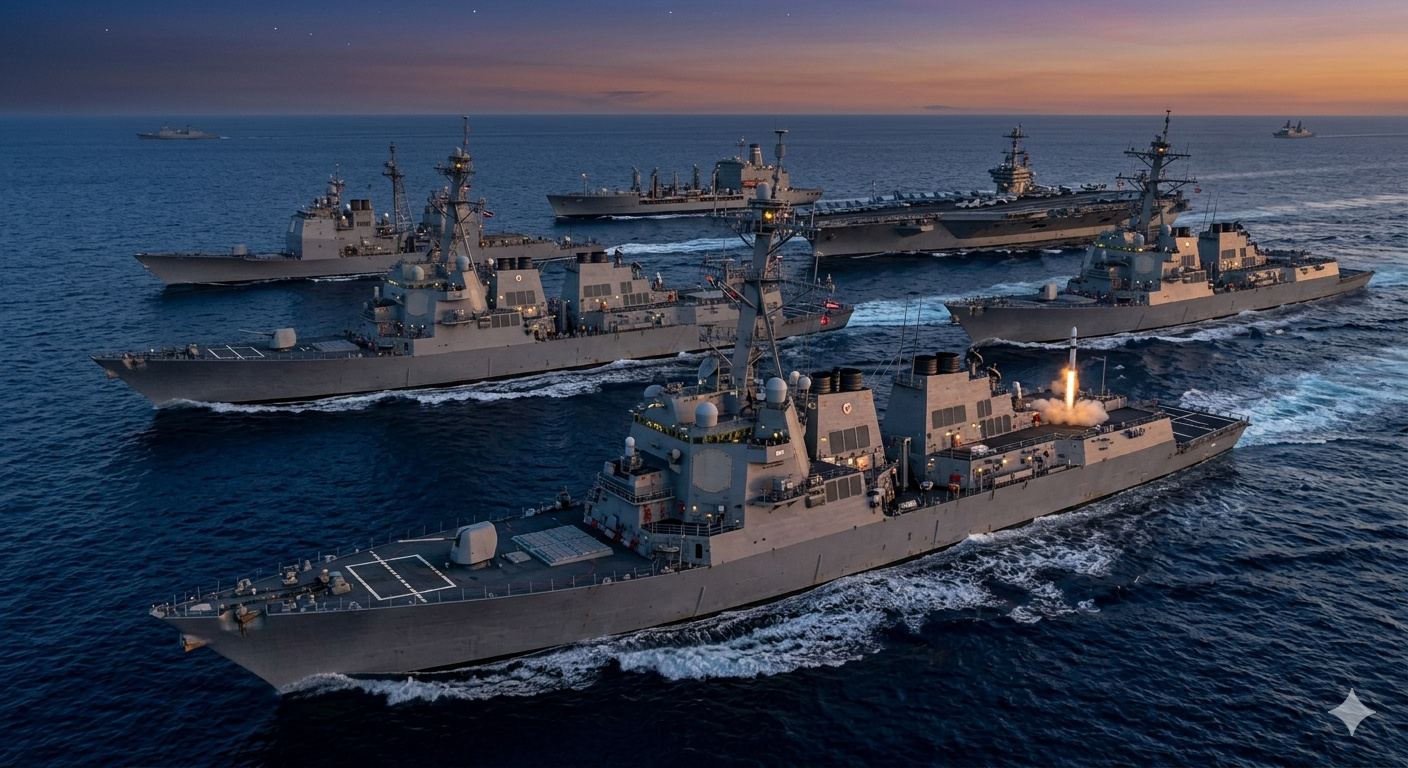
With over 15,000 tons, radars capable of tracking hundreds of targets simultaneously, and more than 120 missiles ready for launch in seconds, modern destroyers cease to be escorts and begin to dominate the naval battlefield.

A Strategic Return That Concerns China
Japan’s decision to resume operations with Japanese aircraft carriers goes beyond a mere military renewal; it is a strategic move that modifies the balance of power in Asia. For China, this Japanese military expansion, with the support of the United States, constitutes a containment network that limits its expansion possibilities in the Pacific. Japan, along with allies such as the U.S., Australia, and South Korea, forms an alliance aimed at containing China’s growing influence in the region.
In addition to territorial disputes and the memory of past aggressions, Japan’s rise as a renewed military power may evoke painful pasts for China, where Japan had imperial ambitions. The resurgence of Japanese aircraft carriers may be interpreted as an indication that Japan is once again open to expanding its military capabilities.
Global Reaction and Implications
This Japanese military advancement is viewed with apprehension not only by China but also by neighboring countries that closely monitor any changes in Japanese defense forces. For many analysts, the return of Japanese aircraft carriers symbolizes a more proactive stance that breaks with the country’s strictly defensive policy.
This change aligns with Japan’s new National Security Strategy and Defense Reinforcement Program, both crafted to provide a more assertive response to potential threats in the region.
The military alliance between Japan and the U.S. is essential for this advancement. The United States encourages Japan to strengthen its military capabilities as part of a strategy to counterbalance China’s influence. This support enables Japan to carry out modernizations with American technological and logistical resources, creating a network of allies in the Indo-Pacific.
The Return of Japanese Aircraft Carriers


The return of Japanese aircraft carriers is a turning point in the balance of power in Asia, reigniting historical rivalries and containment strategies. For China, Japan’s increasing militarization, with U.S. support, is seen as a direct threat, not only territorially but also as a reminder of old wounds. This new scenario places Japan and China in a constant state of alert, where each move can have global repercussions.






Na verdade é a expansão militar China já com terceiro porta avião,por causa do taiwan que chineses não quer americano colocar pilhas, como o tratado Japão tem que devolver tudo que não era deles as ilha em disputa com corea do Sul e China não pertence a eles , até hoje no o Japão tentando embelezar e moderado história de “invasão”e suavizando massacre de milhão de pessoas maiorias civil, falta de desculpa oficial do Japão aos países invadindo e indenização de mulheres estupradas.agora juntar com times com EUA já sabe vai ser usadas como procurador de guerra com a china,vai morrer chineses japoneses mas os EUA vai fica rico vender armas