





 English
  Francês
  Alemão
  Italiano
  Japonês
  Norueguês
  Portuguese
  Spanish
  4 min of reading
  0 comments


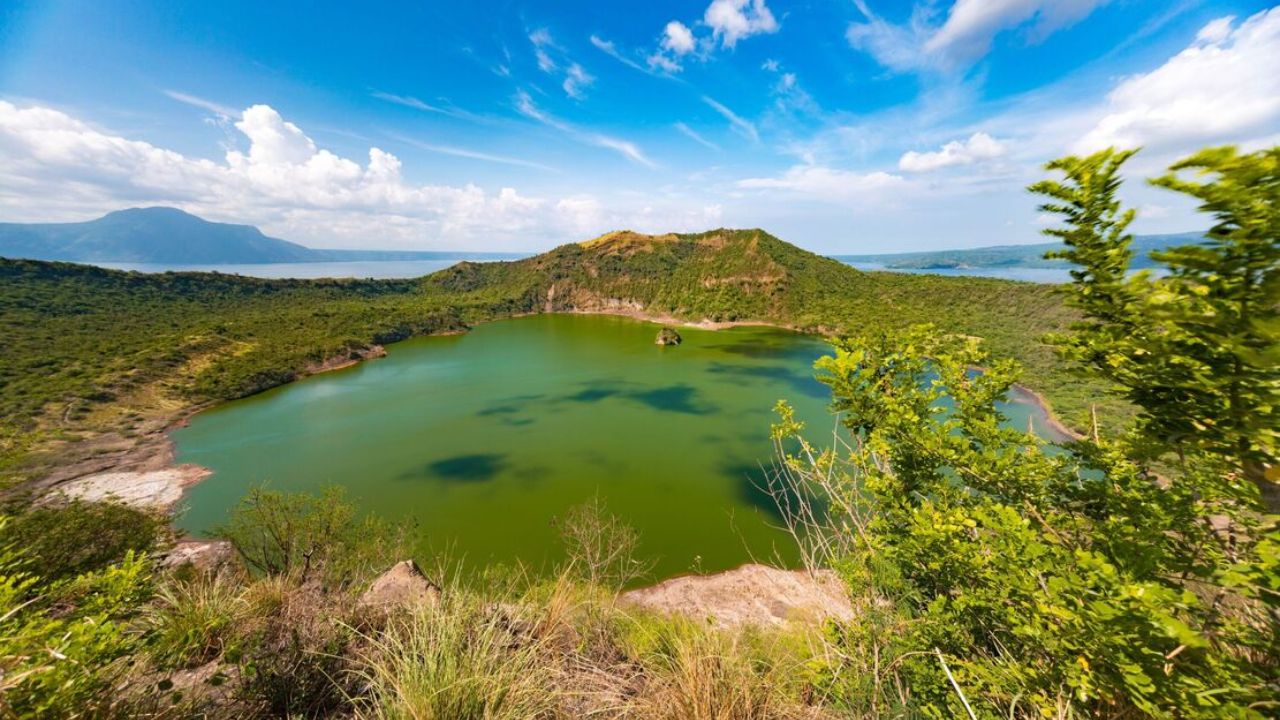
An Island Inside a Lake, That Is Inside Another Island in a Lake… and All of This Inside the Crater of One of the Most Active Volcanoes in the Philippines! Discover the Surreal Phenomenon of Taal Volcano and Its Unique Geographic Formation in the World.
There is a place in the world that feels like a geographic enigma. It’s a lake on an island, inside a lake on another island. Sounds confusing? It is, but it’s real and located in the Philippines, inside Taal Volcano, one of the most active in the country.
In the midst of this geological madness, there is a little piece of land called Vulcan Point, an island that floats within the Main Crater Lake, which, in turn, is inside the caldera of the volcano, surrounded by the vast Taal Lake. In short: it is one of the rarest natural phenomena in the world and, without a doubt, one of the most incredible.
The Phenomenon of the Island in a Lake on an Island
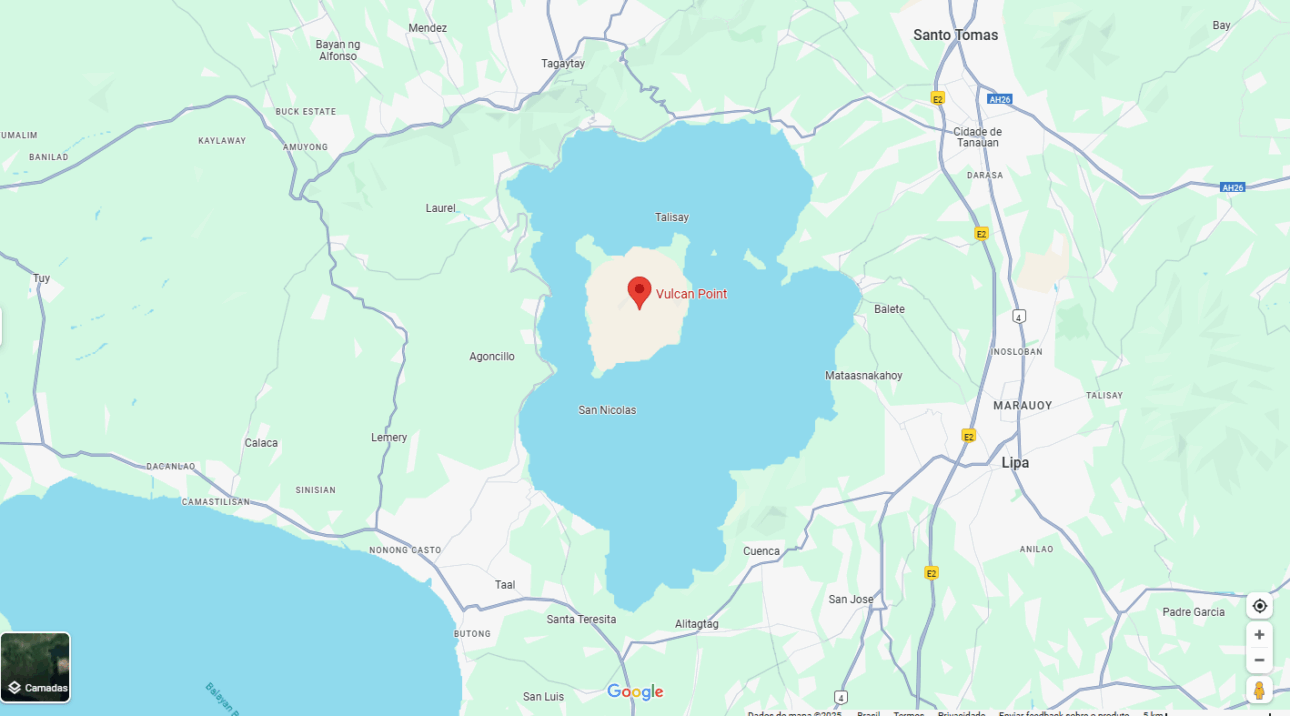
Now, let’s understand this confusion. What’s happening here is a rare case of a third-order island, that is, an island inside a lake, which is on an island, inside another lake. It’s not every day you see a place like this.
-
Spain surprises the world by erecting 62 artificial dunes, mixing sand with natural remains of posidonia, and causing the structure to lose only 1.4% of its volume in 1 year.

-
With 16 Bulava missiles, improvements in acoustic stealth, and a design focused on silent patrols, Russia’s nuclear submarine was born to ensure Moscow’s invisible retaliation and has become one of the pillars of its maritime strength.

-
‘Populous’ city in Rio among the worst in Brazil in national ranking and exposes silent development crisis.
-
Couple buys house in the South Zone of São Paulo, opens a hidden door in the garage, and finds a secret wine cellar with dozens of old wines forgotten since the 1970s.

And as strange as it may seem, it’s not the only one on the planet. There is a similar phenomenon on Victoria Island, Canada, but honestly, Vulcan Point is much more famous. After all, in addition to being a true geographic puzzle, it is located inside an active volcano!
The Formation of the Main Crater Lake
But how did this geological madness come about? Well, it all started with Taal Volcano itself, which has a long history of eruptions. In 1911, a violent explosion opened a giant crater at the top of the volcano. The land sank and, over time, rainwater filled the hole, creating the Main Crater Lake.
And within this lake, in the middle of the crater, there remained a little piece of isolated land: Vulcan Point. It sounds like something out of a movie, but it’s pure science.
Vulcan Point: The Island Inside the Lake in the Crater
Now, what makes Vulcan Point even crazier is the fact that it is not just any small island. It is, in reality, the tip of a submerged volcanic cone. In other words, what is left of an ancient volcano that used to be much more active.
Imagine that one day this land was part of a mountain of fire and lava. Today, it is just a piece of rock surrounded by water. Nature really doesn’t mess around.
The Changes Caused by Eruptions
And if you think this landscape never changes, you’re mistaken. In January 2020, Taal Volcano decided to show that it still rules the area and erupted again. The result? The Main Crater Lake simply disappeared!
This happened because giant cracks opened up, draining water into the underground. Not to mention that the intense heat of the eruption may have evaporated much of the lake. For a while, Vulcan Point ceased to be an island and became just a piece of dry land.
But nature has its way of balancing things. After some typhoons, water began to accumulate again, restoring the lake and returning Vulcan Point to its status as an island in a lake on an island.
Taal Lake and Its Peculiarities
And it doesn’t stop there. Taal Lake, which surrounds the volcano, also has its secrets. It is the only place in the world where a little fish called tawilis exists, a species of freshwater sardine that only survives there.
Another curiosity? The lake is home to the Garman sea snake, one of the rare cases of snakes that managed to adapt to freshwater. Can you imagine finding a sea snake in the middle of a volcanic lake? Well, it happens.







-

Uma pessoa reagiu a isso.