





 Portuguese
  English
  Spanish
  4 min of reading
  0 comments


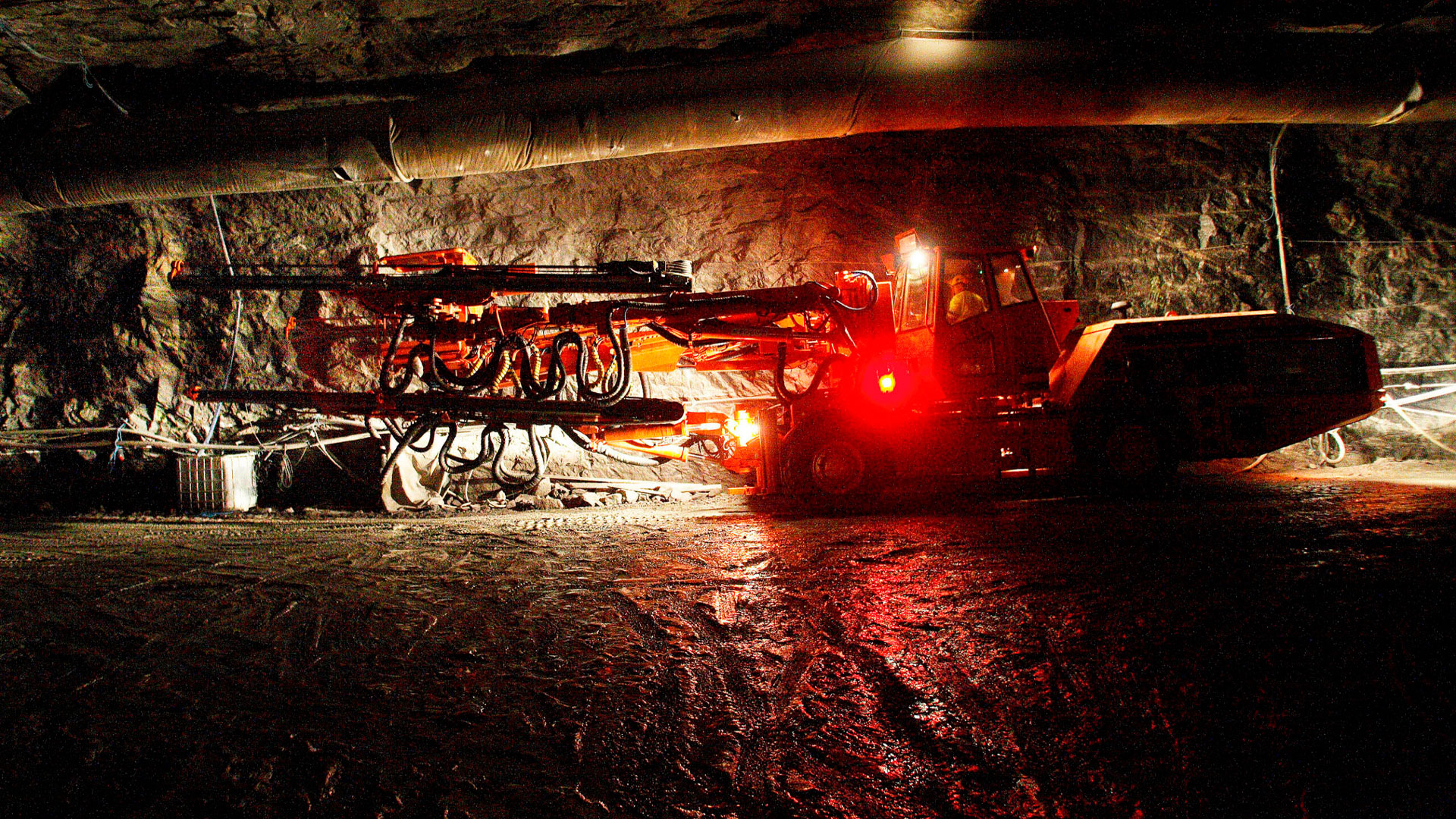
Finland Advances in Building Onkalo, Deep Repository for Used Nuclear Fuel, with Tests Ongoing Since 2024 and Operation Planned After Final License from the Regulator.
Finland is about to inaugurate the world’s first deep geological repository for used nuclear fuel. The project, named Onkalo (“small cave” in Finnish), aims to isolate radioactive material at a depth of over 400 meters for tens of thousands of years.
Since August 2024, the operator Posiva has been conducting a phase of “operational testing” with simulated elements, a trial that validates the entire industrial process before handling real waste. According to Posiva and specialized media, commercial operation depends on the operating license currently being evaluated by the regulatory body STUK.
In January 2025, STUK reported that it was in the final stages of the technical analysis of the license, following extensions decided at the end of 2024. Posiva, in turn, completed rounds of encapsulation tests and backfilling of the tunnels in March 2025, milestones that bring the facility closer to the start of regular operations, targeted for mid-decade.
-
Motorola launched the Signature with a gold seal from DxOMark, tying with the iPhone 17 Pro in camera performance, Snapdragon 8 Gen 5 that surpassed 3 million in benchmarks, and a zoom that impresses even at night.

-
Satellites reveal beneath the Sahara a giant river buried for thousands of kilometers: study shows that the largest hot desert on the planet was once traversed by a river system comparable to the largest on Earth.

-
Scientists have captured something never seen in space: newly born stars are creating gigantic rings of light a thousand times larger than the distance between the Earth and the Sun, and this changes everything we knew about stellar birth.

-
Geologists find traces of a continent that disappeared 155 million years ago after separating from Australia and reveal that it did not sink, but broke into fragments scattered across Southeast Asia.

The Finnish proposal gained global attention for offering a definitive answer to a more than half-century impasse: what to do with nuclear waste in the long term. According to reports from CNBC and international media, the expectation is that Onkalo will become a reference for countries studying similar solutions.
VIDEO: How Onkalo Works and Why “100,000 Years”
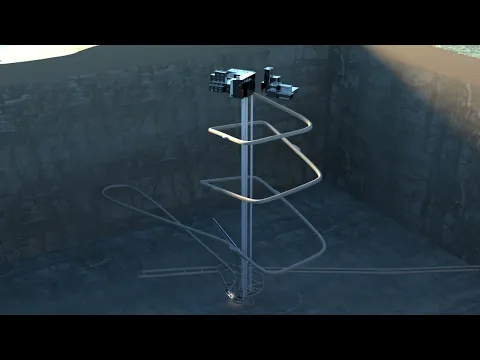

Onkalo employs the KBS-3 concept, developed in Sweden and adopted by Finland: the used fuel is sealed in copper capsules (with iron inner structure), deposited in individual shafts and surrounded by bentonite clay that swells upon contact with water, creating a multi-barrier between the radioactive material and the environment. All of this is installed in stable crystalline rock, at a depth of 400 to 500 meters.
100,000 years is not a commercial guarantee period, but a time scale for which the barrier system is designed, considering the half-life of radionuclides present in the used fuel. Depth helps protect against surface events; while clay and copper limit corrosion and migration of radionuclides.
In 2024, Posiva completed the manufacturing of the buffer installation system (BIS), which precisely positions the bentonite around the capsules, a crucial step to achieving the tightness of the repository.
What Is Needed to Open, License and Final Tests
In December 2024, the regulator STUK postponed its decision on the operating license to 2025, after requesting additional materials. In January 2025, the agency stated it was in the final stretch of its review, a mandatory requirement before the Finnish government’s decision. Meanwhile, Posiva conducted a “trial run” of encapsulation and a backfilling test of the tunnels with clay in March 2025, simulating the real procedure without radioactive fuel.
If the opinion is favorable, commercial opening is close, with a commonly cited timeline for 2026, subject to final approval.
The operational testing phase began on August 30, 2024 and involves training teams, calibrating equipment, and demonstrating the integrity of the entire flow: from reception to encapsulation, from underground transport to final disposal. This is the first time in the world that a facility of this kind tests the entire industrial cycle, which explains the attention from regulators and international experts.
Safety and Environmental Risks: Where the Controversies Are
The design of Onkalo relies on multiple barriers: metal capsule, bentonite, and rock. Industry associations emphasize that this combination drastically reduces the chance of release of radionuclides into the environment. However, part of the scientific community is cautiously monitoring issues such as corrosion of copper by sulfides in groundwater and long-term geological events, debates that remain open precisely because the time scale is unusual.
Recent reports summarize this balance: high potential gain in safety with uncertainties requiring continuous monitoring and transparency.
To mitigate risks, the operation foresees progressive sealing of the tunnels, monitoring, and a plan for definitive closure only when all galleries are filled, keeping the repository inaccessible to humans for many millennia. It is this “prolonged prohibition” that creates the image of a “perpetual cave.”
U.S. Still Relies on “Dry Casks” at Plants
While Finland tests the first permanent solution for used fuel, the United States continues with the practice of storing in “dry casks” at the plants themselves, after cooling in pools.
The American regulator (NRC) considers both temporary storage routes safe, but acknowledges that there is no national final destination for used fuel since the cancellation of the Yucca Mountain project. In parallel, the country operates the WIPP, a deep geological repository for transuranic defense waste, which does not accept plant fuel.
This contrast explains why Onkalo is seen as a global reference, with similar projects under development in Sweden, Canada, France, and Switzerland, but at different stages of licensing and construction.
Why This Matters for the Energy Transition
With the return of the debate on nuclear energy amid climate goals, the management of nuclear waste is the key point for public acceptance and licensing of new plants. If Finland proves, in practice, that it is possible to safely isolate used fuel for geological scales, it sets a regulatory precedent that could unlock investments in other countries. On the other hand, failures or delays could reinforce skepticism and inflate future projects.
In the short term, the world will watch three decisions: the final opinion from STUK, the first operation with real waste, and the results of the first years of monitoring of the repository. Each step will fuel the discussion about cost, safety, and social acceptance of this long-term solution.







-

Uma pessoa reagiu a isso.