





 Portuguese
  English
  Spanish
  5 min of reading
  0 comments


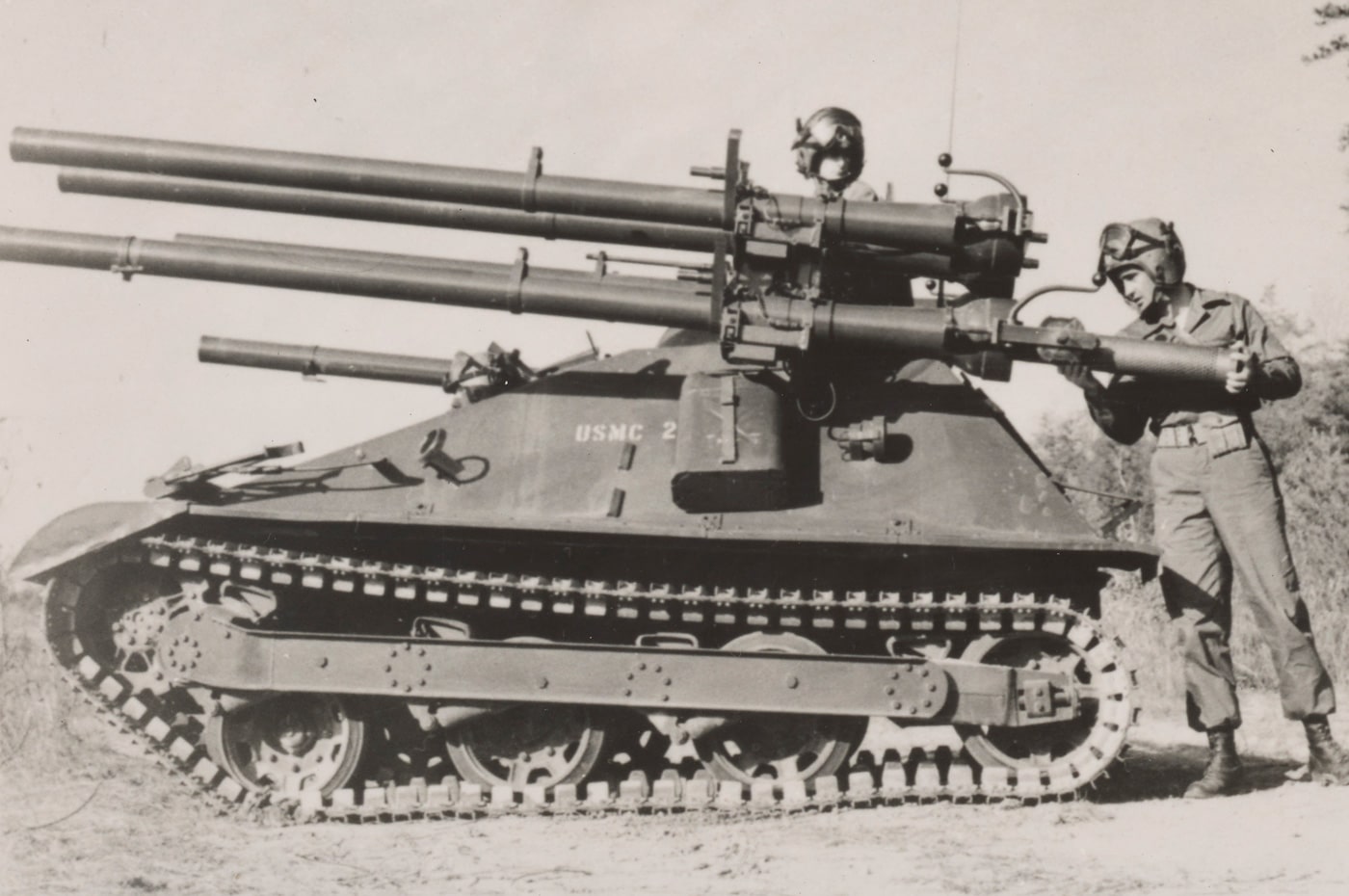
Armed With Six 106 mm Recoiless Rifles, The M50 Ontos Was One of the Most Unusual Anti-Tank Vehicles of the Cold War and Played an Important Role in the Vietnam Battles.
During the Cold War, the United States developed a series of military vehicles designed to face the growing threat of Soviet armored vehicles. Among the most curious projects was the M50 Ontos, a lightweight vehicle that seemed to defy all armored vehicle design conventions. Instead of a large main gun, like traditional tanks, the Ontos was equipped with six 106 millimeter recoiless rifles, mounted externally on a small turret. This unusual configuration allowed the vehicle to fire multiple rounds of high destructive power in rapid succession.
Despite its relatively compact size, the M50 Ontos had enough capability to destroy tanks, fortifications, and defensive positions. Because of this peculiar armament, the vehicle became one of the most unusual projects in American military history.
The Origin of the Ontos Project – The Anti-Tank Vehicle With Six Rifles
The development of the Ontos began in the 1950s, when the United States Marine Corps was looking for a lightweight vehicle capable of providing high anti-tank capability. At that time, American military strategy considered it essential to possess vehicles capable of quickly neutralizing enemy armor in case of conflict in Europe or other strategic regions.
-
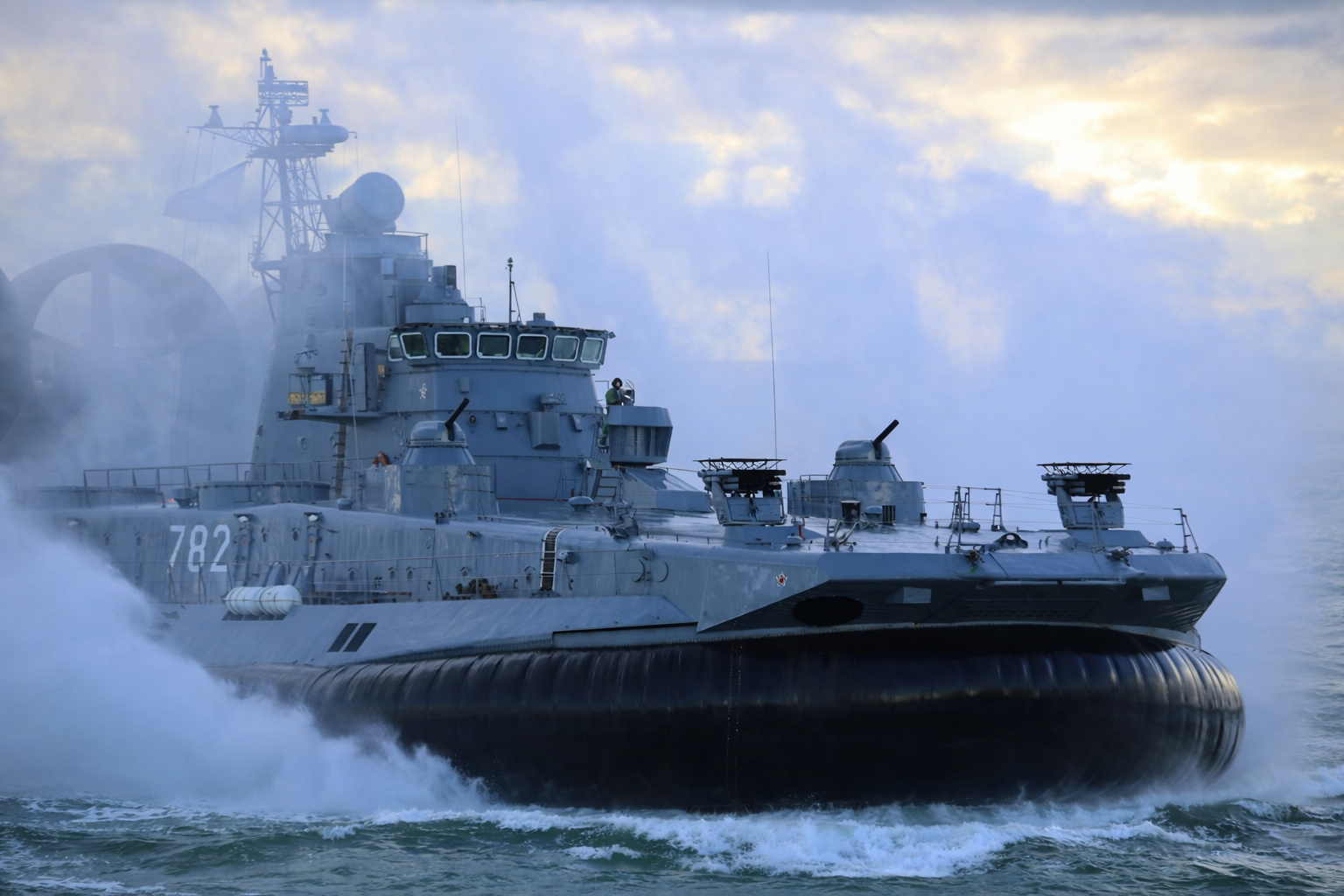
Classified as a “amphibious monster” weighing 555 tons, 57 meters long, and featuring three propellers with a diameter of 5.5 meters, the Zubr is the largest military hovercraft ever built, capable of transporting 3 tanks or 500 soldiers at speeds exceeding 100 km/h over water, ice, and sand, and China has resumed production of it to project power in the South China Sea.
-
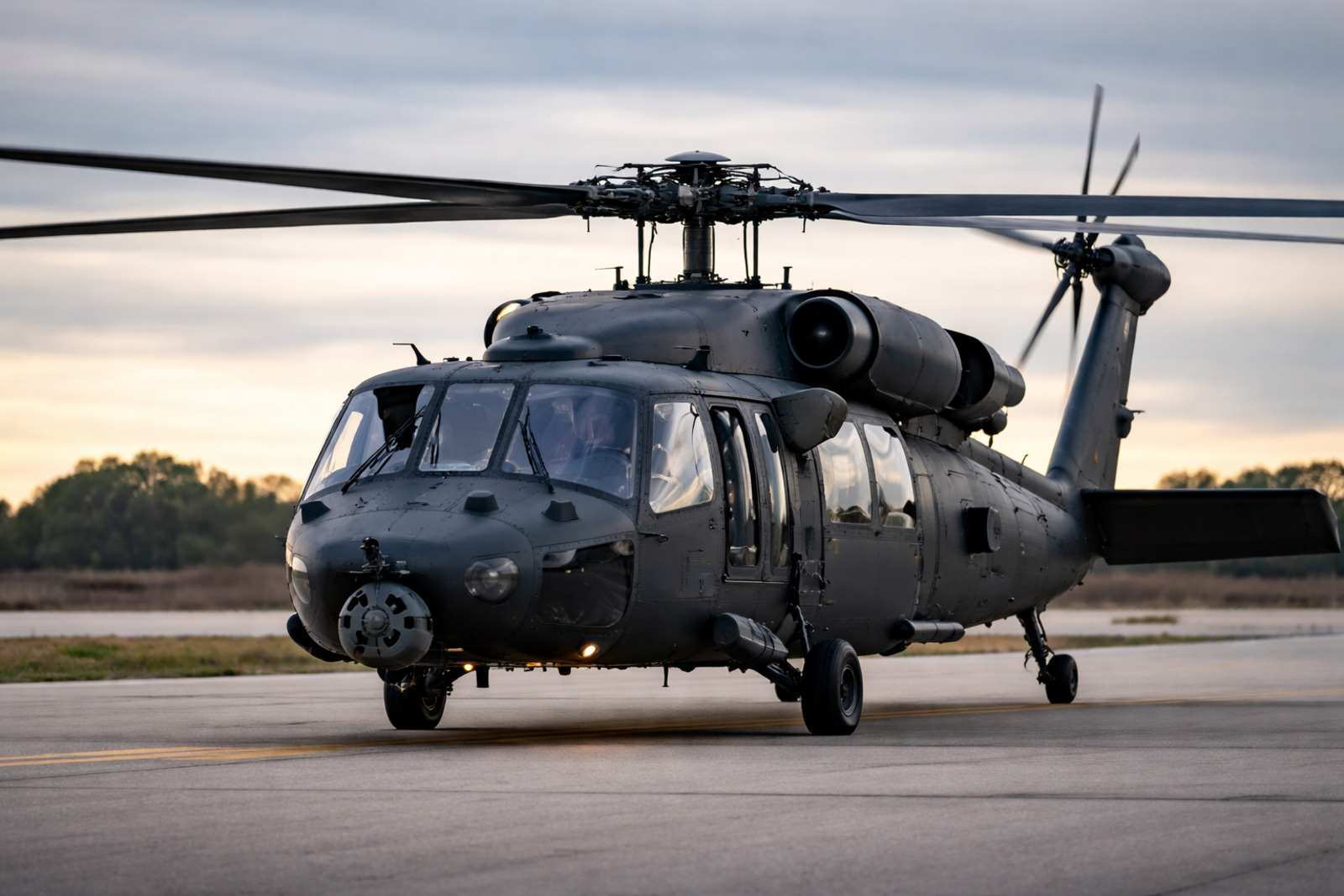
The U.S. Army receives the first Black Hawk helicopter that can fly without pilots, be controlled by a tablet, and even land on its own during high-risk missions.
-
With 11,000 tons and sensors capable of hunting submarines at long distances, the Type 055 has become one of the most feared floating arsenals of the Chinese navy.

-
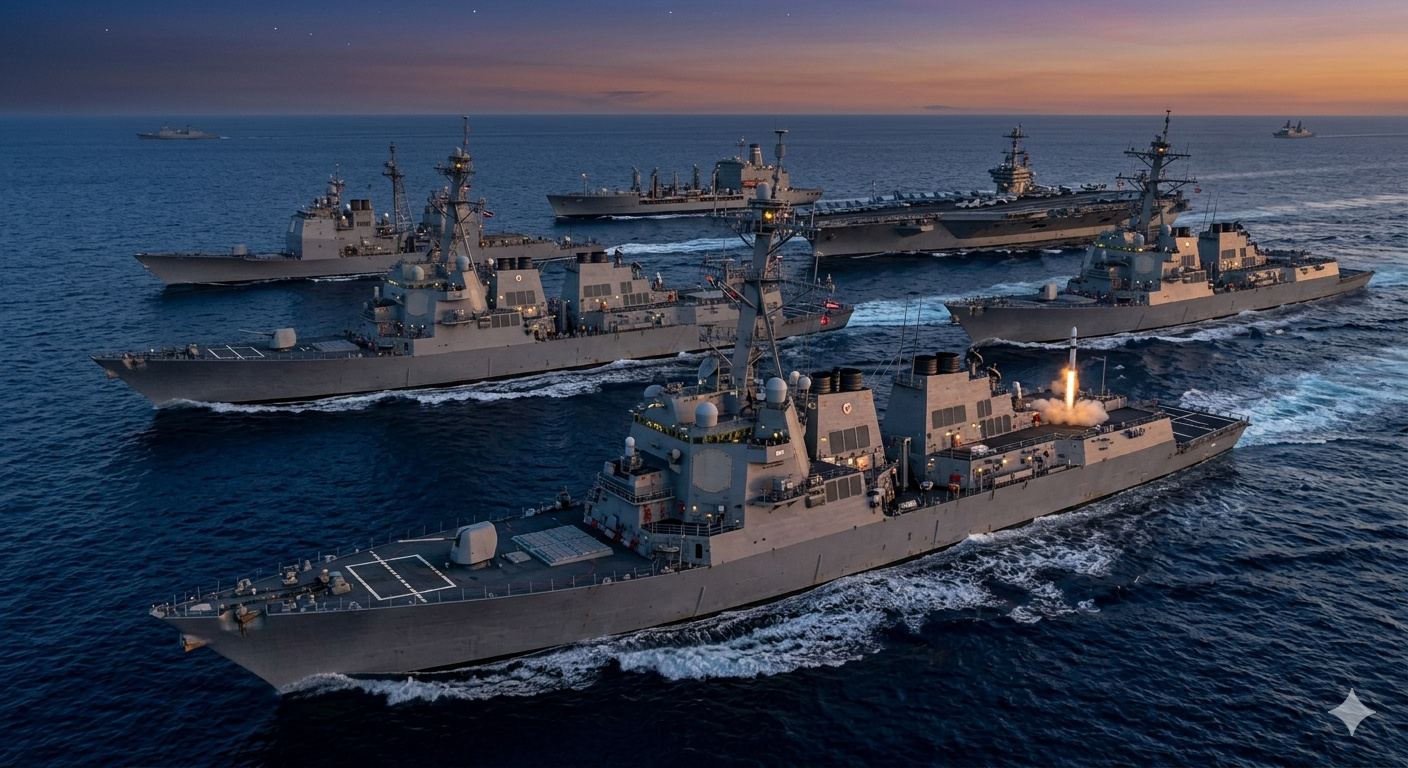
With over 15,000 tons, radars capable of tracking hundreds of targets simultaneously, and more than 120 missiles ready for launch in seconds, modern destroyers cease to be escorts and begin to dominate the naval battlefield.



The solution found by the engineers was to create an extremely lightweight vehicle, but armed with multiple recoiless rifles. The project was developed by Allis-Chalmers, an American company known for manufacturing industrial and military equipment.
The name “Ontos” comes from Greek and means approximately “thing” or “being”, an intriguing name that ended up reflecting the vehicle’s unusual aspect.
The Six 106 mm Recoiless Rifles in the Tank Destroyer
The most impressive element of the M50 Ontos was its armament. The vehicle carried six M40 106 millimeter recoiless rifles, mounted in two sets of three tubes.
These weapons were designed to fire high destructive power anti-tank ammunition. As they were recoiless rifles, some of the explosion gases were released through the rear of the weapon, reducing recoil and allowing installation on lightweight vehicles.
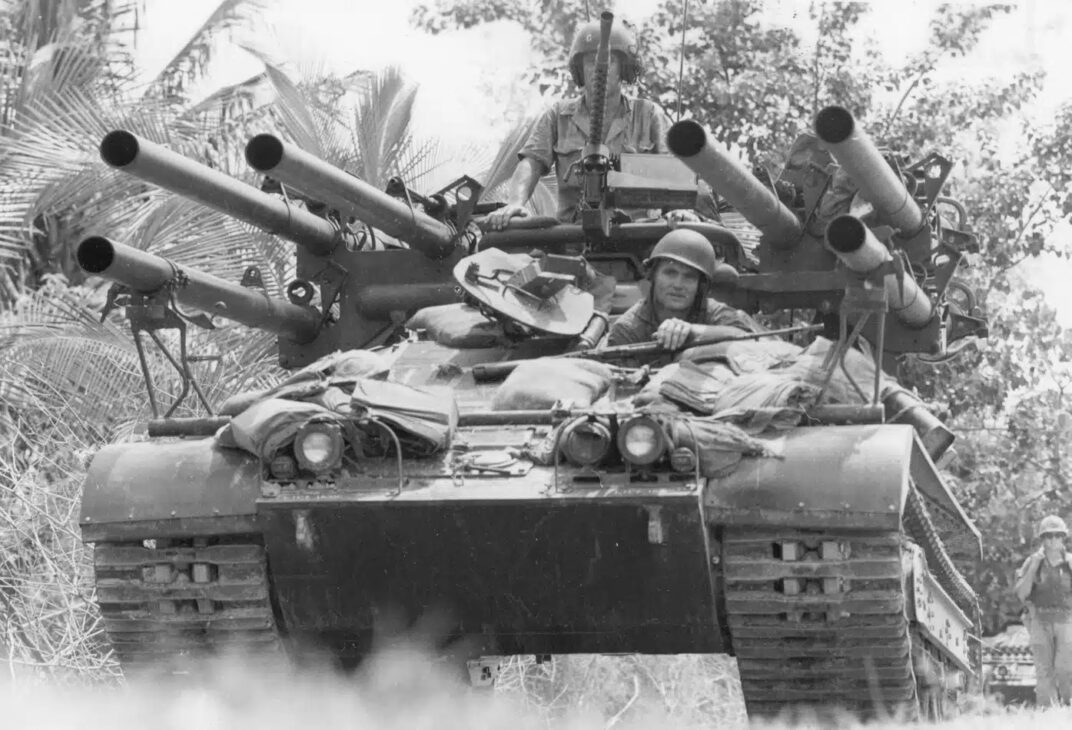
Each rifle had a small .50 caliber spotting rifle, used to help operators adjust the fire. The procedure was simple: first, the spotting rifle was fired, producing a visible impact near the target. Then the operator fired the main cannon with greater precision. This combination allowed the Ontos to hit armored targets at distances greater than 1 kilometer.
Small, Lightweight, and Surprisingly Powerful
Despite carrying heavy armament, the M50 Ontos was a relatively compact vehicle. It weighed about 9 tons, much less than most tanks of the time. Its crew consisted of only three military personnel:
- commander
- driver
- gunner
The engine provided enough power to reach speeds of approximately 48 km/h, allowing the vehicle to move quickly across the battlefield.
This combination of mobility and firepower made the Ontos a potentially effective anti-tank system in ambushes and rapid operations.
The Biggest Problem of the Tank Destroyer With Six Rifles: Reloading the Guns
Despite the advantages, the Ontos design had a significant limitation. After firing its six rifles, the vehicle needed to be reloaded manually. And this reloading could only be done from outside the vehicle, exposing the crew to enemy fire.
In situations of intense combat, this represented a significant risk. After firing all the tubes, the Ontos typically needed to retreat to a safe position before performing the reload.
This limitation was one of the reasons why the vehicle was never considered a definitive solution for anti-tank combat.
Use of the Tank Destroyer With Six Rifles in the Vietnam War
Although the M50 Ontos was primarily designed to destroy tanks, its most intense use occurred in a completely different scenario: the Vietnam War.
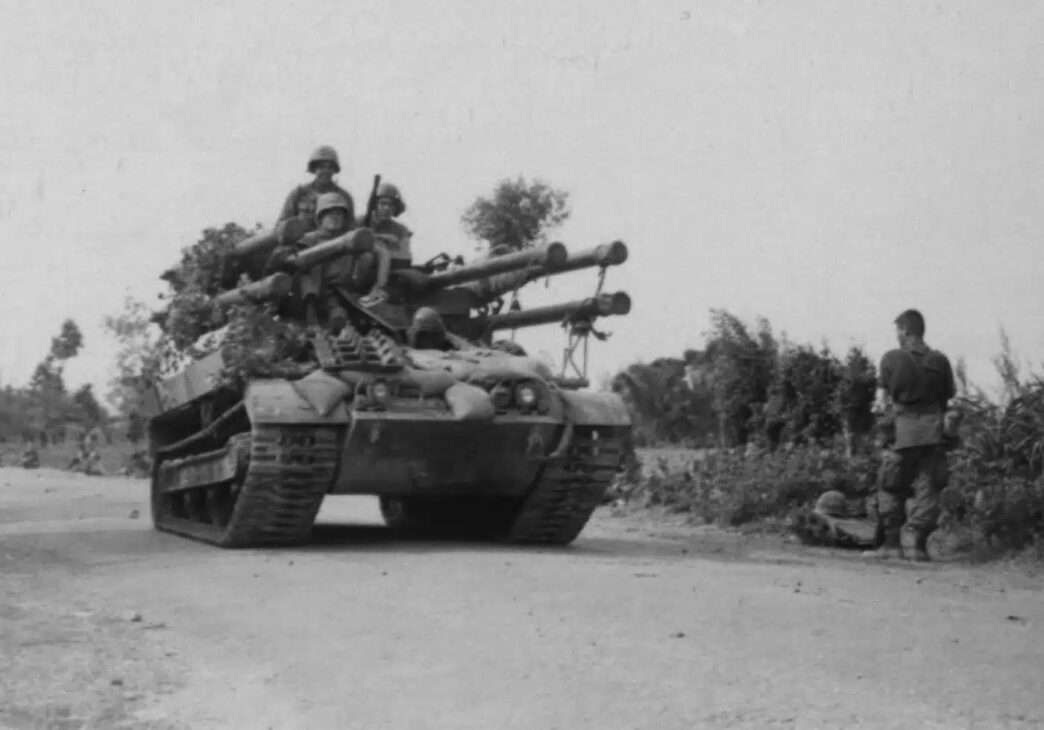
In Vietnam, the United States primarily faced guerrilla forces and camouflaged defensive positions. In this situation, the Ontos revealed an unexpected utility. The six recoiless rifles could fire extremely effective high-explosive ammunition against:
- bunkers
- trenches
- fortified positions
- buildings occupied by enemy troops
In many cases, a single salvo fired by the Ontos was sufficient to completely destroy a defensive position.
For this reason, the Marines began to use the vehicle as a direct infantry support platform, especially in urban combat and attacks on fortifications.
The Role of the M50 Ontos During the Battle of Huế
One of the most striking moments in the Ontos’s career occurred during the Battle of Huế, in 1968, during the Tet Offensive.
During the intense fighting in the Vietnamese city, the Ontos were used to destroy fortified positions occupied by North Vietnamese troops.

Thanks to its concentrated firepower, the vehicle was able to knock down walls, destroy bunkers, and neutralize machine gun positions that hindered the advance of American troops.
Reports from soldiers of the time describe the Ontos as one of the most effective weapons for dealing with fortified positions in urban environments.
Production and Withdrawal of the Tank Destroyer
Between the late 1950s and the early 1960s, about 300 units of the M50 Ontos were produced. Despite its performance in some combat situations, the vehicle had operational limitations that hindered its lasting presence in service. Among the main problems were:
- very light armor
- need to reload weapons externally
- extremely limited internal space
For these reasons, the Marine Corps decided to withdraw the Ontos from service in the early 1970s.
One of the Most Unusual Vehicles in Military History
Even after its withdrawal, the M50 Ontos continues to be remembered as one of the most curious vehicles ever produced for military use.
Its concept of combining six recoiless rifles in a single lightweight vehicle was a bold attempt to increase firepower without increasing the weight of the armor. Although the design did not become standard in the military industry, the Ontos demonstrated that unconventional approaches can lead to effective solutions in certain combat scenarios.
Today, the M50 Ontos remains a fascinating example of the creativity and technological experimentation that marked military projects during the Cold War.









-

Uma pessoa reagiu a isso.