





 Portuguese
  English
  Spanish
  5 min of reading
  0 comments


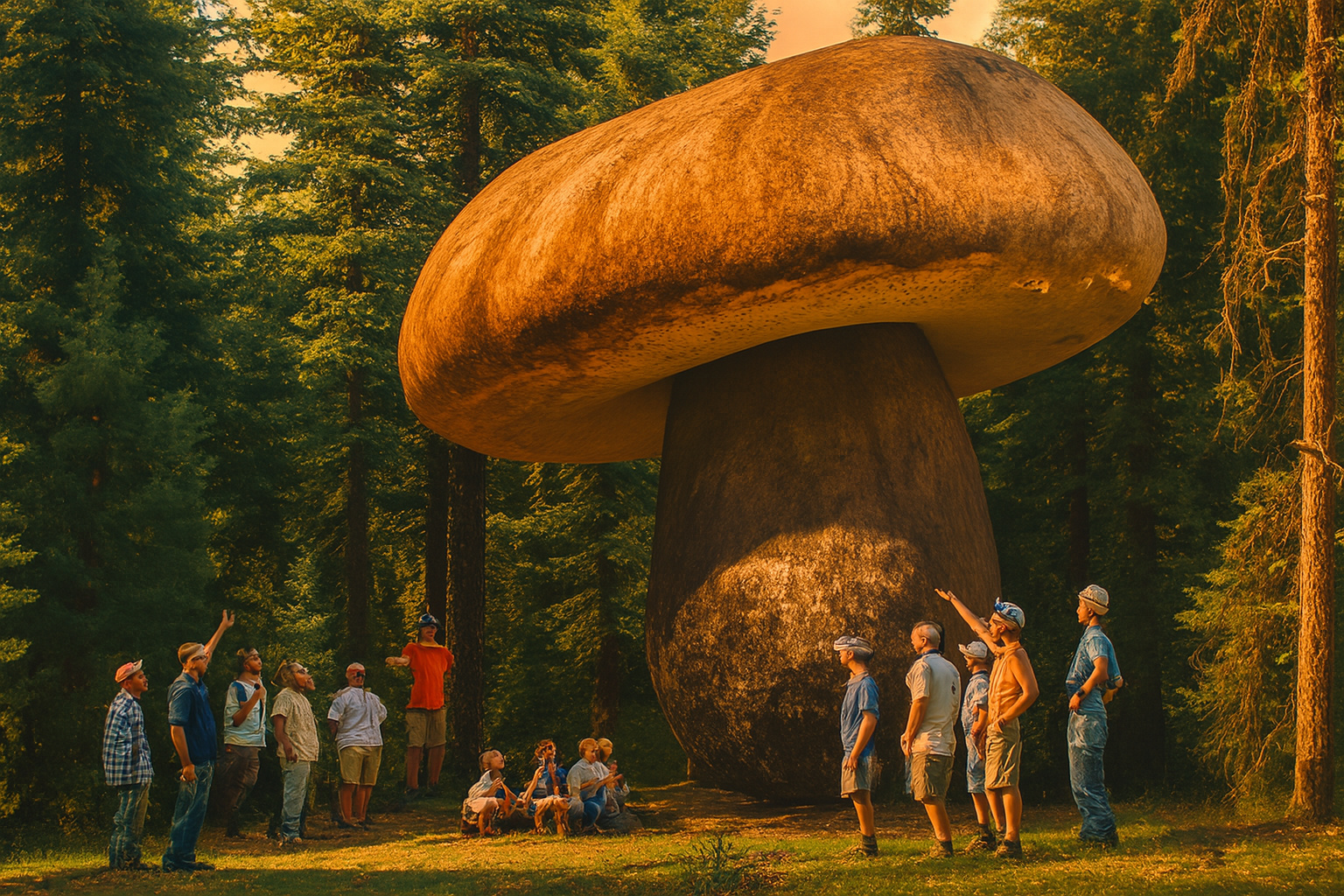
The Largest Living Organism in the World Is Neither a Whale Nor a Sequoia, but the Fungus Armillaria ostoyae, Covering 965 Hectares in Oregon and May Be Up to 8,500 Years Old.
When we think of the largest living being on the planet, it’s common to imagine monumental animals, such as the blue whale, which can reach 30 meters in length, or the legendary California sequoias, with trunks over 11 meters in diameter. But science has revealed an unexpected champion, hidden not in the seas or the skies, but beneath the ground of a forest in the state of Oregon, in the United States.
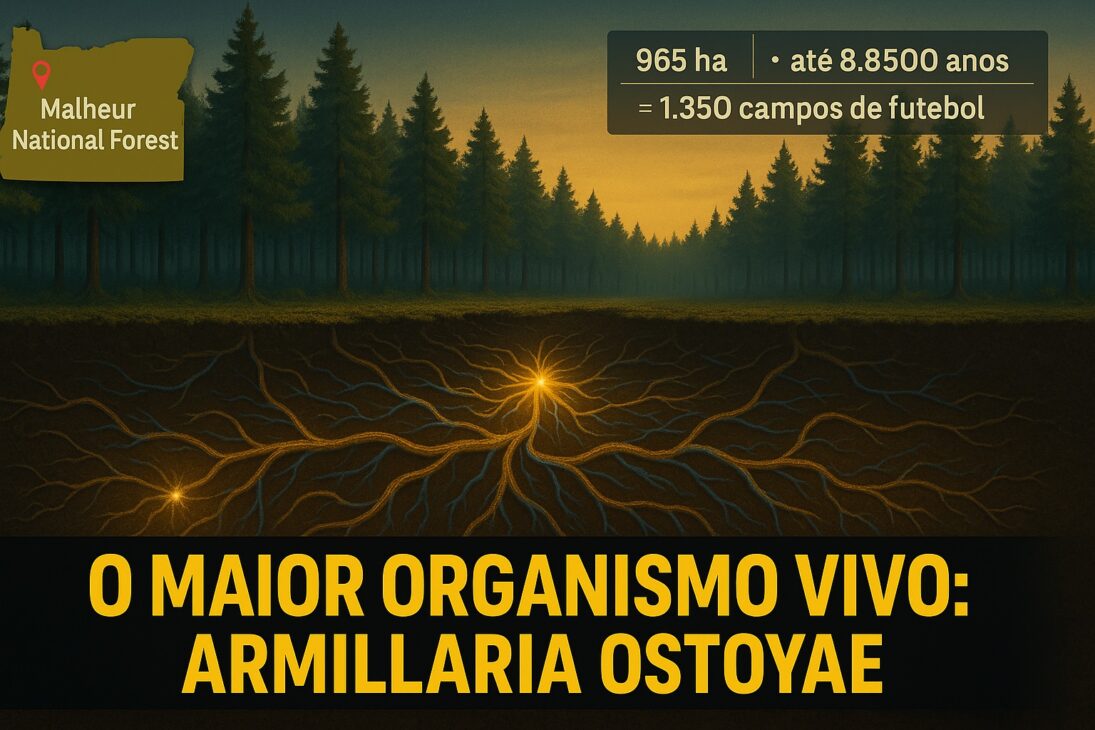
This is the Armillaria ostoyae, a subterranean fungus that covers 965 hectares — equivalent to almost 10 km², an area similar to some entire neighborhoods in São Paulo or Rio de Janeiro, or 1,350 side-by-side football fields. More impressive than its size is its age: it is estimated that this organism may be between 2,400 and 8,500 years, making it not only the largest but also one of the oldest living beings ever identified on Earth.
The Discovery of the “Killer Fungus”
The Armillaria ostoyae was identified in the 1990s by researchers from the U.S. Forest Service, during an investigation into mysterious tree deaths in the Malheur National Forest in Oregon.
-
French “ghost” submarine lost in World War II reappears after more than 80 years on the seabed near the coast of Spain.

-
A simple stitch in wood with nylon thread can reduce adhesives, speed up production, and make sheets up to 4 times stronger and 14 times more difficult to break.

-
The gigantic steel shell built to contain Chernobyl for a century has been pierced by a drone, exposing a critical system and creating a hole that could cost over 500 million euros to repair.

-
Brazilian Navy reaches a new level by taking over an airport with a 1,600-meter runway used by 1,800 military personnel and autonomous attack drone testing.


Initially, scientists believed they were dealing with multiple fungi attacking the roots of the trees, but upon analyzing the DNA of samples collected from different points, they realized something extraordinary: they all belonged to the same organism.
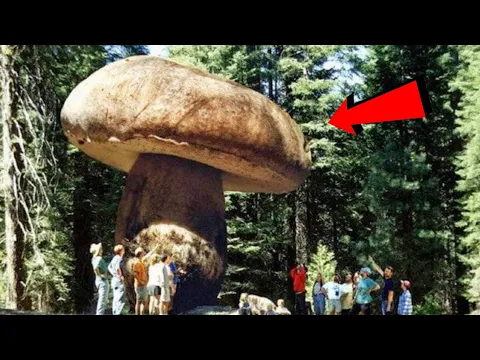

It was a single living being, interconnected by a subterranean network of mycelium — incredibly thin filaments that function like roots and silently spread through the soil, penetrating trees, absorbing nutrients, and often killing the hosts. This characteristic earned it the nickname “killer fungus” (humongous fungus in English, referencing both its size and ecological impact).
How This Organism Works
The visible body of the Armillaria ostoyae consists of small yellowish mushrooms that appear on the surface at certain times of the year. However, its true structure lies underground, where the mycelium spreads in filaments capable of connecting for kilometers.
This subterranean network acts like a primitive nervous system, allowing the fungus to identify nutrient-rich areas and expand its boundaries.
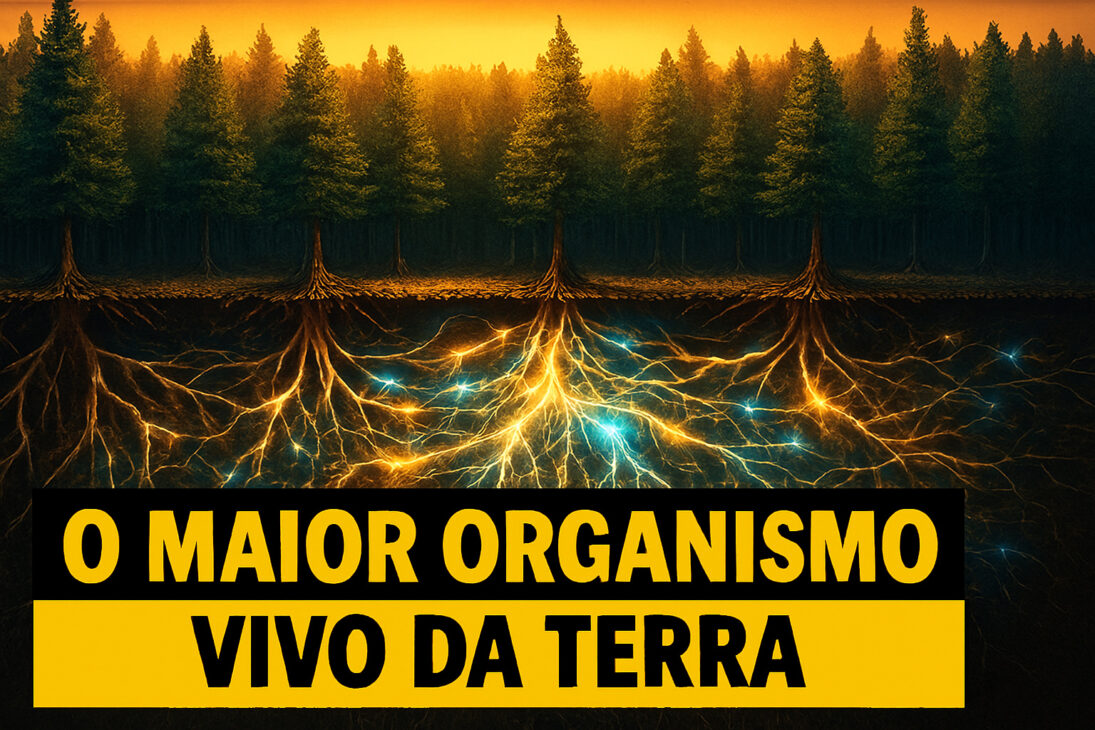
By attaching itself to tree roots, Armillaria releases enzymes that degrade plant tissues, gradually killing the plant and absorbing its resources. It is, at the same time, an essential decomposer for the ecosystem and a mortal enemy for commercial forests.
Colossal Comparisons
To understand the grandeur of this organism, it is enough to compare it with other known giants:
- Total Area: 965 hectares (almost 10 km²). It’s as if the entire neighborhood of Copacabana in Rio de Janeiro were occupied by a single invisible living being.
- Estimated Weight: although difficult to calculate, some scientists suggest that the mycelium may weigh hundreds of tons.
- Age: between 2,400 and 8,500 years, which means that this organism existed before the construction of the Pyramids of Egypt and has survived empires, wars, and climate changes.
In comparison, the blue whale, the largest animal in the world, weighs about 180 tons and can live up to 90 years — nothing compared to the scale of Armillaria. Even the majestic sequoias, which exceed 3,000 years, seem small next to an organism possibly older and much more extensive.
Ecological Importance of Armillaria
Despite its “killer” reputation, the fungus plays a vital role in maintaining ecological balance:
- Nutrient Recycling: by decomposing roots and trunks, it returns carbon and minerals to the soil.
- Natural Selection: eliminates weakened trees, making room for the growth of new species.
- Forest Control: helps maintain the ecosystem’s life cycle, even if with negative impacts for human timber exploitation.
On the other hand, when present in reforestation areas or commercial plantations, Armillaria can become a nightmare. Species such as pines and firs are especially vulnerable, and the spread of the fungus can cause millions of dollars in losses to the timber industry.
The Debate on the “Largest Organism in the World”
The discovery of Armillaria ostoyae in Oregon raised scientific discussions about what defines an organism. This is because mycelium is made up of billions of cloned cells that share the same DNA and act in a coordinated manner.
Unlike colonies of insects, such as ants or bees, which also impress by size, the fungus is considered a single individual precisely because of its genetic uniformity and physical interconnection.
Other candidates for the title of “largest living organism” have also been pointed out, such as Pando, a forest of aspens in the United States where all trees share the same root system. However, in territorial extent, Armillaria ostoyae remains unbeatable.
An Ancient Being in the Face of Climate Change
The fact that Armillaria has existed for thousands of years makes it a true witness to the planet’s history. It has survived glaciations, prolonged droughts, and profound climate transformations. Now, it faces an even greater challenge: human interference.
With the advancement of climate change, the behavior of fungi like Armillaria may become even more aggressive, expanding their range and threatening tree species in different parts of the world.
Researchers are already observing signs of expansion in warmer forests, which could cause ecological imbalances on a global scale.
Scientific and Cultural Fascination
The grandeur of this organism has sparked interest not only from science but also from popular culture.
The “killer fungus” has been the subject of documentaries, reports, and even debates on natural intelligence. Its mycelium network resembles, in many ways, communication systems, leading some scientists to suggest parallels with the natural internet of forests.
In literature and cinema, giant subterranean fungi appear in science fiction stories, often inspired by discoveries such as that of Armillaria ostoyae.
Timeline of the Invisible Giant
- 1990s: researchers identify abnormal tree mortality in the Malheur National Forest.
- 1992–1998: DNA analyses reveal that the same fungus is behind the large-scale destruction.
- 2000: Armillaria ostoyae is officially recognized as the largest living organism on Earth.
- Present: continues to be studied as a key to understanding the resilience of ecosystems and the impacts of global warming.
The Legacy of the Largest Living Organism
More than a scientific curiosity, Armillaria ostoyae is a reminder that life takes surprising forms. Invisible to the naked eye but colossal in scale, it shows that the greatest does not need to be visible and that the grandeur of nature lies in details often overlooked.
While whales and sequoias impress with their beauty and grandeur, the subterranean fungus of Oregon fascinates with its silent resilience, its almost unimaginable reach, and its ability to survive for thousands of years beneath our feet.






-

-

2 pessoas reagiram a isso.