





 Portuguese
  English
  Spanish
  5 min of reading
  0 comments


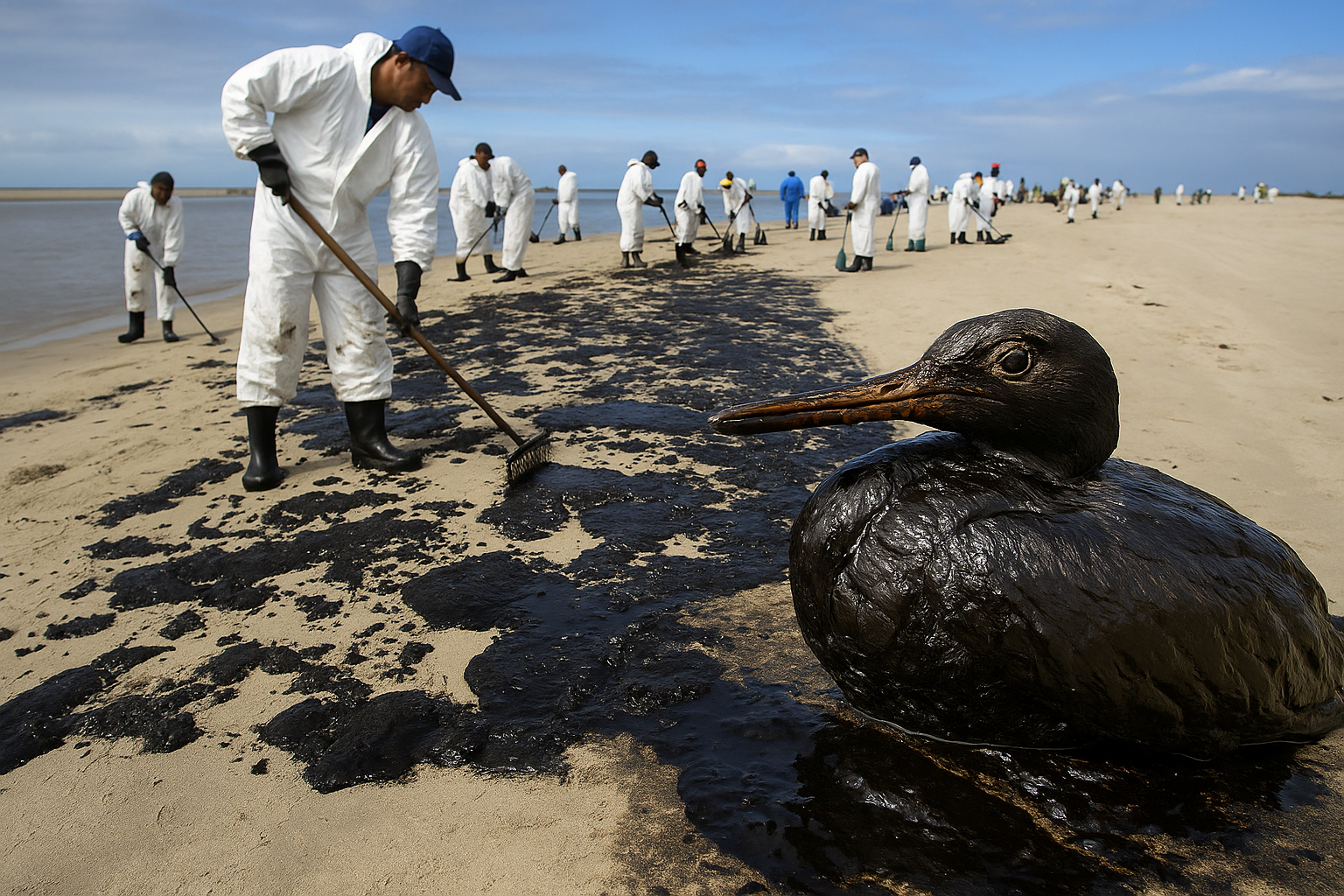
The Largest Oil Spill in History, Caused by the Deepwater Horizon Explosion, Dumped 4.9 Million Barrels into the Gulf of Mexico and Killed More Animals than Chernobyl. Learn About the Environmental and Human Impacts of the Disaster.
The largest oil spill in modern history did not occur in the Middle East, nor on outdated rigs. It happened in the heart of the high-tech offshore exploration of the United States, in the Gulf of Mexico. In 2010, the explosion of the Deepwater Horizon rig, operated by BP, resulted in an unprecedented environmental disaster, with 4.9 million barrels of crude oil spilling into the ocean over 87 days. The world’s largest oil spill left a trail of destruction that surpassed, in terms of impact on marine life, even the Chernobyl disaster, which occurred in 1986.
What Was the Deepwater Horizon Disaster: The Largest Oil Spill in the World


The Deepwater Horizon was a cutting-edge semisubmersible drilling rig, operated by Transocean and contracted by BP (British Petroleum). On April 20, 2010, a catastrophic explosion during operations at the Macondo well, 1,500 meters deep, resulted in the deaths of 11 workers and the onset of what would become the largest oil spill in the world in deep waters.
The explosion generated a fire that consumed the rig for two days until it sank, rupturing the well’s safety system and allowing continuous oil release.
-
A study confirms that the natural gas sector will reduce greenhouse gas emissions in Brazil by 0.5% and accelerate the energy transition by 2026.

-
Petrobras implements a severe adjustment and confirms a 55% increase in the price of aviation kerosene with a proposal for installment payments for the companies.

-
The rise in oil prices could ensure an extra revenue of R$ 100 billion for the Federal Government, indicates a recent economic study.

-
Naturgy begins an investment of R$ 1.6 million to expand the gas network in Niterói and benefit thousands of new residences and businesses.


How Much Oil Was Spilled?
According to the U.S. Geological Survey (USGS) and the National Oceanic and Atmospheric Administration (NOAA), approximately 4.9 million barrels of oil were dumped into the sea between April and July 2010. For comparison, this volume is equivalent to more than 780 million liters, or enough to fill approximately 310 Olympic-sized swimming pools with highly toxic crude oil.
This volume places the Deepwater Horizon disaster as the largest oil spill in history in marine waters, surpassing previous incidents such as the Exxon Valdez (1989) and the spill in the Persian Gulf during the Gulf War (1991).
Environmental Impacts: The Largest Oil Spill is Considered a Catastrophe for Marine Life
The oil spill from the Deepwater Horizon had devastating effects on the marine ecosystem of the Gulf of Mexico. Thousands of species were exposed to crude oil and the chemical dispersants used to contain the spill.
Among the impacts recorded by official agencies and environmental NGOs:
- More than 100,000 dead seabirds, including pelicans, gulls, and sandpipers.
- At least 5,000 affected sea turtles, many of which died from asphyxiation or poisoning.
- It is estimated that more than 65,000 dolphins and whales were exposed to oil, with hundreds of confirmed deaths.
- Massive destruction of coral reefs, mangroves, and fish spawning areas.
- Drastic declines in populations of bluefin tuna, shrimp, crabs, and other commercial species.
The NOAA classified the disaster as “the worst mass environmental impact ever recorded in U.S. history in a marine environment.”
Chemical Dispersants: Solution or New Problem?
In an attempt to control the spill, approximately 7 million liters of Corexit chemical dispersants, manufactured by Nalco, were released into the ocean. Although these compounds reduced the visible stain on the surface, they broke the oil into microdroplets, making it harder to remove and more readily absorbed by fish and plankton.
Researchers from the University of Georgia and Louisiana State University warned that the indiscriminate use of dispersants may have amplified ecological damage, as these products are toxic to marine organisms and potentially carcinogenic to humans.
Comparison with Chernobyl: An Even Greater Disaster for Animals?
The Chernobyl disaster in Ukraine in 1986 is remembered as one of the worst nuclear accidents in history, with a lasting impact on human health and environmental contamination. However, experts from the National Wildlife Federation point out that, in terms of immediate biodiversity loss, the Deepwater Horizon oil spill killed more animals in the short term.
This is due to the fact that oil directly affects the breathing, locomotion, and feeding of hundreds of species. While many animals were able to evacuate the Chernobyl area or were isolated by human measures, marine creatures had nowhere to escape from the oil slick.
Human and Economic Impacts
Destroyed Fishing Industries
The Gulf of Mexico is one of the richest fishing regions in the United States. With the spill, thousands of fishermen were forced to stop their activities. It is estimated that the sector lost more than US$ 2.5 billion in the three years following the disaster.
Collapsed Tourism
The beaches of Louisiana, Alabama, Florida, and Mississippi, famous for coastal tourism, were hit by oil stains. The tourist flow dropped dramatically, causing losses of over US$ 23 billion for hotels, restaurants, and local services.
Population Health
Workers who participated in containing the spill and residents of coastal areas reported respiratory diseases, nausea, skin problems, and neurological symptoms. Subsequent research suggests that dispersants and inhaled oil may have long-term effects that are not yet fully understood.
Accountability and Lawsuits
BP was found to be primarily responsible for the disaster. In 2015, the company agreed to pay more than US$ 20 billion in fines, compensation, and remedial measures, in the largest environmental settlement in U.S. history.
Other companies involved, such as Halliburton and Transocean, were also fined for failures in safety systems and emergency response. The U.S. judiciary classified BP’s conduct as “grossly negligent,” highlighting cost-cutting and technical errors that led to the explosion.
Lessons Learned (or Not): Has the Industry Changed?
After the Deepwater Horizon disaster, the U.S. government implemented stricter measures for offshore exploration, such as:
- Advanced safety requirements for safety valves (blowout preventers).
- Increased environmental monitoring and public transparency.
- Establishment of the Bureau of Safety and Environmental Enforcement (BSEE) to oversee platforms.
However, experts warn that many risky practices persist, especially with the return of economic pressures on the sector. The search for oil in deep waters continues, and new wells are being drilled at depths greater than 3,000 meters.
Could the Largest Oil Spill in the World Repeat Itself?
Unfortunately, yes. Exploration in ultra-deep waters, in regions such as the Brazilian Pre-salt, the Arctic, and the Gulf of Guinea presents similar or even greater risks. In all these cases, the technologies involved are complex, the environments are fragile, and emergency response systems are still limited.
According to the Environmental Defense Fund, the only way to prevent another similar disaster is to reduce global dependence on oil and invest massively in renewable energy sources.
The Deepwater Horizon disaster went down in history not only as the largest oil spill ever but as a brutal warning about the limits of unchecked natural resource exploitation. More than a decade later, its impacts are still felt in the environment, economy, and health of coastal populations.
Although regulatory advancements have been achieved, the risk remains, and the only way to ensure such catastrophes do not recur is through a structural change in the global energy matrix — something that, unfortunately, is still progressing slowly.






-

-

-

-

7 pessoas reagiram a isso.