





 Português
  Inglês
  Espanhol
  4 min de leitura
  0 comentários


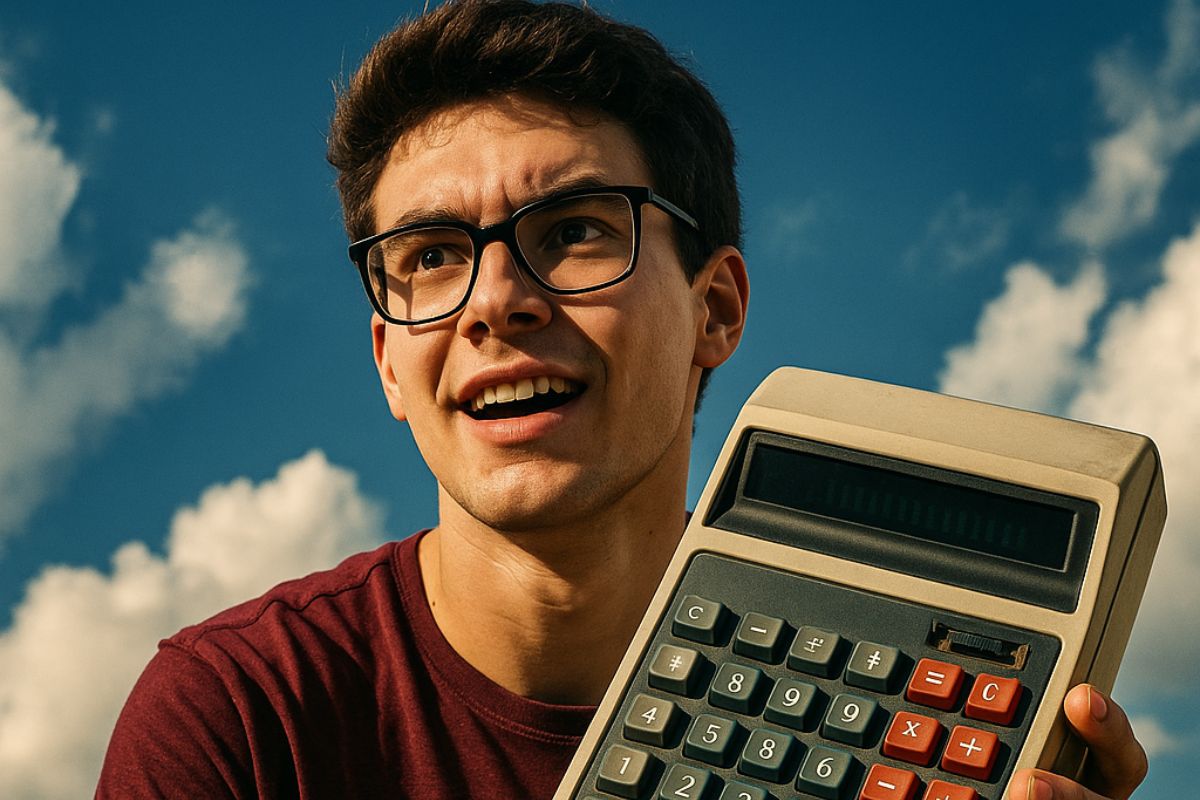
The Trajectory of Blaise Pascal Shows How a Gifted Boy Left Geometry and Physics to Shape Philosophy.
In the 17th century, a gifted boy from France surprised the scientific Europe: at 19, Blaise Pascal created one of the first functional mechanical calculators, the Pascaline, while advancing in geometry, hydrostatics, and the foundations of probability theory. The achievement was not only technical but social, bringing arithmetic from the blackboard to the office and proving that mental processes could be mechanized.
Years later, Pascal himself redefined the relationship between reason and transcendence. Between a mystical experience known as the “Night of Fire” and the famous “Wager”, he argued that the human mind needs distinct methods to reach physical truths and ultimate truths. At the center of this turning point was the thesis that “the heart has its reasons which reason knows not”.
From Childhood to Experiment: The Forging of a Restless Genius
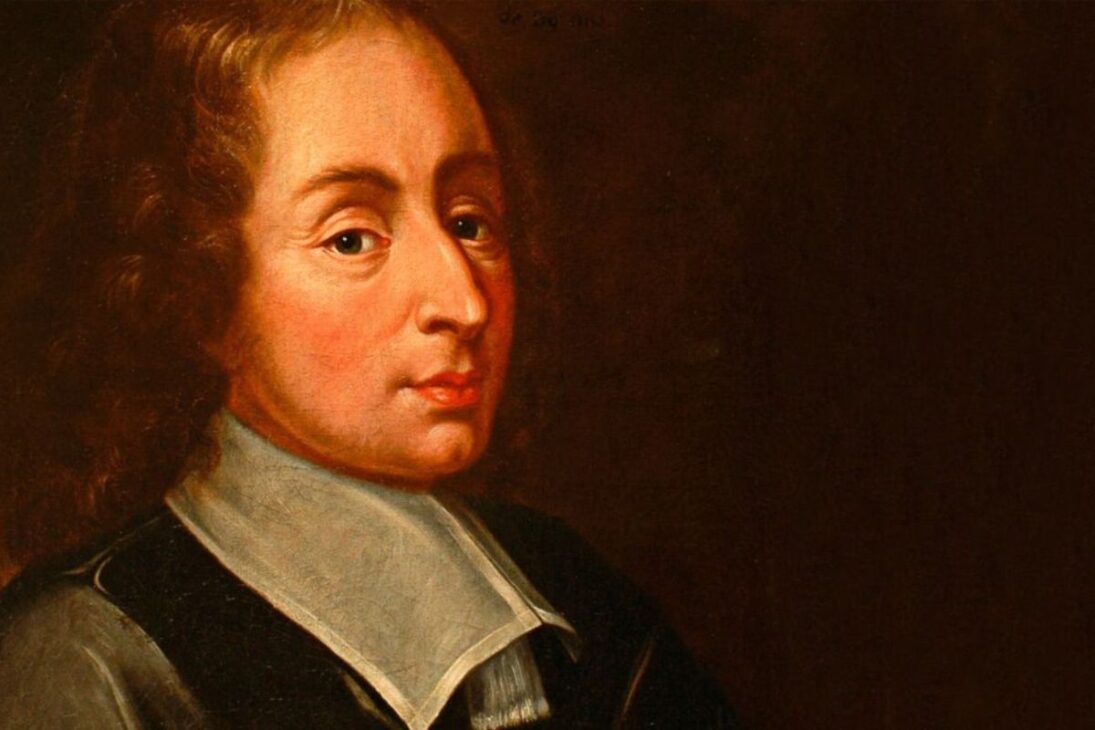
Son of the magistrate and amateur mathematician Étienne Pascal, Blaise grew up in an environment of discipline and curiosity. The father tried to delay the boy’s contact with mathematics and ended up producing the opposite effect. Even as a child, Pascal reconstructed Euclid’s propositions on his own, revealing an intelligence that combined intuition and formalism.
-
Drought may be creating stronger superbugs in the soil and helping antibiotic resistance reach hospitals, warns a study highlighting a problem that could grow alongside extreme weather.

-
The biggest scam in history: Napoleon’s France deceived the United States by selling them a territory that was Spanish.
-
Why is the Danakil Desert so dangerous? It has unstable terrain and how extreme temperatures and toxic gases turn the region into one of the most hostile environments on Earth.

-
With a height of 221 meters and a capacity for trillions of liters, Hoover Dam still holds a trick that makes water defy logic.

By 14, he was already attending the Académie Mersenne, the epicenter of debates with names like Desargues, Roberval, and Gassendi.
From this companionship, original syntheses were born: the theorem of the mystic hexagram (foundation of projective geometry) and, later, correspondence with Fermat that would pave the way for probability theory, a tool that would change science, economics, and decision-making.
The Pascaline: When Calculation Became Machine (and Business)
Between 1642 and 1645, motivated by his father’s “exhaustive calculations” in tax collection, the gifted boy designed and built the Pascaline.
The machine added and subtracted using cogs and an ingenious carry mechanism (sautoir), translating arithmetic rules into precise gear movements.
It took dozens of prototypes to achieve reliability and obtain royal manufacturing privilege. Even without becoming a commercial success, the Pascaline inaugurated something greater: the idea that thought operations could be automated.
From the desktop calculator to modern computing, the founding gesture lies in the calculation in hardware.
From Vacuum to Pressure: The Physics That Destroyed Dogmas
In “New Experiments on the Vacuum,” Pascal confronted the horror vacui of Aristotle with public demonstrations, barometers, and method.
The decisive proof came from the Puy-de-Dôme experiment: as he climbed the mountain, the mercury column dropped, evidencing atmospheric pressure and the weight of air.
This experimental program led to the Pascal Principle: the pressure applied to a confined fluid is transmitted entirely, laying the foundation for hydraulic presses and syringes.
It was not just elegant theory: it was applicable science, capable of generating technology and solving concrete problems.
The Inner Turn: “Night of Fire” and the Reasons of the Heart
In 1654, after a traumatic accident and a mystical experience recorded in the Mémorial, Pascal shifted his focus.
He did not abandon reason but redefined its limits. In the Lettres provinciales, he used sharp prose to criticize loose casuistry, combining logical clarity and moral responsibility.
In the Pensées, he began to explore the human condition between two infinities: that of the cosmos and that of the atom. We are “thinking reeds”: fragile, yet aware.
Probability and Risk: When Mathematics Meets Decision
In dialogue with Fermat and games of chance, Pascal helped found the logic of probabilities. Later, he took this tool to the frontier of the metaphysical.
It is not proof; it is decision under uncertainty, an initial outline of what we now call decision analysis.
The gifted boy who built a calculator transformed doubt into method: where science measures, reason decides; where reason does not decide, the heart guides. It was a coherent intellectual architecture uniting laboratory, typography, and chapel.
Legacy: A Unified Project, Not a Split Life
Pascal died at 39, but left measurement units, machines, arguments, and pages that remain relevant today.
From projective geometry to Pensées, the thread is the search for hidden order in numbers, fluids, or human dilemmas.
For today’s readers, his lesson is straightforward: use the best tool for each type of truth. When data speaks, calculate.
When data is lacking and consequences abound, decide. When the question is about meaning, make space for the “reasons of the heart”.
The biography of Blaise Pascal shows how a gifted boy transformed calculation into machine, doubt into method, and into conscious choice.
His work invites us to not confuse the limits of reason with the weakness of reason, nor reduce humanity to what fits in gears or formulas.
And you? In what moments of life do you trust the numbers and in what do you listen to the heart? Would the Wager make sense in your decisions? Share in the comments how you balance method, risk, and belief in your day-to-day; we want to hear real experiences from those who live this dilemma in practice.









Seja o primeiro a reagir!