





 Português
  Inglês
  Espanhol
  3 min de leitura
  2 comentários


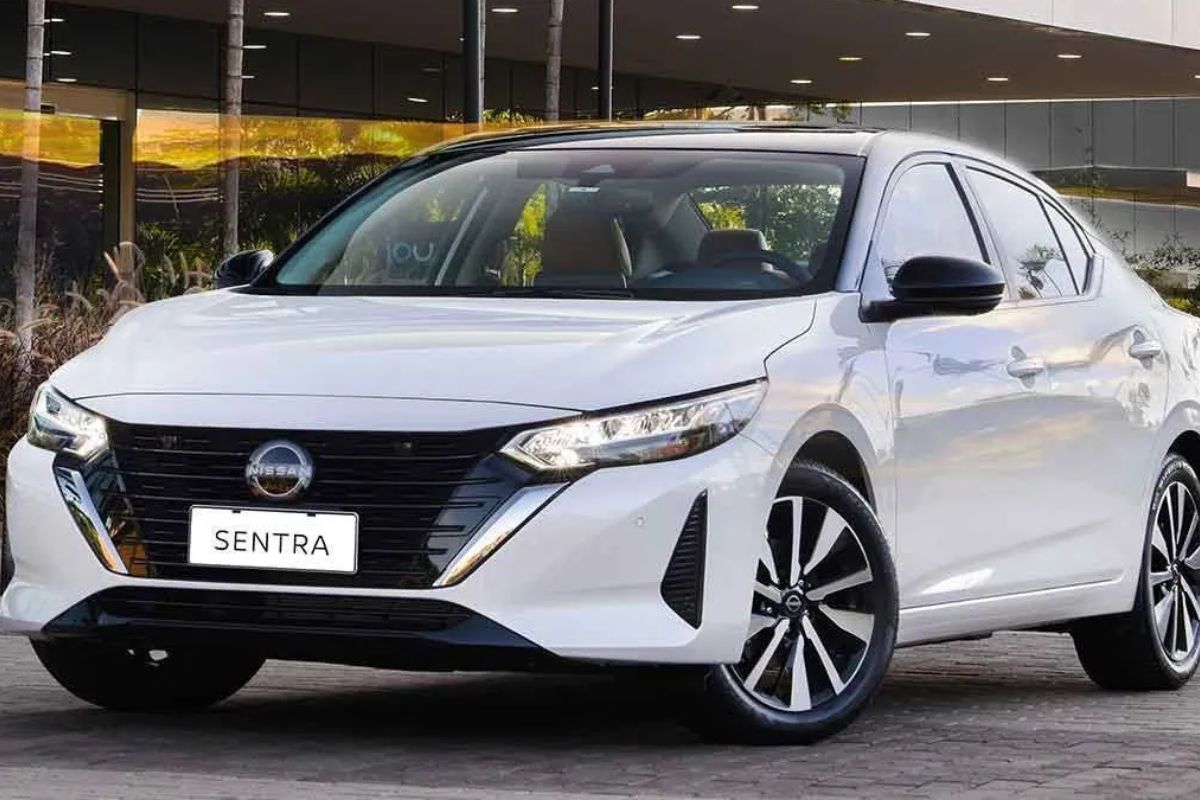


With 151 HP and Focus on Comfort, the New Sentra Uses the Apparent Reliability of a Traditional Engine to Face the Power of the Jetta and the Unmatched Efficiency of the Corolla.
In an increasingly turbocharged and hybrid engine-dominated market, Nissan made a bold bet with the new Sentra: to maintain a naturally aspirated 2.0 engine. The strategy aims to attract more conservative consumers, who seek the supposed reliability of a well-known technology, to compete head-on with the leaders in the midsize sedan segment.
The new Sentra positions itself as an alternative for comfort and a good equipment package, but faces the challenge of justifying its mechanical choice against the power of the Volkswagen Jetta and, mainly, the efficiency and low ownership cost of the unbeatable Toyota Corolla.
The Sedan Battlefield in 2025: Corolla Reigns, but the Fight for Vice-Leader Heats Up
The midsize sedan segment remains strong in Brazil. In 2024, the Toyota Corolla was the absolute leader, with an impressive 63% market share. In this scenario, the new Sentra managed to establish itself as the second place, capturing 10% of sales.
-
The world’s first octopus farm wants to open in the Canary Islands and is already provoking an international reaction: the plan aims to produce 3,000 tons per year.

-
Drought may be creating stronger superbugs in the soil and helping antibiotic resistance reach hospitals, warns a study highlighting a problem that could grow alongside extreme weather.

-
The biggest scam in history: Napoleon’s France deceived the United States by selling them a territory that was Spanish.

-
Why is the Danakil Desert so dangerous? It has unstable terrain and how extreme temperatures and toxic gases turn the region into one of the most hostile environments on Earth.


However, the beginning of 2025 brought a new and strong competitor. The Chinese hybrid sedan BYD King, in its first full month of sales in February, has already surpassed the Sentra, showing that the fight for vice-leadership will be intense and that hybrid technology has become a major attraction.
Nissan’s Strategy: The 2.0 Naturally Aspirated Engine with 151 HP in the New Sentra

Nissan’s weapon for this battle is the third-generation 2.0-liter naturally aspirated engine with direct fuel injection. It delivers 151 HP of power and 20 kgfm of torque, powered exclusively by gasoline. The unit works with a CVT automatic transmission that simulates 8 gears.
The performance is adequate for daily use. The new Sentra accelerates from 0 to 100 km/h in 9.4 seconds. Fuel consumption is also respectable for a 2.0 engine, recording 11 km/l in the city and up to 14 km/l on the highway. The brand bets that the familiarity of this type of engine will attract customers who are still skeptical about turbo and hybrid systems.
The Power of the Jetta and the Efficiency of the Corolla
The competitors of the new Sentra rely on very different strategies. The Volkswagen Jetta GLI focuses on the performance niche. Its 2.0 turbo engine delivers 231 HP, making it a true sports sedan, with an acceleration from 0 to 100 km/h in just 6.7 seconds.
On the other hand, the Toyota Corolla bets all its chips on efficiency. Its hybrid version, the best-selling, combines a 1.8 flex engine with an electric motor, delivering a combined power of 122 HP. The performance is more restrained, but fuel consumption is exceptional, reaching 17.5 km/l in the city with gasoline.
What Do Owners Say About Each Model?
The idea that the Sentra’s naturally aspirated engine is more reliable needs to be analyzed carefully. The most common complaints from new Sentra owners do not refer to the engine, but rather to noises in the electric steering box and the difficulty of finding spare parts.
Data from the North American market shows that the Corolla continues to be the reliability champion. The Jetta, on the other hand, although it has a robust engine, suffers from a chronic problem in Brazil: the theft of the front radar module (ACC), an expensive part that can cost over R$ 7,000 to replace.
Analysis of Purchase Cost and Depreciation


The acquisition price of the new Sentra Exclusive, at R$ 178,390, is competitive. It is positioned below the Corolla Altis Hybrid (R$ 199,990) and well below the Jetta GLI (R$ 245,390). However, the most important factor in long-term ownership cost is depreciation.
And in this regard, the Corolla’s victory is overwhelming. According to projections, the Toyota sedan depreciates only 5.4% in its first year of use. The Nissan Sentra, on the other hand, loses 15.1% of its value in the same period. This difference means that, in the end, the total cost of owning a Corolla is significantly lower, even though it is more expensive at the time of purchase.









Adquiri um Sentra 2025 em Julho do ano passado .
O carro me surpreendeu , tendo em vista que tinha dois carros turbo anteriormente.
Bom desempenho , muito bom de acabamento e conforto .
Além de fazer médias de consumo , fora de padrão pelo tamanho do carro.
Recomendo a compra .
Olha, o único item que eu vejo reclamarem demais no Sentra, é o sistema de freio de estacionamento no pé.
Tirando isso, você encontra a versão Advanced Zero km por R$ 138.000,00.
Acompanhei a desvalorização do modelo, anos 2023, 2024 e eles caíram de valor em média 13%, pois você encontra seminovos pouco rodados por R$ 120.000,00.
Só que, essa desvalorização maior se dá apenas no 1° ano e é normal na grande maioria dos carros comercializados no Brasil.
Tirando alguns detalhes, muito provavelmente o Sentra Advance é o melhor carro em custo benefício do mercado.
Olha, na “minha opinião” se você ainda nem comprou um carro e já está pensando em quando vai revender ele, tem algo muito errado lhe acometendo.
Eu compro carro pra usar no dia a dia e procuro mais por modelos que me proporcionem conforto.
Dito isso, coloco o Sentra Advance muito a frente da maioria dos carros nessa faixa de preços.