





 Português
  Inglês
  Espanhol
  3 min de leitura
  6 comentários


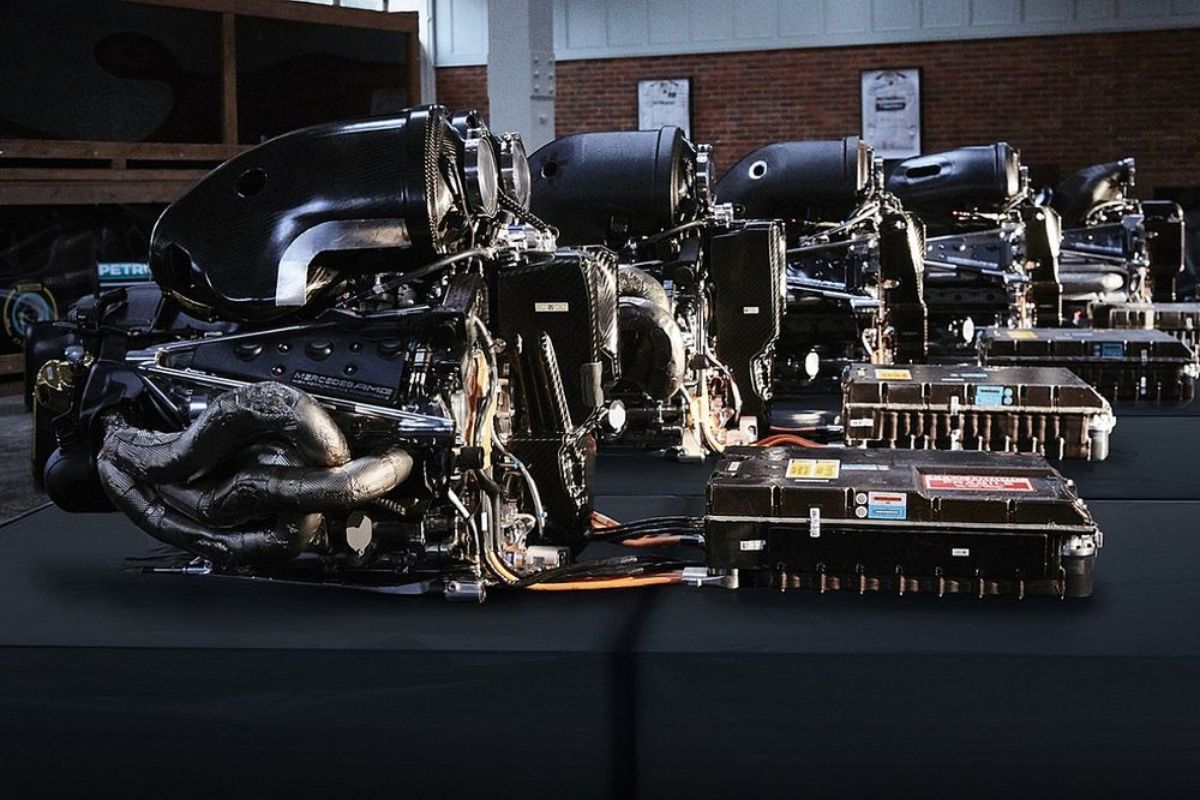


Understand The Technology Behind The Most Efficient Machine In The World The V6 Turbo Hybrid That Will Be Simplified In 2026 And Why, Despite Being Amazing, You Won’t See It In Your Street Car
The engine of a Formula 1 car is undoubtedly the most efficient machine in the world when it comes to converting fuel into power. While a regular car engine utilizes about 30% to 35% of the energy from gasoline, the power unit of a modern F1 exceeds the 50% thermal efficiency mark. An impressive engineering feat.
This extraordinary efficiency is the result of an extremely complex hybrid technology introduced in 2014. It combines a V6 Turbo Internal Combustion Engine with two energy recovery systems, known as MGU-H and MGU-K. However, this technology, which will peak in 2025, already has a date set for simplification in a major revolution that F1 is preparing for 2026.
The 2014 Hybrid Power Unit, The 1.6L V6 Turbo And Its 1000 Horses
Since 2014, Formula 1 has been using a power unit (PU) that is much more than just an engine. The system comprises a 1.6-liter turbocharged V6 Internal Combustion Engine (ICE), coupled with an advanced energy recovery system.
-
The world’s first octopus farm wants to open in the Canary Islands and is already provoking an international reaction: the plan aims to produce 3,000 tons per year.

-
Drought may be creating stronger superbugs in the soil and helping antibiotic resistance reach hospitals, warns a study highlighting a problem that could grow alongside extreme weather.

-
The biggest scam in history: Napoleon’s France deceived the United States by selling them a territory that was Spanish.

-
Why is the Danakil Desert so dangerous? It has unstable terrain and how extreme temperatures and toxic gases turn the region into one of the most hostile environments on Earth.


Together, these components generate a combined power output exceeding 1,000 horsepower. The internal combustion engine is responsible for about 820 hp, while the electric system, called MGU-K, adds an extra boost of approximately 162 hp, making these cars true power monsters.
Surpassing 50% Efficiency Of Mercedes Against 35% Of A Regular Car
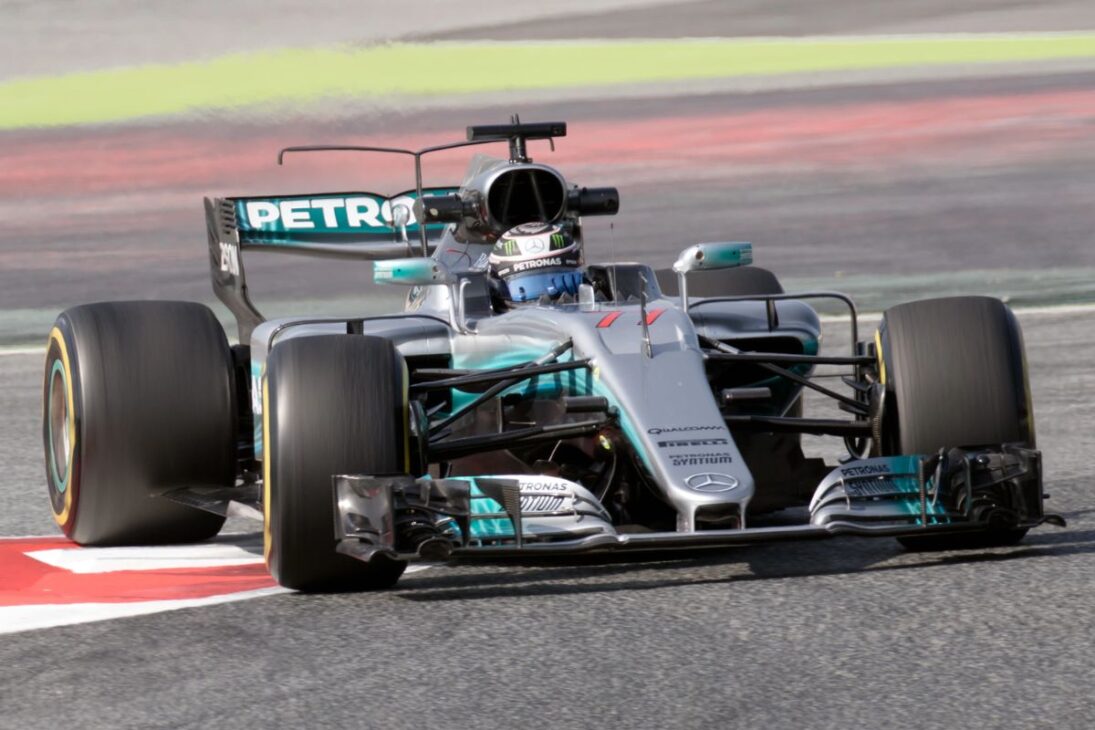
What makes the F1 engine the most efficient machine in the world is its ability to harness the heat from fuel. Thermal efficiency measures how much of the gasoline’s energy is converted into motion, rather than being lost as heat. In this aspect, F1 is unbeatable.
The Mercedes-AMG team, for example, announced that its M08 EQ Power+ power unit achieved an efficiency of over 50%. This is a gigantic leap compared to the 30% to 35% of a street car engine. Even a very efficient road hybrid, like the Toyota Prius, achieves about 42% efficiency.
MGU-H And MGU-K, The Systems That Recover Energy From Heat And Braking
The key to this efficiency lies in two components: the MGU-H and the MGU-K.
The MGU-H (Motor Generator Unit – Heat) is connected to the turbocharger. It recovers energy from the heat of the exhaust gases, which would otherwise be wasted, and transforms it into electricity. Additionally, it eliminates the “turbo lag,” ensuring instant power. It can rotate at an impressive 125,000 rpm.
The MGU-K (Motor Generator Unit – Kinetic) is connected to the crankshaft of the engine. During braking, it recovers kinetic energy and stores it in the battery. During acceleration, it acts as an electric motor, providing an extra boost of 162 horsepower for the driver.
The 2026 Revolution, Why Will Formula 1 Remove The MGU-H?
Despite being an engineering marvel, the MGU-H will be removed from F1 engines starting in 2026. The main reason is its prohibitive cost. The complexity and high development cost of the MGU-H were a barrier for new manufacturers, like Audi, to enter the category.
To compensate for the loss of power and increase focus on electrification, the MGU-K will triple its power, increasing from 120 kW to 350 kW (about 470 hp). The idea is that by 2026, the power will be equally split: 50% coming from the internal combustion engine and 50% from the electric system.
Most Efficient Machine In The World Will Have 100% Renewable Fuels Starting In 2026
The other major change for 2026 is the commitment to sustainability. Formula 1 will start using 100% sustainable fuels. This means the fuel will be produced from non-food sources or waste, without burning new fossil carbon.
This measure, along with greater electrification, aims to align the premier motorsport category with global environmental goals. F1 will not only be the category with the most efficient machine in the world, but also a platform for the development of cleaner and more sustainable transportation technologies for the future.









Existem motores a diesel que ultrapassa os 53% de eficiência energética!
Outro ponto amigo Rubens, o fantástico Olympus 593 que equipava o ESPETACULAR jato concorde da década de 60 entregava 43 por cento, com uma tecnologia de sessenta anos atrás e ainda com o seu poderoso mas ignorantemente “****” afterburner que despejava combustível no “escapamento” daquele motor fantástico
A retirada da MGU-H é um retrocesso, o custo já foi amortizado, já que os 3 fornecedores de PU dominam a tecnologia. A desculpa de que esta tecnologia não viria aos carros de rua foi contraposta justamente pela Porsche, do mesmo grupo da entrante Audi, com a versão 992.2 do 911, a oitava geração deste esportivo clássico. Que oferece este recurso em seu propulsor 3.6 l com um Turbo compressor grande, cujo lag é compensado pela MGU-H de 20 kW.
Penso que o futuro disso será sem graça, os carros passando e só ouço barulho dos pneus. Adeus fórmula 1..
É o que penso também! Não consigo assistir a fórmula E, e a moto E . Totalmente sem graça!
Falou pouco mas falou tudo, tem um vídeo na internet que mostra os roncos, desde os V8 aos ignorantes V12 da F1, na minha modesta opinião, os V10, se não me engano da Ferrari do vídeo, é uma verdadeira orquestra