





 Portuguese
  English
  Spanish
  4 min of reading
  0 comments


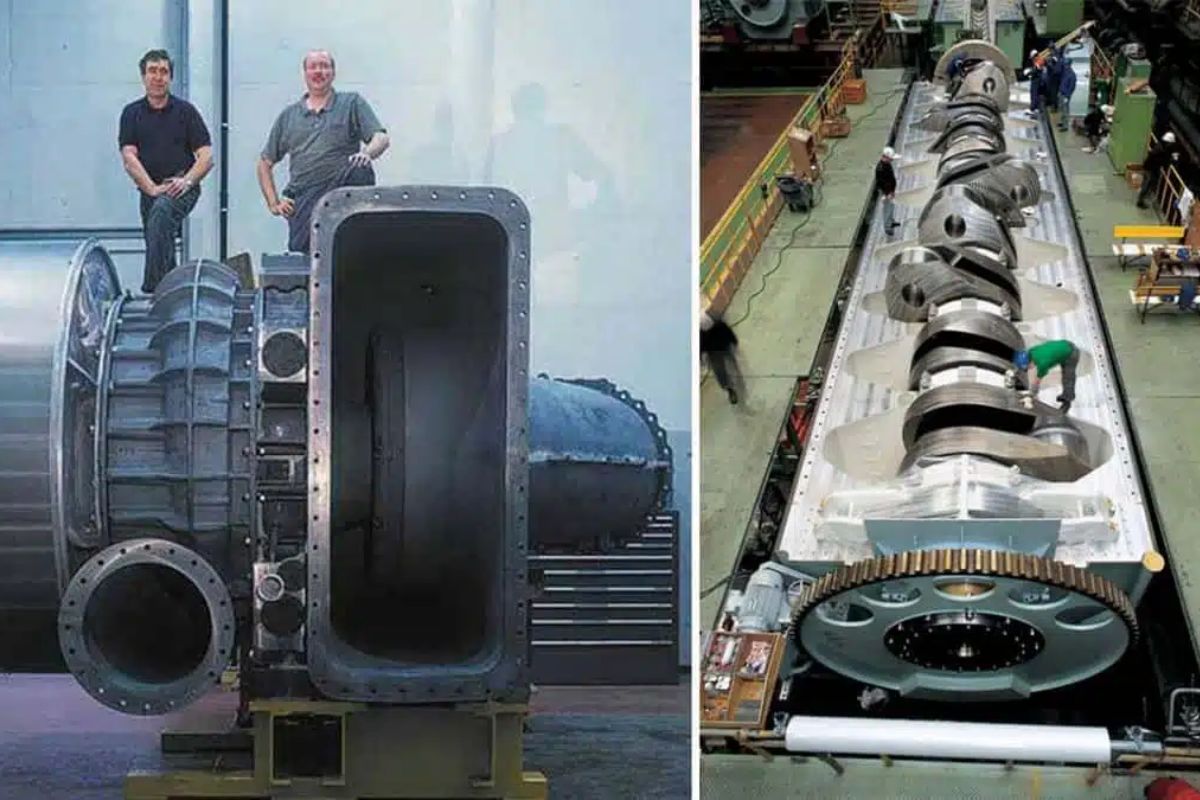
With 5-Ton Pistons and the Height of a Building, the Wärtsilä RT-flex96C Is an Engineering Marvel That Powers the Largest Container Ships in the World.
In the world of mechanical engineering, few creations are as impressive as the ship engine Wärtsilä RT-flex96C. This two-thousand-ton giant is capable of generating the power of approximately 1,100 small cars combined. Its components are so massive that a single piston weighs 5.5 tons, more than many entire cars.
This engine is not just brute force; it is the peak of efficiency in diesel engines, designed to move the largest vessels on the planet economically. The technology behind this colossus has redefined global maritime transport and paved the way for a new generation of propellers now navigating the oceans.
An Engine the Height of a 4-Story Building
The dimensions of the ship engine Wärtsilä RT-flex96C are difficult to visualize. Its height of 13.5 meters is equivalent to that of a four-story building. In its 14-cylinder configuration, its length reaches nearly 27 meters. The total weight exceeds 2,300 tons.
-
Spain surprises the world by erecting 62 artificial dunes, mixing sand with natural remains of posidonia, and causing the structure to lose only 1.4% of its volume in 1 year.

-
With 16 Bulava missiles, improvements in acoustic stealth, and a design focused on silent patrols, Russia’s nuclear submarine was born to ensure Moscow’s invisible retaliation and has become one of the pillars of its maritime strength.

-
‘Populous’ city in Rio among the worst in Brazil in national ranking and exposes silent development crisis.

-
Couple buys house in the South Zone of São Paulo, opens a hidden door in the garage, and finds a secret wine cellar with dozens of old wines forgotten since the 1970s.


Because of its size, the ship is literally built around the engine. Its base is installed at the beginning of the hull construction, and the rest of the vessel’s structure is assembled around it. It is a true cathedral of steel designed for one purpose: maximum efficiency.
The Engineering of the Wärtsilä RT-flex96C: The 5-Ton Piston and Its 109,000 Horsepower
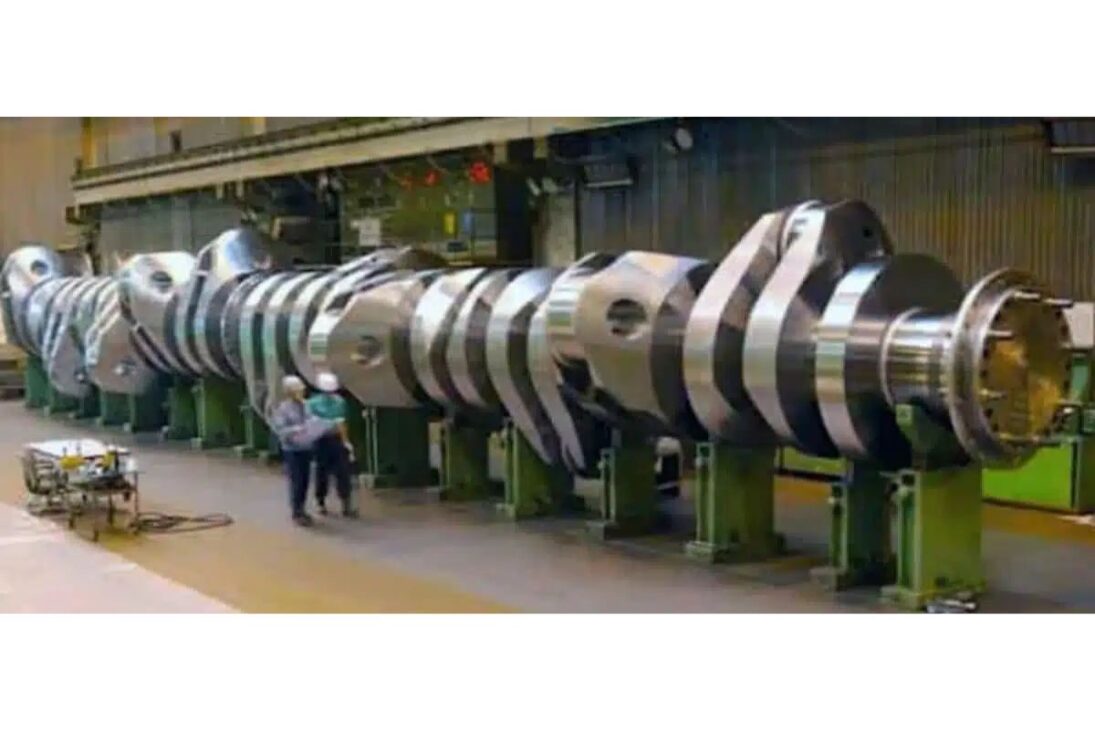
The performance numbers of this ship engine are as impressive as its size. The 14-cylinder version of the RT-flex96C generates up to 109,000 horsepower (or 114,800 bhp in its updated version).
Its internal components operate on a monumental scale:
Piston: each of the 14 pistons has a diameter of 96 cm and a set that, with its connecting rod, reaches 6 meters in height and weighs 5.5 tons.
Crankshaft: the part that converts the pistons’ movement into rotation weighs 300 tons.
Torque: the engine produces a torque of over 7.6 million Newton-meters, allowing it to spin a propeller directly over 9 meters in diameter without needing a gearbox.
This ship engine operates at very low RPM, between 22 and 102. Despite its appetite for fuel (it can consume up to 250 tons per day), it is one of the most efficient combustion engines in the world, converting over 50% of the fuel’s energy into work, while a car engine rarely exceeds 35%.
The Revolution of the “RT-flex”: How Common-Rail Technology Changed Ship Engines
The major technological leap of the Wärtsilä RT-flex96C was the introduction of the “RT-flex” system in 2003. It replaced the complex and heavy mechanical camshaft system with a electronically controlled common-rail system.
In this system, fuel is kept under high pressure in a common tube and injected into the cylinders by electronic valves. This precise control brought revolutionary benefits:
Smoke-Free Operation: cleaner combustion eliminated visible smoke, especially at low speeds.
Lower Consumption: real-time injection adjustment improved fuel efficiency.
Reduced Maintenance: the elimination of many moving parts simplified and reduced maintenance costs.
This flexible technology was the foundation for modern multi-fuel engines being developed today.
The Case of Emma Mærsk: The Application of the Engine in the Container Giant in 2006
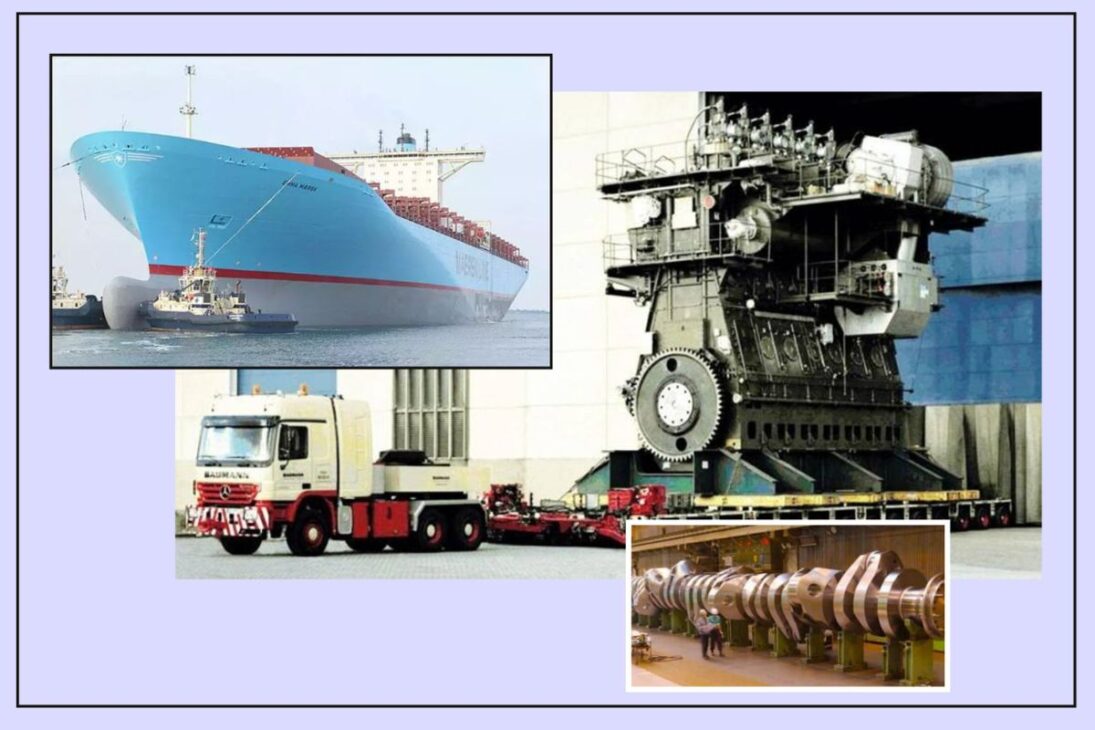
The most famous application of this ship engine was on the Emma Mærsk, launched in 2006. At the time, it was the largest container ship in the world, and its heart was the first Wärtsilä 14RT-flex96C with 14 cylinders ever built.
The ship redefined economies of scale in maritime transport and, along with its engine, became an engineering icon. Even after a serious incident in 2013 when its engine room was flooded, the engine was completely disassembled, repaired, and returned to operation, proving the resilience of the design. As of 2025, the Emma Mærsk remains in active service, a testament to the durability of this legendary engine.
The Successors and the Search for Cleaner Fuels
Although the RT-flex96C remains in operation, new ultra-large container vessels (ULCVs) are already equipped with a new generation of engines from manufacturers such as MAN Energy Solutions and WinGD (successor to Wärtsilä).
These new ship engines prioritize even longer piston strokes for greater efficiency and, crucially, the flexibility to operate on alternative fuels. Driven by stringent environmental goals from the International Maritime Organization (IMO), the industry is seeking decarbonization. The future of marine propulsion will not be of a single fuel but a matrix that includes LNG, methanol, and ammonia. The legacy of the RT-flex96C was to have been the pinnacle of the diesel era and, at the same time, the technological precursor that made the multi-fuel era now beginning possible.







-

-

-

-

-

30 pessoas reagiram a isso.