





 Português
  Inglês
  Espanhol
  4 min de leitura
  0 comentários


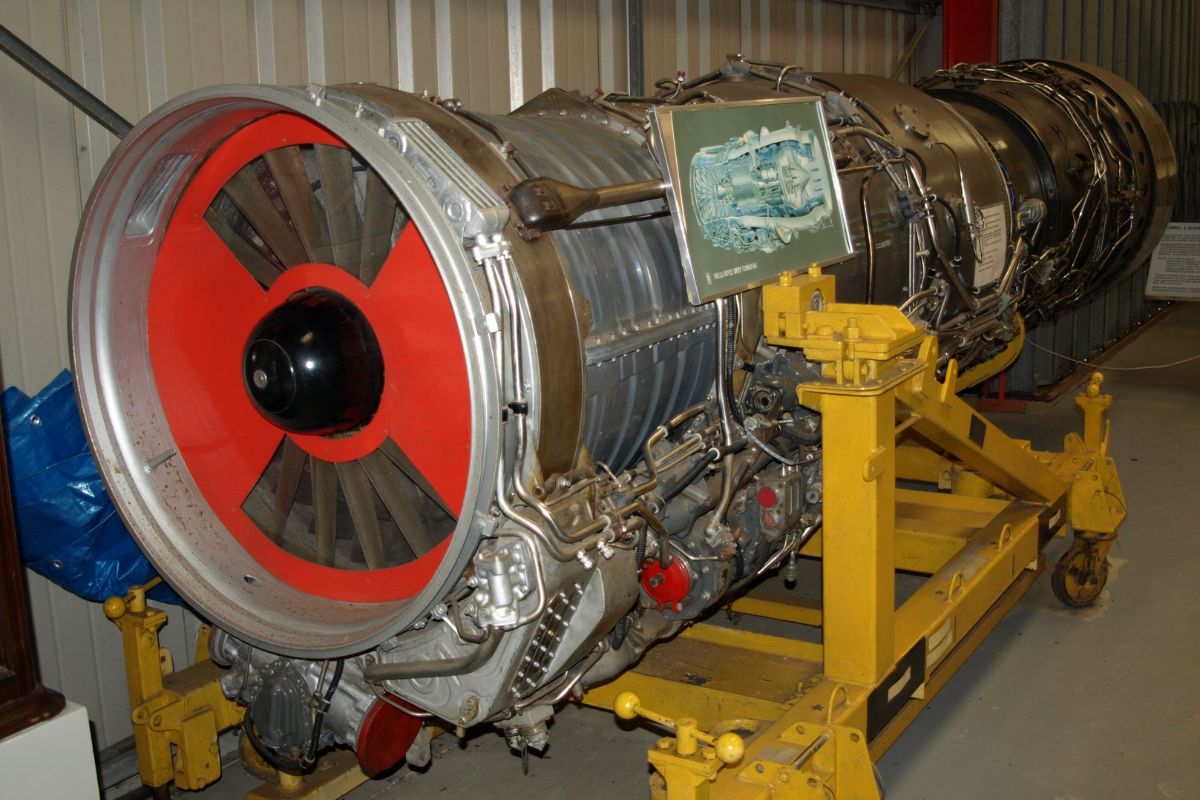
The Secret Of ThrustSSC Was The Engine Of The Car That Broke The Sound Barrier: Two Fighter Jet Turbofans That Made It The First And Only Ground Vehicle To Surpass The Speed Of Sound In 1997.
Led by Richard Noble and piloted by Royal Air Force (RAF) fighter pilot Andy Green, the ThrustSSC was not an ordinary car. At its heart, it beat the engine of the car that broke the sound barrier, actually a pair of turbofans from the F-4 Phantom II fighter jet. This colossal force, coming directly from the turbines of a military fighter, combined with revolutionary engineering, was the formula that turned the impossible into history.
For 50 years, since pilot Chuck Yeager broke the sound barrier in the sky in 1947, the mark seemed an insurmountable wall on land. It was a challenge that involved not only power, but the mastery of unknown and dangerous physics. It was in this scenario that the British ThrustSSC project was born, a machine designed with a single purpose: to be the first to surpass the speed of sound.
The Power Of The Engine Of The Car That Broke The Sound Barrier: The 110,000 Horses That Pushed The ThrustSSC
The driving force behind the record was two of the most iconic British jet engines. The engine of the car that broke the sound barrier was of the same specification used to power the British version of the McDonnell Douglas F-4 Phantom II fighter, the Rolls-Royce Spey.
-
The world’s first octopus farm wants to open in the Canary Islands and is already provoking an international reaction: the plan aims to produce 3,000 tons per year.

-
Drought may be creating stronger superbugs in the soil and helping antibiotic resistance reach hospitals, warns a study highlighting a problem that could grow alongside extreme weather.

-
The biggest scam in history: Napoleon’s France deceived the United States by selling them a territory that was Spanish.

-
Why is the Danakil Desert so dangerous? It has unstable terrain and how extreme temperatures and toxic gases turn the region into one of the most hostile environments on Earth.


Together, the two engines generated approximately 50,000 pounds of thrust. At maximum speed, this force translated to a calculated power of 110,000 horses. At these power levels, fuel consumption was astronomical: the car burned about 18 liters of aviation kerosene per second.
Unique Engineering: The Steel Chassis, The Rear Steering, And The Solid Aluminum Wheels
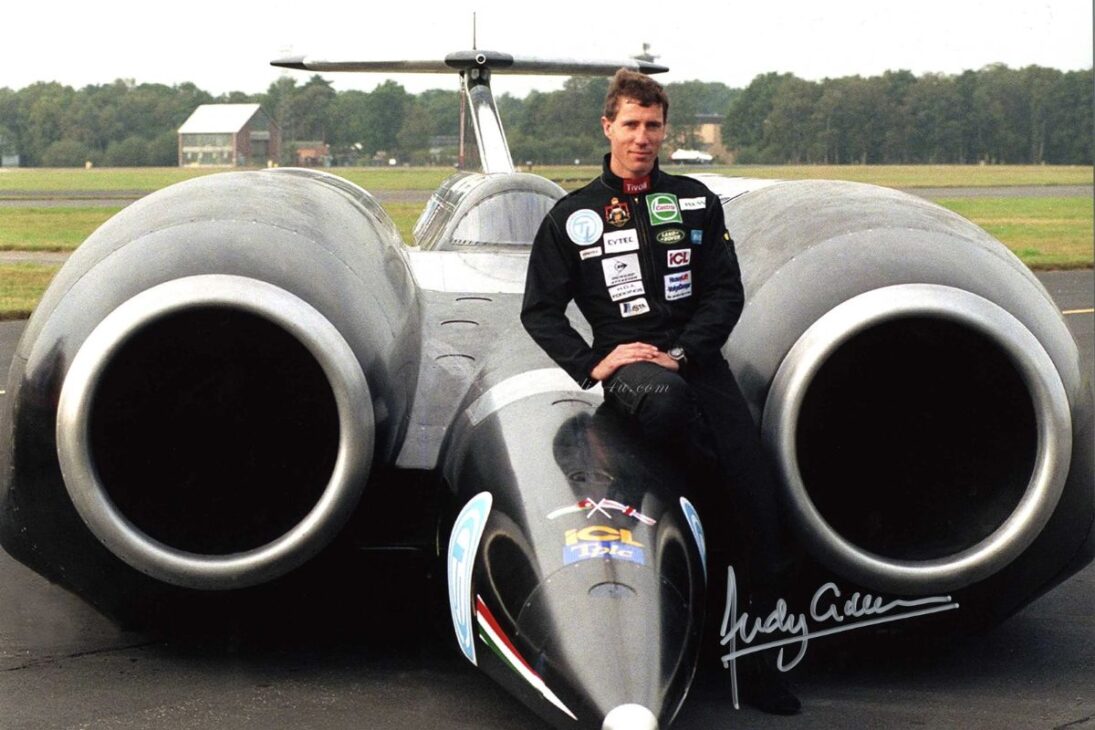
To withstand the force of the engines and the extreme speed, the ThrustSSC was built as a ground jet.
Structure And Safety: The skeleton of the ThrustSSC was a T45 steel truss chassis, designed for maximum robustness. The cockpit was securely ‘sandwiched’ between the two engines, the safest position in case the worst happened.
Aluminum Wheels: Rubber tires would have disintegrated with the rotation. Therefore, the wheels were solid forged discs made of aluminum alloy, each weighing over 160 kg. At 1,228 km/h, they spun at 8,400 rpm.
Rear Steering: The design with two engines left no room for a steering system in front. The solution was to create a steering system in the rear wheels, an idea so radical that it had to be tested on a modified street car before being applied.
Active Suspension: To prevent the car’s nose from lifting at high speeds, a catastrophic event, the ThrustSSC used a computer-controlled active suspension system, that adjusted the car’s height 1,000 times per second.
October 15, 1997: The Day The ThrustSSC Reached 1,228 km/h In Black Rock Desert
After an intense testing campaign in Nevada, USA, and a rivalry with the American team Spirit of America, led by Craig Breedlove, the British team was ready for the record. On October 15, 1997, exactly 50 years and one day after Chuck Yeager’s first supersonic flight, Andy Green made the feat.
For the record to be official, the rules were strict: the ThrustSSC needed to make two passes in opposite directions, over a measured mile, and all within an hour. The result was a new officially certified world record for ground speed: 1,227.985 km/h (or 763.035 mph), equivalent to Mach 1.02. For the first time, a ground vehicle had broken the sound barrier.
From F-4 Phantom II Fighter To History: The Origin Of The Engine Of The Car That Broke The Sound Barrier
The engine of the car that broke the sound barrier was not chosen at random. They were robust and proven military engines. The British team acquired several units of the Rolls-Royce Spey, including the standard model Mk. 202 and the rarer and more powerful Spey Mk. 205.
The engineering team’s strategy was brilliant. The 205 model used turbine blades made of “monocrystal”, a more resilient material. The team realized they could ‘trade’ the extra durability, designed for thousands of flight hours, for a performance peak. They operated the engines at higher temperatures than would be safe in an aircraft, extracting about 25% more thrust during the few minutes necessary to break the record.
The Supersonic Legacy: The Record That Remains Intact And Inspired The Bloodhound Project
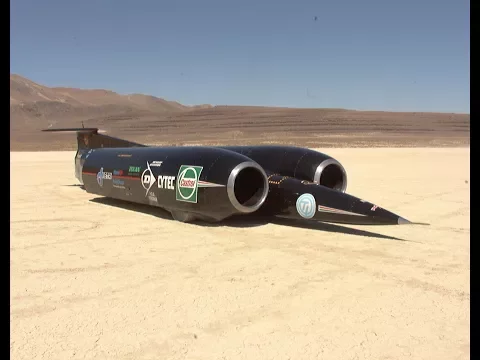

The ThrustSSC record has remained intact for over 25 years, a testament to the magnitude of the achievement. The car is now on display at the Coventry Transport Museum in the UK, alongside its predecessor, the Thrust2, and the project it inspired, the Bloodhound LSR.
The Bloodhound project, also led by Richard Noble and with Andy Green as the driver, was born with the even greater ambition of reaching 1,000 mph (about 1,609 km/h). However, its enormous financial difficulties, which paralyzed the project, only underscore the magnitude of what ThrustSSC accomplished, which elevated record breaking to a technical and financial level that is nearly insurmountable. The sound of the engine of the car that broke the sound barrier echoes to this day, not only in the record books but as a landmark of engineering and human determination.








-

-

3 pessoas reagiram a isso.