





 Português
  Inglês
  Espanhol
  5 min de leitura
  1 comentário


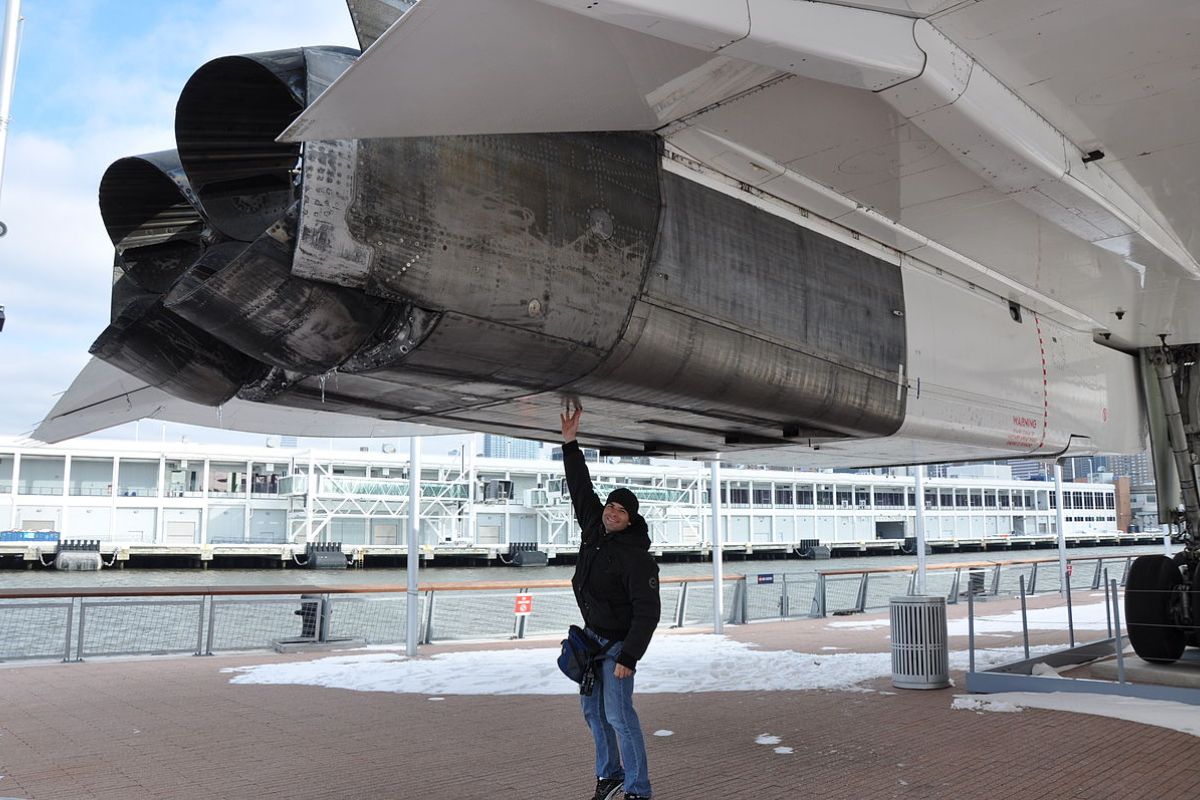


The Rolls-Royce/Snecma Olympus 593 Was a Turbojet with Military Fighter Technology, Responsible for the Extremely High Fuel Consumption and the Iconic Flame During Takeoff of the Aircraft.
In the pantheon of engineering, few projects are as fascinating as the Concorde engine. The Rolls-Royce/Snecma Olympus 593 was the heart that allowed the world’s most famous passenger aircraft to fly at twice the speed of sound. It holds a unique distinction: it was the only afterburning engine to operate in regular commercial service, a technology that was both its greatest glory and its greatest weakness.
The history of the Concorde engine is a study of extremes: on the ground, one of the most ‘fuel-guzzling’ engines ever created; in the sky, at supersonic speed, a marvel of efficiency. Understand how this engineering masterpiece worked and why its brilliance also sealed its fate.
What Was the Rolls-Royce/Snecma Olympus 593, the Concorde Engine?
The Concorde engine was a two-spool axial-flow turbojet, an architecture chosen for its ability to generate the high exhaust velocity needed for supersonic flight. The design came from a historic collaboration between British Rolls-Royce and French Snecma, uniting two nations that were both partners and rivals in the aerospace race, in an agreement made in November 1962 to develop the aircraft’s propulsion system.
-
With more than 635,000 doctors, Brazil sees competition increasing in large cities, and recent graduates are competing for shifts at an accelerated pace while the countryside still faces shortages.

-
The world’s first octopus farm wants to open in the Canary Islands and is already provoking an international reaction: the plan aims to produce 3,000 tons per year.

-
Drought may be creating stronger superbugs in the soil and helping antibiotic resistance reach hospitals, warns a study highlighting a problem that could grow alongside extreme weather.

-
The biggest scam in history: Napoleon’s France deceived the United States by selling them a territory that was Spanish.


Its engineering was unique, designed to withstand extreme temperatures. At cruising speed of Mach 2, the air entered the engine at over 120°C even before combustion. This required the use of advanced materials, such as nickel-based superalloys, in parts of the compressor, something unthinkable in a subsonic engine.
The “Afterburner”: How Fuel Injection in the Exhaust Broke the Sound Barrier
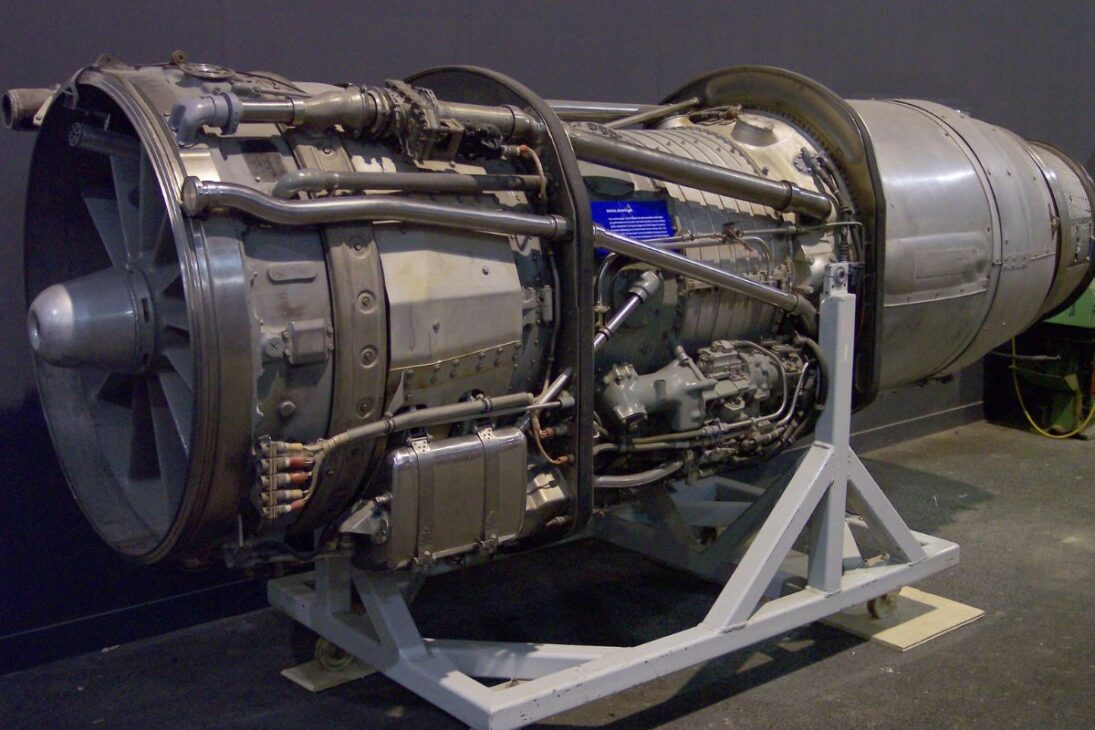
The most famous feature of the Concorde engine was its afterburner system, or “reheat.” It was responsible for the iconic visible flame at the rear of the engines during takeoff. Similar to a military fighter system, it injected fuel directly into the exhaust duct, behind the turbine.
This system was not used to maintain cruise speed, but rather as a temporary boost to overcome the two phases of highest drag during flight:
- During Takeoff: To lift the weight of the aircraft off the ground.
- During Transonic Acceleration: To break the sound barrier, between Mach 0.95 and Mach 1.7.
Once the aircraft reached Mach 1.7, the afterburners were turned off, and the flight continued with the engine’s “dry” thrust. This solution was a ‘necessary evil’ that allowed the design to be optimized. An engine with sufficient “dry” thrust (without afterburning) for takeoff would be enormous, heavy, and terribly inefficient during the long cruise flight, which was the most important phase of the journey. The afterburner allowed for a lighter main engine that was perfectly tuned for maximum efficiency in cruise.
Efficiency at Mach 2: The Paradox of the Concorde Engine’s Fuel Consumption
On the ground, the Concorde engine was extremely “fuel-thirsty.” It is estimated that the aircraft consumed two tons of fuel just to taxi to the runway threshold. During takeoff with the afterburners engaged, each of the four engines burned fuel at a rate of 22,500 kg per hour.
However, at 60,000 feet and Mach 2, the system transformed into one of the most efficient in the world, with an overall thermal efficiency of 43%, a record for the time. The secret to this efficiency, and the most surprising fact about the Concorde, is that at cruising speed, the engine itself was the component that generated the least thrust, contributing only 8% of the total force. The rest of the work was done by the aircraft’s own structure:
- 63% of the thrust came from the air pressure in the complex variable geometry air intakes.
- 29% of the thrust came from the expansion of gases in the variable geometry exhaust nozzles.
The Concorde engine, therefore, was part of a fully integrated propulsion system, where the aircraft and its engines were inseparable.
A Unique Engine in Its Class: The Comparison with Military Engines of Its Time
When compared to supersonic military engines of its time, such as the Pratt & Whitney TF30 (of the F-14) or the General Electric J79 (of the F-4 Phantom), the philosophy of the Olympus 593 stands out. Military engines were designed for short bursts of high speed and agility.
The Concorde engine, on the other hand, was designed for durability and efficiency in long hours of sustained supersonic flight. Its components were built for a lifespan of 25,000 hours, a standard in commercial aviation, not military. The decision to use pure turbojet technology, although older than turbofan technology, proved to be the most robust and correct for the unique mission of the Concorde.
The Noisy Legacy: A Masterpiece of Engineering That Did Not Survive Its Time


The Olympus 593 was an absolute technical success, a testament to engineering’s ability to push technology to its limits. However, the world around it changed. The oil crisis of the 1970s, growing environmental awareness, and the economic dominance of subsonic aircraft rendered the Concorde obsolete.
Fuel consumption and the deafening noise, which led to legal battles and the ban on supersonic flights over land, sealed its fate. The legacy of the Concorde engine is twofold: it is a monument to human ingenuity and, at the same time, a lesson that technical success does not guarantee commercial viability. For the new generation of supersonic aircraft, the Olympus 593 is not just a museum piece, but the most important lesson ever written with kerosene and decibels: that power, without economic and environmental viability, cannot fly forever.







Depois botam catalisador caro em veículos de baixa potência com papo de meio ambiente.