





 Portuguese
  English
  Spanish
  4 min of reading
  0 comments


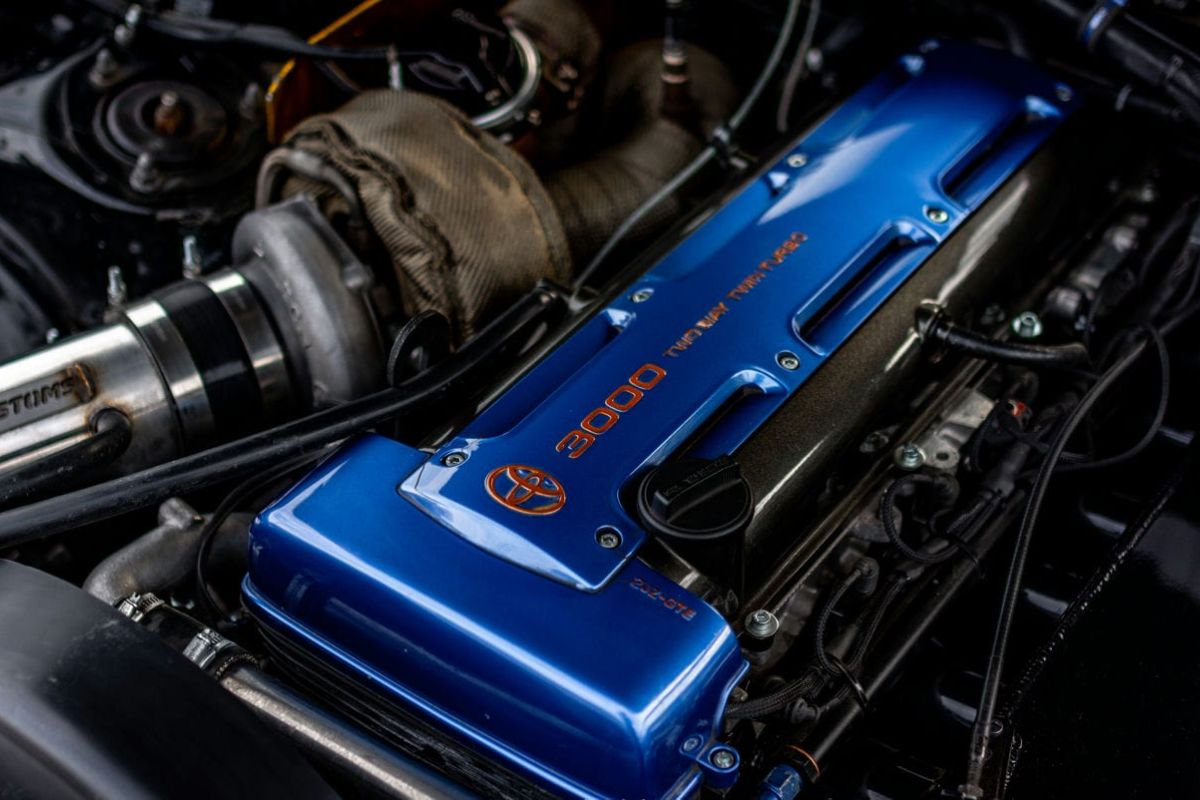
Designed To Withstand Extreme Power With Factory Parts, The 2JZ-GTE Engine Has Become An Icon Of Automotive Culture, But The Reality Of 1,000 HP Is More Complex Than The Myth.
In the world of automotive tuning, few names are as revered as the engine of the Toyota Supra. The legendary 2JZ-GTE, which powered the fourth generation of the sports car (MK4), built a mythical reputation for being able to withstand 1,000 horsepower with its factory internals.
As of 2025, more than three decades after its launch, the 2JZ-GTE is not a relic but a dominant force. It remains the preferred choice for extreme racing projects and an icon talked about daily in enthusiast forums. This article unveils the engineering behind the legend, separates myth from reality, and explains why the motor of the Toyota Supra continues to be the undisputed king of tuning.
The Rivalry With Nissan And The “Gentlemen’s Agreement” Of 276 HP In Japan
To understand the strength of the 2JZ-GTE, one must go back to the “golden age” of the Japanese automotive industry. In the early 90s, Toyota needed a robust response to Nissan’s acclaimed RB26DETT engine that powered the Skyline GT-R. The goal was to create an engine that not only matched but surpassed its rival’s robustness.
-
Drought may be creating stronger superbugs in the soil and helping antibiotic resistance reach hospitals, warns a study highlighting a problem that could grow alongside extreme weather.

-
The biggest scam in history: Napoleon’s France deceived the United States by selling them a territory that was Spanish.

-
Why is the Danakil Desert so dangerous? It has unstable terrain and how extreme temperatures and toxic gases turn the region into one of the most hostile environments on Earth.

-
With a height of 221 meters and a capacity for trillions of liters, Hoover Dam still holds a trick that makes water defy logic.

At the same time, the “Gentlemen’s Agreement” was in effect in Japan, an informal pact that limited the declared power of all cars sold in the country to 280 PS (276 hp). To compete in races and the global market, Toyota designed the 2JZ to be mechanically capable of generating much more power, but sold it “detuned” in Japan to comply with the agreement. The result was an oversized engine, with an immense “engineering margin” that tuners soon learned to exploit.
Unraveling 1,000 HP: The Difference Between Maximum Power And Reliable Power Of The Toyota Supra Engine

The Biggest Myth Of Automotive Culture Is That The Toyota Supra Engine Can Handle 1,000 HP With Factory Parts. The technical reality is that the reliable power limit is much lower. It is true that an original 2JZ can indeed reach 1,000 hp on a dynamometer, but the sustainability of that power is practically nil.
The consensus among experts and tuners, validated by decades of builds, is that the reliable power limit for a 2JZ-GTE with the factory internals is in the range of 600 to 800 hp. Within this range, the engine shows remarkable durability. Beyond 800 hp, the risk of catastrophic failure in the connecting rods and pistons increases exponentially. The 1,000 hp mark is a “glory pull”, not a configuration for continuous use.
The Cast Iron Block, The Forged Crankshaft, And The Secrets Of Its Strength
The ‘bulletproof’ fame of the 2JZ-GTE comes from oversized engineering focused on robustness.
Cast Iron Block: The Heart Of Its Strength. In an era that was already exploring aluminum, Toyota opted for the rigidity and stability of cast iron, creating a base that, with the right modifications, can withstand over 2,000 hp.
Inline Six Architecture: This design is inherently balanced, resulting in smoother operation, with less vibration and stress on internal components.
Forged Crankshaft And Connecting Rods: The factory crankshaft and connecting rods are made of forged steel, a process that makes them extremely resistant to fatigue and twisting. The crankshaft, in particular, is so oversized that it is often retained even in projects that exceed 1,000 hp.
Why The 2JZ-GTE Still Dominates Drag And Drift Tracks
Even as a project over 30 years old, the engine of the Toyota Supra continues to be a dominant force on the tracks in 2025, far from being a museum piece.
In Drag Racing: The 2JZ Is Synonymous With Absolute Power. Modern builds, using replacement blocks made of billet aluminum based on the 2JZ architecture, have already surpassed the 3,000 hp mark, aiming to break records in the quarter-mile.
In Drift: In championships like Formula Drift, the 2JZ is one of the most popular “swap” (engine swap) motors. Its combination of high power and broad torque curve, along with its reliability under extreme abuse, makes it the ideal platform for the sport.
The Comparison Of The 2JZ With Rival RB26 And Modern BMW B58
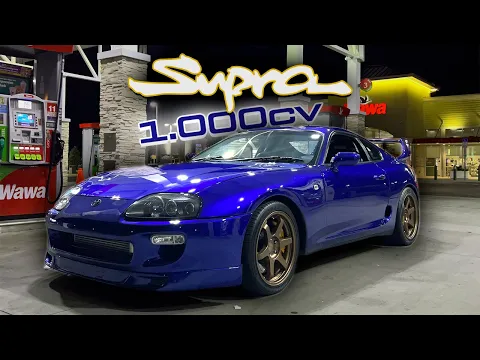

The rivalry with the Nissan RB26 is eternal, but the 2JZ has an advantage due to its larger displacement (3.0L vs. 2.6L) and a lubrication system considered more robust.
The more modern comparison is with the engine that Toyota itself chose to equip the fifth-generation Supra: the BMW B58. Both are 3.0 turbo inline six engines and extremely robust. The competition reflects two eras of engineering: the 2JZ represents analog robustness, with its strength coming from oversized materials. The B58 represents digital efficiency, with lightweight components and advanced electronics. The legacy of the 2JZ is so powerful that Toyota itself, when developing its new generation of engines, publicly declared an ambitious goal: to finally ‘overcome the 2JZ’.








-

-

-

-

-

38 pessoas reagiram a isso.