





 Portuguese
  English
  Spanish
  4 min of reading
  1 comment


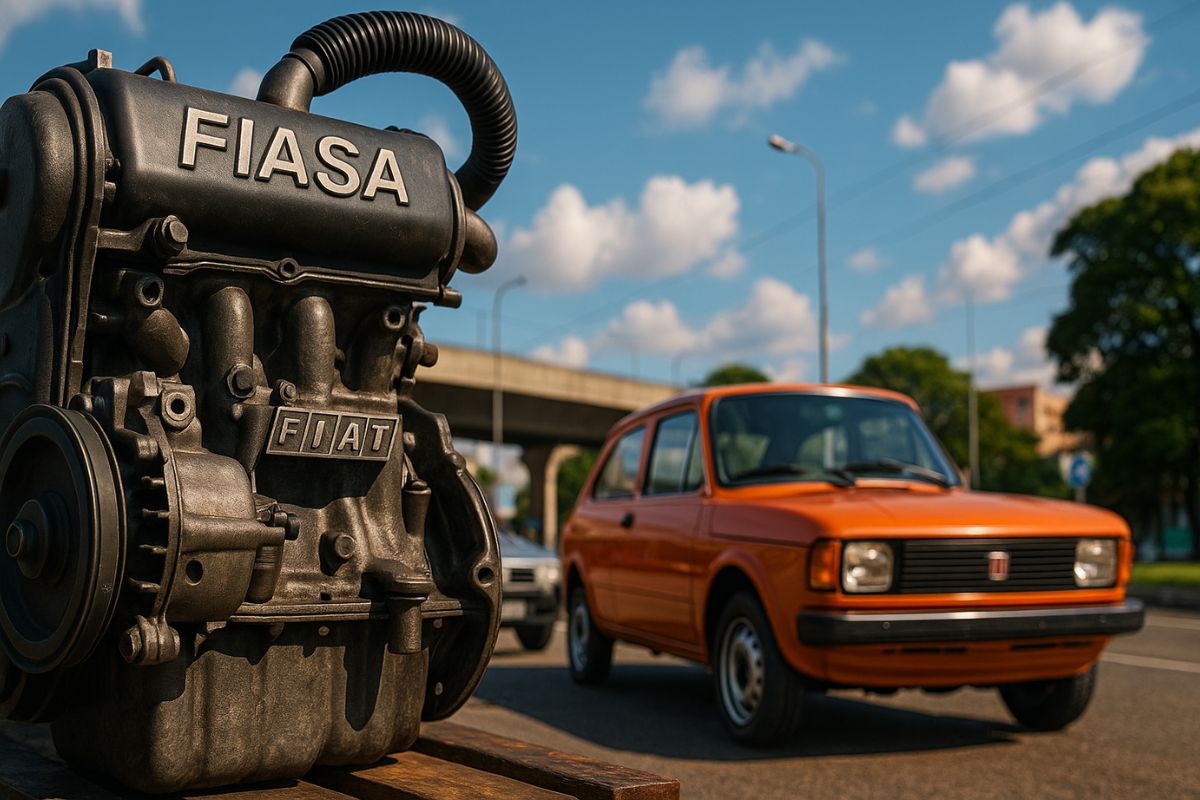


Created in 1976 and discontinued only in 2003, the “Fiasa” engine from Fiat marked generations of vehicles in Brazil for its durability, low maintenance cost, and pioneering use of ethanol and electronic fuel injection
The “Fiasa” engine from Fiat is one of the most emblematic in the history of the national automotive industry. Produced in Brazil for 37 years, it was responsible for powering some of the brand’s most popular models, such as the Fiat 147, Uno, Prêmio, Elba, and Fiorino, in versions powered by gasoline, ethanol, and electronic fuel injection.
The acronym “Fiasa” comes from Fiat Automóveis S.A., and the engine was born in 1976 alongside the launch of the Fiat 147 — the first car from the brand manufactured in the country. Inspired by the Italian engine from the 100 series, used in the Fiat 127, the project was adapted to Brazilian conditions under the supervision of engineer Aurelio Lampredi, known for developing engines for Ferrari.
Pioneering And Technological Evolution In Brazil
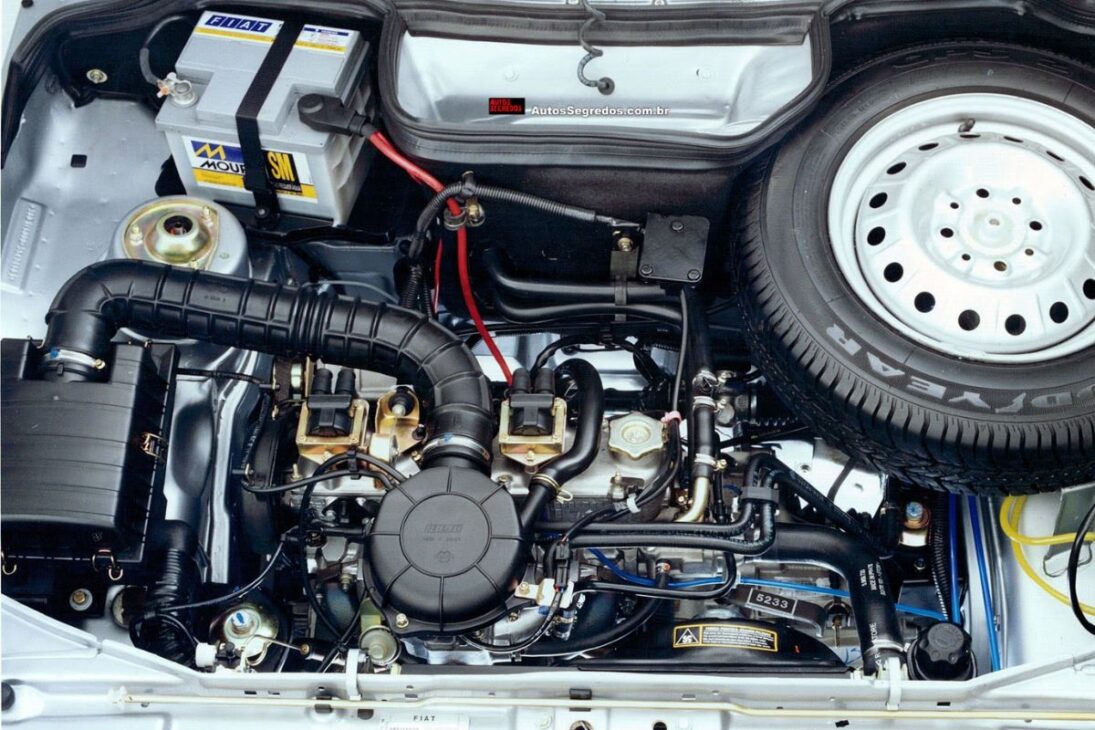
Since its debut, the Fiasa stood out for its technical innovation.
-
5 cheapest used cars than a Honda CG 160 Titan 0 km, with options starting at R$ 13,000 for those who want to trade their motorcycle for a car and escape the rain, sun, and risks of riding.

-
Around R$ 24,000: 4 used Ford SUVs with up to 253 hp, V6 engine, all-wheel drive, 7 airbags, panoramic sunroof, and a complete package that surprises with its price and performance in Brazil.
-
A brand new car starts at around R$ 75,000 in Brazil, but what stands out the most is seeing streets filled with SUVs and expensive sedans in a country where millions remain in debt.

-
For R$ 32,000, a brand new Hyundai car is a rival to the Kwid with a 1.2 engine producing 82 hp, 6 airbags as standard, multimedia with wireless Android Auto, up to 391 liters in the trunk, and a refreshed look for 2026 in India.

It was the first national engine with overhead camshaft, a modern solution for its time.
Three years later, in 1979, it equipped the first ethanol-powered car produced in series in the world, the Fiat 147 Álcool, a milestone in Brazilian automotive engineering.
From the 1990s onwards, the Fiasa also received electronic fuel injection, initially single-point and later multi-point, replacing the traditional carburetor and improving fuel efficiency and overall performance.
This technological evolution allowed Fiat to keep the engine competitive in a market that increasingly demanded economy and reliability.
Robust Structure And Simple Maintenance
The Fiasa became popular among mechanics and drivers for its robustness and ease of maintenance.
The cast iron block and aluminum cylinder head ensured strength and durability, even under severe usage conditions.
The versions ranged from 1.0 to 1.6 liters, offering different levels of performance and economy.
The 1.0 model, for example, was widely used in the Uno Mille, a symbol of low consumption and mechanical simplicity.
The 1.5 and 1.6 16V versions, with electronic fuel injection, equipped vehicles such as the Palio and Siena, delivering up to 106 horsepower.
Dozens Of Models And Millions Of Units Produced
For nearly four decades, the Fiasa engine was the heart of dozens of Fiat models, consolidating the brand’s presence in Brazil.
It was present in compact cars, sedans, station wagons, and even light commercial vehicles.
Among the main models equipped with the Fiasa are:
Fiat 147 – the first car of the brand in Brazil and the first ethanol-powered car in the world;
Fiat Uno – launched in 1984, it was the longest-lasting car with the Fiasa engine;
Fiat Prêmio and Elba – sedan and station wagon derived from the Uno;
Fiat Fiorino – cargo and pickup versions;
Fiat Palio and Siena – the first generations received the Fiasa before the arrival of the Fire engine.
The last Fiasa rolled off the assembly line in 2003, marking the end of a historic cycle that helped shape Fiat’s mechanical identity in Brazil.
Comparison With Rival Engines Of The Time
Throughout its history, the Fiasa competed with iconic engines such as the Volkswagen AP and the Chevrolet Family I.
Each had distinct characteristics, and this rivalry marked the golden age of popular Brazilian cars.
| Feature | Fiasa (Fiat) | AP (Volkswagen) | Family I (Chevrolet) |
|---|---|---|---|
| Main Focus | Economy and torque at low revs | Power and performance at high revs | Balance between power and economy |
| Reliability | Very high, simple and durable | High, with robust construction | High, with modern versions |
| Maintenance | Easy and inexpensive | Simple, but parts are more expensive now | Slightly more expensive |
| Consumption | Economical, ideal for urban use | Higher | Medium, depending on the displacement |
While the AP stood out for its strength and sportiness, the Fiasa won over users with reliability and economy, becoming the preferred choice for those seeking a robust car with accessible maintenance.
Legacy Of An Engine That Marked Generations
The legacy of the Fiasa goes beyond its production. It represents a time when mechanical ingenuity and simplicity defined the success of a car in Brazil.
Its durability and adaptability, from carburetors to ethanol and electronic fuel injection — show how well Fiat understood the national market.
Even after being replaced by the Fire engine, which is lighter and more efficient, the Fiasa remains a symbol of robustness, low cost, and longevity.
Many examples are still on the roads, being remembered as engines “that never break.”
And you, have you ever owned or driven a car with the Fiat Fiasa engine? How do you evaluate the performance and durability of this national classic? Leave your opinion in the comments — we want to hear from those who experienced this era of legendary engines.








Eu tenho um Siena 1.5 V8 MPI FIASA ÁLCOOL, ELE É MUITO BOM, EU VIAJO BASTANTE E NUNCA ELE ME DEIXOU NA MÃO