





 Português
  Inglês
  Espanhol
  5 min de leitura
  7 comentários


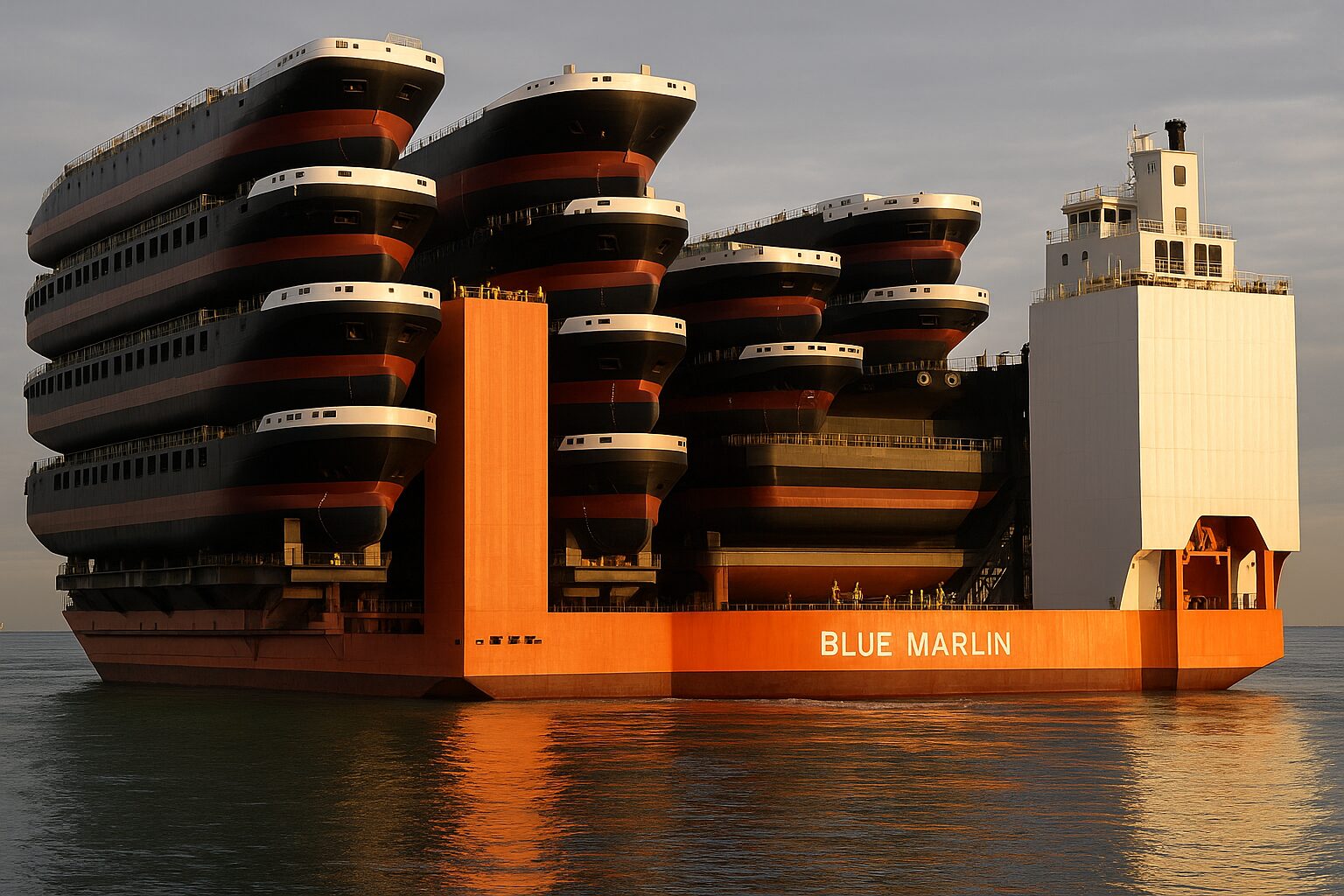


With a capacity to transport up to 75 thousand tons, the Blue Marlin is one of the greatest achievements of modern naval engineering. From South Korea to the Gulf of Mexico, this semi-submersible ship has carried everything from oil platforms to entire ships, pushing the limits of maritime logistics.
Few vehicles in the world are capable of transporting, in a single trip, dozens of barges, submarines, entire freighters, and even oil platforms. The Blue Marlin, a semi-submersible ship from the Dutch company Dockwise, does this regularly, setting new standards in the heavy cargo transport industry via ocean.
Measuring 224 meters in length and 63 meters in width, the Blue Marlin is a true floating platform, whose specialty is to operate as a kind of temporary bridge between continents. Its deck can be submerged up to 13 meters deep, allowing gigantic loads to float onto it — and then hoisted back up to the surface for transport. Also, learn about the ship that was wider than a building: meet the Knock Nevis, the largest oil tanker in the world, designed to face giant waves without capsizing
How Does A Semi-Submersible Ship Work?


The Blue Marlin belongs to a special category of vessels called semi-submersible ships. The technology behind this type of ship is remarkable: by filling ballast tanks with water, the ship sinks part of its deck until submerged. The load — which can be an oil platform, for example — is then towed and positioned on the floating deck. With the tanks emptied again, the ship rises, taking with it structures weighing tens of thousands of tons.
-
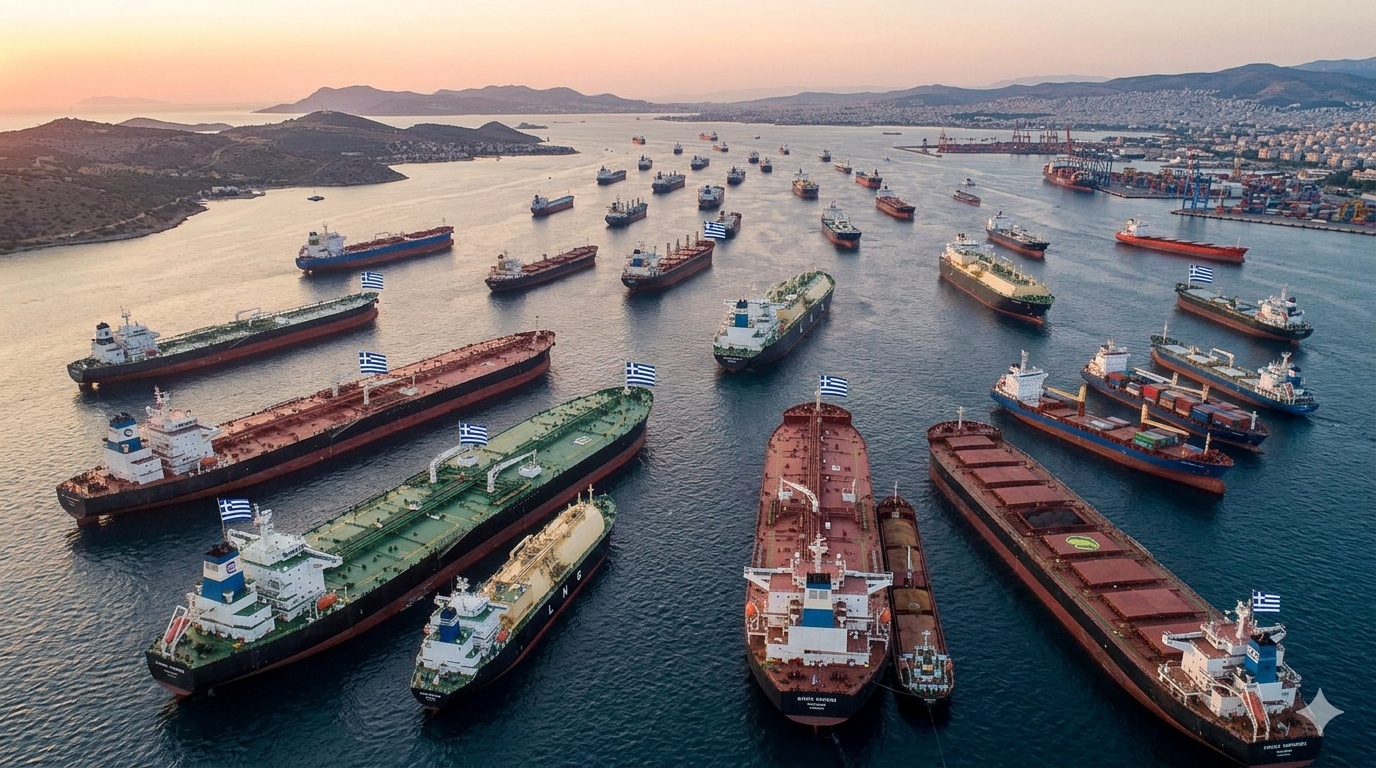
Neither the USA nor China: a small European nation has become one of the largest maritime powers on the planet, controlling one of the largest merchant fleets in the world with thousands of ships and dominating the global transportation of oil and strategic cargo.
-
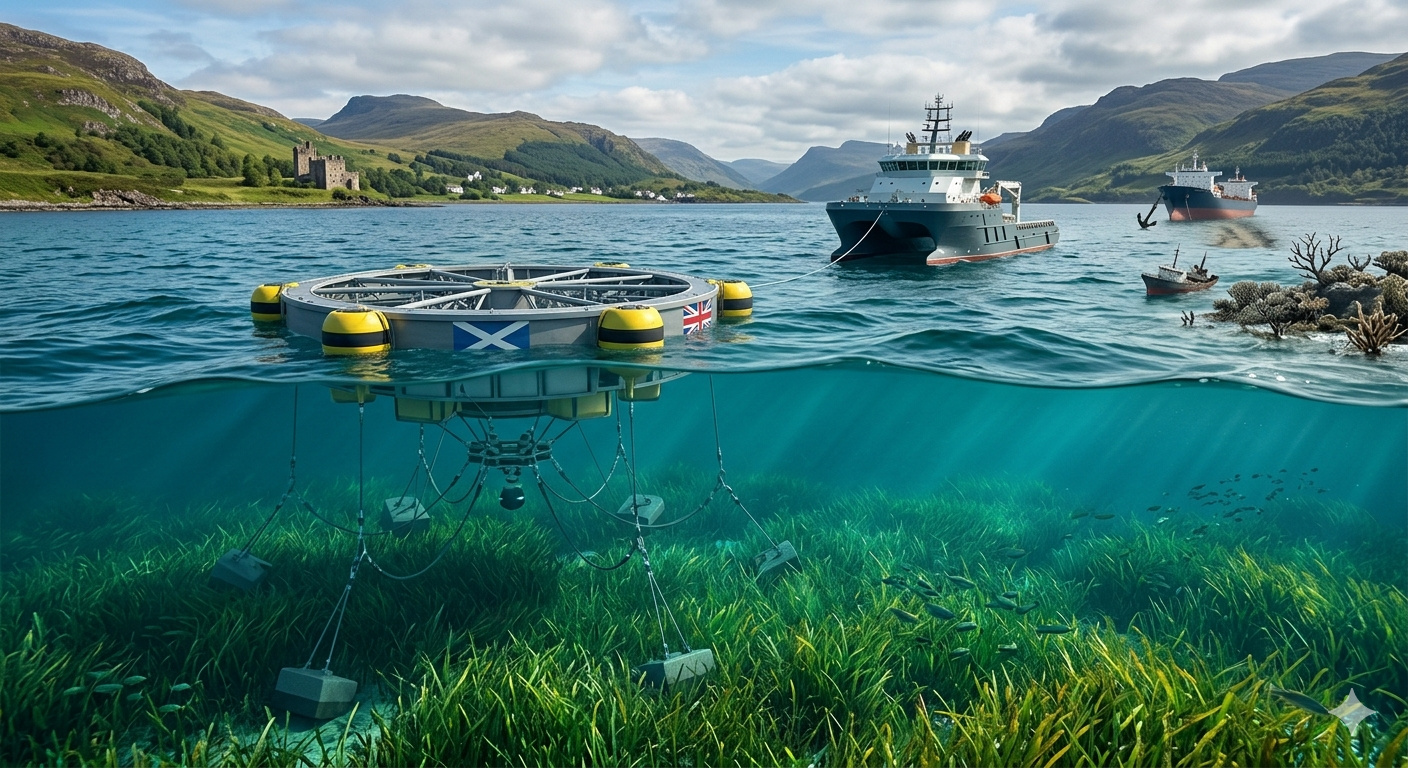
Scotland and the United Kingdom have created a new anchoring system that floats in the water without touching the seabed, after discovering that the current from a conventional anchor destroys up to 50 m² of seagrass meadow per event and that ship-damaged reefs showed no signs of recovery even ten years later.
-
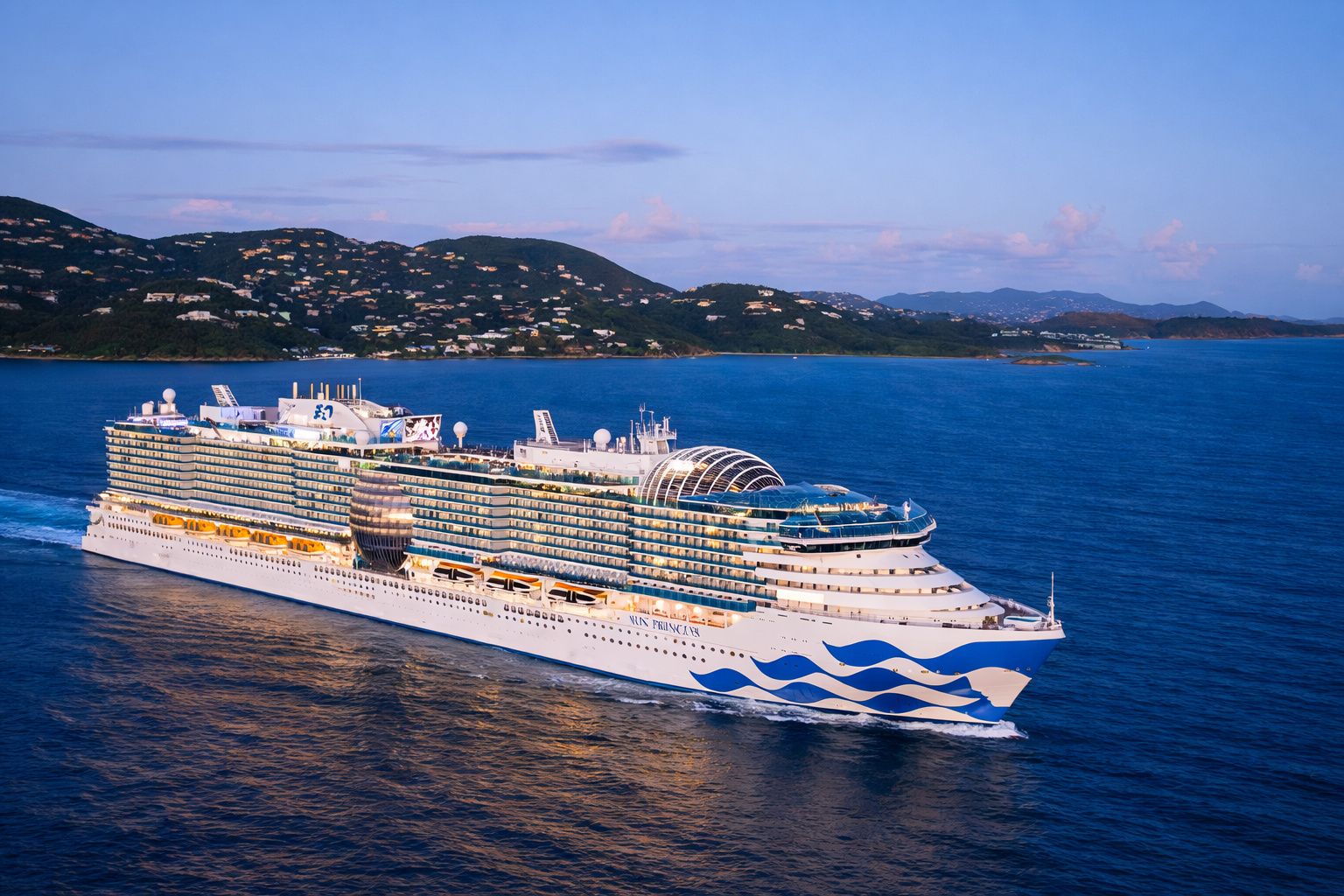
Weighing 175,500 Tons, Measuring 345 Meters Long, and With Capacity for Over 4,300 Passengers, the Sun Princess Becomes the Largest Ship Ever Built by Princess Cruises and Attracts Global Attention for Its Huge Glass Dome Inspired by Santorini’s Architecture Installed on Top of the Vessel
-
TX-10, The Colossus of The Sea: Largest Lifter Ship in The U.S., With Two Giant Barges, 73-Meter Tall Structure, and Strength to Raise 7,500 Tons of Sunken Oil Rigs
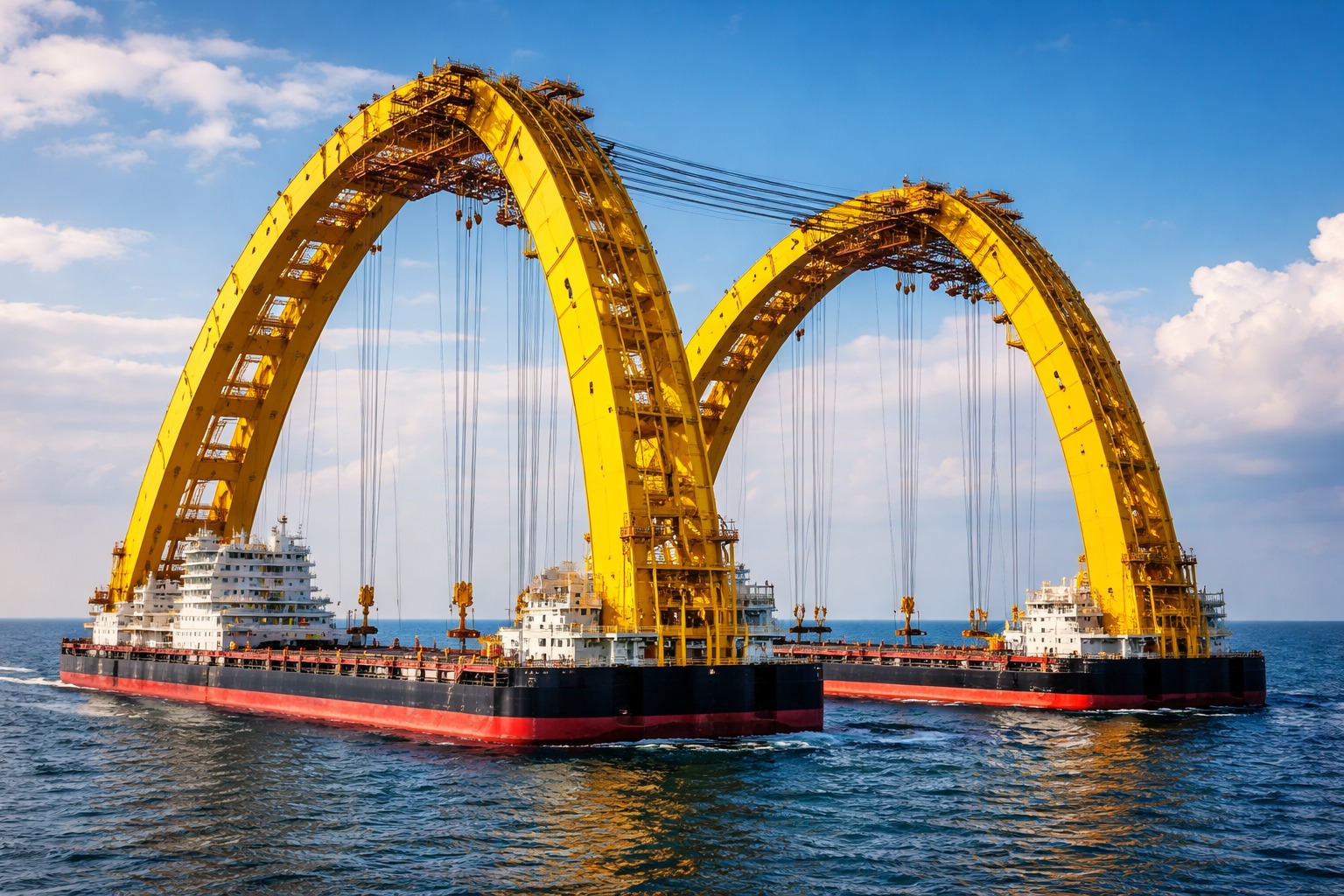

This maneuver requires precision engineering, complex mass balance calculations, and absolute control over sea conditions, but makes the Blue Marlin ideal for transporting loads that simply cannot be disassembled.
Technical Specifications of the Blue Marlin: The Power of a Floating City
The technical characteristics of the Blue Marlin are as impressive as its function:
| Specification | Detail |
|---|---|
| Overall Length | 224 meters |
| Width | 63 meters |
| Deck Area | 11,200 m² (equivalent to two football fields) |
| Cargo Capacity | 75 thousand tons |
| Average Speed | 13 knots (about 25 km/h) |
| Engines | 24 diesel engines |
| Total Power | 17 thousand horsepower |
| Crew | 60 people, in 38 cabins |
| Maximum Deck Submersion | 13 meters below the waterline |
Despite its enormous capacity, the Blue Marlin’s speed is modest — after all, its mission is to safely transport structures that often exceed 60 thousand tons.
Historical Missions: What Has the Blue Marlin Carried?

22 Barges and Almost 60 Thousand Tons
One of the most challenging feats was the transport of 22 barges, each weighing about 3 thousand tons. The logistics involved the synchronized movement of almost 60 thousand tons of metal on the ship’s submerged deck. The operation required meticulous planning and stable navigability to avoid structural risks during the journey.
The BP Thunder Horse Platform – 2004
In 2004, the Blue Marlin transported one of the largest loads ever carried by sea: the BP Thunder Horse oil platform. The structure was loaded at the Okpo shipyard in South Korea and taken to Corpus Christi, Texas (USA) — a journey of over 25 thousand kilometers to the Gulf of Mexico.
The total load exceeded 60 thousand tons, and the operation was recorded as the heaviest ever performed by a ship up to that year.
Ocean Monarch Drilling Platform
Another notable feat was the transport of the Ocean Monarch drilling platform, taken from Singapore to Texas. This structure is used in oil exploration in deep waters and required a level of stability that only a ship like the Blue Marlin could provide.
Dockwise Vanguard: The Younger Sister and Even More Powerful
Launched in 2013 by the same company that operates the Blue Marlin, the Dockwise Vanguard is considered its natural successor, with even more cargo capacity and versatility.
The main differences include:
| Feature | Blue Marlin | Dockwise Vanguard |
|---|---|---|
| Length | 224 m | 275 m |
| Width | 63 m | 70 m |
| Cargo Capacity | 75 thousand tons | 110 thousand tons |
| Speed | 13 knots | 14.5 knots (27 km/h) |
| Modular Technology | No | Yes |
With a dynamic modular system of cabins and internal arrangements, the Vanguard can carry everything from platforms to entire ships more efficiently. In its debut, it transported the Jack/St. Malo platform, weighing 53 thousand tons, from South Korea to the Gulf of Mexico.
More than a curiosity of engineering, the Blue Marlin is a geostrategic tool. Countries and companies use vessels like it to relocate oil assets, transport floating shipyards or mobile military bases, and even to assist damaged ships in hard-to-reach areas.
The ability to transport entire damaged ships to repair yards, without the need for disassembly, also makes the Blue Marlin relevant for rescue operations, as happened with the USS Cole destroyer of the US Navy in 2000, after a terrorist attack.
Why The Blue Marlin Became A Bridge — Literally
The title of “the ship that became a bridge” is not an exaggeration. On several occasions, the Blue Marlin has acted as a temporary logistical support structure. By positioning itself with the deck submerged between ports or floating bases, the ship served as a connection platform, allowing for cargo transfers or the passage of heavy equipment between structures that could not be connected by conventional methods.
This hybrid function — between ship, dry dock, and bridge — is rare and extremely valuable for offshore operations, especially in the oil and gas industry.
What Moves This Gigantic Structure?
Despite its 17 thousand horsepower, generated by 24 diesel engines, the Blue Marlin is a displacement ship — that is, it does not “plane” on the water like fast vessels, but pushes the volume of water to move forward. Therefore, even with all this power, its average speed is 13 knots (about 25 km/h).
This limitation is compensated by cargo efficiency, stability, and capacity for operation in open sea, making it an irreplaceable resource.
The growth of the offshore market, advancements in oil and gas exploration in ultra-deep waters, and the increasing demand for modular infrastructures drive interest in new generations of ships like the Blue Marlin.
Dockwise has already announced plans to build a successor to the Vanguard, even more efficient, focusing on emission reduction and hybrid propulsion systems. The goal is to ensure the safety and feasibility of extreme transport missions until 2050.
The Floating Legacy of the Blue Marlin
The Blue Marlin is more than just a ship — it is a symbol of what modern naval engineering can achieve. By transporting ships, platforms, and structures that would challenge even trains or cargo planes, it has redefined the concept of maritime transportation.
If today we talk about floating cities, modular infrastructure, and the reconfiguration of oil bases on a global scale, it is thanks to vessels like the Blue Marlin. And even with successors on the horizon, its trajectory at sea remains a reference for engineers, military personnel, environmentalists, and energy industry executives.
The ship that became a bridge continues to sail — silent, stable, and carrying the future on its deck.








Que maravilhoso estou encantado…
Eu quero
Eu quero