





 Portuguese
  English
  Spanish
  4 min of reading
  7 comments


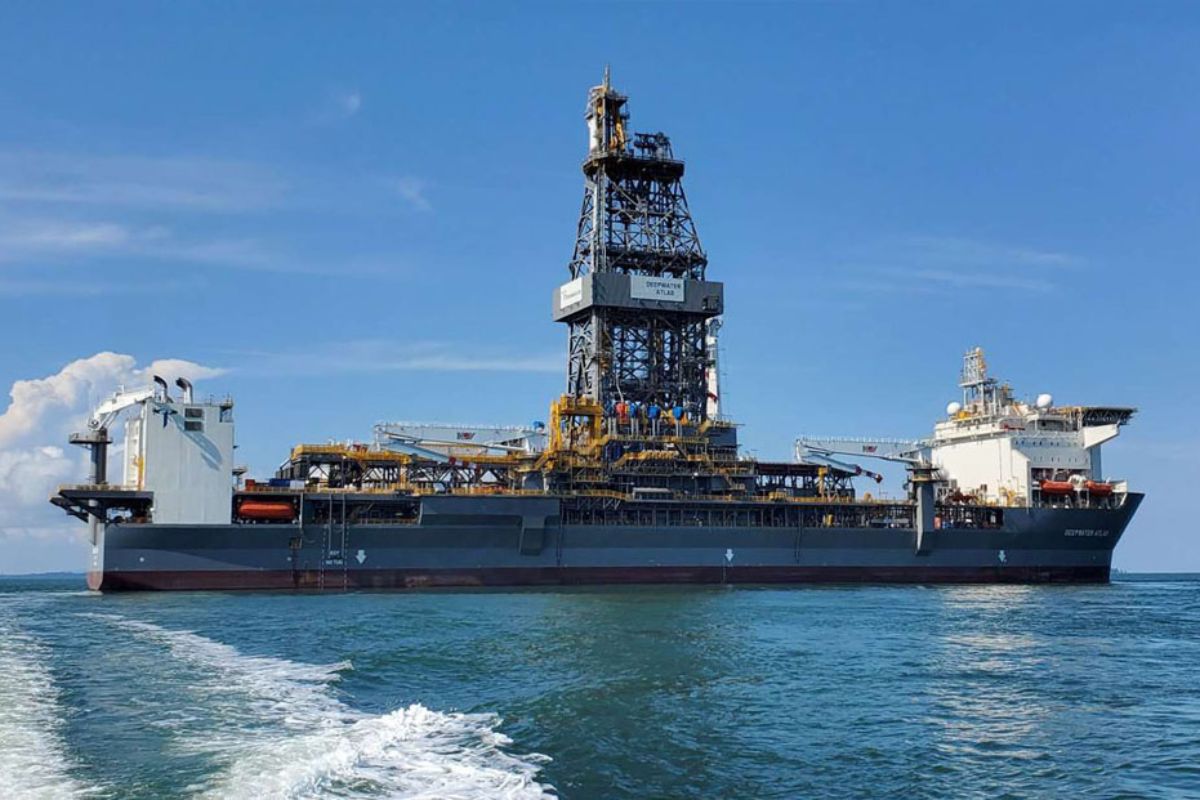


With Dynamic GPS Technology And Thrusters That Adjust Thousands Of Times Per Second, This Colossal Machine Drills Wells 2 Km Deep Even In The Middle Of Storms.
Deepwater oil exploration requires one of the most sophisticated machines ever built by mankind: the dynamically positioned drillship. This true floating industrial city operates in some of the most hostile environments on the planet, maintaining its position with meter-level precision, without the use of anchors, to drill the ocean floor kilometers deep.
The cost to keep one of these engineering marvels operational can reach US$ 1 million per day. But what justifies such a high price? The answer lies in a combination of cutting-edge technology, a highly specialized crew, and the ability to withstand the most extreme forces of nature.
What Is The Drillship Like On The Inside?
A modern drillship is a floating industrial complex. With a ship-shaped hull, it can quickly move between different drilling locations. Its most striking feature is the immense drilling tower, or “derrick”, mounted at the center of the deck, and the “moon pool”, an opening in the hull through which equipment descends to the seabed.
-
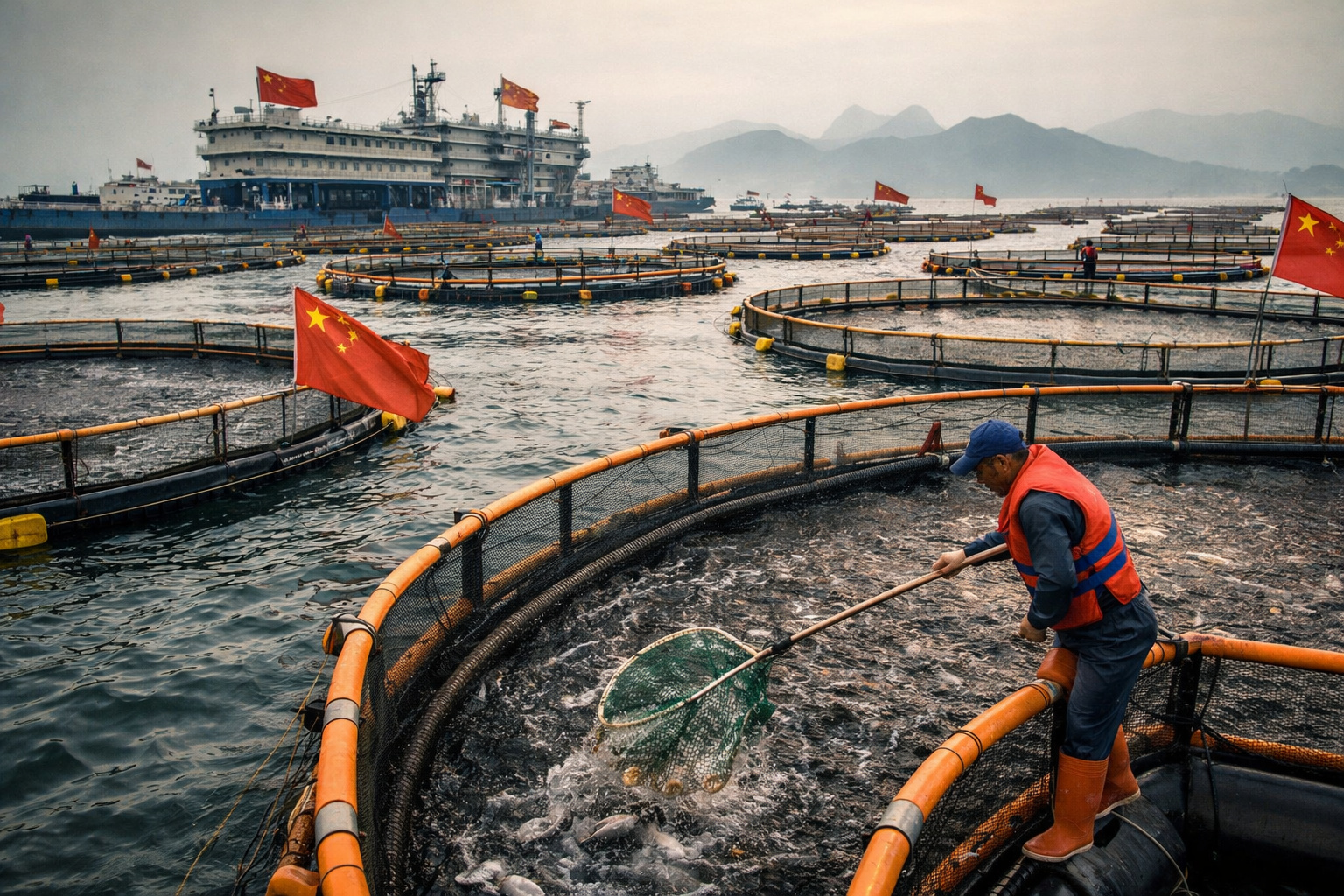
Neither Brazil nor the USA: China produces over 60% of the world’s farmed fish and accounts for about 40% of all global seafood, using industrial-scale aquaculture megafarms to influence the international market and supply billions of people.
-
Archaeologists opened the only Etruscan chamber never looted in 2,600 years and found four individuals lying on stone beds with 110 intact objects around them, and the inscriptions found in the tomb have not yet been deciphered because the Etruscan language is a mystery that science has not yet solved.

-
Health issues urgent alert for flu and calls for the vaccination of the elderly, children, and pregnant women this Saturday with Day D and drive-thru in Curitiba.

-
What seemed like waste has turned into a barrier, and now human hair collected from salons helps retain debris in the water of ancestral channels in Latin America.

To operate 24 hours a day, the vessel has a crew of nearly 200 people, divided between the maritime team, which navigates the ship, the drilling team, which operates the drill, and a range of outsourced specialists. One of the most important professionals on board is the Dynamic Positioning Operator (DPO), who is responsible for operating the “autopilot” that keeps the ship stationary.
The Technology To Stay Still: How Does Dynamic Positioning (DP) Work?
The ability of a drillship weighing thousands of tons to remain fixed over a point in the ocean is the greatest feat of its engineering. The technology behind this is Dynamic Positioning (DP).
The system functions like an electronic brain that uses a mathematical model of the ship to predict how it will react to the forces of wind, waves, and currents. This brain receives real-time information from a network of sensors:
- DGPS (Differential GPS): provides the ship’s geographical position with meter-level accuracy.
- Gyrocompasses: indicate the direction (bow) to which the ship is pointing.
- Motion Sensors (MRU): measure the roll and pitch of the vessel.
- Wind Sensors: detect wind speed and direction.
Based on this data, the DP computer commands multiple thrusters, which can rotate 360 degrees, to generate a force exactly equal and opposite to the forces of nature, canceling their effect and keeping the ship stationary. The system is proactive: it predicts the effect of a gust of wind and reacts before the ship even starts to move.
The DP1, DP2, And DP3 Classes That Ensure Operation
To ensure safety, DP systems are classified into three levels of redundancy, as defined by the International Maritime Organization (IMO).
DP Class 1: has no redundancy. A single failure can cause loss of position.
DP Class 2: has redundancy in active components (generators, thrusters). It does not lose position with a single active failure, but is still vulnerable to failures in cables or pipelines.
DP Class 3: is the highest level. The drillship must survive any single failure, including fire or flooding in a compartment. Redundant systems are physically separated. Ships drilling in deepwater are almost always DP Class 3.
The One Million Dollar Account: Where Does The Daily Cost To Operate The Drillship Come From?
The claim that a drillship costs US$ 1 million per day is realistic, but it is necessary to understand where this value comes from. The cost is not just the rent of the ship.
Most of it is the day rate, which oil companies pay to drilling companies. In 2024 and 2025, for the most advanced drills, this rate is in the range of US$ 450,000 to US$ 650,000 per day. The remainder comes from other operational costs that the oil company needs to cover:
- Fuel: to power the ship’s power plant.
- Logistics: helicopters for personnel transport and support boats to deliver supplies.
- Third-Party Services: dozens of specialists on board for specific operations such as cementing and well profiling.
In total, the total cost of the drilling campaign can indeed exceed US$ 1 million per day.
What Happens When Extreme Weather Challenges Technology?

A drillship is designed to withstand extreme weather events, such as Category 5 hurricanes. However, drilling operations are suspended long before such conditions are reached to ensure safety.
When the weather worsens, strict protocols are activated. First, the most sensitive operations are suspended. If conditions worsen, drilling is stopped, the well is capped with safety valves, and the drill string is disconnected. In the case of a hurricane, non-essential crew members are evacuated, and the drillship uses its own propulsion to navigate out of the storm’s path, a crucial advantage over fixed platforms.






De Navio eu só sei o nome, mas pela reportagem descrita acima, essas PLANTAFORMAS são operadas por Profissionais de alto conhecimento, pois é um serviço ,que não se pode errar .
Muito interessante esse navio primeira vez que eu lhe uma matéria tão importante gostei muito bem explicado
Veja como é caro. E a ecochata ET impediu um navio sinda de perfurar a margem equatorial. Há estava lá esperando, custando muito e mesmo assim ela não permitiu
Esses são os custos operacionais deste navio sonda de maior tecnologia. Porém em momento algum a notícia disse que ele está no Brasil parado!
Os que temos aqui são mais simples, de menor tecnologia, mas eficientes também, porém com um risco maior.
A questão da margem equatorial é a segurança ambiental, ela deve existir, assim como existirá. Já estão fazendo testes em outros pontos de perfuração que já foi concedida a licença ambiental pré-exploratória.
Ninguém está contra o desenvolvimento, mas esse tem que ser um desenvolvimento seguro, responsável e sustentável! Não queremos reviver os descasos ambientais Brumadinho e Mariana.
Eu já trabalhei em 2 navio desses ns22 e ns24 o ns22 teve problemas com o BOP estava dando falha na válvulas dele isso já tem mais de 20 anos .
Ao seu ver, pela sobrevivência, existe risco de vazamento em um navio deste?