





 Portuguese
  English
  Spanish
  4 min of reading
  0 comments


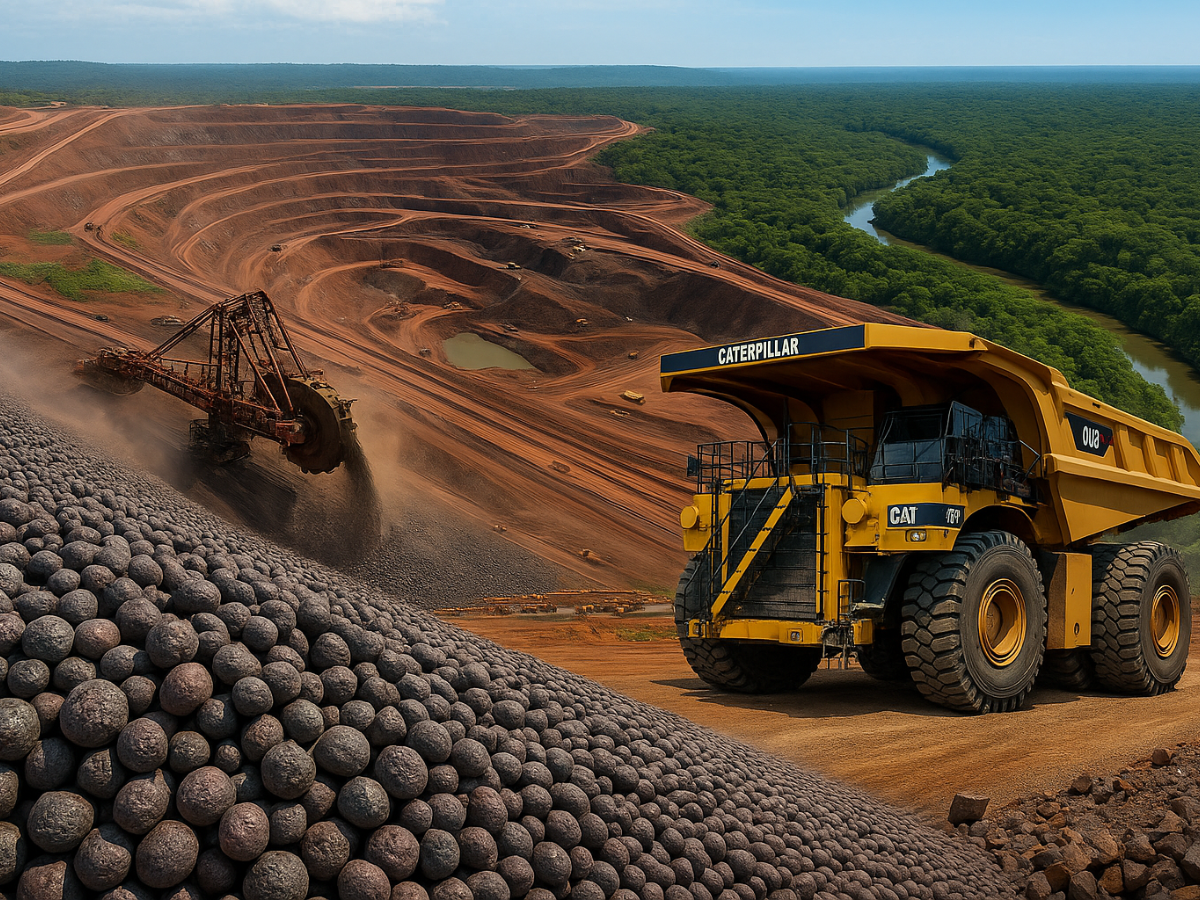
With Truckless Operation, Dry Processing, and No Dams, the S11D Project in Carajás (PA) Represents the Future of Mining, but Its Construction Was a Saga of Engineering and Socio-Environmental Challenges
In the heart of the Brazilian Amazon, in Canaã dos Carajás (PA), Vale S.A. built a monument to innovation and scale: the S11D Eliezer Batista Complex. Considered the largest undertaking in the company’s history and the iron ore industry, the S11D project is acclaimed as the world’s most technological mine.
Born from an investment nearing US$ 19.5 billion, the S11D project was designed to redefine sustainability and efficiency standards in mining. Understand the “battle” for its construction, its revolutionary technologies, and the complex impacts of a giant amid the largest forest on the planet.
The Genesis of a Giant, the Vision Behind the S11D Project
The S11D project was born from Vale’s ambition to strengthen its leadership in the global iron ore market, focusing on a high-quality product (66.48% iron content) to meet the growing Asian demand.
-
Drought may be creating stronger superbugs in the soil and helping antibiotic resistance reach hospitals, warns a study highlighting a problem that could grow alongside extreme weather.

-
The biggest scam in history: Napoleon’s France deceived the United States by selling them a territory that was Spanish.

-
Why is the Danakil Desert so dangerous? It has unstable terrain and how extreme temperatures and toxic gases turn the region into one of the most hostile environments on Earth.
-
With a height of 221 meters and a capacity for trillions of liters, Hoover Dam still holds a trick that makes water defy logic.

The undertaking was officially named “S11D Eliezer Batista Complex,” in honor of Vale’s former president, Eliezer Batista, a visionary who advocated for large-scale projects and the integration of environmental and social aspects from the outset.
The nominal capacity was planned at 90 million metric tons per year (Mtpa). The goal was not only volume but to revolutionize mining with a focus on sustainability, by eliminating trucks in the pit and drastically saving water in processing.
The Billion-Dollar Investment and Challenges in the Amazon
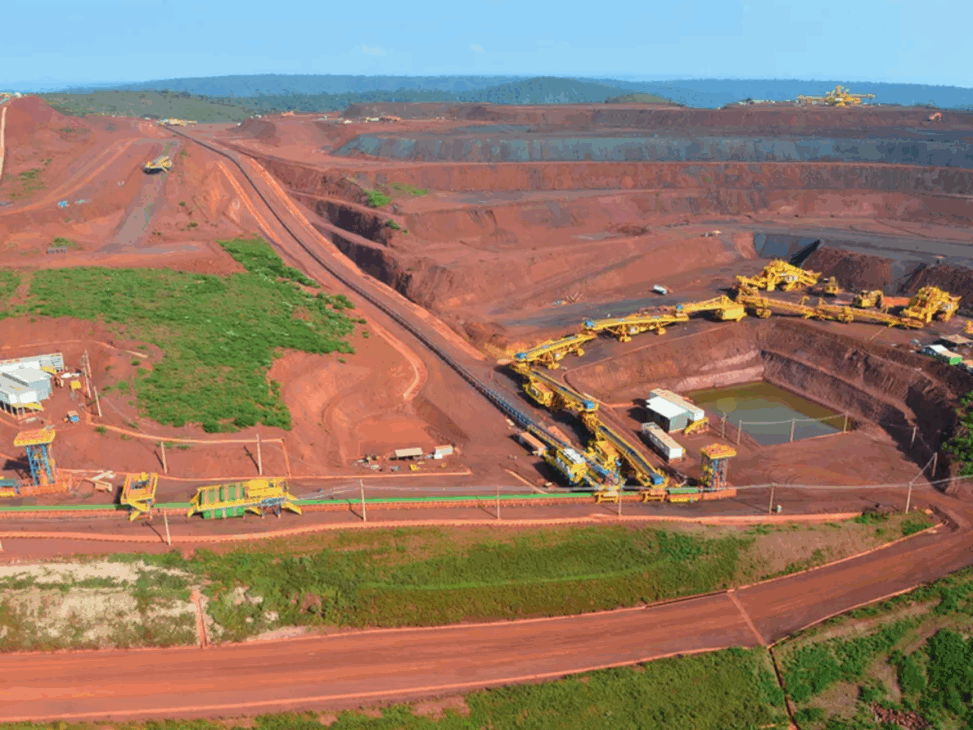
The investment figure reflects the magnitude of the project. Although frequently cited at US$ 14 billion, the total value, including logistics infrastructure, approaches US$ 19.5 billion, with about US$ 8 billion for the mine and plant, and more than US$ 11 billion for the expansion of the Carajás Railway (EFC) and the Ponta da Madeira port terminal.
Building the S11D project in the heart of the Amazon rainforest posed colossal engineering and logistical challenges.
The remote location required meticulous planning of equipment and exceptional project management to overcome obstacles and meet timelines, with the electromechanical assembly of the main system consuming more than 5 million man-hours of construction.
Inside the Operation of the S11D Project
Innovation is the pillar of the S11D project. Its operations are marked by technologies that set new standards for the industry.
“Truckless” System: The main innovation of S11D is the replacement of the conventional fleet of off-road trucks with an integrated system of mobile crushers and conveyor belts. This approach reduces diesel consumption by over 70% and greenhouse gas emissions by about 50%.
Dry Processing: The beneficiation of ore uses the natural moisture of the material, completely eliminating the need for tailings dams. This technology results in a 93% savings in water consumption compared to conventional methods, equivalent to the annual supply for a city of 400,000 inhabitants.
Autonomous Operations: Vale has progressively implemented automation in the Carajás complex. The S11D project features a private 4G/LTE network to operate drills and, in the future, autonomous trucks for auxiliary operations.
Socio-Environmental Impacts and the Battle with Communities
The design of the S11D project brought significant environmental benefits. However, its implementation in a highly sensitive area generated complex socio-environmental challenges.
The environmental licensing by IBAMA was rigorous and required the relocation of waste piles, which were initially proposed within the Carajás National Forest, to outside the conservation unit.
The arrival of the mega project to Canaã dos Carajás also intensified agrarian conflicts, leading to the displacement of family farmers and rural communities.
Reports indicate a strong expropriation of the living conditions of the local population, much of which has not been able to integrate into the dynamics of the mining activity.
This “battle” demonstrates the challenge of reconciling large-scale economic development with the protection of the rights and ways of life of pre-existing communities.
Record Performance and the Future of the S11D Project
Since the start of its commercial operations in 2017, the S11D project has demonstrated a successful trajectory. In 2024, the mine achieved a record production of 83.0 Mt, close to its nominal capacity, a feat attributed to maintenance optimization and the high availability of assets.
The future of S11D points to continuous improvement and expansion. Vale plans to increase production capacity by 20 Mtpa starting in 2026, with an additional investment of US$ 2.8 billion.
The S11D project is not only the most technological mine in the world but a scalable platform that consolidates Vale’s leadership in the global high-quality iron ore market for decades.







-

Uma pessoa reagiu a isso.