





 Portuguese
  English
  Spanish
  7 min of reading
  0 comments


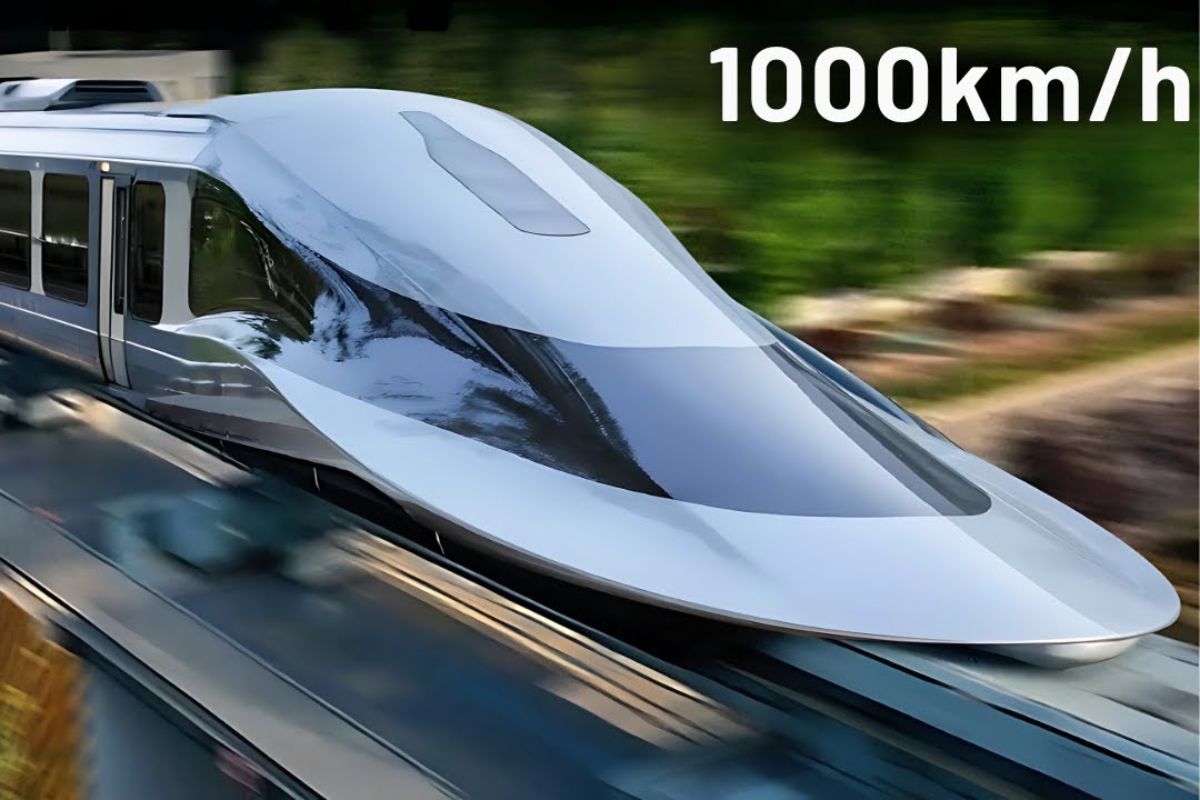
The New Train from China Presented As Maglev of 1,000 km/h Uses Tubes With Almost No Air and Promises to Reduce Trips Like Beijing to Shanghai to Under 2 Hours, Compared to 4.5 Hours. The Speed Surpasses Commercial Airplanes and Puts Noise and Friction Limiters at the Center of the Global Debate.
The new train from China has come on the radar with an objective promise: to deliver 1,000 km/h on land. The idea confronts common sense because a commercial airplane flies at about 885 km/h, and because traditional rail transport has always been limited by friction, noise, and track limitations.
The debate about the new train from China, however, is not just about records. It opens a technical dispute between infrastructure, safety, and a culture of speed: if the gain is in shortening domestic trips, the cost may come in operational complexity, maintenance, and how the system controls risk when speed becomes the norm and not the exception.
What Is the New Train from China and Why Does the 1,000 km/h Mark Attract Attention

Instead of wheels, it floats in the air using magnets that lift it above the track, reducing the friction that slows conventional trains.
-
In A European City, The Country’s Largest Railway Junction Was Modernized Without Closing Its Doors, Kept Trains Running During Years Of Construction, Now Serves Up To 60,000 Passengers Per Day, And Installed Solar Panels That Generate About 30% Of Its Energy
-
Famous Brazilian Railway May Become a Parking Lot
-
The Country of “Punctual As a Train” Admits It Has Lost Control: High-Speed Trains Delay, Stop, Disappear from the Map and Turn 6-Hour Trips into 10, While Deutsche Bahn Promises Restructuring in 2026 But Faces 19th Century Infrastructure, Staff Shortages and Sections Closed for Months
-
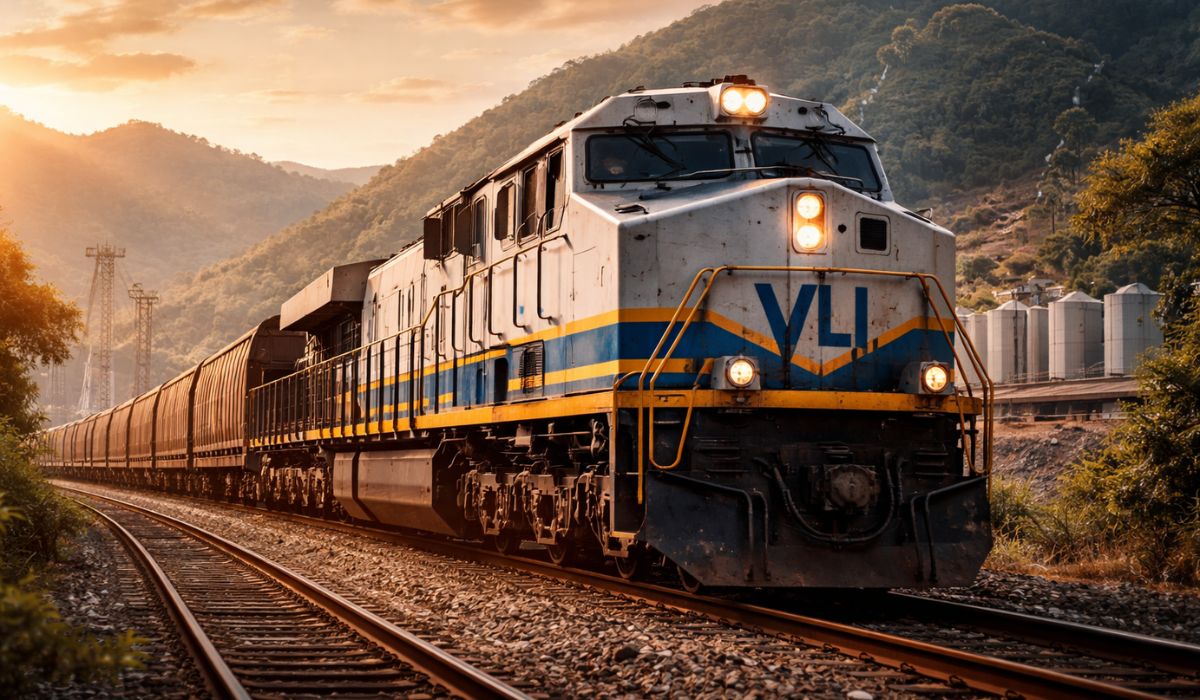
With an Investment of R$ 700 Million in One of the Country’s Main Rail Networks, VLI Reinforces Infrastructure, Receives 8 New Locomotives, and Expands the Corridor Connecting 7 States, Boosting Jobs and the Transportation of Grains, Ore, and Oil Products to the Port of Santos

With less friction, speed ceases to be a rigid ceiling imposed by mechanical contact.
The comparison with commercial airplanes appears as a direct provocation.
The new train from China is presented with a speed of 1,000 km/h, above the 885 km/h mentioned for a commercial airplane in cruise.
The technical message is simple: if the speed of movement on land approaches or exceeds that of air, the boundary between domestic rail routes and domestic air routes becomes less obvious.
To sustain this leap, the described Maglev does not rely solely on magnetic levitation.
The project is associated with the use of tubes where there is almost no air, reducing wind resistance.
It is an attempt to tackle the second major enemy of speed: aerodynamic drag, which increases as speed rises.
Tubes, Little Air and the Logic of Cutting Wind Friction
The explanation offered for the tubes is that the new train from China travels inside an environment with almost no air, reducing resistance that, in trains exposed to the open sky, requires constant energy to overcome the wind.
It also uses electronic valves as part of the system, reinforcing that it is not just a different track, but an infrastructure with fine control of the environment.
In operational terms, this combination of Maglev and tubes seeks to deliver stability at high speeds without the drag penalty that dominates at extreme speeds.
Without touching the tracks and with little air in the tubes, the new train from China is described as capable of maintaining acceleration and cruising with fewer losses to heat and turbulence.
Even with this logic, the central point is that tubes change the rules of the game.
Tubes require a chain of systems, from valve control to constant circuit monitoring, and this shifts the discussion from “the train is fast” to “the entire infrastructure needs to be precise.”
Beijing to Shanghai in Under 2 Hours: The Time Shock for Domestic Routes
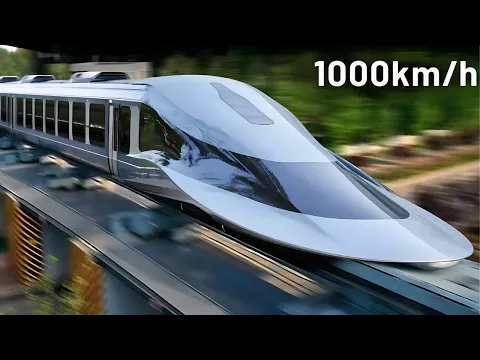

The most concrete promise of the new train from China is to cover the distance between Beijing and Shanghai in less than 2 hours.
The contrast presented is with a trip that takes 4.5 hours on very fast trains, pointing to a time cut that, in domestic routes, changes travel decisions.
This type of reduction has a cascading effect. If a route that is already fast drops to under 2 hours, the comparison with commercial airplanes ceases to be just maximum speed and becomes total travel time.
The new train from China begins to compete on convenience: shorter travel, fewer steps, and the perception that ground travel can be as direct as air travel.
Here, the word speed becomes more than just a number.
Speed becomes scheduling compression: a workday that previously required larger margins can fit into smaller windows, and this fuels the competition between tracks and skies.
The Chinese High-Speed Family: CRH2-380A and CR380D as the Basis for the Leap
The CRH2-380A is described with 420 km/h in official tests and with the ability to maintain over 350 km/h for hundreds of kilometers without damage.
An advanced cooling system that uses liquid air to keep the engines at the proper temperature even after hours at maximum power.
It also states that the CRH2-380A can receive electricity during movement, reducing the need for technical stops.
The CR380D, meanwhile, is presented as the first train built entirely with Chinese technology and engineering from scratch.
It is described as practically silent even above 350 km/h, and the “dragon head” front shape is linked to aerodynamics.
The technical reading is clear: shape and airflow matter as much as power.
In summary, these examples place the new train from China within a sequence: proving that it’s possible to run fast over long stretches; proving that it’s possible to run fast with less noise; and then pushing the Maglev in tubes to the 1,000 km/h mark.
Japan and Europe: The Precision Standard That the New Train from China Seeks to Surpass
The landscape includes the Shinkansen E5, described as the fastest commercial train in Japan, with 320 km/h.
The relevant data is not just speed, but punctuality: average delay of only 18 seconds per year.
60 years of operation without a single fatal accident, and it mentions regenerative braking that produces more electricity than it consumes when the train descends.
Next to it appears the L0 Maglev, with 603 km/h, not yet operational commercially and expected to enter service in 2027.
The L0 Maglev is described as superconductive magnetic levitation, floating 10 cm above the tracks, and connecting Tokyo to Osaka in 67 minutes, versus 2 hours and 15 minutes on the fastest Shinkansen.
In Europe, the ICE 3 is described with 368 km/h in tests and commercial operation at 300 km/h for safety reasons.
Distributed traction and an active tilt system, with sensors that monitor track conditions. It also mentions wheels and chassis with special metals to resist extreme wear during decades of high-speed operation.
Another European example is the Italo AGV, cited with 360 km/h and commercial operation at 300 km/h.
It is described without traditional locomotives, with engines distributed along the train, ultralight materials, and suspension that reduces vibrations.
These examples serve to frame the new train from China: it tries to go beyond high speed with wheels and beyond open Maglev, aiming for a Maglev in tubes to shift the speed ceiling and, at the same time, compete for reliability and regularity.
What the Alpha X Reveals About the Race to 2030
The cutoff ends with the Shinkansen Alpha X, described as an experimental train of 10 cars, 320 m long and 400 km/h in tests.
It is presented with a 22 m nose to reduce air resistance and with sensors analyzing more than 10,000 data points during the trip, controlling everything from temperature to vibrations.
The Alpha X can adjust its shape while moving to maintain stability in strong winds or changes in air.
It also describes a braking system capable of stopping completely from 400 km/h in 2 minutes. The promise of entry into service is 2030.
This part is not China, but explains the environment: if Japan projects 2030 as a new frontier, the new train from China tries to anticipate the shock this decade with a Maglev of 1,000 km/h in tubes.
The competition shifts from just “who is faster” to who can make speed viable safely.
Domestic Aviation in the Crosshairs and the Paradox of Selling Speed with Operational Limits
When the new train from China is presented as faster than commercial airplanes on domestic routes, the narrated gain is obvious.
The paradox is that extreme speed requires operational discipline: what makes sense in a tube with little air depends on redundancy, monitoring, and quick responses to any failure because the margin of error decreases as speed increases.
The same paradox appears in the imaginary: the culture of speed may celebrate the number, but safety demands that infrastructure imposes limits and procedures.
In practice, the new train from China, the Maglev, and the tubes place a technical question at the center: how far can land transport push speed while maintaining routine predictability.
The new train from China is presented as a breakthrough: a Maglev of 1,000 km/h in tubes with almost no air, promising to shorten Beijing to Shanghai to under 2 hours and to surpass commercial airplanes in reference speed.
At the same time, the global scenario shows that high speed is also reliability, control, and safety, from the Shinkansen E5 to the L0 Maglev and the Alpha X.
If the decade will truly witness the new train from China competing with commercial airplanes on domestic routes, the conversation will not only be about speed but about who can operate, maintain, and scale a Maglev and tube system without turning technological advancement into risk.
Would you swap a commercial airplane for the new train from China if the trip dropped to under 2 hours, or would the speed of 1,000 km/h still leave you skeptical?








-

Uma pessoa reagiu a isso.