





 Portuguese
  English
  Spanish
  3 min of reading
  1 comment


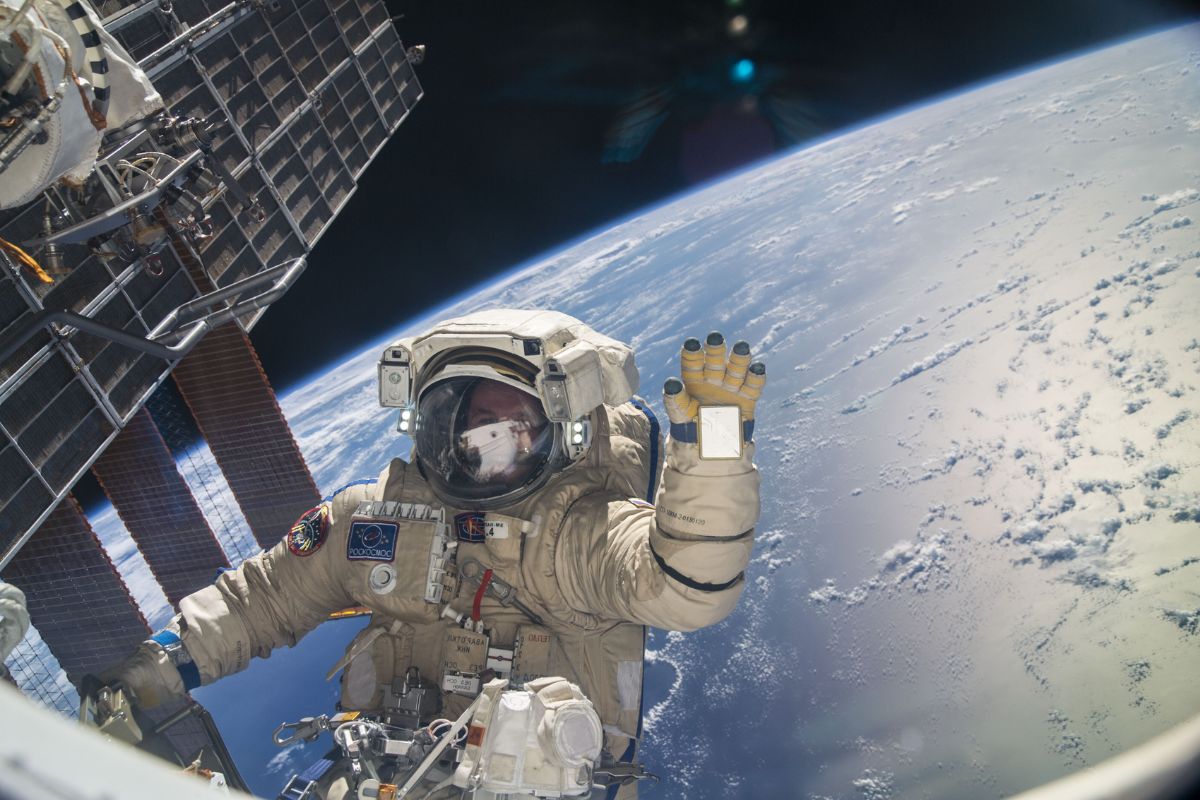


While the International Space Station orbits a mere 400 km, NASA’s Voyager 1 probe, launched in 1977, is already the farthest human-made object from Earth, and in May 2025, it continues to send data from interstellar space, almost 25 billion kilometers away.
As of May 2025, Voyager 1 is an astonishing 24.879 billion kilometers from Earth, unequivocally positioning itself as the farthest human-made object from Earth. This article details its cosmic odyssey, discoveries, and ongoing communication from deep space.
Common perception may point to the International Space Station (ISS) as a symbol of how far we’ve come. However, the ISS orbits Earth at an average altitude of only 400 kilometers. The true distance record holder is the Voyager 1 probe, which in May 2025 was approximately 24.879 billion kilometers (about 166.3 Astronomical Units – AU) away from us, already navigating through interstellar space. This analysis explores the incredible journey of Voyager 1.
The Epic Journey of Voyager 1
Launched by NASA on September 5, 1977, the Voyager 1 mission was designed to take advantage of a rare alignment of the outer gas giant planets. Its flybys of Jupiter in 1979 and Saturn in 1980 were filled with transformative discoveries, including active volcanism on Jupiter’s moon Io, the faint rings of the gas giant, and Titan’s dense hydrocarbon-rich atmosphere, Saturn’s largest moon.
-
China has launched the world’s first floating artificial island, a scientific structure designed to face open seas, test equipment weighing hundreds of tons, and reach depths of 10,000 meters.
-
China accelerates global science and may surpass the United States in 2 years with increased public investment, continuous growth, and direct impact on the global technological competition.

-
Scientific studies indicate that drought may be strengthening a much greater silent threat: more resistant superbugs.

-
Man builds functional 5-meter submarine in his garage using gas cylinders, PVC pipes, and a refrigerator motor, and navigates with the vessel on a lake in Colombia.


The optimized trajectory and the crucial flyby of Titan propelled Voyager 1 out of the plane of the ecliptic, into deep space. On February 17, 1998, it surpassed the Pioneer 10 probe, officially becoming the farthest human-made object.
The Historic Entry of Voyager 1 into Interstellar Space
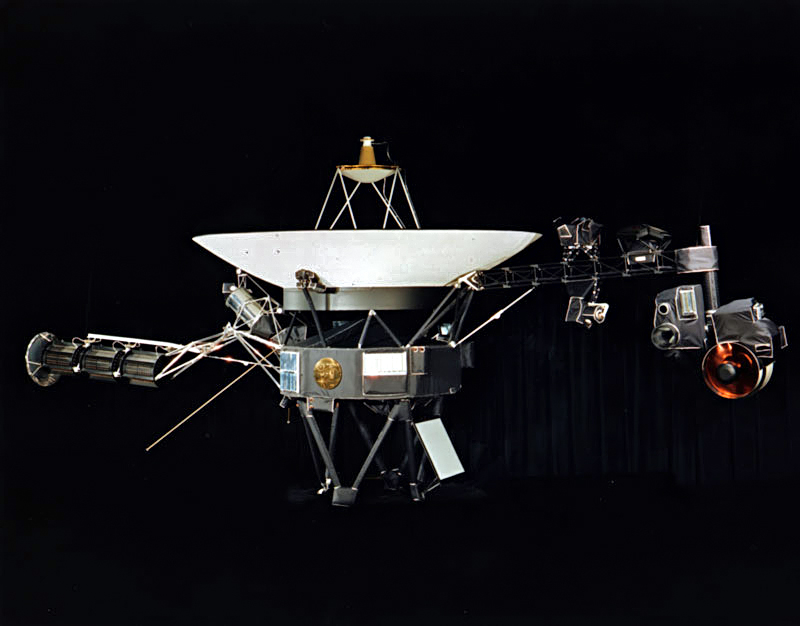
The influence of our Sun creates a “bubble” of magnetic energy called the heliosphere. Its outer boundary is the heliopause. On August 25, 2012, at a distance of approximately 122 AU from the Sun, Voyager 1 crossed the heliopause, becoming the first human artifact to enter interstellar space – the space between the stars. Confirmation came through the analysis of galactic cosmic ray data and, later, plasma oscillations caused by a solar eruption that reached the probe.
How Voyager 1, the farthest human-made object from Earth, Is Still Sending Valuable Data
Even billions of kilometers away, Voyager 1 continues to send data. This is possible thanks to NASA’s Deep Space Network (DSN), a global system of giant radio antennas. The received signals are incredibly weak, about 20 billion times weaker than the energy from a digital wristwatch.
In May 2025, a radio signal took over 23 hours to travel one way between Earth and the probe. Despite the gradual shutdown of instruments to save power, in May 2025, the Magnetometer (MAG), the Plasma Wave Subsystem (PWS), and the Low-Energy Charged Particles instrument (LECP*) were still operational (*with the LECP planned to be shut down during 2025).
The International Space Station (ISS) in Perspective
In sharp contrast, the ISS operates in Low Earth Orbit (LEO), at an altitude of about 400 km. Its purpose is to serve as a microgravity research laboratory and maintain a continuous human presence in nearby space. The ISS is therefore millions of times closer to Earth than Voyager 1, with completely distinct operational goals and challenges.
A Testament to Ingenuity and Resilience
Designed for a primary mission of five years, Voyager 1 has been operating for over 47 years. Its exceptional longevity is due to robust design, redundant systems, and remote reprogramming capability. Recently, the NASA/JPL team overcame a complex data corruption failure (November 2023 – June 2024) and, in March 2025, managed to reactivate primary thrusters that had been inactive for 21 years.
Its power comes from three Radioisotope Thermoelectric Generators (RTGs) powered by Plutonium-238, whose output gradually diminishes. On board, Voyager 1 carries the Golden Record, a time capsule with images, sounds, and music from Earth, aimed at any extraterrestrial civilization that may come across it.
Voyager 1, the farthest human-made object from Earth, and Its Ongoing Legacy for Science
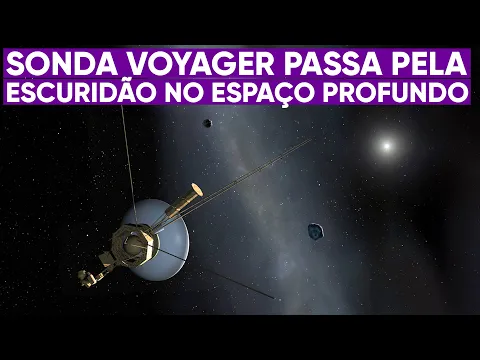

Undoubtedly, NASA’s Voyager 1 probe is the farthest human-made object from Earth and a pioneer in interstellar space. Its journey and the scientific discoveries it continues to provide have transformed our understanding of the Solar System and the medium between stars.
It represents the insatiable human curiosity and extraordinary engineering capability. Expected to operate at least one instrument until the 2030s, Voyager 1 will then continue its quiet and eternal journey through the Milky Way, a lasting testament to our quest for knowledge.








Não sei mentir assim. Aqui qdo o apresentador chama o reporter de rua as vezes espera 20, 30 segundos pra retorno. Kkkk