





 Portuguese
  English
  Spanish
  5 min of reading
  0 comments


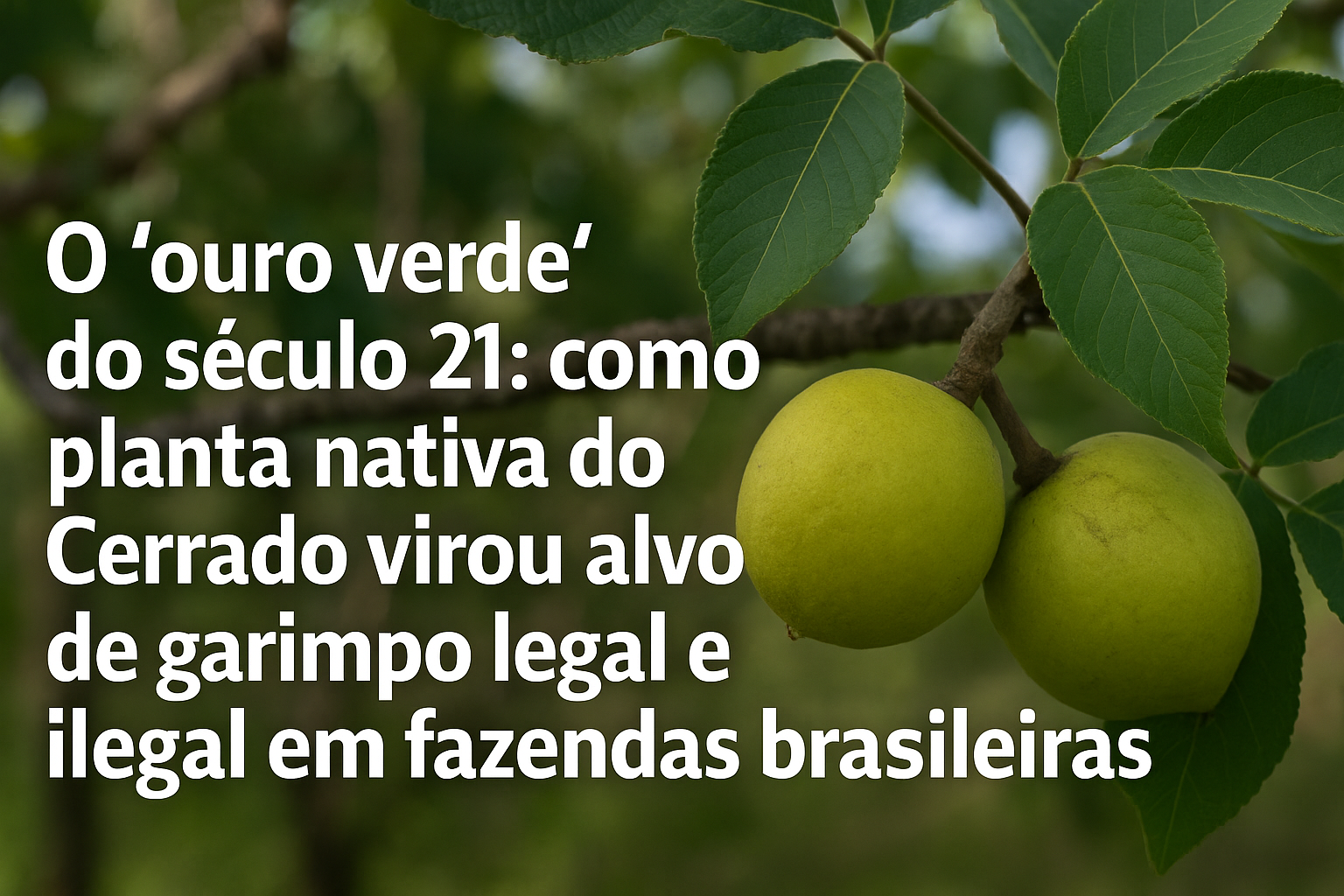
Native Plant of the Cerrado, Considered the Green Gold of the 21st Century, Is in the Crosshairs of Green Mining and Biopiracy in Brazil. Understand the Risks of Illegal Exploration and the Role of Sustainable Agriculture.
The Brazilian Cerrado, the second largest biome in South America and known as the “cradle of waters,” is at the center of a worrying and silent race. Native plants once restricted to local use by traditional communities and family farmers have come to be seen as a natural treasure. This “green gold” of the 21st century, as it has been dubbed by scholars and the productive sector, represents species of high economic value, with applications in areas such as food, cosmetics, and medicine.
The growing interest has given rise to a new type of exploitation in the field: the so-called green mining. This activity involves both legal initiatives for cultivation and management as well as illegal and predatory practices that encroach on private lands, conservation units, and traditional territories. Data from ICMBio and the Ministry of the Environment indicate an increase in occurrences of clandestine collection and illegal exportation of genetic material from the Cerrado, one of the most threatened biomes in the country.
What Makes Green Gold So Valuable and Coveted?
Among the most sought-after species are pequi, baru, and araticum. Pequi, in addition to being a symbol of regional cuisine, is a source of oils rich in antioxidants, widely used in the cosmetics and functional foods industry.
-
One of the most important lakes in the United States for birds, the balance of nature, and the climate has dried to historic levels, leaving boats stranded, revealing salt flats, and showing how the lack of water can transform an entire landscape.

-
It’s not Cristiano Ronaldo or Messi: the richest football player in the world is only 27 years old, has a fortune of 100 billion reais, and is the nephew of a sultan from an Asian country that few people know about.

-
At 77, the king of one of the most famous and powerful crowns on the planet is said to be under pressure to leave the throne, while behind the scenes there are already talks of a new coronation that could cost R$ 260 million.

-
Chinese researchers have created bamboo drones that fly with the same precision as conventional models and have released the flight control software for free to the entire world in a technology that could revolutionize sustainable aviation.


Baru, in turn, has gained international prominence due to the nutritional properties of its seeds, while araticum piques the interest of laboratories for the medicinal potential of its compounds.
These plants, which are part of the group of species considered rare in Brazil, have gained strategic importance in markets that value natural ingredients and biodiversity. The advancement of sustainable consumption and the search for products with identity and traceability have transformed these species into valuable assets, attracting interest from both national and multinational companies. This, however, has created loopholes for the advance of biopiracy and uncontrolled exploitation.
Green Mining and Biopiracy in Brazil: The Dark Side of Exploitation
While there are advancements in regulating exploitation and promoting sustainable agriculture, illegal green mining is growing in remote areas that are difficult to monitor.
In various operations, inspectors from ICMBio and the Ministry of Agriculture have identified clandestine extraction of fruits and seeds in conservation units and indigenous lands, in violation of management and preservation rules.
Illegal green mining often occurs in a disguised manner, with the entry of exploiters into properties and reserves at night or through poorly monitored routes. In addition to irregular collection, there are cases of illegal exportation of seeds and active ingredients.
This material often supplies foreign companies that develop patented products without any sharing of benefits with Brazil or with the communities that traditionally use these plants. It is biopiracy in its most harmful form: silent, difficult to trace, and with devastating impacts on the economy and biodiversity.
Sustainable Agriculture: A Response That Comes from the Cerrado Itself
Amid the scenario of predatory exploitation, initiatives are emerging that show it is possible to generate income while conserving the Cerrado. Family farmers, cooperatives, and traditional communities, with the support of organizations like Embrapa, have been investing in sustainable production systems.
These models include the integration of native species into agroforestry systems and productive consortia, maintaining the vegetation of the biome and favoring local biodiversity.
The legally and traceably harvested fruits gain added value and find markets willing to pay more for certified products. This type of management, in addition to conserving native species and natural resources, helps strengthen local economies and avoids cycles of dependence on illegal practices.
Success stories have been recorded in states such as Goiás, Minas Gerais, and Tocantins, where certified collection projects for pequi and baru show that conservation and income generation can go hand in hand.
The Challenge of Enforcement and the Role of Law
Brazil has advanced legislation for the protection of its genetic heritage, especially with the Biodiversity Law (Law No. 13.123/2015), which establishes rules for access to genetic heritage and associated traditional knowledge. However, practical application faces serious difficulties. The Cerrado covers about 2 million km², making monitoring a huge logistical challenge. Environmental agencies have small teams and limited budgets, which undermines the effectiveness of enforcement.
The use of technology such as satellites and drones has been advocated by experts as a way to improve control over areas and inhibit the actions of criminals. Another proposal under discussion is to strengthen partnerships between federal, state, and municipal agencies, along with expanding incentives for the legal and certified production of green gold.
Environmental and Social Impacts of Illegal Exploitation
The indiscriminate removal of native plants from the Cerrado compromises the natural regeneration of the biome and affects the balance of ecosystems. Many of these plants play a fundamental role in feeding fauna, protecting soil, and maintaining the water cycle.
By depleting these species, illegal green mining also weakens traditional communities and small producers who depend on natural resources for their livelihood.
In addition to environmental damage, illegal exploitation and biopiracy devalue products from legal practices. Those who invest in proper management and certification face unfair competition from products obtained clandestinely, often sold at lower prices in the informal market.
Paths to Protect Green Gold and the Cerrado
Protecting Brazil’s green gold requires a combination of strategies. It is necessary to strengthen enforcement, invest in remote monitoring technology, and bolster sustainable agriculture projects. At the same time, public policies need to create mechanisms to value legal products and punish illegal practices more rigorously.
Consumers also play an essential role in this process. By choosing products with certification of origin and traceability, they contribute to the preservation of the biome and help combat the clandestine market. Companies, in turn, must make real commitments to conservation, avoiding practices that encourage the advance of green mining.
The green gold of the 21st century, represented by the native plants of the Cerrado, symbolizes the potential of a Brazil that can unite natural wealth with sustainable development. However, this potential is under threat from the advance of green mining and biopiracy.
The choice between predatory exploitation and preservation is in our hands. The future of the Cerrado and its rare species depends on coordinated actions between the public power, private sector, and civil society.






-

-

-

7 pessoas reagiram a isso.