





 Portuguese
  English
  Spanish
  8 min of reading
  1 comment


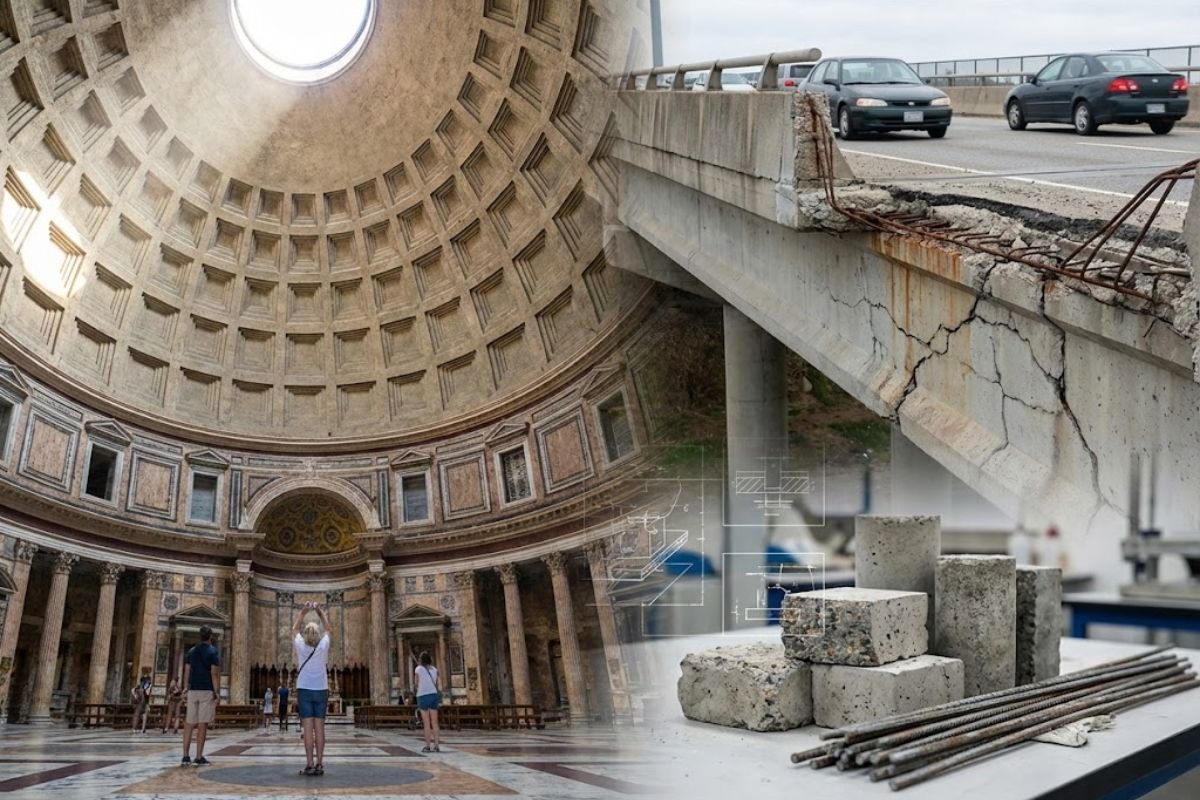


Raised Almost Two Thousand Years Ago, the Largest Unreinforced Concrete Dome of the Pantheon Survives Without Steel Bars, While Modern Bridges and Overpasses Crack with Corrosion. Between Water in the Mix, Volcanic Ash, and Economic Decisions, Durability Becomes a Technical Debate About Compression, Tension, and Maintenance Still Here Today
The Pantheon houses the largest unreinforced concrete dome in the world, built almost two thousand years ago, and this longevity demands a direct comparison with modern works that crack in a few decades. When the largest unreinforced concrete dome remains intact, the question ceases to be historical curiosity and becomes a diagnosis of how steel, water, volcanic ash, and design choices shape durability.
The discussion is not limited to saying that the Roman Empire “got it right” and modern engineering “errs.” It involves structural mechanics, the chemistry of mixing, and construction economics: what a structure needs to withstand, for how long, and at what cost. It is at this intersection that the Pantheon becomes a technical reference, and the largest unreinforced concrete dome becomes an uncomfortable comparison for contemporary infrastructure.
The Pantheon and the Question That Won’t Leave the Construction Site

The largest unreinforced concrete dome is in the Pantheon, an ancient Roman temple built almost two thousand years ago.
-
Made from recycled plastic, plastic wood is gaining space in the construction industry because it does not rot, resists moisture, and reduces maintenance costs over the years.

-
Florianópolis will receive a million-dollar BRT that will begin construction in 2026 with nearly 400 million in funding from the federal government and the Inter-American Development Bank, and the map already shows the routes for the exclusive bus corridors.

-
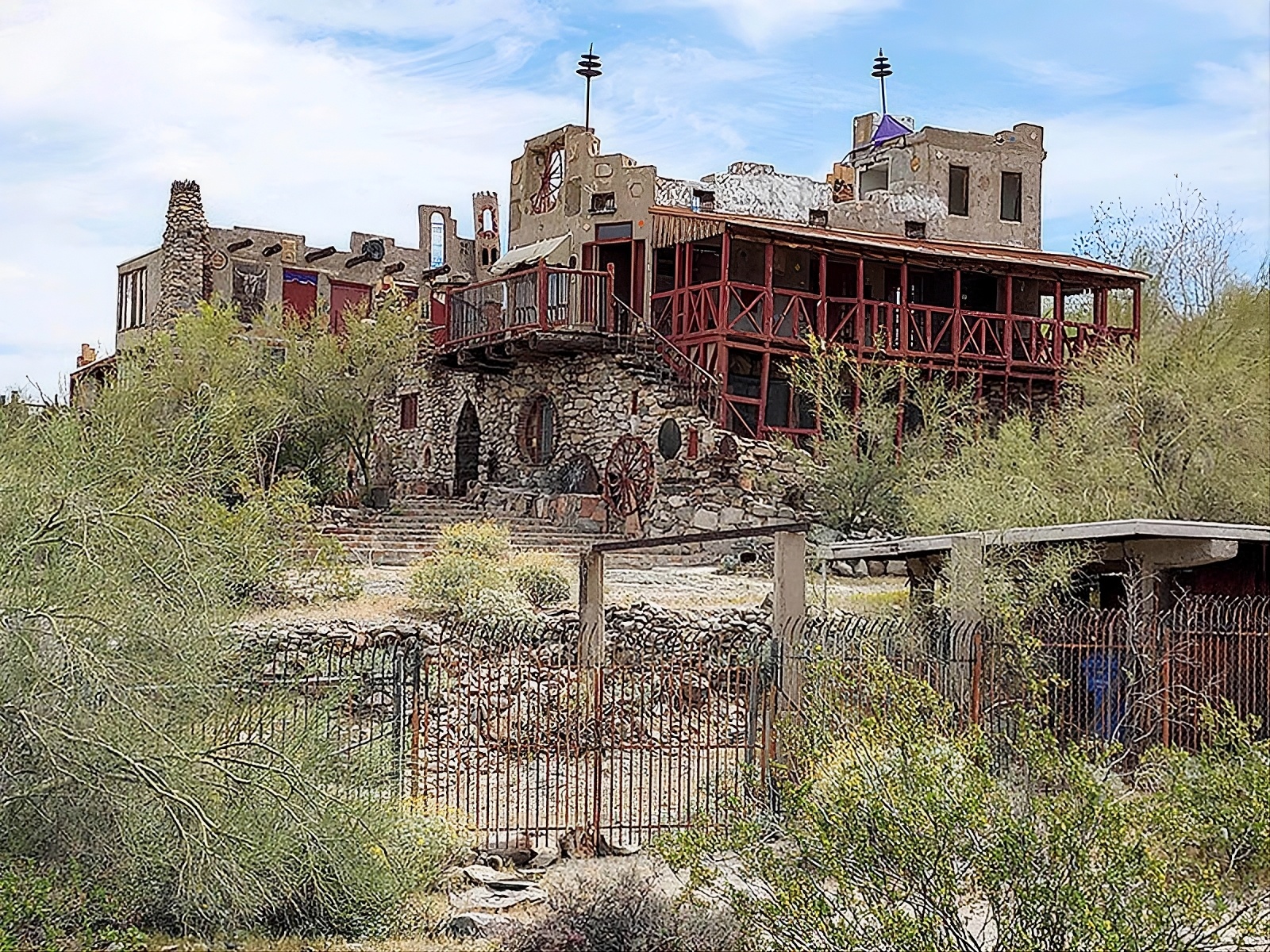
Without a blueprint, without an engineer, and using scrap from the dump, a father spends 15 years building an 18-room castle for his daughter, featuring tram tracks, 13 fireplaces, and over 700 m², which may now be demolished.
-
A megaproject worth R$ 89 billion is advancing in Iraq and promises to change the game in global trade by creating a new corridor between Asia and Europe, reducing traditional routes and repositioning the country as a logistics powerhouse.

The contrast is striking because modern concrete projects, even with solid appearances, can present cracks, fragmentation, and loss of maintenance capacity after just a few decades.
The question that emerges from the Pantheon is straightforward: if a structure from the Roman Empire can last for centuries, why do so many modern works need repairs early on or display visible damage in short timeframes?
The answer, in the presented material, does not point to a single culprit.
It combines the role of steel, the role of water in the mix, the effect of volcanic ash, and the impact of economic decisions on service life.
Steel: Solution for Tension, Frequent Source of Cracks

Concrete reinforced with steel bars is described as the foundation of modern society.
The reinforcement exists because concrete is strong in compression but weak when subjected to tensile forces.
In slender structures, in pieces with large spans, and in elements that need to “hold” flexes, tension appears as an inevitable condition. To resist it, steel is used.
The steel enters for practical reasons listed in the report: robustness, thermal behavior similar to that of concrete, availability, and low cost.
However, steel has a determining fragility: it rusts.
The corrosion of embedded steel reduces the resistance of the reinforcement and, by producing iron oxide, generates expansion.
This expansion creates internal stresses in the concrete and leads to cracks, fragmentation, and eventually complete loss of maintenance capacity, or failure.
The highlighted point is that the corrosion of embedded steel reinforcement is presented as the most common form of concrete deterioration.
This helps explain why modern engineering, despite being more sophisticated in methods and calculations, can suffer from a recurring mechanism.
Steel makes reinforced concrete feasible, but it also introduces a typical path of damage.
Without Steel and With Geometry: How the Romans Maintained Compression

The Romans circumvented the problem in a simple way: they did not put steel in the concrete.
To support unreinforced structures, the strategy was to use geometry to ensure that the concrete resisted primarily to compression and almost never to tension.
The arch and the dome appear as the main resources of this reasoning.
The dome distributes forces in a way that favors compression.
Under this logic, the largest unreinforced concrete dome of the Pantheon stops seeming like a miracle and starts looking like a consistent structural decision: to reduce tension situations and therefore reduce the need for steel.
By eliminating steel, the most vulnerable point cited for the durability of reinforced concrete, the corrosion of the reinforcement, is also eliminated.
Another resource mentioned is mass.
The simplest way to keep concrete under compression is to put weight on top, literally more concrete.
The report uses this reasoning to show that the modern era also applies the same principle in large concrete dams.
Gravity dams and arch dams are designed to withstand water pressure based on their own weight and geometry, reducing tensile stress and decreasing the need for steel.
That’s why the section of these structures grows as depth increases.
Here, the word water appears with a dual role.
Water is the external load that presses on a dam. And water is, also, an ingredient in concrete that defines strength and durability.
The Pantheon’s question traverses these two dimensions.
Water in the Mix: Water-Cement Ratio as a Turning Point
A factor described as basic and decisive is the water-to-cement ratio.
The demonstration cited shows that the strength of concrete decreases as more water is added.
Extra water dilutes the cement paste and weakens the concrete as it cures.
The Romans, according to the presented material, already valued this relationship.
Historical manuscripts indicate that Roman architects sought to mix with the minimum amount of water possible and then compact the material in place using special tamping tools.
Instead of “gaining workability” with more water, the method was to reduce water and compensate with process and compaction.
This detail helps answer why the largest unreinforced concrete dome can last so long. Durability depends not only on the absence of steel.
It also depends on how water was used in the mix and how the concrete was placed and densified.
Volcanic Ash and Durable Minerals: The Observation of 2017
Another frequently cited hypothesis for the durability of Roman concrete is the chemistry.
The presented material mentions that in 2017, scientists discovered that the combination of seawater and volcanic ash used in ancient structures can create extremely durable minerals, normally not found in modern concrete.
This excerpt positions volcanic ash as a central component of the debate, not as an exotic detail.
The presence of volcanic ash appears associated with a durability outcome.
At the same time, the material itself emphasizes that the present is not bound to a “lost recipe”: the science of optimized mixtures has advanced to a level that a Roman engineer would not have been able to imagine.
The conflict, then, is not between past and present.
It stands between technical capability and practical decision. If there are tools to produce resilient concrete, the question shifts to design, control, and cost.
CCR: Little Water, Compaction, and the Technical Bridge with the Roman Method
There is a modern process described as similar to the Roman method of little water and compaction: Roller-Compacted Concrete, or RCC.
It uses ingredients similar to conventional concrete but with much less water, creating a dry mix.
Instead of flowing like a liquid, RCC is moved with earthmoving equipment and compacted in place with vibrating rollers.
The report points out that RCC mixes often include ash, which creates a link to the theme of volcanic ash and the tradition of ash in Roman concrete.
RCC is cited as a common material in large gravity and arch dams for combining high strength and low cost.
Once again, these are structures that can forego steel in large volumes because they rely on weight and geometry to work in compression.
This point reintroduces the Pantheon into contemporary debate without romanticism.
Modern engineering has not “forgotten” the principle of little water. It applies it in specific contexts, such as dams, where geometry and mass allow for a reduction in tension.
Additives and Superplasticizers: Less Water Without Losing Workability
Not everything can be scaled to avoid tension. Modern structures, such as overpasses and skyscrapers, are described as unfeasible without reinforced concrete.
And when there is steel and complex formwork, concrete tends to be wetter because this facilitates execution: it flows in pumps, fills molds, and envelops the steel.
The modern solution described is chemical. Water-reducing additives, called superplasticizers, decrease the viscosity of the mix and allow concrete to remain workable with lower water content.
The practical effect is to maintain workability without diluting the cement paste, favoring stronger curing.
The cited demonstration compares three batches.
In the first, with the recommended amount of water, the concrete flows well in the mold and, after a week of curing, breaks around 2000 psi, about 14 MPa, with the caveat that the numbers require caution as it is not a formal laboratory test.
In the second, with much less water, the mix does not flow and requires compaction but breaks near 3000 psi, about 21 MPa.
In the third, the same little water from the second is used and a superplasticizer is added, making the mix flow again while maintaining strength similar to that of the batch with less water.
The material adds an operational data point: in many cases, a workable mix can be obtained with 25% less water using chemical additives.
This repositions water and durability at the center of the Pantheon debate, now with modern tools.
Economics and Service Life: Why Modern Concrete Doesn’t Always Aim for Millennia
If chemistry has advanced and there are additives, why does modern infrastructure seem less durable?
The material indicates that the answer is complicated but points to economics as a relevant piece.
The remembered phrase summarizes the tension: anyone can design a bridge that won’t fall, but it takes an engineer to build one that hardly ever falls.
The idea behind this is the search for efficiency.
The structural engineer’s job is to remove all the extra parts of a structure that are not necessary to meet project requirements.
And service life is only one criterion among many. Much of the infrastructure is funded by taxes, and building to Roman standards, on a modern scale, is described as impractical or beyond what the public would consider reasonable.
The Pantheon, in this regard, serves as a mirror.
The largest unreinforced concrete dome reveals that durability can be the result of choices in materials, water in the mix, volcanic ash, and geometry, but also of economic choices.
The comparison exposes that “lasting” comes with a cost and priority, and does not always win in the initial cost competition.
The Pantheon does not prove that the past was superior.
It shows, with the largest unreinforced concrete dome, a set of factors that reduce deterioration paths cited for modern concrete: absence of steel and therefore absence of the risk of corrosion of reinforcement; geometry and mass to maintain compression; control of water in the mix; and the role of volcanic ash in the chemical discussion.
For those who design, execute, or supervise works, the practical conclusion is less philosophical and more objective: where there is steel, the risk of corrosion must be treated as a central durability mechanism; where there is excess water, strength diminishes; where possible, the specification of mix and execution control define what concrete will be in decades.
If you had to choose a priority in new works, would you invest more in water control, in reducing steel corrosion, in using volcanic ash, or in geometry to maintain compression?







Muito interessante essa abordagem!!! Convém salientar que o contexto cultural e polític, onde os imperadores considerados como deuses, empregavam força de trabalho escrava, sem controle de gasto, propondo eternizar-se na história.
Ora, todas os fatores, no texto discorrendo, na atualidade também considerados, nao passam de uma geração.