





 Portuguese
  English
  Spanish
  3 min of reading
  0 comments


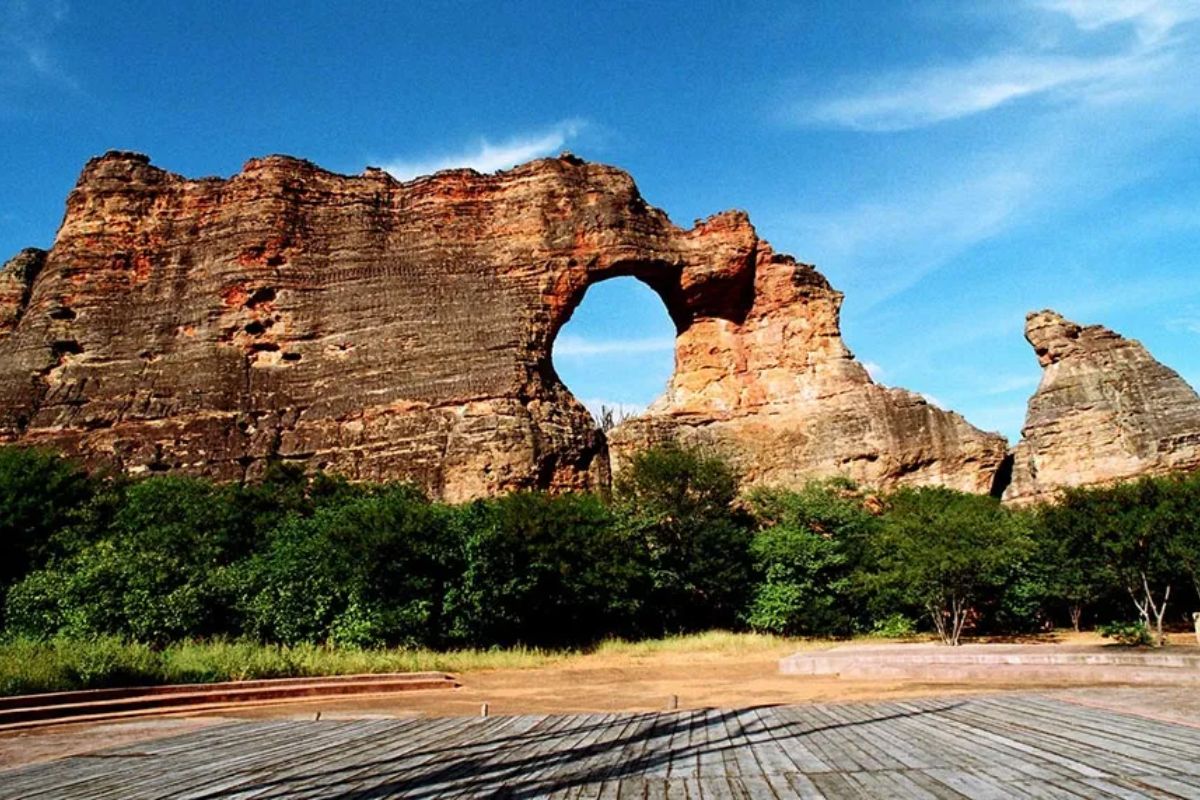
With Rock Formations That Resemble Monuments and 6,000-Year-Old Cave Paintings, the Park in Piracuruca Reveals a Geological and Human History Much More Fascinating Than the Phoenician Legend
In the heart of the Piauí semi-arid region, a monumental landscape challenges the imagination. The Sete Cidades National Park, officially created by Decree No. 50,744, of June 8, 1961, with its rocks resembling walls, castles, and monuments, has long fueled the legend of being a lost metropolis built by Phoenician navigators. Science, however, tells a story that is much older and grander.
In fact, the park located between Piracuruca and Brasileira is a masterpiece of nature, sculpted over millions of years. Instead of Phoenician secrets, its sandstone cliffs hold the authentic traces of a deep prehistoric human occupation, visible in its enigmatic cave paintings.
How Nature Sculpted the Cities 400 Million Years Ago
The “constructions” of Sete Cidades were not made by human hands. They are the result of a geological process that began in the Devonian Period, about 400 million years ago. The rocks in the park belong to the Cabeças Formation, a set of sandstones deposited by ancient rivers and seas that covered the region.
-
Spain surprises the world by erecting 62 artificial dunes, mixing sand with natural remains of posidonia, and causing the structure to lose only 1.4% of its volume in 1 year.

-
With 16 Bulava missiles, improvements in acoustic stealth, and a design focused on silent patrols, Russia’s nuclear submarine was born to ensure Moscow’s invisible retaliation and has become one of the pillars of its maritime strength.

-
‘Populous’ city in Rio among the worst in Brazil in national ranking and exposes silent development crisis.
-
Couple buys house in the South Zone of São Paulo, opens a hidden door in the garage, and finds a secret wine cellar with dozens of old wines forgotten since the 1970s.

What we see today is the product of differential erosion. Over millions of years, water and wind wore down the rocks unevenly. The more resistant layers of sandstone remained, forming the tops of the “walls” and the “monuments,” while the more fragile layers were removed, creating passages and valleys. The organization into seven distinct groups, or “cities,” was guided by a system of faults and fractures in the Earth’s crust, which directed the work of erosion.
Echoes of 6,000 Years? What Science Knows About the Cave Paintings
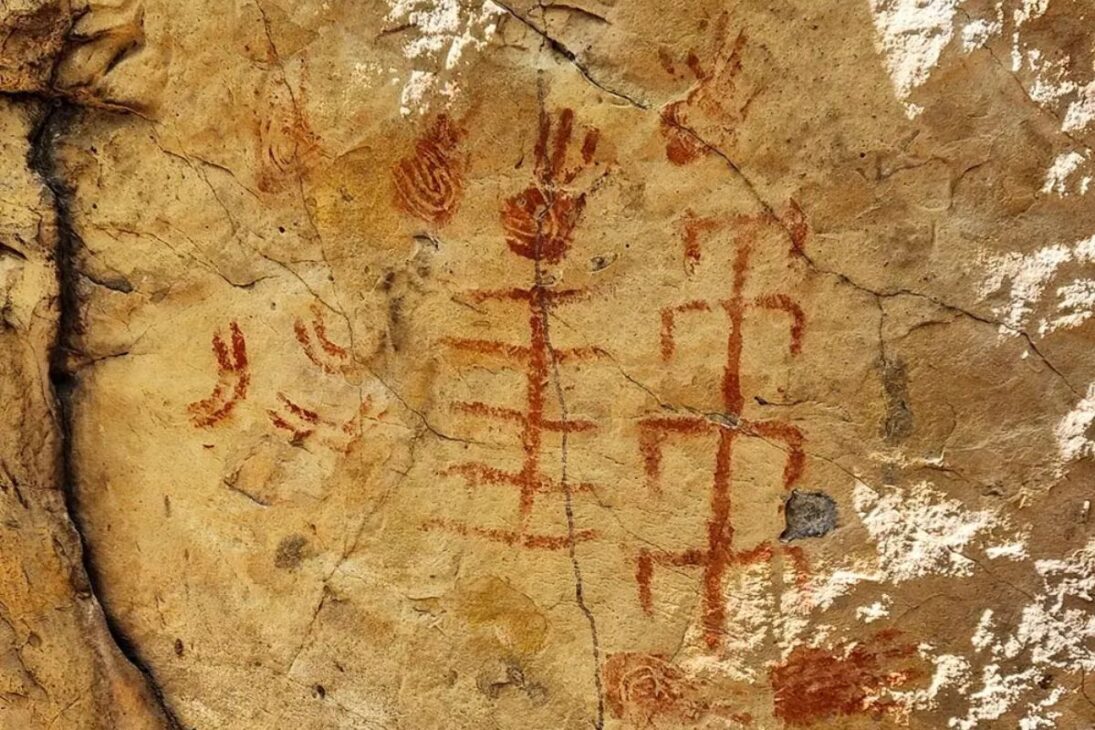
Beyond geology, the Sete Cidades National Park holds an archaeological treasure. In its rock shelters, there are various panels of rock art, evidence of ancient human presence in the region. The paintings, predominantly in shades of red, include geometric figures, hand stencils, and even an enigmatic “winged man,” which could represent a leader or shaman.
The age of these paintings is a controversial topic. The popular belief, and the question many ask, is whether they are really 6,000 years old. The scientific truth is that, so far, there are no absolute datings that specifically confirm this age for the Sete Cidades panels. This chronology is often attributed to an association with the famous Serra da Capivara National Park, also in Piauí, where there are much older datings. This means that, although the age of millennia is almost certain, the exact age of the Sete Cidades art remains one of its most fascinating scientific mysteries.
The Myth of the Phoenician City, the Origin of the Legend and Its Refutation
The most famous narrative about the park is that it would be a lost Phoenician colony. This theory was widely popularized by the Austrian investigator Ludwig Schwennhagen, in his book “Ancient History of Brazil,” published in 1928. He interpreted the rocks as ruins and the paintings as a form of ancient writing.
Modern science, however, conclusively refutes this theory. Geology shows that the formations are natural, and archaeology not only identifies rock art as part of the indigenous traditions of the Northeast but also points to the definitive proof: the total absence of any Phoenician artifacts (ceramics, metal, coins) in the region. The legend, while captivating, has no factual basis.
How to Plan Your Visit to the Stone City
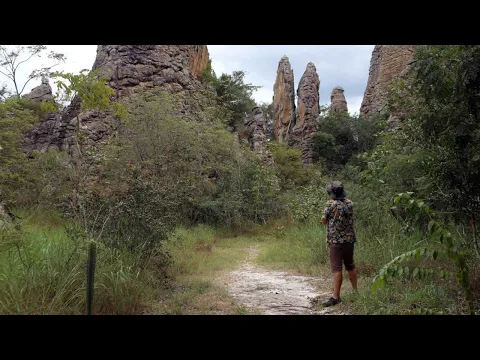

Visiting the Sete Cidades National Park is an immersion in the deep history of the planet and humanity. Access is available from the municipalities of Piracuruca or Brasileira, in Piauí, about 190 km from Teresina.
The park operates every day, and entry is free. The visitation circuit can be done by car, with stops for short walks to the formations and waterfalls. Therefore, it is recommended to wear light clothing, comfortable shoes, and bring sunscreen and water. Although not mandatory, it is highly recommended to hire a licensed local guide. They know every detail of the geology and archaeology, in addition to enriching the visit with the region’s stories, ensuring a much more complete and safe experience.








Seja o primeiro a reagir!