





 Portuguese
  English
  Spanish
  4 min of reading
  0 comments


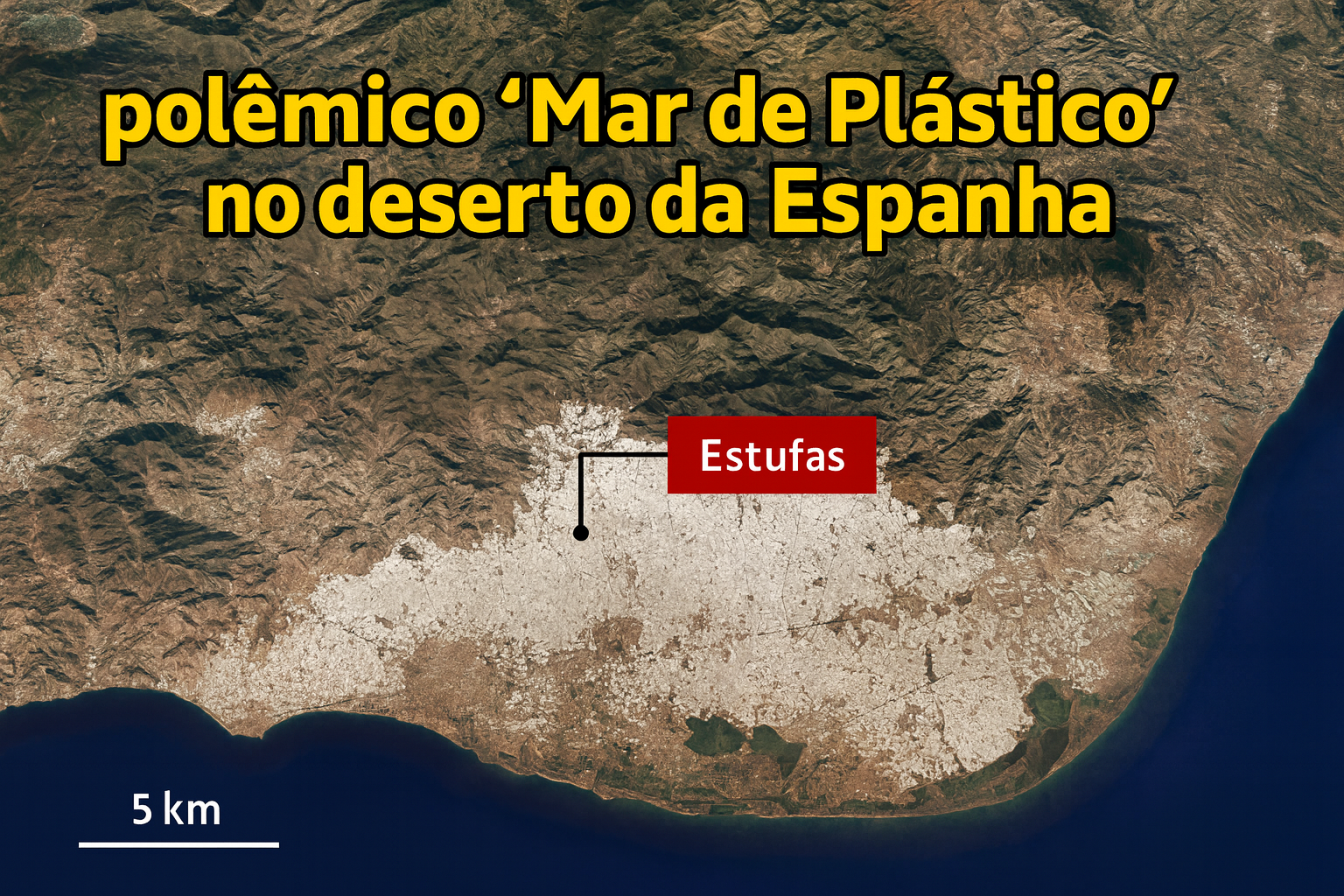
Discover the “Plastic Sea” in the Desert of Spain: The Garden of Europe Visible from Space, Generating Billions in Exports but Facing Environmental and Social Criticism.
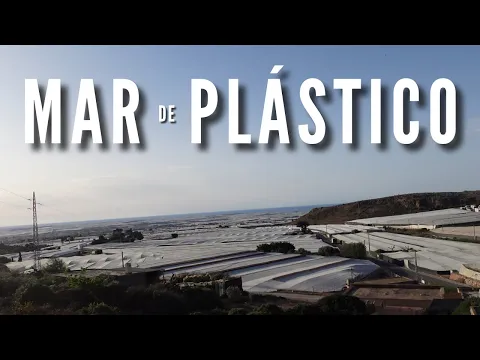
The so-called “Plastic Sea,” in southern Spain, is an agricultural and economic phenomenon that has gained worldwide attention. Located between the cities of El Ejido and Almeria, this gigantic greenhouse complex spans 32,000 hectares of land, equivalent to 44,000 football fields, and is the only human-made structure visible to the naked eye from space, according to NASA.
Under the white plastic roofs, four million tons of food are produced annually, including tomatoes, peppers, cucumbers, watermelons, and melons. More than half of this production is destined for export, establishing the area as the garden of Europe.
Agriculture in One of the Driest Regions of Europe
The uniqueness of the “Plastic Sea” is even more evident when considering the geography of the region. The province of Almeria is among the driest areas in Europe, averaging only 54 days of rain per year.
-
After 14 years of waiting, a rammed earth mansion built in 1702 in the North Zone of São Paulo will become a park with leisure facilities and green areas, with a million-dollar investment.
-
With 2 unfinished nuclear reactors, up to 25 billion in costs, and proven fraud, the Nukegate case has left 800,000 consumers still paying today for energy that will never be produced.

-
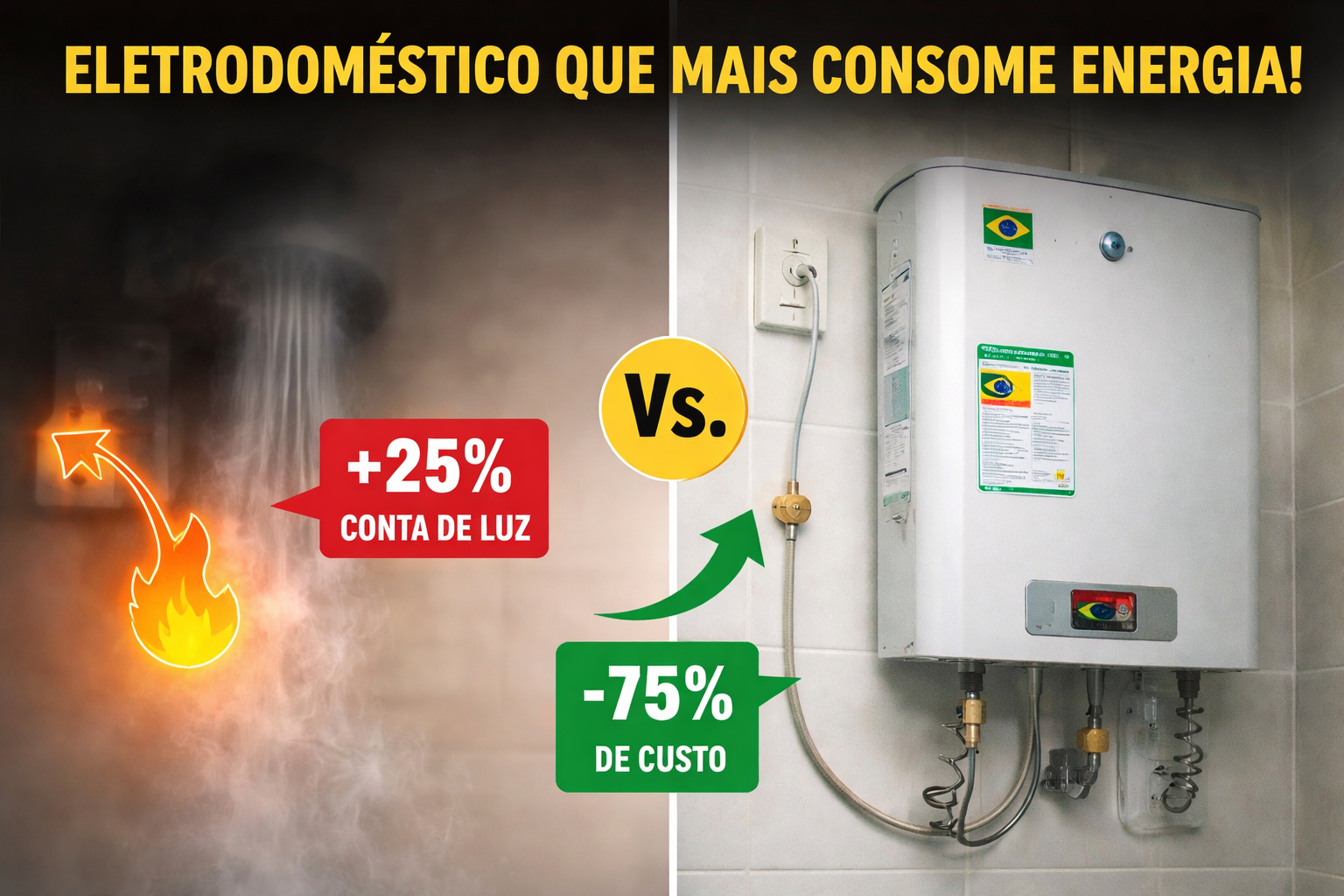
The household appliance that consumes the most energy in Brazilian homes is not the air conditioner; it is located in the smallest room of the house, is used daily, and can account for up to 25% of the electricity bill, while an alternative in the same outlet can reduce this cost by up to 75%.
-
Son of a seamstress from the rural area of Ceará who did not speak English wins a scholarship of over 2 million reais at Williams College, one of the top 10 universities in the United States, covering everything including dormitory, meals, and annual trips to Brazil.




In the 1950s, facing the challenge of turning the desert into a source of income, the Spanish government invested in innovative solutions. The key was the use of underground aquifers and the adaptation of Dutch greenhouse models, replacing glass with plastic, a material more resistant to the strong local winds.
The result was the transformation of a barren land into an agricultural hub that currently accounts for about 18% of Spain’s agricultural exports.
Economic Engine and Job Creation
Today, the “Plastic Sea” is one of the pillars of Almeria’s economy. Agricultural activity generates about US$ 5.1 billion per year, representing 40% of the region’s Gross Domestic Product (GDP). Additionally, it creates approximately 100,000 direct and indirect jobs, becoming as important as local tourism.
The main consumer markets for the products grown in the Spanish greenhouses are in Germany, the United Kingdom, France, Italy, and even the United States.
Agricultural and Export Tradition
The region’s success did not happen overnight. As early as the 19th century, Almeria was exporting grapes and other products to the United Kingdom, known for their artisanal quality. This agricultural vocation, combined with investments in irrigation technologies and protected cultivation, paved the way for the intensive production seen today.
Currently, there are about 12,000 agricultural properties in the region, many of them small and medium-sized, but integrated into a globalized export system.
Irrigation and Cultivation Technologies
One of the secrets to high productivity lies in the use of drip irrigation, a technique that allows for significant water savings. According to local producer associations, Almeria uses about 60% less water compared to other agricultural hubs worldwide.
Additionally, the use of sand to improve soil water retention has helped overcome aridity. This combination of techniques has transformed the desert into one of the most fertile agricultural areas in Europe.
Environmental Criticism: Excess Water and Plastic
Despite the advancements, experts and environmentalists raise concerns about the future of the “Plastic Sea.” One critical point is the over-exploitation of aquifers, which are already showing signs of depletion.
The greenhouses alone consume about 1.3 billion liters of water per year. The Níjar aquifer, for example, has been exploited beyond its regeneration capacity for over two decades.
Another growing problem is the production of plastic waste. It is estimated that greenhouses generate 30,000 tons of plastic per year, of which only 85% is recycled. The accumulation of microplastics has already been detected in nearby marine ecosystems, such as the Alboran Sea and Cabo de Gata.
Social Issues and Working Conditions
In addition to environmental impacts, there are criticisms related to social and labor conditions. About 60% of the workforce consists of migrants, primarily from North Africa. Reports from human rights organizations indicate that some of these workers face exploitation, poor housing, and low wages.
It is estimated that approximately 25,000 people work without formal contracts. Even those with employment ties often live in makeshift houses, lacking adequate access to water and electricity.
These conditions fuel social tensions in cities like El Ejido, where nearly a third of the population is composed of foreigners. Paradoxically, despite having one of the lowest unemployment rates in Andalusia, the region is among the poorest in Spain in terms of income distribution.
The Challenge of Sustainability
Given this scenario, local experts and academics advocate that the production model needs adjustments to become sustainable. This includes:
- More Rational Use of Water
- Reduction of Intensive Production
- Improvement of Working Conditions
- Efficient Management of Plastic Waste
Producer associations state that they are already increasing the use of alternative water sources, such as desalination plants and rainwater reuse. They also highlight that labor conditions have improved in recent years, with a higher number of regular contracts for foreigners.
Between Miracle and Contradiction
The “Plastic Sea” symbolizes an agricultural miracle, capable of transforming one of the driest regions of Europe into a supplier of food for millions of people.
On the other hand, it also exposes contradictions: economic wealth that does not fully reflect on the well-being of the local population, environmental risks associated with water use and the accumulation of plastic waste, as well as social tensions arising from the massive presence of migrant workers.
The future of the “Plastic Sea” will depend on Spain’s ability to balance productivity, environmental sustainability, and social justice.





Seja o primeiro a reagir!