





 Portuguese
  English
  Spanish
  5 min of reading
  12 comments


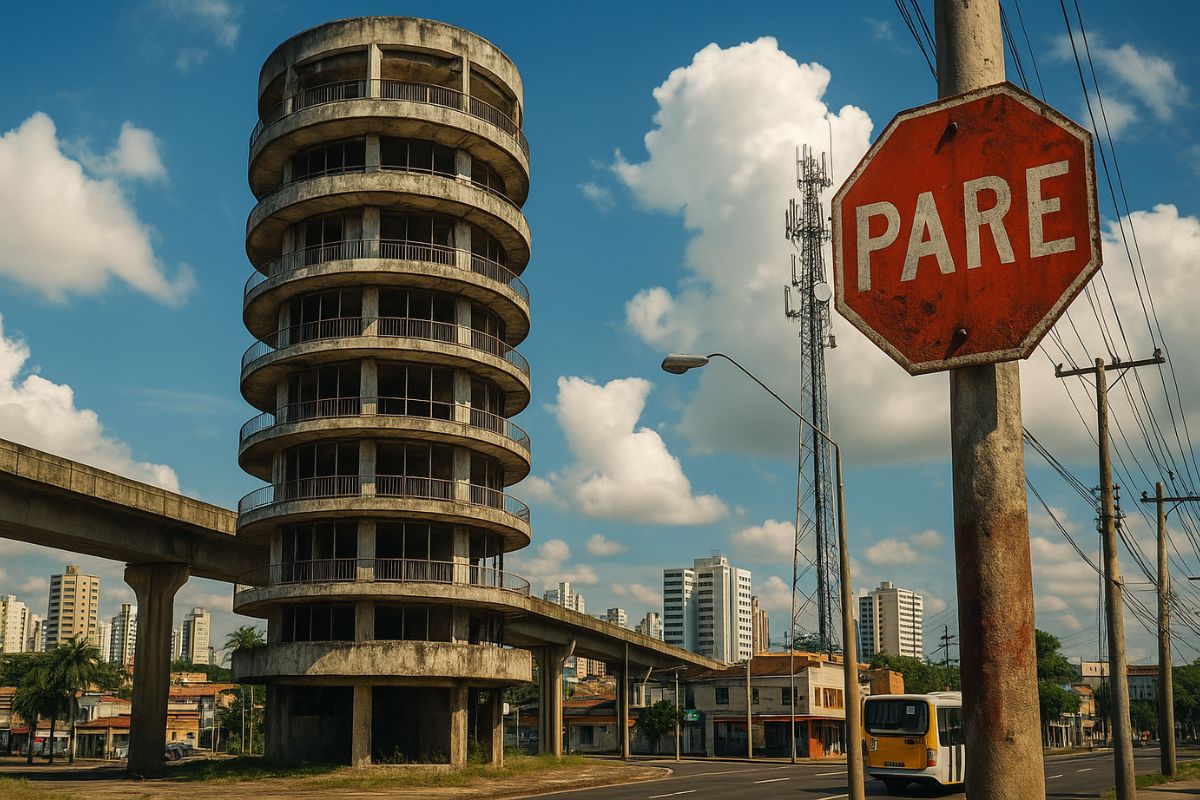


Conceived as the first rotating building in the world, the Suite Vollard promised luxury and technology in the 1990s; two decades later, it has seen failed auctions, abandonment, and the central question: why didn’t the innovation become a success story?
The first rotating building in the world was born so that the resident could change the window view with a voice command. Designed in 1994 and launched in 2004, the Suite Vollard, in Curitiba (PR), raised the bar for residential engineering by allowing each floor to rotate 360° independently, with the promise of redefining the home experience.
However, the technical ambition did not translate into market adoption. According to the G1 portal, the apartments stagnated, the construction company accumulated debts, and the tower entered a cycle of foreclosure, vandalism, and empty auctions. The building that rotated became static and turned into a case study on product, audience, and timing.
The Innovation: A Rotating Cylinder to Live In
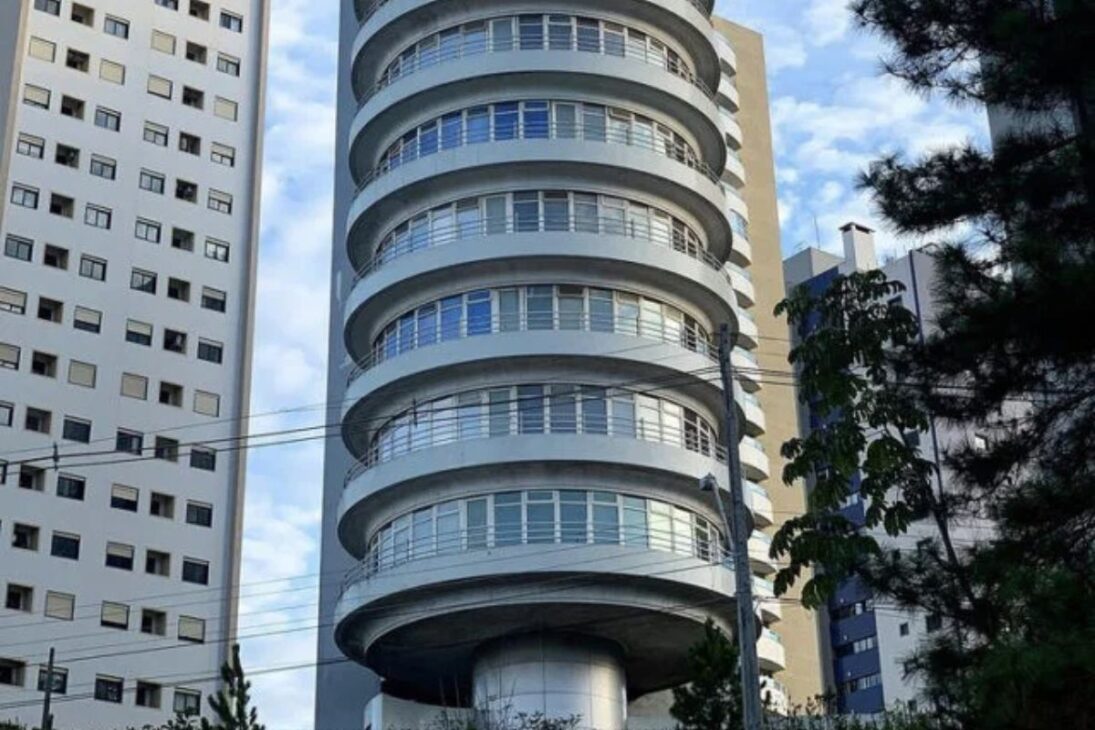
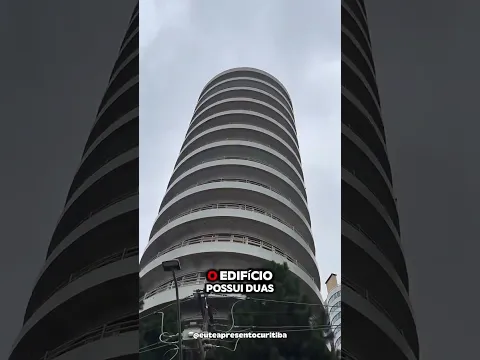
The Suite Vollard is a cylindrical building with 11 floors, each with a single apartment that can rotate 360° without interfering with the others. The movement, powered by dedicated motors, allows for configuring environments and views throughout the day, even with floors rotating simultaneously in opposite directions.
-
Italian researchers have detected what appears to be a second Sphinx buried under the sands of Egypt, and satellite scans reveal a gigantic underground megastructure hidden beneath the Giza Plateau for over 3,000 years.
-
There are 4,223 drums and 1,343 metal boxes concreted with 50-centimeter walls that store the radioactive waste from Cesium-137 in the worst radiological accident in Brazil, just 23 kilometers from Goiânia, with environmental monitoring every three months.
-
Giant Roman treasure found at the bottom of Lake Neuchâtel in Switzerland reveals an advanced trade system, circulation of goods, and armed escort in the Roman Empire about two thousand years ago.
-
He buried 1,200 old tires in the walls to build his own self-sufficient house in the mountains with glass bottles, rainwater, and an integrated greenhouse.

The proposal was to transform the floor plan into a dynamic experience, bringing together resident, sunlight, and landscape.
Conceived as a “concept building” by Bruno de Franco, developed by Moro Construções, the project aimed for high standards and sought urban impact.
The narrative was futuristic: rotating the living room, bedroom, and dining table for the best framing at sunrise, sunset, and skyline.
The circular shape synthesized the idea: technology serving daily life.
The Product and the Market: Who Would Buy 11 Units?
The central calculation of the launch was simple and harsh: were there 11 buyers for a rotating apartment in Curitiba?
In 2004, each unit of 164.75 m² sold for about R$ 835,000 (approximately R$ 2.5 million in current values).
The high ticket required an audience willing to pay for innovation before proof of use, in a local market that was conservative and pragmatic.
There was initial sales signaling, but renegotiations and cancellations returned units to the company. The real estate cycle turned, and the building lost traction.
Without residents, there was no showcase effect; without a showcase, the differential became a risk. What should have been “experience” remained in the realm of curiosity.
Auctions, Abandonment, and Bureaucracy: What Does It Cost to Stop Spinning?
Foreclosed to pay debts, the complex faced auctions in 2022: initial bid of R$ 1.4 million per unit with no interested parties; a new round starting at R$ 849,000 sold only one apartment.
Even direct sales with a 50% discount did not change the situation. In 2023, Construtora Moro entered judicial recovery.
Without maintenance and without a valid occupancy permit, the tower cannot be occupied, according to the city hall. Inspections depend on requests via 156, and a private guard maintains minimal security.
The structure is aging, and the fixed asset loses its use value, a vicious circle where each month costs more and resolves less.
The Diagnosis: “Round Building in a Square City”
For architect Bruno de Franco, the synthesis is direct: the product did not find its city and time. In his words, “round building in a square city”.
The innovation was real, but the local market changed to be more immediate, with less conceptual projects and greater sensitivity to price and maintenance. Without a demand backing, technology becomes fixed cost.
The former manager Sérgio Luiz Silka reinforces the point: Moro sought differentiated proposals, but gauged the buyer’s appetite.
The price, consumer culture, and risk perception formed a difficult tripod to sustain. When the economic cycle tightened, the project lost oxygen.
Engineering and Operation: Why the Rotating Logic Weighs on the Wallet

Independent rotation per floor entails motors, control, preventive maintenance, and safety protocols.
The lifecycle of this system requires a specialized manager, stable OPEX, and niche suppliers. Without occupancy, the condominium becomes unfeasible; without a condominium, maintenance fails; without maintenance, the rotation stops.
Additionally, the user’s learning curve is not trivial. Operating view, sunlight, and dynamic layout demands servitization: training, support, and clear contracts.
Without services, technology becomes an obstacle. In the first rotating building in the world, this layer did not mature.
Viability and Reuse: How to Bring the Icon Out of Hibernation
Converting the tower into a hotel is a hypothesis pointed out by Bruno: short stay, intense experience, high turnover. In experience tourism, the spin becomes an attraction, reducing the purchase barrier and monetizing curiosity. Another route: a hybrid model (hotel + events + guided technical visits), with restoration plan, retrofit of systems, and certifications.
To take it off paper, the path involves structuring a business case: CAPEX for recovery, OPEX for operation, condominium governance (or Single Owner), licenses, and financing line.
Without a financial plan, engineering won’t progress; without licenses, marketing won’t sell. Viability is a sequence, not a leap.
Repercussions and Legacy: What the World Saw and What Remains
The first rotating building in the world designed in Curitiba gained international showcases, attracting curious people, media, and investors.
Its physical proof it spins distinguished the Suite Vollard from promises that never left the drawing board. The technical legacy exists: structure, systems, and narrative of a real experimental project.
The market legacy, however, is ambivalent. Without occupancy, there is no user case; without a case, there is no scale.
The insights remain valuable for construction startups, developers, and asset managers: disruptive product requires fine alignment between technology, audience, price, maintenance, and city.
The Suite Vollard remains a landmark of creativity and boldness the first rotating building in the world, while also serving as a caution about timing and demand. The engineering worked; the market did not.
The reactivation depends on repositioning the “spin” as a sellable experience, with professional management and a route for licenses that unlocks occupancy.
Would you live or stay in the first rotating building in the world if it reopened as a experience hotel? How much would you pay for a nightly stay that includes “spinning the city” from your bed? For those in the market: does retrofit with hotel operations close the deal in Curitiba, or would it depend on international brand and urban incentives? Leave your technical or user perspective in the comments: what would make this icon spin sustainably again?









Construtora Moro, em Curitiba…
Me lembra outra coisa que deu ruim.
Mais um **** relinchando!
No caso, você mesmo quem ta relinchando.
A Justiça Divina virá e fará todos esses juízes, promotores desonestos paguem por ter facilitado a entrada de um polítiqueiro incompetente que freiou(gagou) a economia e mau geriu a saúde na pandemia.E que despertou nas mentes fracas dos facistóides a idolatria, a revolta com as instituições, o medo do fracassado comunismo e o receio e discriminação de dividir espaços, estudos e empregos com aqueles que vieram de categorias sociais mais baixas.
Como hotel, poderia me hospedar por um final de semana, pois é uma novidade, entretanto poderia ser por hora, para ser acessível ao público. É com ficar num brinquedo chapéu mexicano. Serve como ponto turístico para visitação. Já que financeiramente ficou inviável para moradia. Virou um elefante branco que gira.
Acho que deveria ser transformado em shopping e nos dois últimos andares restaurantes aí sim os dois últimos giratórios.. diga se Santiago no Chile!