





 Portuguese
  English
  Spanish
  5 min of reading
  0 comments


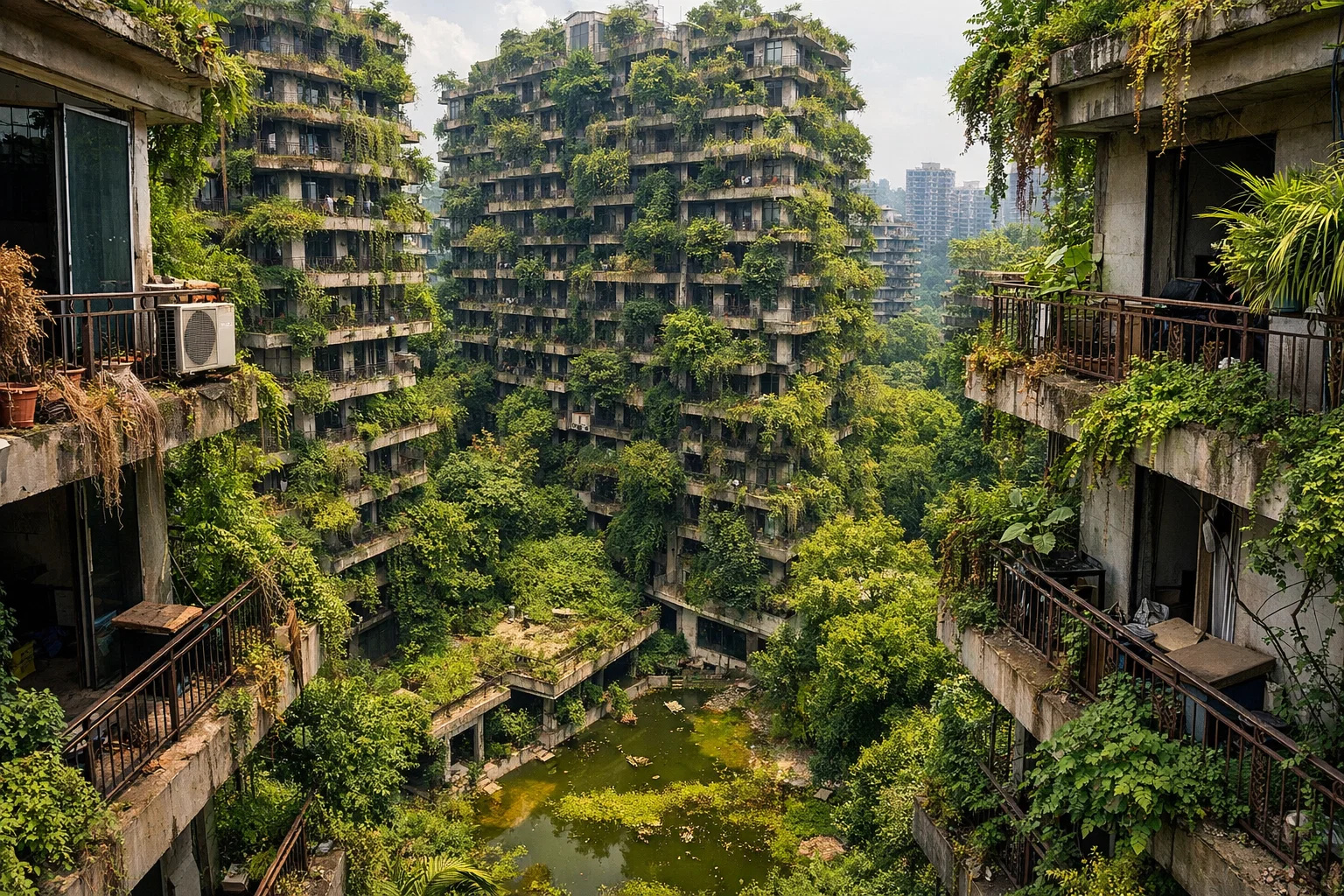
Residential Project in Chengdu Was Designed as a Vertical Forest Capable of Transforming Buildings into True Urban Ecosystems, but Uncontrolled Plant Growth and Lack of Maintenance Drove Residents Away and Sparked Debate Over Landscape Engineering
A set of buildings designed to bring residents closer to nature ended up having the opposite effect. In Chengdu, the capital of Sichuan Province in China, a residential complex that promised to be a true vertical forest is now attracting attention for an unexpected reason.
The development, called Qiyi Forest Garden, was inaugurated in 2018 with an ambitious purpose. To transform apartment balconies into small fragments of urban forest.
However, the scene that began as an architectural experiment turned into a curious case in the world of urban engineering. The vegetation grew so intensely that most residents decided to leave the place.
-
With 333 meters and equivalent to a 20-story building: China launches a supertanker that transports 2 million barrels, has 540,000 m² of area, and saves $5 million per year.

-
Brazil becomes a beacon of hope for ending plastic waste by leading a global plan that could prevent millions of tons from entering the oceans.

-
The low-cost solution called PatchPal, invented in South Africa to fix potholes in minutes, does not crack and prevents water from entering, becoming more compact with each car that drives over it, revolutionizing road repairs that governments have forgotten.

-
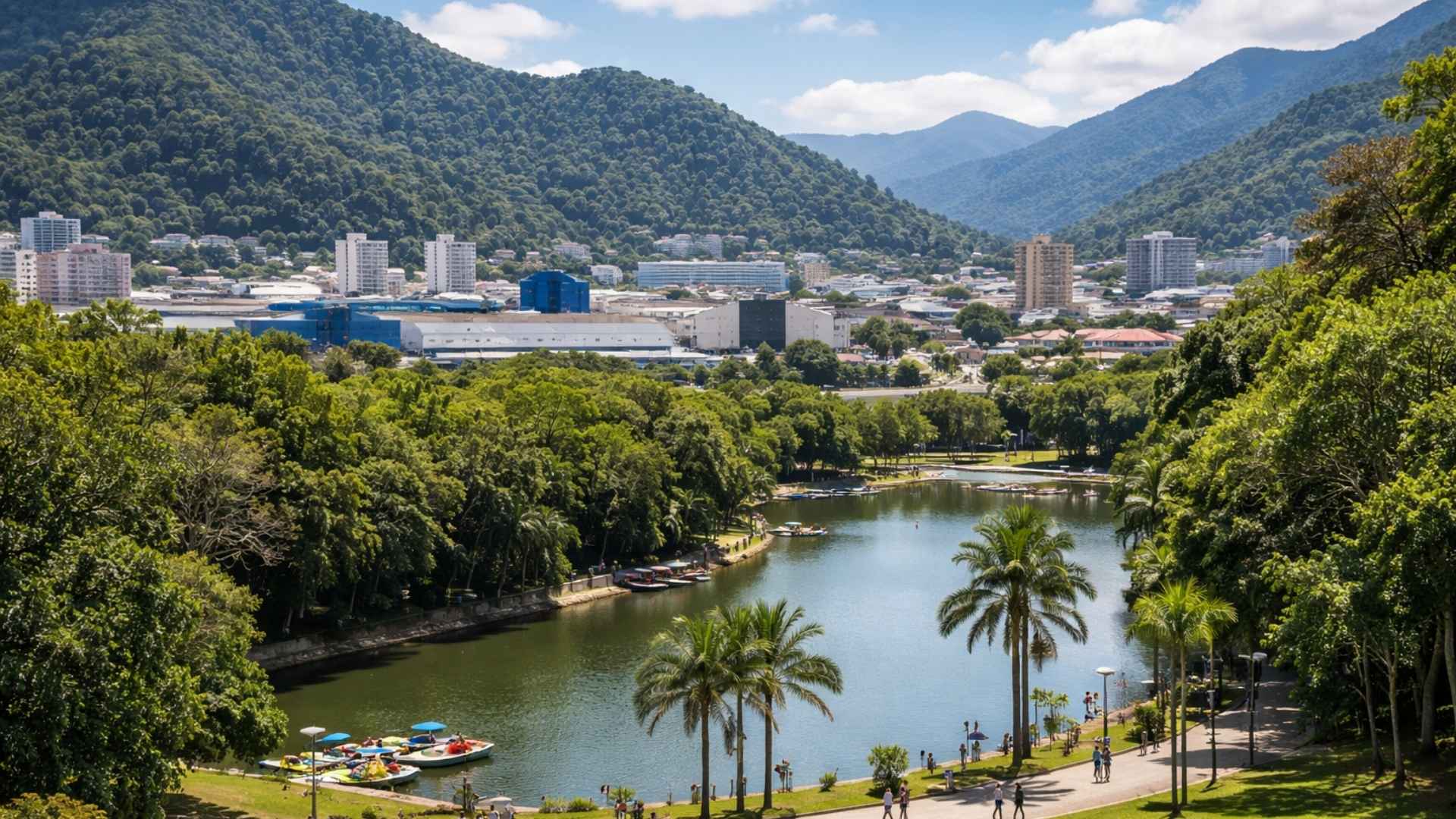
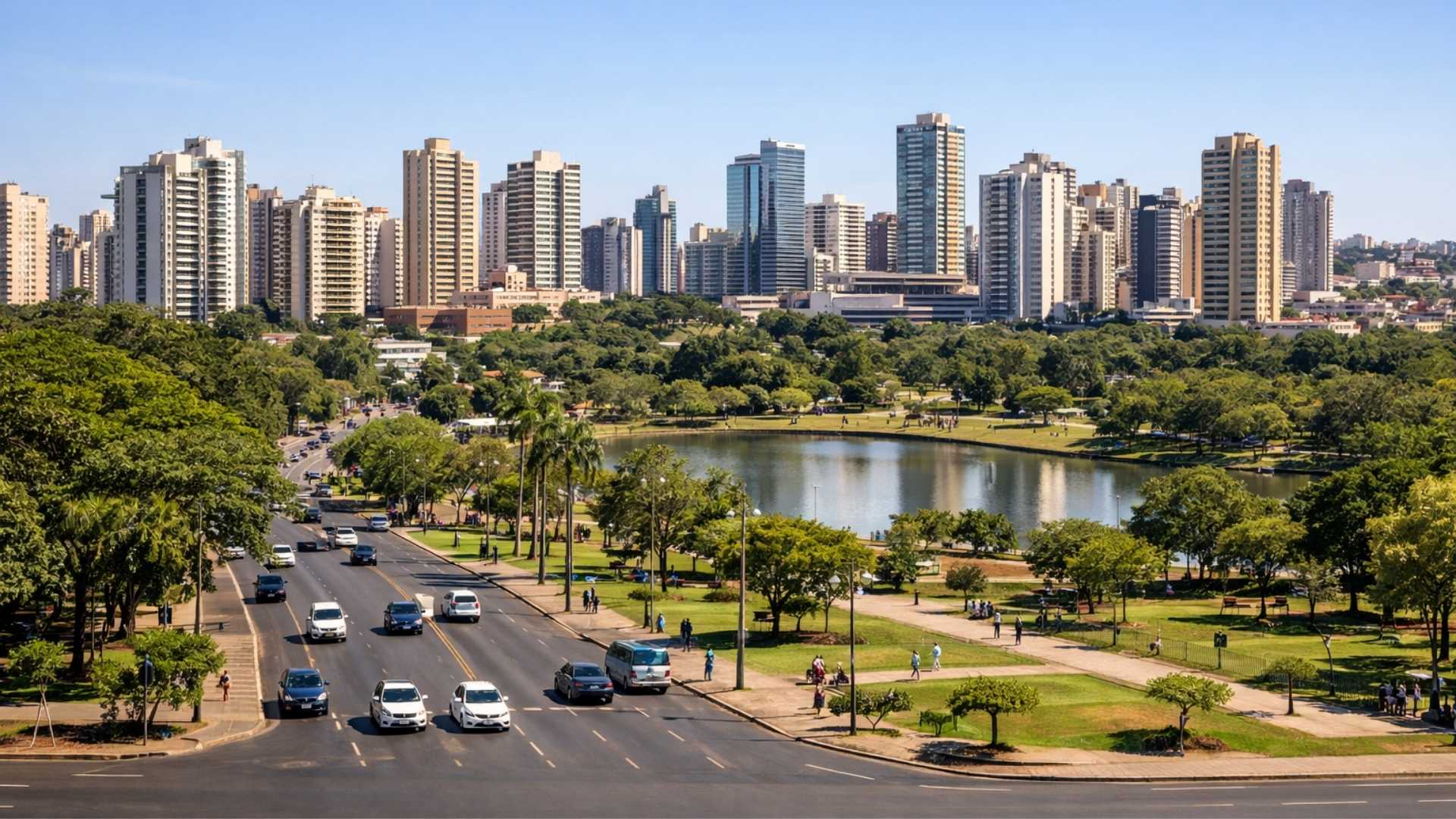
The 2nd safest city in Brazil is attracting new residents, industries, formal jobs, and also has a giant free park.

A Megaproject Aimed at Transforming Ordinary Buildings into a Giant Vertical Forest Within One of the World’s Largest Economies
The Qiyi Forest Garden was conceived as an advanced example of green architecture. The complex consists of eight residential buildings and even had all of its 826 units sold.
The idea seemed perfect for a generation of increasingly dense cities. Each apartment would have a balcony filled with greenery. Trees, shrubs, and plants would form a kind of micro-private forest.
Over time, though, what was meant to be a symbol of sustainable urbanism came to draw attention for another reason. Today, estimates indicate that only about ten apartments remain occupied.
The explanation quickly circulated on social media and sparked curiosity around the world. The plants grew with such vigor that they completely overtook the building balconies.
When Green Engineering Meets the Reality of Urban Maintenance and Reveals a Challenge That Many Sustainable Projects Still Face
The images of the complex are striking. Balconies covered in dense vegetation give the buildings the appearance of structures overtaken by small suspended jungles.
According to experts, the problem does not lie in the concept of the vertical forest. The issue primarily involves maintenance and botanical planning.
Landscaper Wolfgang Schlögel notes that the exuberance of the plants indicates that the irrigation systems are still functioning. Without adequate water, this vegetation would not exhibit such a level of growth.
What seems to have occurred is a common phenomenon in large-scale landscaping projects. When maintenance does not keep pace with the growth of the species, the result can turn into unmanaged vegetation.
This scenario has also opened the door to another problem that bothered residents. The increase of insects on balconies and areas near the apartments.
The Technical Secret That Distinguishes Successful Vertical Forest Projects and Can Decide the Success or Failure of a Billion-Dollar Development
Architects and urban planners point out that projects of this type require much more detailed planning than a common garden.
The choice of species is crucial. Some plants retain water in their leaves or form structures that favor the presence of mosquitoes and other insects.
Biologist Luiz Felipe Cavazzani explains that certain species can aggravate this type of situation. Plants that hold water or form clumps create favorable environments for mosquito reproduction.
On the other hand, there are species that function as natural repellents. Aromatic herbs like basil, lemongrass, geranium, and lavender help reduce insect presence.
Additionally, regular pruning and technical oversight are part of the maintenance package necessary for projects of this scale.
Without this continuous care, a system designed to be sustainable can quickly turn into a challenge for residents.
Similar Projects Show That Vertical Forest Engineering Can Work and Become a Model for Future Cities
Despite the Chinese case going viral on social media, experts remind us that the idea of vertical forests continues to be considered an important solution for dense cities.
One of the more well-known examples is in Milan, Italy. The Bosco Verticale project, designed by architect Stefano Boeri, has become an international reference in sustainable architecture.
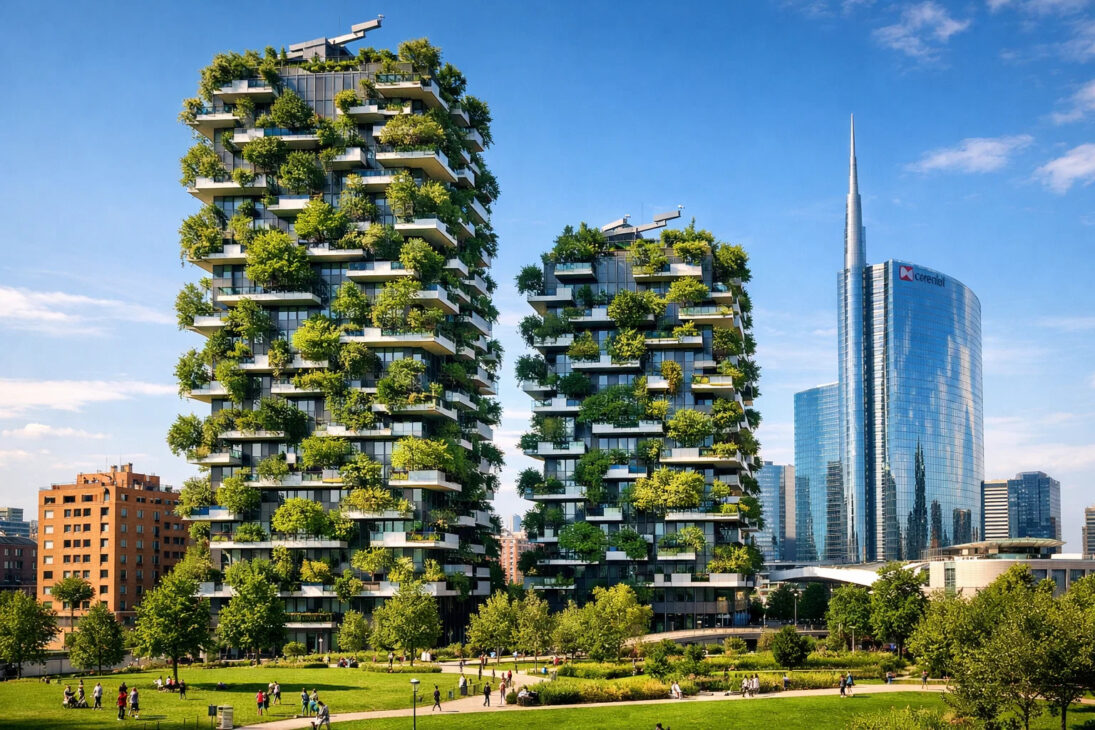
In this model, vegetation is treated as part of the building’s infrastructure. Automated irrigation systems, specialized maintenance, and a rigorous species selection ensure a balance between nature and housing.
When these elements work together, the vertical forest can improve air quality, reduce urban temperature, and increase thermal comfort in the apartments.
The Lesson Urban Planners and Engineers Take from the Chinese Case and What It Reveals About the Future of Sustainable Cities
The Chengdu case shows that bringing nature and architecture together does not depend solely on good ideas. Projects that integrate large-scale vegetation therefore require ongoing planning and permanent technical oversight.
According to experts, it is also important to consider the behavior of species over the years. Some plants may develop invasive roots and even reach plumbing or drainage structures.
For this reason, professional guidance becomes essential in the choice of species and in the management of vegetation.
When this balance is respected, the vertical forest ceases to be just an architectural concept and transforms into a true ecological system within cities.
The curious case of the Chinese complex captured attention precisely for this reason. It reveals how modern urban engineering is still learning to coexist with nature at scale.
The project that promised to bring residents closer to nature eventually exposed one of the significant challenges for the cities of the future. Integrating technology, architecture, and living ecosystems within the same urban space.
Now we want to know your opinion. Would you live in a building surrounded by vegetation like this one, or do you believe that projects like this still have a long way to evolve? Share your thoughts in the comments.






-

Uma pessoa reagiu a isso.