





 Portuguese
  English
  Spanish
  5 min of reading
  0 comments



Mission Aims at One of the Most Unusual Environments in the Solar System and Places on the Scientific Radar a Cold World Covered in Fog and Hydrocarbons, Where NASA Plans to Investigate Chemical Processes Related to the Origins of Life.
The NASA has confirmed the advancement of the Dragonfly mission, a robotic vehicle with eight rotors designed to investigate Titan, Saturn’s largest moon.
The agency maintains the arrival forecast at the natural satellite by the end of 2034.
The launch is scheduled for July 2028, in a mission focused on studying the organic chemistry of the environment and searching for evidence of processes that precede the emergence of life.
-
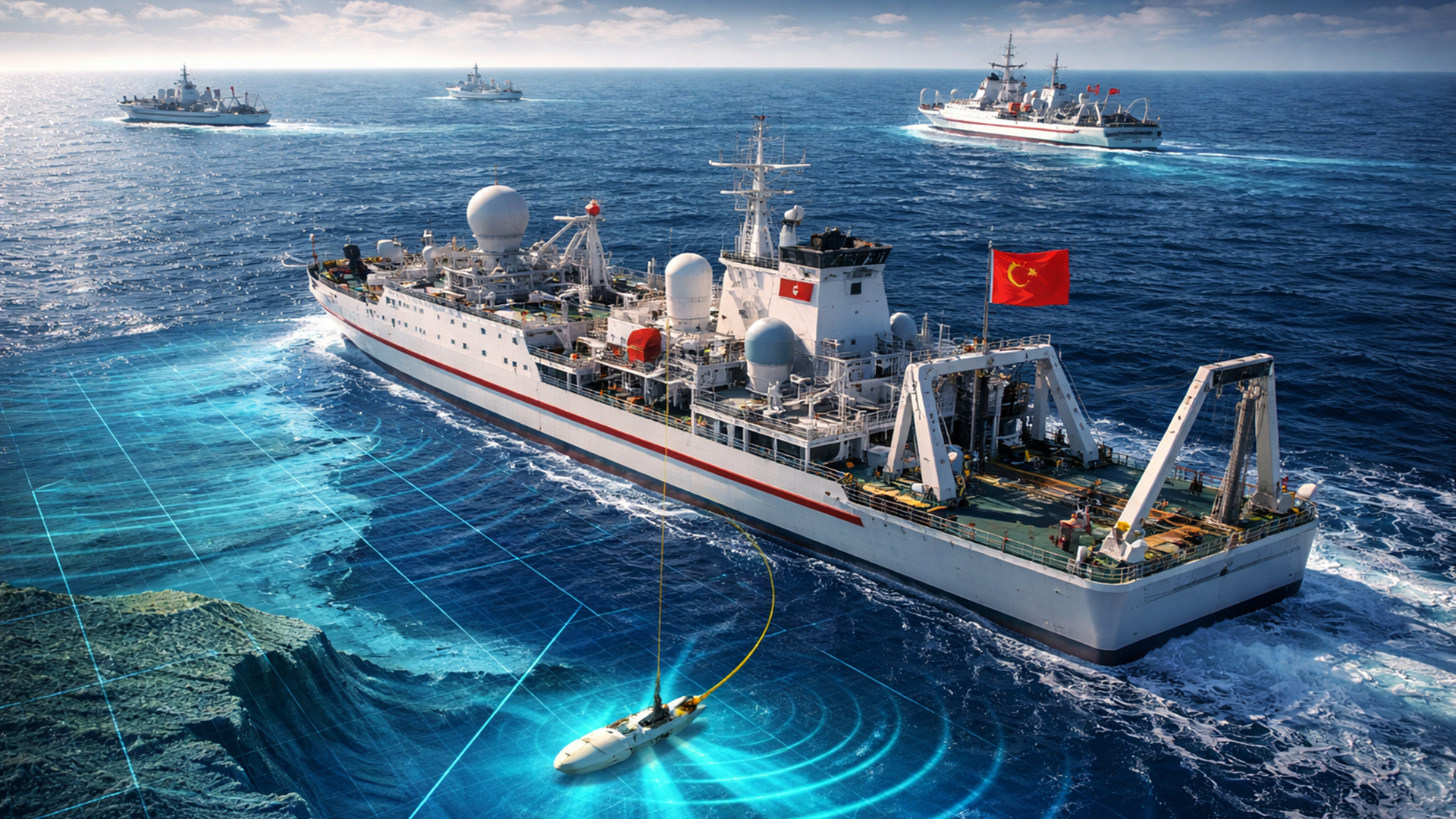
Dozens of Chinese research ships are discreetly mapping the ocean floor in three oceans – and naval analysts see a military pattern.
-
The winter of 2026 in Brazil will not be what you expect: meteorologists warn that the season will be warm and rainy at the same time due to the advance of El Niño, which is already warming the Pacific and changing the climate of the entire country.

-
For the first time, humanoid robots will compete in a full half-marathon without any human assistance in Beijing, with over 100 teams from China registering machines that need to complete the course with autonomous navigation on two legs.

-
Submarine cables installed to transmit the internet now also help scientists detect earthquakes.

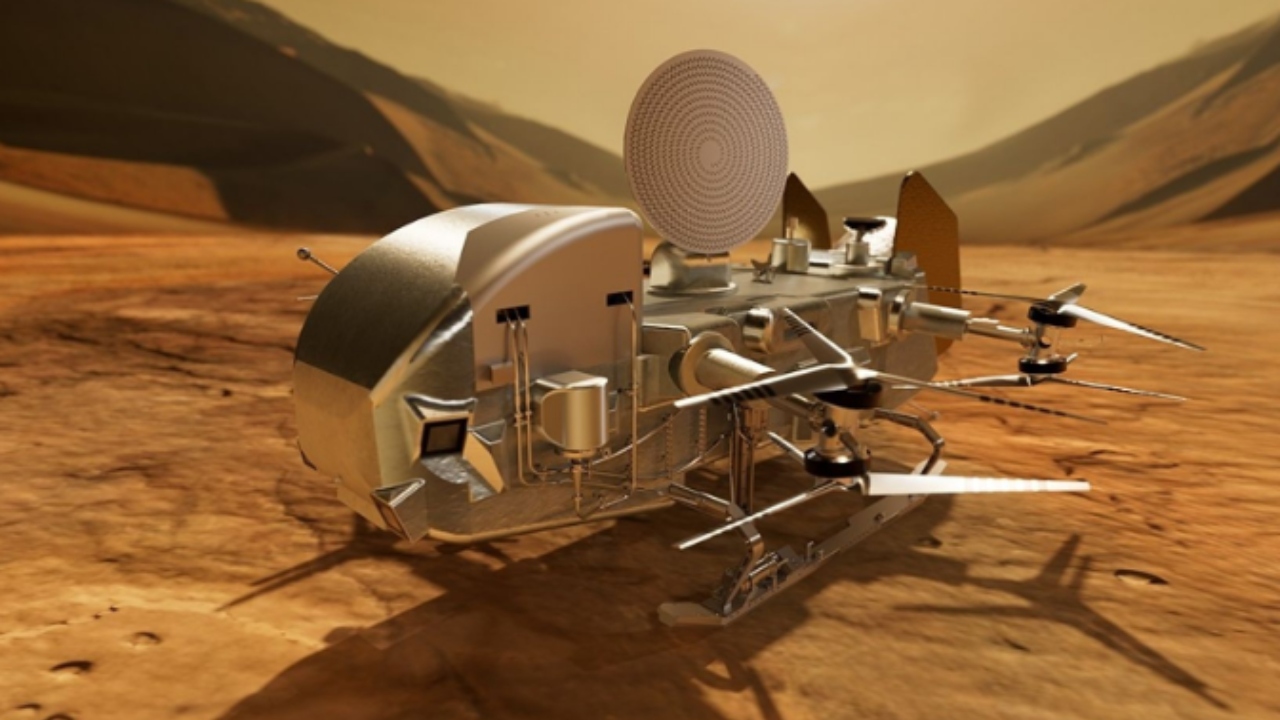
Rather than a conventional helicopter, the Dragonfly has been designed as a rotorcraft the size of a small car, with eight rotors distributed in four pairs.
According to NASA, this design allows for controlled flights in a low-gravity environment with a dense atmosphere, a condition that distinguishes Titan from other destinations already chosen for direct exploration in the solar system.
The confirmation of the mission, announced by NASA in April 2024, authorized the transition to the final stages of design, construction, and testing of the equipment and scientific instruments.
Since then, the agency and the Applied Physics Laboratory at Johns Hopkins University, responsible for the project, have been reiterating the schedule with a launch window planned for July 2028.
In 2025, a report from NASA’s inspector general’s office also recorded this update following a budgetary and timeline review.
Titan and the Search for Prebiotic Chemistry
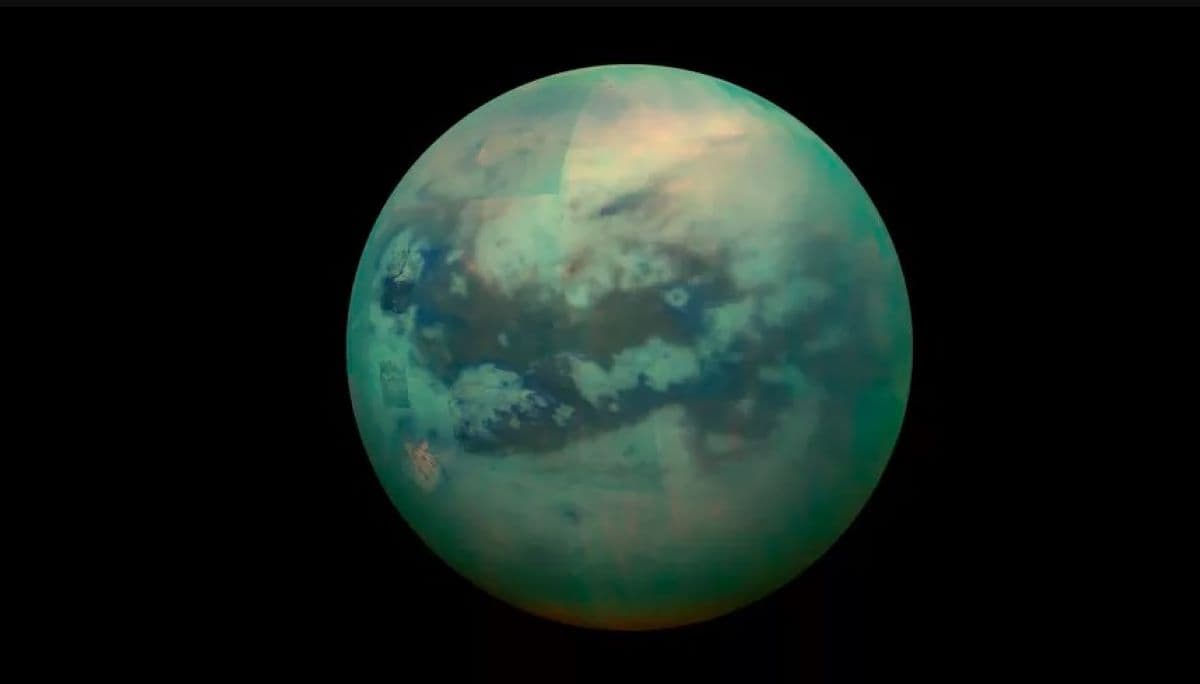
Titan is considered a relevant target for science because it combines unusual characteristics.
The moon has a dense atmosphere, primarily composed of nitrogen and methane, in addition to a complex carbon-based chemistry.
It also features rivers, lakes, and methane rain, a crust dominated by water ice, and signs of a subsurface ocean, according to NASA.
The focus of the mission is not to search for living organisms directly.
The goal, according to the space agency, is to examine whether the environment preserves records of prebiotic chemistry, that is, reactions and compounds that may precede biology.
For the researchers involved, Titan offers useful conditions to investigate processes that may have occurred on primitive Earth.
The scientific strategy concentrates primarily on the relationship between organic compounds and ancient episodes of contact with liquid water.
One of the primary destinations for Dragonfly will be the region near the Selk Crater, an impact structure about 80 kilometers in diameter.
According to NASA, this location may have harbored, in the distant past, liquid water mixed with organic materials long enough to promote scientifically interesting chemical reactions.
How the Dragonfly Mission Should Operate on Titan
The mission has been planned so that the Dragonfly is not limited to a single landing site.
After initially descending in a dune field in the Shangri-La region, near Titan’s equator, the vehicle will carry out short movements and, in later stages, longer flights to areas deemed priorities for investigation, including the Selk Crater.
During the planned scientific phase, estimated to last 3.3 years, the rotorcraft could cover up to about 115 kilometers, according to the latest description on the mission’s official page.
In NASA’s environmental documentation, this range appears as up to 180 kilometers or 108 miles, a reference used in earlier phases of planning.
The difference is associated with documents produced at different moments in the project.
At each stop, the mission anticipates the collection of surface material for analysis with onboard instruments.
The set includes a mass spectrometer, a sample acquisition system, meteorological and geophysical sensors, as well as cameras aimed at studying the terrain and navigation.
With these equipment, NASA intends to examine the chemical composition of the soil, monitor atmospheric conditions, and observe surface and subsurface characteristics.
The flights will not occur at a daily rhythm according to the Earth calendar.
The official forecast is for one takeoff every one or two days on Titan, referred to as Tsols.
As one Titan day lasts about 16 Earth days, the interval between operations has been defined to accommodate the recharging of systems and planning of scientific activities.
Extreme Environment on Saturn’s Moon Challenges the Mission
Although it features geological formations reminiscent of landscapes known on Earth, Titan has severe environmental conditions.
The average surface temperature hovers around 94 Kelvin, equivalent to about -179 °C, in an environment marked by thick fog and the presence of hydrocarbons.
To operate under these conditions, the Dragonfly has been designed with thermal protection and a radioisotope power system, responsible for providing heat and electricity during travel and exploration.


The initial landing area includes organic dunes and terrains that, from a morphological point of view, can be compared to formations observed in terrestrial deserts, according to descriptions from NASA itself.
This similarity refers to the structure of the relief, and not to the environmental conditions, which are very different from those found on the planet.
Another decisive factor for the mission is Titan’s thick atmosphere.
According to NASA, the combination of low gravity and high atmospheric density favors the vehicle’s flight and allows movements between different points of scientific interest.
This mobility is one of the central elements of the mission, as it enables the comparison of materials collected in distinct areas without the need for multiple landers.
What Scientists Hope to Discover with Dragonfly
The scientific community’s expectation is that Dragonfly’s data will help clarify the extent to which Titan’s chemistry has advanced toward biologically relevant compounds.
The mission will investigate the interaction between complex organic molecules, water ice, atmosphere, and possible records of past episodes with liquid water.
According to NASA, this set of information could help reconstruct chemical conditions similar to those that existed on Earth in periods before the emergence of life.
The scientific interest in Titan is precisely linked to the possibility of observing, in another world, processes that have not been preserved in the same way on Earth.
For this reason, Dragonfly is treated by the mission team as a field platform to study chemical evolution on a planetary scale.
The proposal is to gather data that allows assessment of how environments rich in organic compounds may contribute to the formation of more complex molecules, without extrapolating the results beyond what is effectively measured by the mission’s instruments.








-

-

-

-

9 pessoas reagiram a isso.