





 Portuguese
  English
  Spanish
  4 min of reading
  0 comments


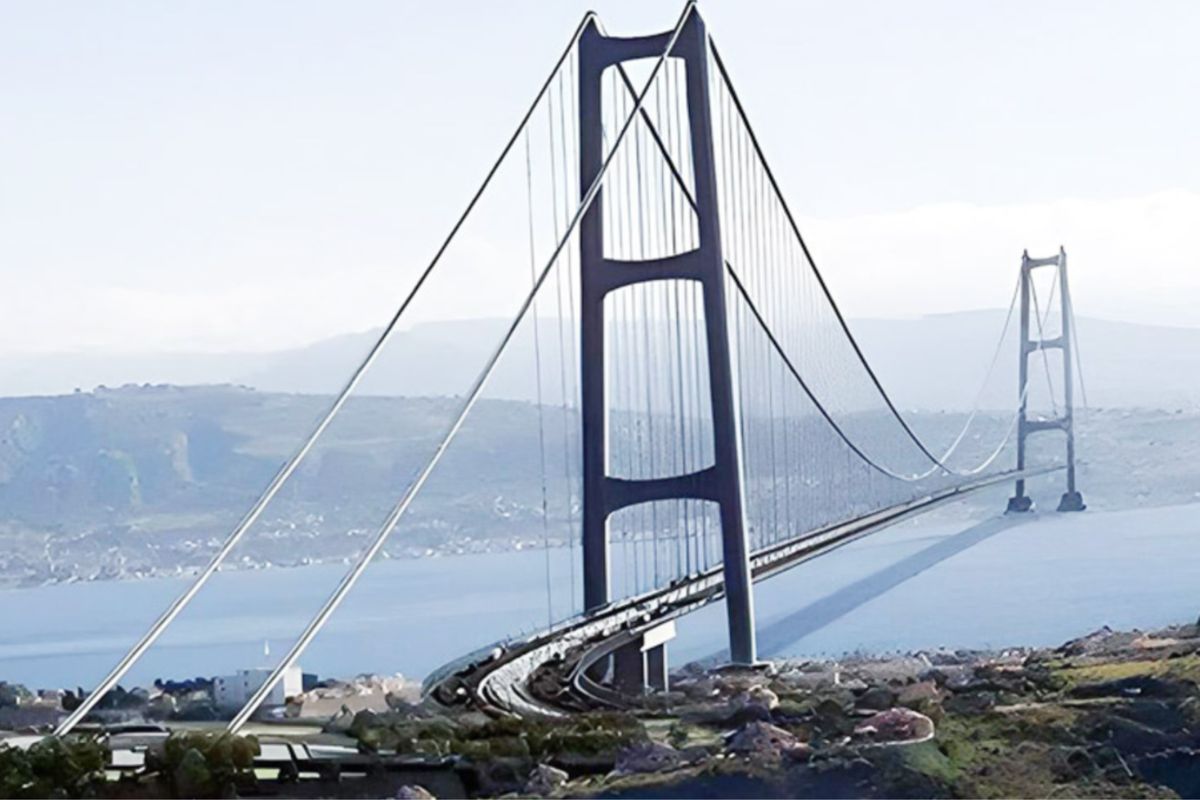
With a Span of 3.3 Km, the Project that Crosses the Strait of Messina Advances in Italy, But Faces Seismic, Environmental Challenges and a Billion-Dollar Cost.
The Messina Bridge is a project that has captivated the Italian imagination for millennia. The ambition is to connect Sicily to mainland Italy via what would be the largest suspended bridge in the world. Driven by strong recent government support, the realization of this dream seems closer than ever.
This article examines the saga of the Messina Bridge. We will explore its history, the unprecedented engineering project, the monumental challenges, and the current status of this one of the most debated infrastructure works in Europe.
A 2,000-Year Ambition: The Story Behind the Messina Bridge
The idea of a permanent physical link between Sicily and mainland Italy is not new. The earliest concepts date back to the Romans in 251 BC, who attempted to build a floating structure to transport war elephants. Over the centuries, the idea has resurfaced, becoming almost mythical.
-
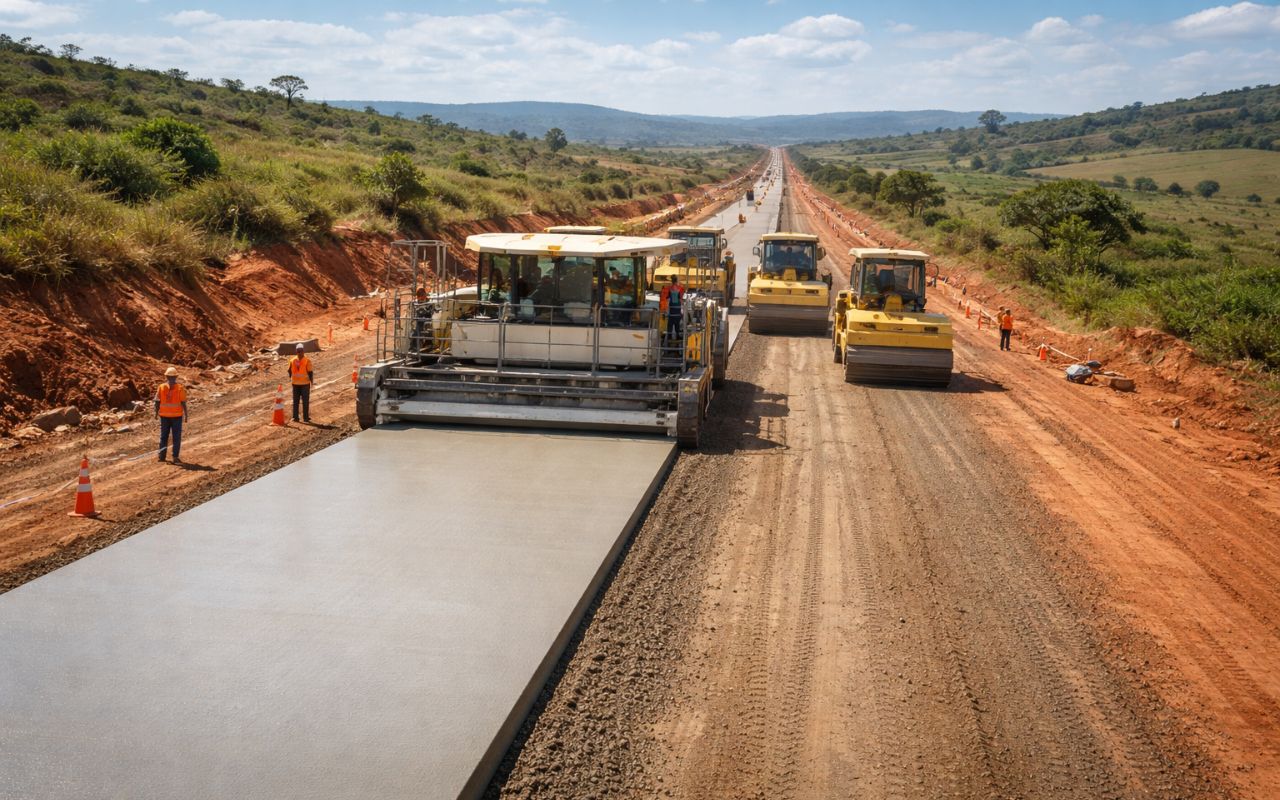
New CCR concrete paving technology promises roads up to 3x more durable, less maintenance, and cost reduction in Brazil.
-
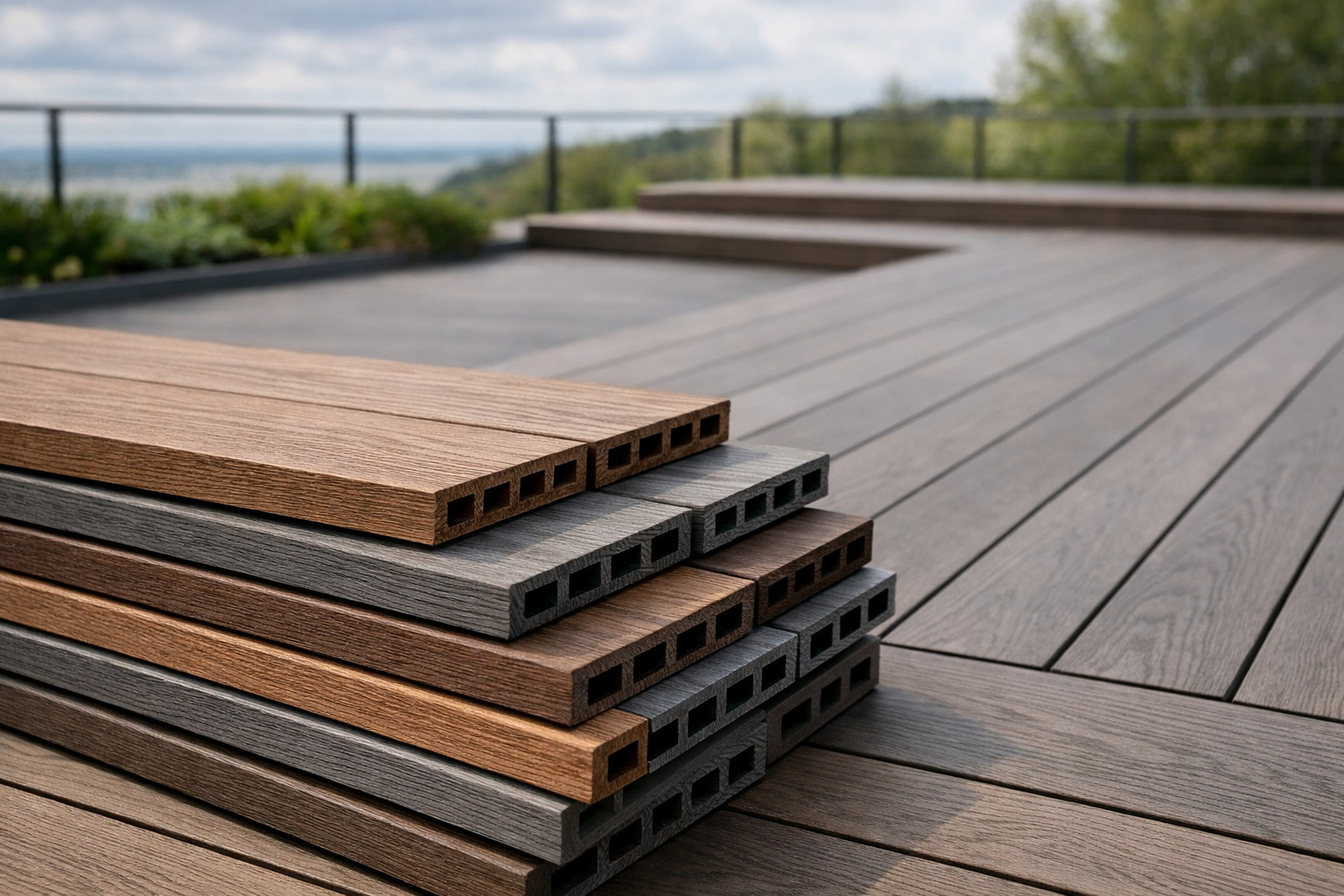
Made from recycled plastic, plastic wood is gaining space in the construction industry because it does not rot, resists moisture, and reduces maintenance costs over the years.
-
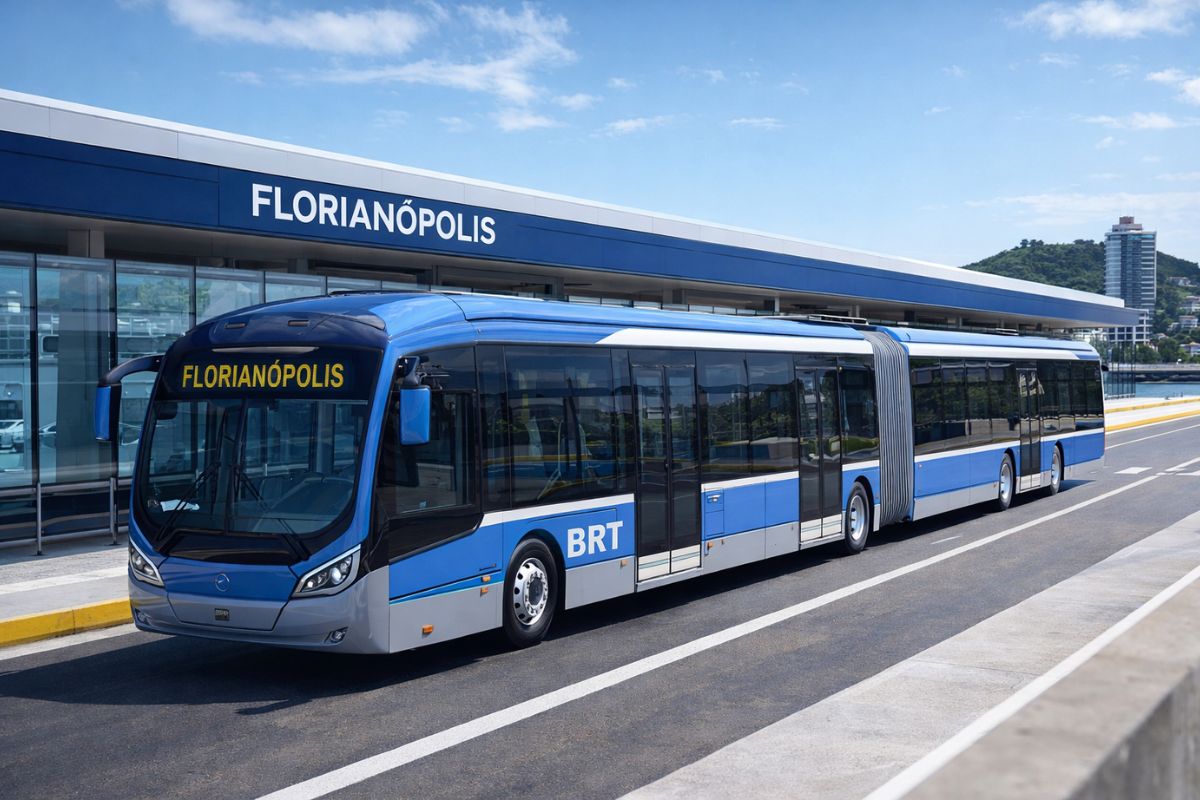
Florianópolis will receive a million-dollar BRT that will begin construction in 2026 with nearly 400 million in funding from the federal government and the Inter-American Development Bank, and the map already shows the routes for the exclusive bus corridors.
-
Without a blueprint, without an engineer, and using scrap from the dump, a father spends 15 years building an 18-room castle for his daughter, featuring tram tracks, 13 fireplaces, and over 700 m², which may now be demolished.

In the 20th century, several proposals were considered. In 1981, the state-owned company Stretto di Messina S.p.A. was created to plan the crossing. A project was even contracted in the early 2000s, under the government of Silvio Berlusconi, but was shelved by subsequent governments due to costs and environmental risks. After decades of ups and downs, the project has been vigorously revived by the current Italian government.
What Will the Largest Suspended Bridge in the World Look Like?
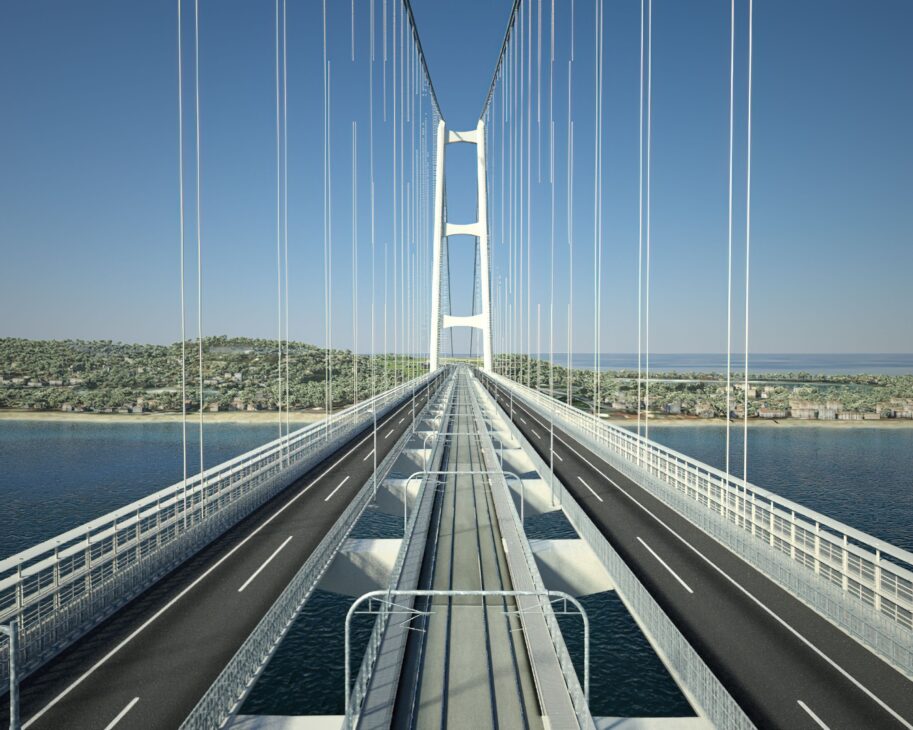
The design of the Messina Bridge is a demonstration of engineering prowess. With a main span designed at 3,300 meters (3.3 km), it would become the largest suspended bridge in the world, surpassing the current record holder, the Çanakkale 1915 Bridge in Turkey (2,023 meters).
The structure is designed for mixed traffic, with three lanes in each direction and a double-track railway line. Its two supporting towers will have an impressive height of 399 meters. A central innovation is the “Messina Type Deck,” an aerodynamic triple-box deck designed to ensure stability against the strong winds of the strait. The structure’s lifespan is expected to be 200 years.
The Political Momentum and Current Status in 2024-2025
The reactivation of the project is a priority for the Italian government. The Minister of Infrastructure and Transport, Matteo Salvini, is its main advocate. The government revived the state-owned Stretto di Messina S.p.A. in 2023 to oversee the project, and construction will be handled by the consortium Eurolink, led by Webuild, which had already won the original tender.
The approval process has advanced significantly. In June 2025, the Environmental Impact Assessment Committee of the Ministry of Environment issued a favorable opinion, a crucial step. Final approval by the Interministerial Committee for Economic Planning and Sustainable Development (CIPESS) is the next major milestone, expected by mid-2025.
The Colossal Challenges of the Largest Suspended Bridge Project in the World
Despite the government’s optimism, experts and civil organizations point to monumental challenges. The Strait of Messina is one of the highest seismic risk areas in Europe, capable of generating earthquakes greater than 7.1 on the Richter scale. Although the project incorporates robust anti-seismic engineering, concerns remain.
Environmental impacts are also a point of intense debate. The area is a biodiversity hotspot, protected by European Union directives, and a crucial migratory route for birds and cetaceans. Environmental groups question the efficacy of mitigation measures and pledge to continue legal challenges. Another serious concern is the risk of mafia infiltration (‘Ndrangheta and Cosa Nostra) in a public works project of this magnitude in southern Italy.
The Future of the Sicilian Connection
Building the largest suspended bridge in the world comes at a high cost. The total estimated budget is €13.5 billion, including the bridge and about 40 km of connecting road and rail infrastructure.
Funding will predominantly come from Italian public funds. The government is also seeking co-financing from the European Union, which has already contributed to the detailed project costs. The current timeline is ambitious: construction is expected to begin by the end of 2025, with completion in 2032. However, the road ahead is complex and depends on overcoming legal, financial, and environmental challenges for the 2,000-year dream to become a reality.







Seja o primeiro a reagir!