





 Portuguese
  English
  Spanish
 4 min of reading
  0 comments


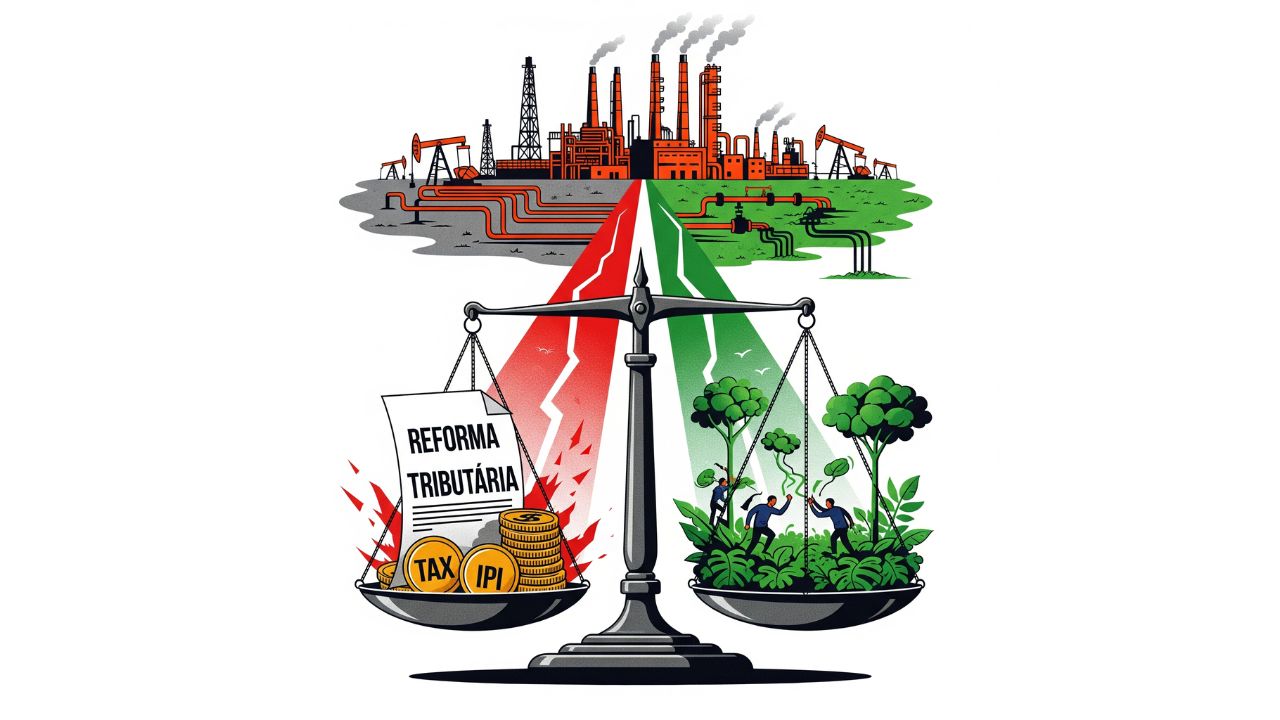
Tax Reform In Focus: Understand How the Change in IPC for Oil in Manaus Affects the Fuel Market and Competitiveness.
The new tax reform is generating lively debate in the fuel market. The recent changes in the Tax on Industrialized Products (IPC) have created a scenario of uncertainty, with an innovative tax benefit for the oil industry in Manaus, specifically for the refinery located in the Free Trade Zone.
This measure, which breaks a historical rule of excluding the oil sector from tax incentives, may directly affect market competitiveness and the production of biofuels.
The changes are taking place under Complementary Law 214/25, which guarantees a favored tax regime for oil refining in the region.
-
The noise law will no longer be in effect at 10 PM starting in June with a new rule valid during the 2026 World Cup.

-
The Chamber opens a debate on driver’s licenses at 16 years old as part of a reform that includes around 270 proposals to change the Brazilian Traffic Code and may redesign rules for licensing, enforcement, and circulation in the country.

-
The new Civil Code could revolutionize marriages in Brazil with “express divorce” and changes that could exclude spouses from inheritance.

-
Banco do Brasil sues famous influencer for million-dollar debt and intensifies debate on delinquency, risks of seizure, and direct impact on Gkay’s credibility.

<p.As a result, the IPC rate will be zeroed for goods produced in the Free Trade Zone of Manaus that have no similar in other free trade areas.
Experts and industry bodies are questioning the constitutionality of the measure and warning of possible impacts on the national market, generating unfair competition and harming sustainability.
Understand the Change in the Tax on Industrialized Products (IPC)
The Free Trade Zone of Manaus (ZFM) is an industrial, commercial, and agricultural hub created to promote the development of the northern region of the country.
To achieve this, it offers tax incentives that include, for example, benefits in the Tax on Industrialized Products (IPC).
However, due to a historical rule, operations involving oil, lubricants, and liquid and gaseous fuels have never been granted these incentives.
Law 14.183/21, for example, already provided for this exception.
What changes now with the new tax reform is the introduction of an unprecedented tax benefit for the oil refining industry in the ZFM. This is seen by some as a violation of the principles of free competition.
Why Is the Change in IPC Viewed with Concern?
The creation of this benefit has raised strong criticisms from industry bodies, such as the Brazilian Institute of Oil and Gas (IBP) and the Unique Federation of Oil Workers (FUP).
For the IBP, the measure violates the principles of free competition and free enterprise, as it creates an artificial distortion in the same market.
This tax asymmetry, by privileging one refinery with a more favorable tax treatment, may induce market concentration, harming equality among economic agents.
The FUP shares this concern. According to the entity, “the alteration introduced by LC 214/25 not only compromises competitive equality but may also weaken the productive structure of the sector as a whole.”
They argue that the measure tends to reduce the diversity of companies in the sector and make it harder to maintain jobs in other regions of the country.
In other words, the isolated benefit may exacerbate regional inequalities and inhibit new investments, compromising the cohesion of the national fuel market.
The Dangerous Imbalance in Competition and the Impact on Sustainability
The granting of the new tax benefit may also harm the production of biofuels. By artificially lowering the cost of gasoline in Manaus through tax relief, ethanol and other biofuels become less competitive.
The biofuels sector already faces significant challenges, such as high investments in technology and logistics, in addition to fierce competition with the oil industry.
The new measure creates an even greater imbalance and, consequently, discourages the production of clean energy sources. This goes against public policies aimed at environmental sustainability.
The Tax Reform and the Goal of a More Neutral Market
The tax reform seeks, in its essence, to increase simplicity, transparency, and fiscal neutrality, reducing distortions and inequalities.
The goal is to prevent taxation from unduly influencing the economic decisions of agents, promoting a more equitable environment.
In this context, the new role of the IPC, with the rate set to zero for the oil industry in Manaus, goes against the principles that guide the new tax model.
Instead of neutrality and uniformity, the measure creates sectoral tax privileges that may undermine competition and jeopardize the consolidation of a fairer and more sustainable market.
The discussion on the constitutionality of this measure is ongoing and may result in new developments, as the topic directly affects regional development and the country’s energy policy. Market and consumer attention remains focused on the unfolding of this story.










Seja o primeiro a reagir!