





 Portuguese
  English
  Spanish
  4 min of reading
  0 comments


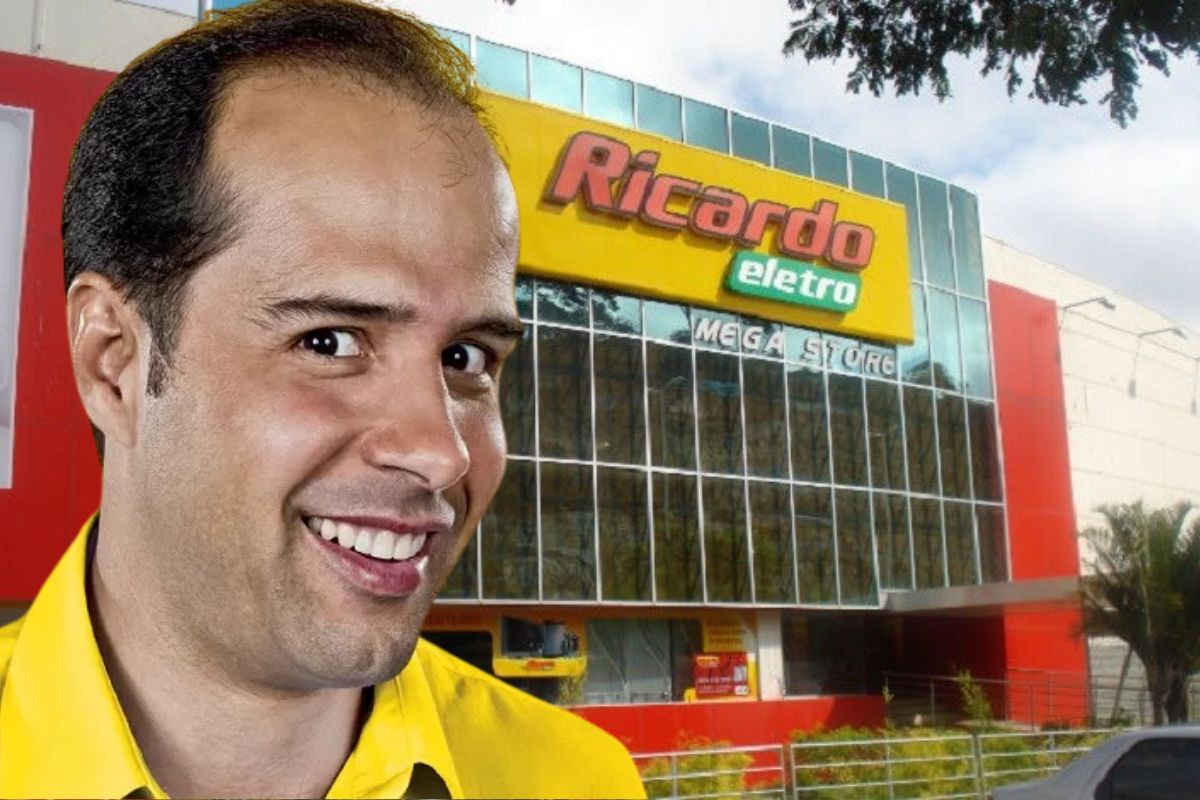
From 20m² Store to R$10 Billion Empire: The Rise and Fall of Ricardo Eletro, Marked by Scandals, Founder’s Arrest, and Bankruptcy.
A small store in Minas Gerais became a retail giant. It had up to 1,200 locations and generated R$ 10 billion in revenue. This is the story of Ricardo Eletro. However, the peak lasted for a short time. The financial crisis hit, stores closed, and thousands were laid off.
The founder, Ricardo Nunes, was even arrested for tax evasion. The company entered a bankruptcy process. What happened to this giant?
From Clementine Seller to Store Owner: The Beginning of Ricardo Nunes
Ricardo Nunes, founder of Ricardo Eletro, was born in Divinópolis (MG) in 1970. He came from a humble family and started working early. At 12, he sold clementines at the market. Later, he sold popsicles and candies. At 18, he traveled to São Paulo to buy stuffed animals and resell them in his hometown.
-
A new Brazilian shopping center worth R$ 400 million will be built in an area equivalent to more than 4 football fields, featuring 90 stores, 5 cinemas, a supermarket, a college, and parking for 1,700 cars, potentially generating 3,000 jobs.

-
Larger than entire cities in Brazil: BYD is building a 4.6 km² complex in Bahia with a capacity for 600,000 vehicles per year, but the discovery of 163 workers in conditions analogous to slavery has shaken the entire project.

-
With an investment of R$ 612 million, a capacity to process 1.2 million liters of milk per day, Piracanjuba inaugurates a mega cheese factory that increases national production, reduces dependence on imports, and repositions Brazil on the global dairy map.

-
Brazilian city gains industrial hub for 85 companies that is equivalent to 55 football fields.


In 1989, with just 20m² and R$ 5,000, he opened his first Ricardo Eletro store. The initial focus was on stuffed animals, but he soon adopted a low-price policy and expanded to appliances.
The Expansion of Ricardo Eletro and the Holding Company Máquina de Vendas

Ricardo Eletro grew rapidly. Nunes’ strategy was aggressive. He opened stores near competitors and matched their offers to attract customers. In 1999, he opened a unit in Belo Horizonte. Starting in 2002, he began a strong expansion into other states. In 2007, he acquired the Mig chain (SP/GO). He launched his e-commerce site in 2009.
The big leap came in 2010 with the merger with the Bahian Insinuante. Together, they created the holding company Máquina de Vendas, the second largest in the sector in Brazil. The group also bought City Lar, Eletroshopping, Salfer, and Clique Eletro. Eventually, all stores were unified under the Ricardo Eletro brand.
Peak in 2014 and the Founder’s Conviction for Corruption
In 2014, Ricardo Eletro reached its peak. There were about 1,200 stores in 23 states and the DF. It had 28,000 employees and nearly R$ 10 billion in annual revenue. Ricardo Nunes was a well-known face, appearing in TV commercials.
However, as early as 2011, Nunes had been sentenced to 3 years for active corruption. He was accused of paying bribes to a Receita Federal tax auditor. The auditor was caught red-handed leaving Ricardo Eletro with cash. Nunes was not arrested at the time and even appeared on Forbes’ list in 2013.
Recession, Debts, and the Judicial Recovery of Ricardo Eletro
The decline of Ricardo Eletro began in 2015. The Brazilian economic recession severely affected retail. Sales dropped, operational costs rose, and online competition increased. The company’s revenue plummeted by about 40%. The number of stores and employees was drastically reduced.
Facing financial difficulties, Ricardo Eletro filed for Judicial Recovery in August 2018. The request was accepted in January 2019, involving debts of R$ 4 billion with 17,000 creditors. In 2019, Ricardo Nunes and his family sold their entire stake in the company to businessman Pedro Bianchi.
Final Blow? Pandemic, Arrest of Ricardo Nunes, and Declaration of Bankruptcy


The Covid-19 pandemic in 2020 worsened the situation of Ricardo Eletro. Under the leadership of Pedro Bianchi, the last 300 physical stores were closed. An additional 3,000 employees were laid off. To make matters worse, in July 2020, Ricardo Nunes was arrested. The accusation was for evading over R$ 400 million in ICMS in Minas Gerais.
He allegedly charged the tax from consumers but did not pass it on to the state. Nunes spent only one day in jail, but the scandal further tarnished the brand’s image. In 2022, the São Paulo justice declared the Máquina de Vendas holding bankrupt three times, but those decisions were later overturned.
What Is Left? E-commerce Ricardo Eletro, ‘Nossa Eletro’ Stores, and Ricardo Nunes Coach
Currently, the Ricardo Eletro brand survives only in e-commerce. The website has been revamped and operates as a marketplace, but it has a low reputation on complaint sites. The Máquina de Vendas group, now under Pedro Bianchi’s leadership, is attempting a return to physical retail.
In April 2023, it opened stores under a new name: “Nossa Eletro.” There are currently four units in Minas Gerais. Meanwhile, Ricardo Nunes, the founder, works as a coach and speaker. He uses his social media and his company R1 Educação to talk about business and entrepreneurship.









-

-

-

-

8 pessoas reagiram a isso.