





 Portuguese
  English
  Spanish
  3 min of reading
  0 comments


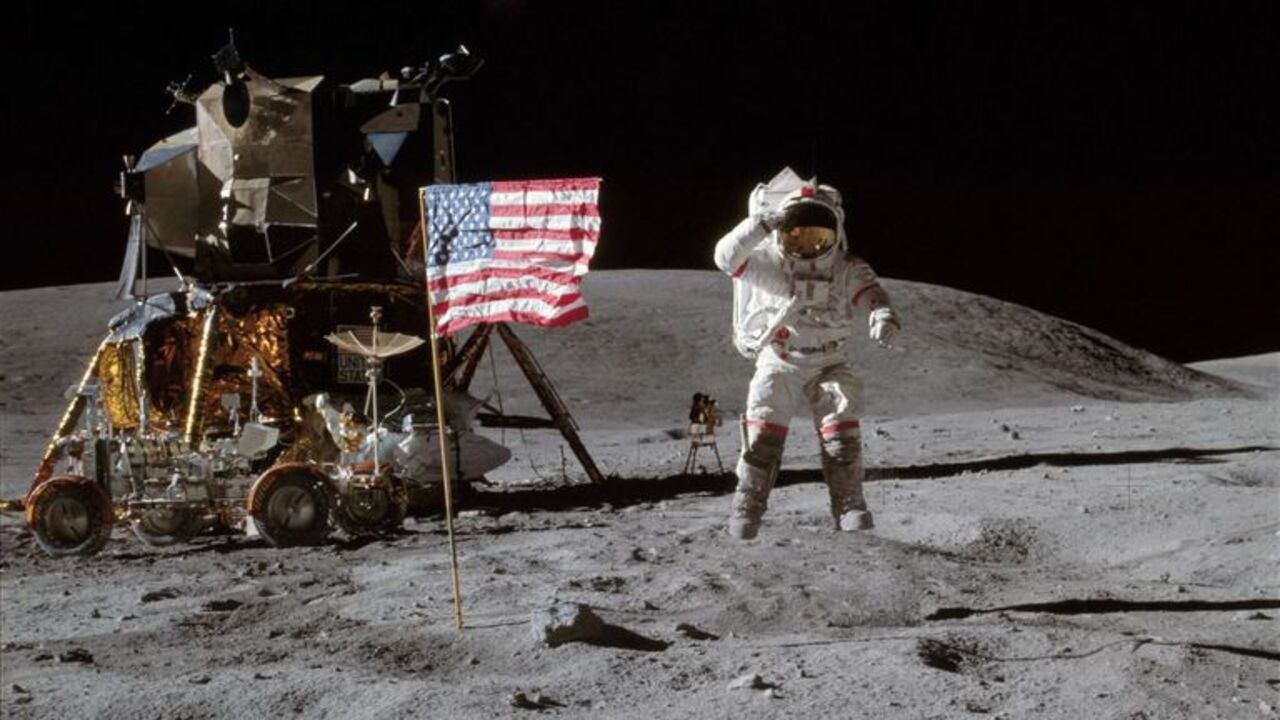
Images from the LRO Probe Show That Five Flags from the Apollo Missions Remain Standing on the Moon After More Than 50 Years of Trips
The Apollo missions, conducted by NASA between 1969 and 1972, not only took astronauts to the Moon but also left a striking symbol of American presence: six flags of the United States planted on the lunar surface. Over time, questions arose about the current state of these flags.
Decades after the end of the crewed missions, images captured by the Lunar Reconnaissance Orbiter (LRO), a NASA orbiter, offer clues about the persistence of these flags on the Moon.
The first was planted in 1969, by the Apollo 11 mission, and the last in 1972, during Apollo 17.
-
The Argentine government celebrates the lowest poverty rate in 7 years, but experts warn that the methodology has changed, real wages have fallen, unemployment has risen, and the number of people on the streets of Buenos Aires has increased by 57% since Milei took office.

-
7.8 magnitude earthquake in Indonesia frightens the population, triggers tsunami alert, and hits an island with over 200,000 inhabitants this Thursday.

-
Google will finally let you change that embarrassing Gmail address you created in your teenage years without losing any accounts, logins, or old emails: the feature is already available in the United States.

-
Heading to Brazil in a Bonanza F33 single-engine aircraft: a couple departs from Florida on a visual flight, makes technical stops in the Caribbean to refuel and organize paperwork, and begins the staged crossing until they reach the country.

The Technique Used to Identify the Flags
To find out which flags are still standing, NASA scientists analyzed a series of images taken by the LRO at different times of the day.
The observation focused on the shadows projected around the spots where the flags were placed. The goal was to identify shapes or projections that indicated the physical presence of these objects.
The Flag from Apollo 11 Fell During Launch
According to Dr. Noah Petro, a NASA researcher involved with the Artemis III projects and the Lunar Reconnaissance Orbiter, the first flag placed during the Apollo 11 mission likely fell during the launch of the lunar module.
Astronaut Buzz Aldrin had previously reported that the force of the launch would have knocked the flag down. The LRO images confirm the absence of a shadow at the location where it was planted on July 20, 1969.
After the incident with Apollo 11, the subsequent missions took precautions. The flags were placed further away from the lunar modules to avoid being knocked down by the shockwave from the launch.
The strategy seems to have worked. According to Dr. Noah Petro, high-resolution images from the LRO clearly show shadows at the landing sites of the Apollo 12, 14, 15, 16, and 17 missions. This indicates that these flags are still standing.
Clearer Evidence and Other Less Conclusive
Among them, the flags from the Apollo 12, 16, and 17 missions present the clearest and easiest shadows to identify in the LRO images.
However, the records of the flags from Apollo 14 and 15 are less conclusive. Scientists believe this may be due to the positioning of the flags, which could have hindered the visibility of the shadows, or because the resolution of the images was not sufficient to capture details accurately.
Even so, the fact that five of the six flags are still standing after more than 50 years is notable to researchers.
With information from Canal Tech.








-

Uma pessoa reagiu a isso.