





 Portuguese
  English
  Spanish
  4 min of reading
  1 comment


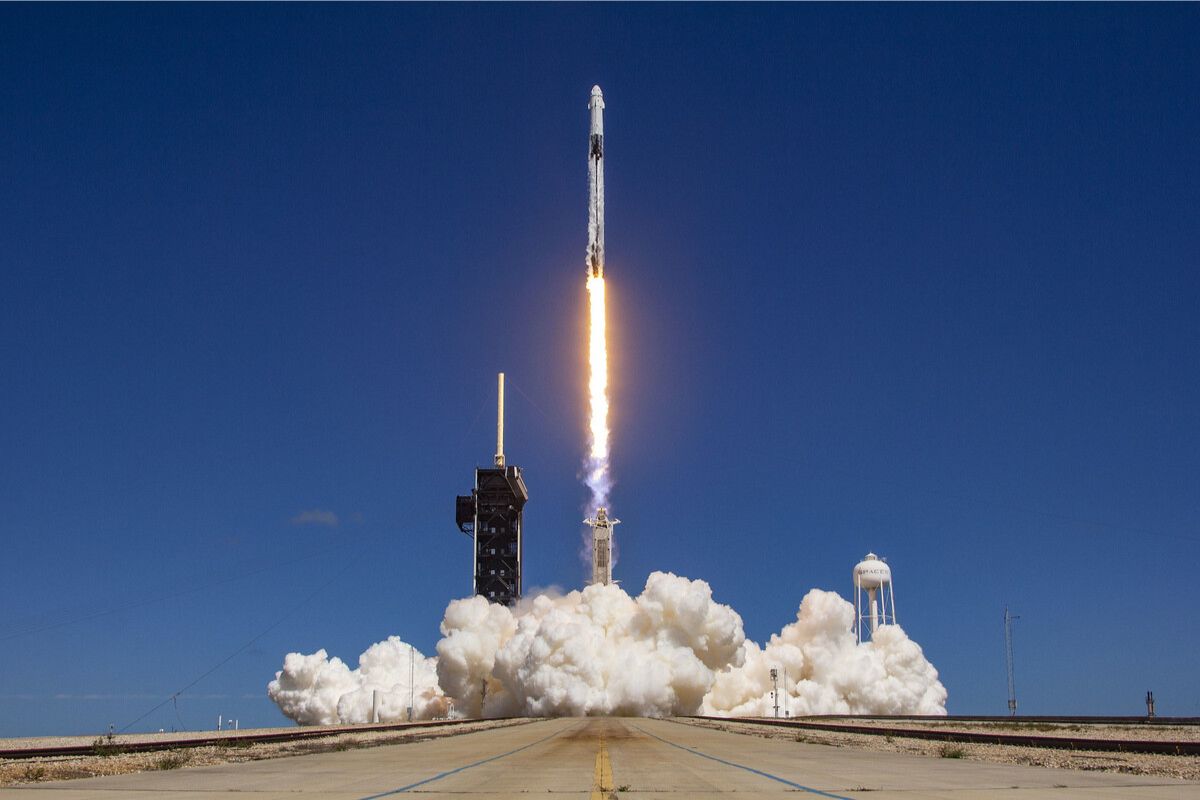


SpaceX’s Falcon 9 Surpasses NASA’s Space Program Efficiency, Achieving a Flight Rate 30 Times Greater at a Fraction of the Cost
Until relatively recently, the very idea of launching the same rocket into space multiple times in a single weekend was confined to science fiction. However, everything changed on June 4, 2010, with the first launch of SpaceX’s Falcon 9. Since then, Elon Musk’s company has not stopped making history in the space industry. This year, it was unmatched.
Recent Milestones. The portal ArsTechnica reported last weekend that SpaceX had reached a new level of efficiency with its Falcon 9, achieving 400 successful missions and 375 booster recoveries to date.
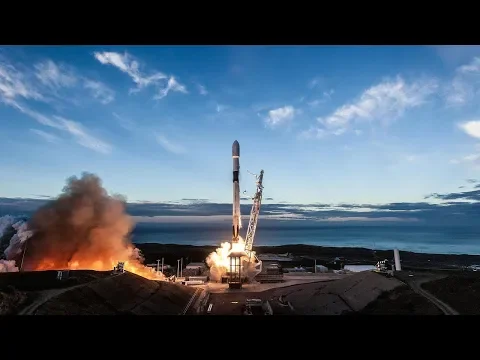

From Falcon 9 to Space Dominance
In November, the company set a turnaround record by launching a booster just 13 days and 12 hours after its previous landing, surpassing the previous record of 21 days. Additionally, the company conducted 16 Falcon 9 launches in a single month, including Starlink missions and satellites for the U.S. Department of Defense. And, of course, there is much more.
-
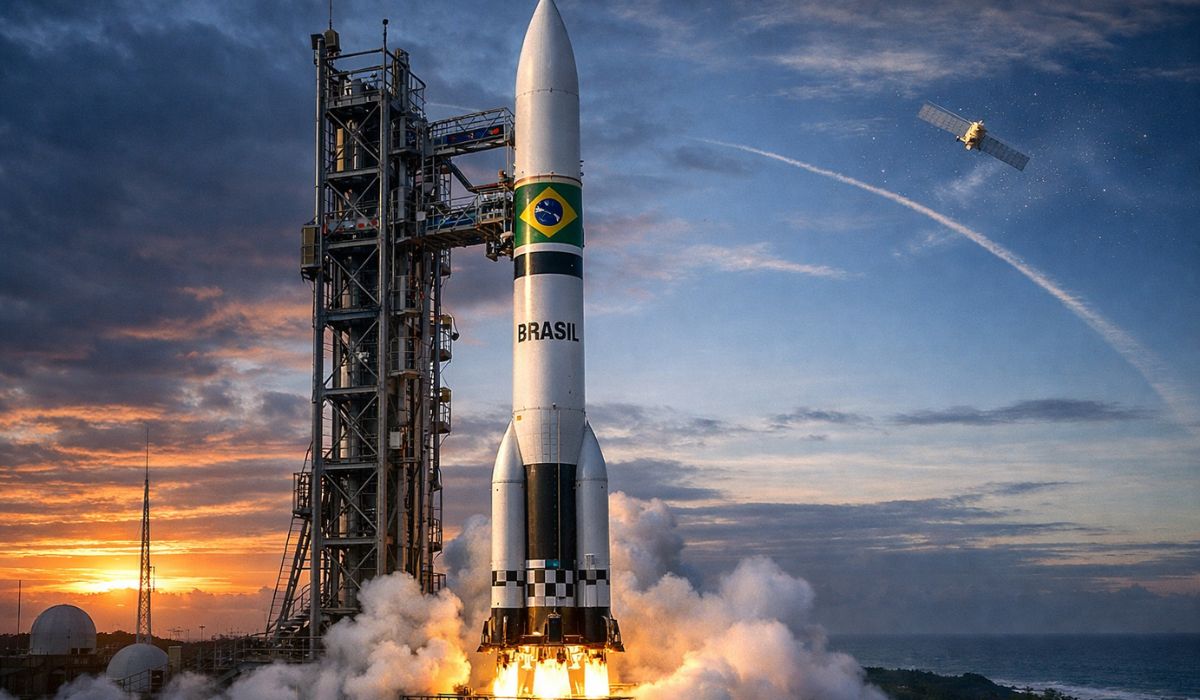
After decades of failed attempts, Brazil is once again looking to space with an orbital rocket measuring 12 meters, weighing 12 tons, costing R$ 189 million, and scheduled for launch in 2026, in a new race to finally achieve autonomous access to orbit.
-
The Earth will plunge into a few minutes of darkness in broad daylight in August 2026, when a total solar eclipse transforms the sky into one of the most impressive astronomical phenomena in recent years.

-
How the terraforming of Mars can transform the planet: artificial aerosols can increase the temperature by up to 35°C in 15 years, creating conditions for liquid water.

-
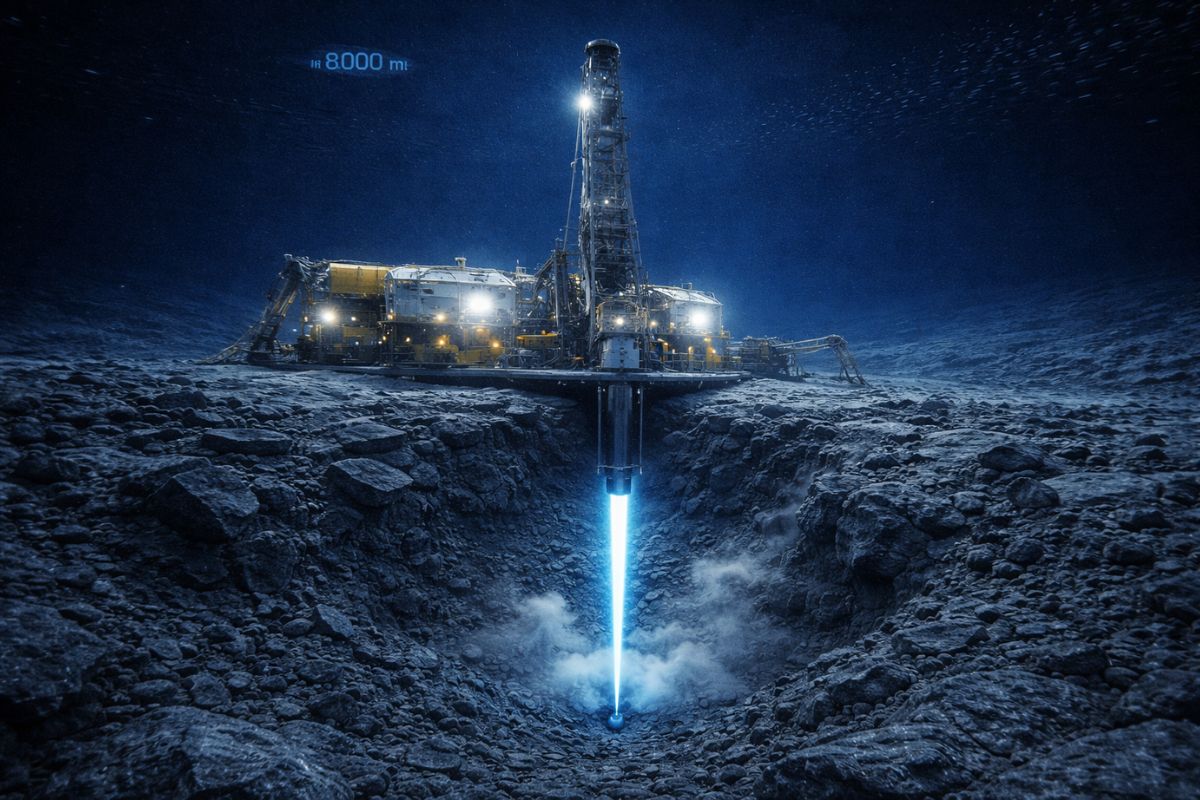
Scientists drilled nearly 8,000 meters into the ocean floor above the fault that caused the 2011 tsunami in Japan and discovered that a layer of clay 130 million years old was responsible for making the wave much worse than any model had predicted.

Unprecedented Pace. In 2024, SpaceX launched the impressive number of 119 Falcon 9, averaging one launch every 2.3 days. If it hits its goal of 15 more launches this December, the annual total could reach 134 missions.
This is not just an extra number, far from it. Adding in the two Falcon Heavy missions, the total rises to 136 launches, which would exceed the total number of flights conducted by NASA’s Space Shuttle during its 30 years of service (135). In other words, the comparison highlights Falcon 9’s ability to surpass in a single year what a whole large-scale program, like that of the American space agency, achieved.
The Secret of Reusability. The data highlighted in the title is an example to understand what Elon Musk’s company has accomplished. The Falcon 9 rocket fulfills the main objective of the program: rapid and low-cost reusability. As we will see next, there is much more, but one fact is revealing: a NASA Space Shuttle mission cost approximately $1.5 billion.
In comparison, each Falcon 9 launch has an estimated internal marginal cost of just $15 million. This means that SpaceX operates with a flight rate 30 times higher than that of the Space Shuttle, at only one-hundredth of the cost.
Of course, this would be impossible without the financial support of the U.S. agency over the years, which allowed SpaceX to progress to these unprecedented levels of efficiency. For example, with a contribution of $400 million to develop the Falcon 9 and Dragon, or with contracts for cargo missions or astronauts (CRS), or even for crewed missions (up to six for the ISS on Crew Dragon).
Revolutionary Efficiency and Costs
The Reconditioning Process. Part of the “trick” of the Falcon 9 has been revealed by Elon Musk a few years ago to Aviation Week. The reconditioning of the rocket’s boosters includes detailed inspections, such as X-rays of the propellant tanks, cleaning of the landing “legs” and unclogging of the Merlin engines, necessary due to the use of kerosene as fuel.
Musk explained that this process is relatively simple, with reconditioning costs of just $250,000 per booster. Most of the engines and components remain intact between flights, with only a few parts, such as the turbines, being occasionally replaced.
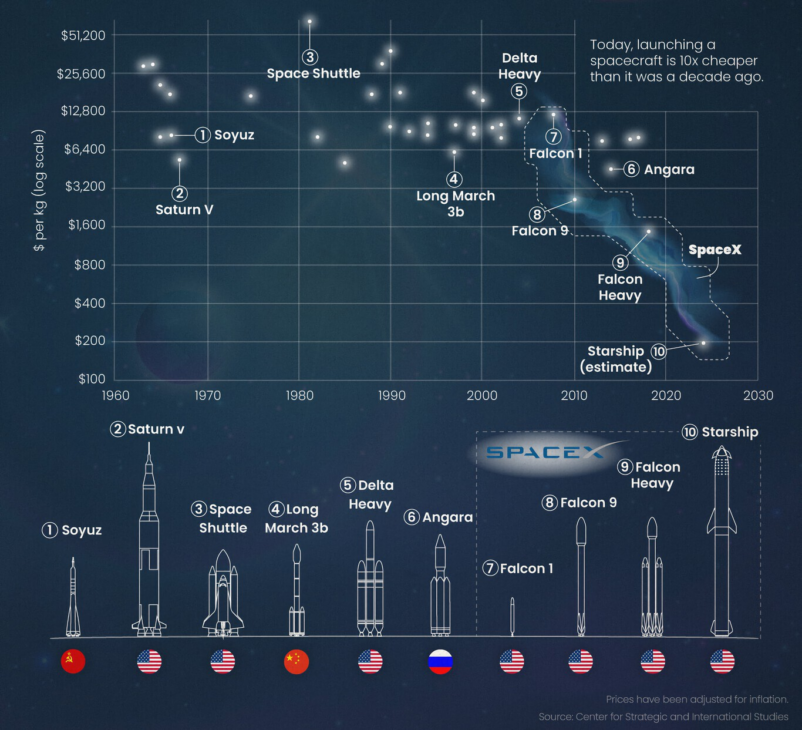
Costs and Economic Efficiency. Regarding the division of these $15 million of marginal cost per launch, Musk explained that $10 million goes directly to manufacturing a new second stage (which cannot be reused and needs to be built for each launch), and the remaining $5 million is associated with costs such as propellant, recovery of components, and reconditioning.
Additionally, and very importantly, Elon revealed that SpaceX charges $50 million for a reused launch (this figure has increased over time), generating a significant profit margin that finances projects like Starlink itself (potential “cash cow”) and the Starship.
For example, two consecutive launches of a reused Falcon 9 generate about $110 million in revenue with a total cost of $65 million, resulting in a net profit of approximately $47 million. Thus, if a booster performs 10 launches, the estimated total costs are $210 million, allowing SpaceX to use part of these flights for internal missions, such as Starlink, practically “for free”.
Comparison with the Industry. All this data has allowed something completely unprecedented in the sector: SpaceX has no rivals. No one has been able to routinely recover or reuse its rockets, while most competitors are still trying to figure out how to make their own Falcon 9.
If we base on the data, in 2024, SpaceX conducted more launches than its competitors over long periods: it matched the launches of Roscosmos since 2013, United Launch Alliance since 2010, and Arianespace since 2009. Furthermore, just this year, the Falcon 9 has flown more times than iconic rockets such as Ariane 4, Ariane 5, or Atlas V throughout their entire history.
Challenges and SpaceX’s Leadership
Challenges. Undoubtedly, despite its success, SpaceX has faced setbacks. In July, the failure of the second stage resulted in the loss of 20 Starlink satellites, marking the first major “asterisk” for Falcon 9 since 2016. In August, a booster failed to land after catching fire during the attempt, although it was its 23rd flight, setting a reuse record. Another booster matched this record in November by completing its flight, and it is expected to reach 24 missions before the end of 2024.
An unprecedented trajectory led by the Falcon 9 and its successors, which have revolutionized the standards of reusability and efficiency in the aerospace industry, demonstrating SpaceX’s ability to achieve historic milestones at an unprecedented pace. With a model based on low costs and high frequency, the company is transforming space exploration, paving the way for a new era in access to space and, possibly, for the long-awaited arrival on Mars.






Parabéns, pelo empenho e progressos obtidos!!