





 Portuguese
  English
  Spanish
  5 min of reading
  0 comments


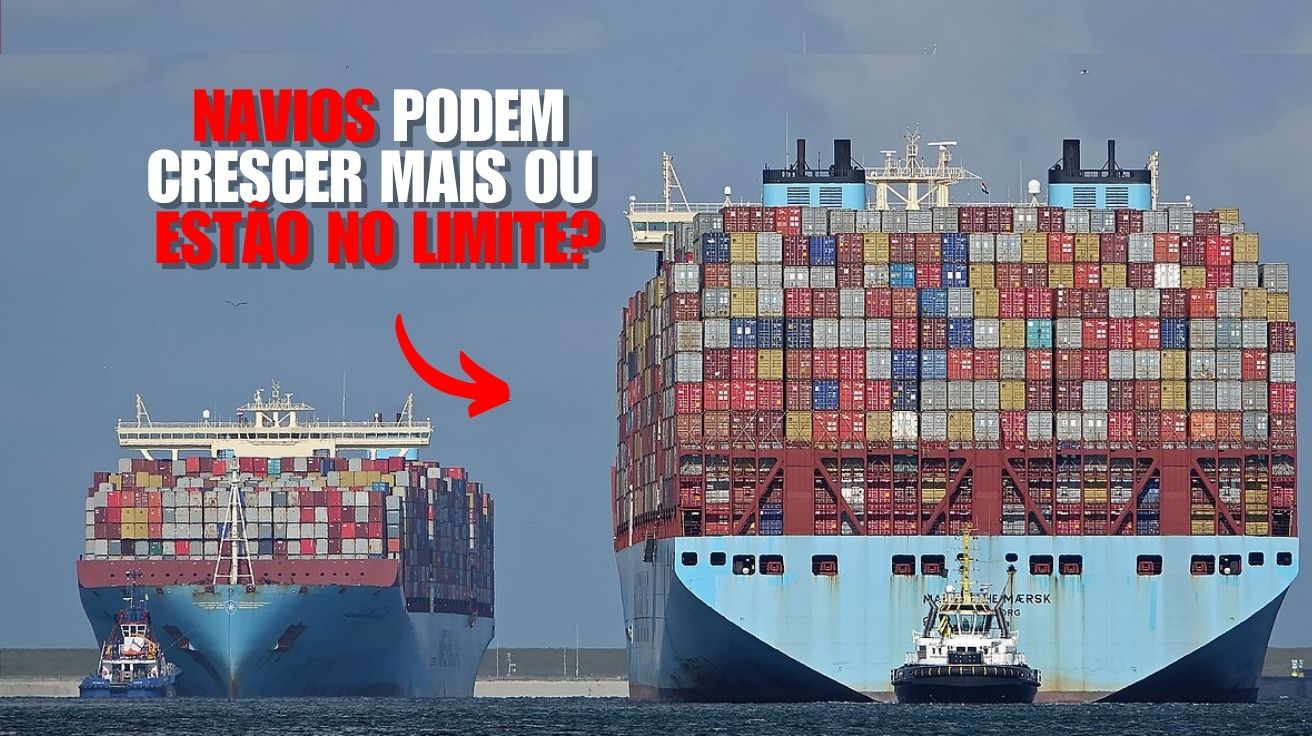
Mega Ships Have Already Surpassed 400 Meters In Length And Carry Up To 24,000 Containers, But Economic, Climatic, And Logistical Limits Hinder Progress. Understand Why Brazil Is Out Of This Route And What Factors Hinder Change.
Although naval engineering now allows for the construction of colossal vessels, the growth in the size of container ships has reached an impasse due to logistical, geographical, and economic reasons.
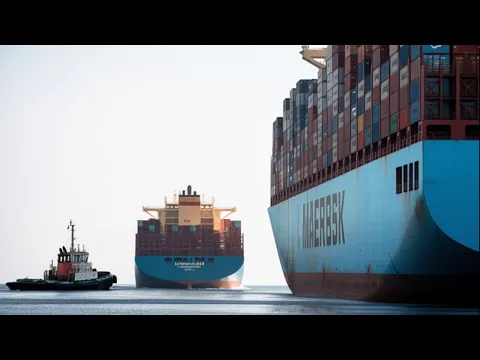
With over 400 meters in length and a capacity to carry up to 24,000 containers, the so-called mega ships represent the technological pinnacle of the maritime industry.
Since 2021, vessels of this size have been dominating trade routes between Asia, Europe, and parts of North America.
-
Motorola launched the Signature with a gold seal from DxOMark, tying with the iPhone 17 Pro in camera performance, Snapdragon 8 Gen 5 that surpassed 3 million in benchmarks, and a zoom that impresses even at night.

-
Satellites reveal beneath the Sahara a giant river buried for thousands of kilometers: study shows that the largest hot desert on the planet was once traversed by a river system comparable to the largest on Earth.

-
With 74% of companies facing difficulties in hiring, technicians and engineers in renewable energy are becoming scarce in Brazil and are essential to support the expansion of solar, wind, and green hydrogen projects.

-
Scientists have captured something never seen in space: newly born stars are creating gigantic rings of light a thousand times larger than the distance between the Earth and the Sun, and this changes everything we knew about stellar birth.


However, despite the advances, experts point out that it is unlikely we will see even larger ships in the coming years.
The curiosity channel Leandro LS explains that the current limits are not imposed by physics or engineering, but by structural and economic barriers, such as port capacities, restrictions on maritime routes, and high operating costs.
Colossal Ships Already Exist — But Face Limits
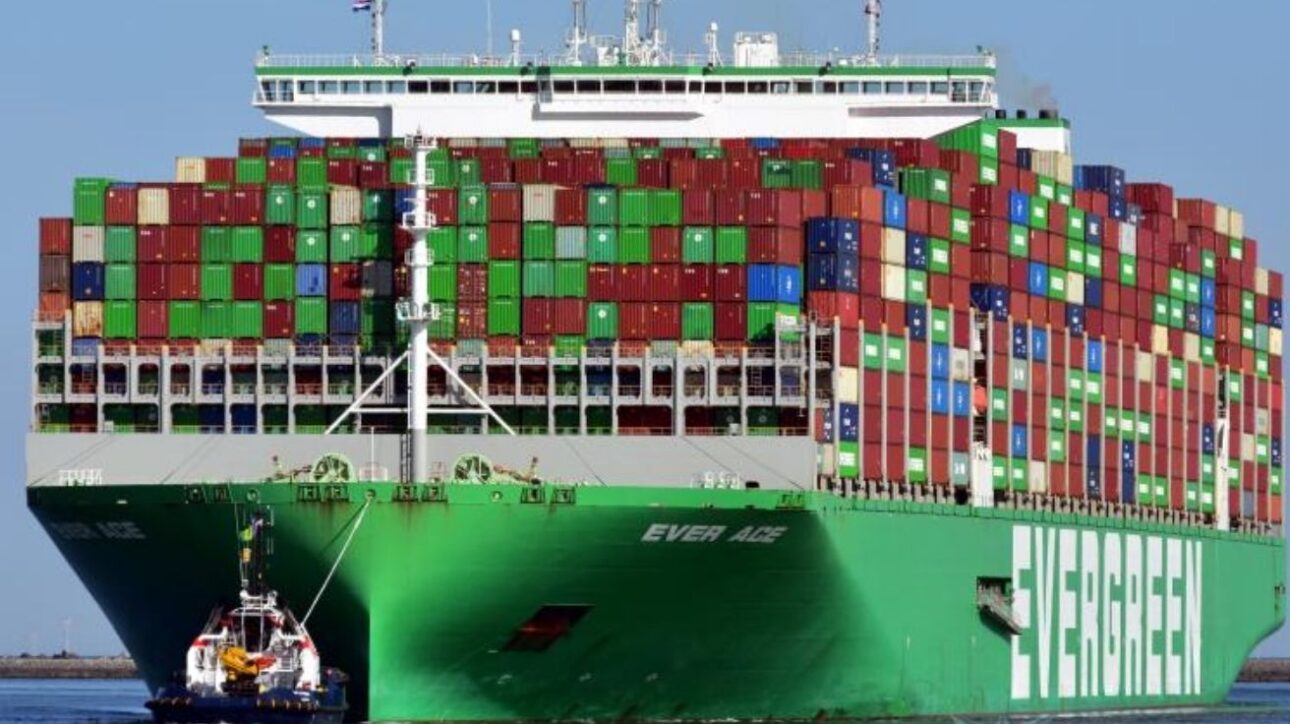
When the giant Ever Ace departed from the port of Yantian in southern China, loaded with 21,000 containers, it sought to establish a new world record.
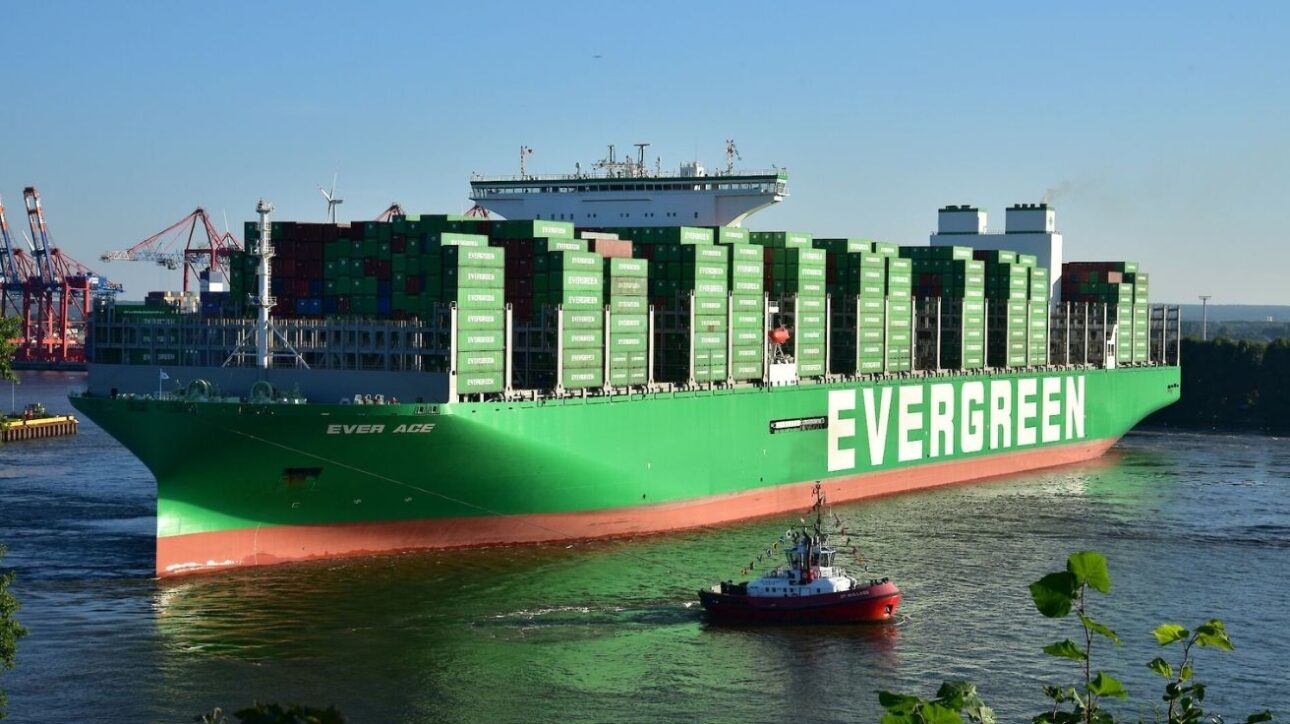
At 399 meters long and 61.5 meters wide, it became a symbol of a new generation of vessels.
Since then, dozens of other ships with similar or larger dimensions have been built.
Many of them have already surpassed 400 meters and carry up to 24,000 containers on board.
These are the so-called giants of the seas, which challenge not only engineering but also the operational capacity of global trade.
Two of these ships, stacked vertically, would be almost as tall as the tallest building in the world, the Burj Khalifa in Dubai.
However, an analysis of the largest container ships currently in operation shows that almost all are around 400 meters long and 60 meters wide — a standard that reveals a practical limit.
According to Leandro LS, “this is roughly the current limit for this type of ship”, and there are reasons for this.
Ports Are Not Prepared For Even Larger Ships
The main obstacle is not in engineering but in port infrastructure.
There are over five thousand container ships in the world, with a total capacity of about 25 million TEUs (twenty-foot equivalent units).
The average capacity has grown considerably over the last decade: from under 3,000 to 4,500 TEUs.
Today, more than 50 ships have a capacity exceeding 21,000 TEUs — and nearly all were built in the last five years.
“However, these ships are challenging the limits of ports, even the largest in the world,” warns the channel.
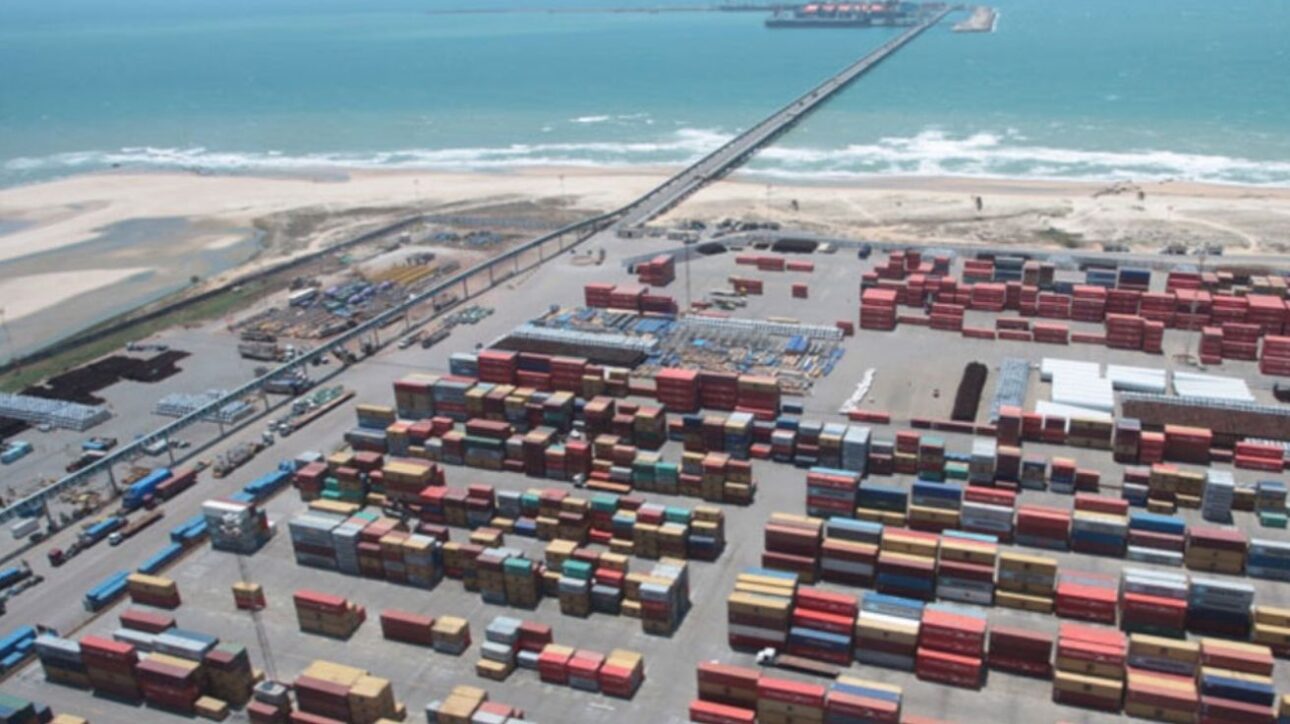
To operate these giants, ports need cranes with long arms, greater depth at the docks, and highly efficient handling infrastructure.
Additionally, space is required for complex maneuvers, often near shallow areas, which increases the risk of grounding.
Leandro states that “some larger vessels come within inches of touching the seabed”.
If the ships were even larger, many current maritime routes would no longer be viable for their paths.
Ports Would Require Billion-Dollar Reforms
Adapting to accommodate larger ships would imply a colossal reform of various ports around the globe, something that is not always financially feasible.
The channel explains that “accommodating much larger ships would require a tremendous overhaul of port infrastructure, which would be extremely costly”.
This includes the need to redesign artificial canals like those in Suez and Panama, which impose width and depth restrictions.
Many of these canals already operate at the limit of what they can accommodate.
And there is also the problem of environmental conditions.
The mega ships are more vulnerable to extreme climate changes.
For this reason, they avoid crossing the Pacific Ocean directly, where violent storms are frequent.
“Medium-sized ships sometimes lose containers in the Pacific,” states the channel.
The ultra-large ships, in turn, prefer to navigate close to the coast to reduce the impact of large waves.
It is a matter of stability and safety.
Larger Ships Face Instability And Physical Limitations
A phenomenon known as parametric rolling represents another challenge.
When the ship faces a sequence of waves along its length, the crest of the wave can concentrate at the center of the vessel.
At this moment, the bow and stern lose the support of the water beneath.
The variation in support causes a twisting motion that can compromise stability.
This effect can cause extreme rolling angles even in not very high waves.
Additionally, the structure of container ships includes large hatches on deck, making them structurally weaker compared to other vessels.
“They are more prone to twisting or buckling in rough seas,” states Leandro.
Another important factor is the container securing systems, which have physical limits for stacking.
Even if the hull can support more weight, the safety of the cargo is not guaranteed beyond a certain point.
Economy And Fuel Costs Impose New Barriers
Even though it is technically feasible to create ships with capacities exceeding 30,000 TEUs, the operation of vessels of this magnitude depends on economic viability.
According to the channel, “the largest ships consume immense amounts of fuel,” and this cost is not always sustainable.
Currently, global freight rates help cover the costs, but this could change.
The price of oil and environmental requirements also directly impact the decision to build even larger ships.
Leandro explains that “investing in even larger ships may not be the smartest financial decision”, at least in the current scenario.
Additionally, new routes would have to be developed, possibly linking countries in Asia to African ports, where it would be possible to adapt the infrastructure to new size standards.
“Perhaps we may see this type of ship one day, traveling from China to an African port,” he suggests.
Brazilian Ports Are Out Of This Equation
For now, Brazil is out of the mega ship circuit.
So far, the country does not receive container ships that are 400 meters long.
The lack of compatible infrastructure and the lack of investment in modernization keep the country away from this reality.
For the channel Leandro LS, the current limit of 24,000 TEUs is, therefore, a reflection of a combination of factors: port limitations, maritime geography, economy, and, ultimately, engineering.
Despite everything, he concludes with a provocative thought: “There is always a possibility that someone, with enough money, will order a ship that transforms even the giants of today into dwarfs.”
If that happens, it will be a marvel to behold.
Do you believe that the future of navigation will bring even larger ships, or have we already reached the practical limit of the seas?





-

-

-

-

-

19 pessoas reagiram a isso.