





 Português
  Inglês
  Espanhol
  7 min de leitura
  246 comentários


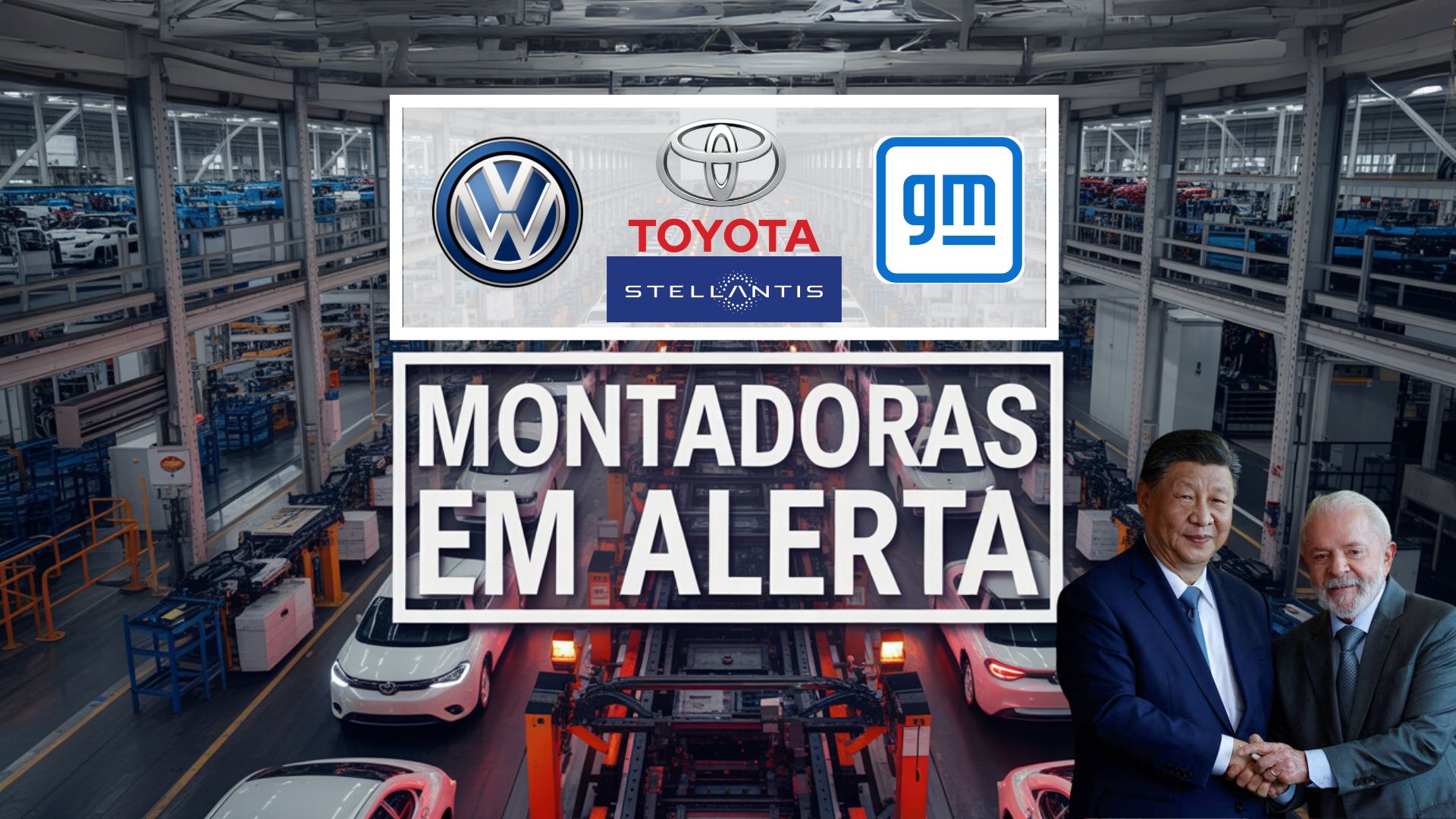


Automakers Warn of Risk of Mass Layoffs in Brazil Amid Incentives for Chinese Vehicles, While Government Analyzes Changes in the Industrial Policy of the Automotive Sector.
The top executives of Toyota, Volkswagen, General Motors, and Stellantis sent a letter to President Luiz Inácio Lula da Silva warning about the impact that a possible government measure could have on the national automotive sector.
According to the document published by the Poder 360 portal, if the measure advances, the biggest beneficiary will be the Chinese automotive industry, especially companies like BYD, which adopts the SKD (Semi Knocked Down) model, where cars arrive partially assembled and are completed in the destination country.
-
Future profession with immediate earnings: Specialist reveals how a solar energy technician earns R$ 8,000 per month by taking advantage of the explosion in demand across the entire country.
-
Work from 8:30 AM to 5:30 PM with a 1-hour break at Sicredi as a Customer Service Assistant and receive a salary + benefits such as life insurance, dental plan, partnerships, Gympass, and much more in job openings across various states.

-
Subsea7 has job openings: the company has offshore and onshore positions available in 2026 for operators, pilots, supervisors, engineers, and much more.

-
Unimed is hiring candidates with and without experience! More than 10 job openings for Assistants, Analysts, Kitchen Assistants, and much more!


Furthermore, the document states that in this system, there is little hiring of local suppliers and, consequently, low job creation in Brazil.
Investments by Automakers in Brazil
The group of four automakers, which accounts for a significant portion of national vehicle production, highlights in the letter that the investments announced for the next five years total about R$ 180 billion, of which R$ 130 billion is directed towards the development and production of vehicles, and another R$ 50 billion to the auto parts sector.
With the possibility of easier entry for cars produced abroad, the companies project a minimum cut of R$ 60 billion in those investments, in addition to a drastic reduction in the number of job openings.
The automakers estimate that, in addition to suspending the hiring of approximately 10,000 new workers, at least 5,000 existing jobs could be eliminated.
The executives also emphasize the multiplier effect of this impact: for each job lost in the factories, another ten could be lost throughout the auto parts and systems production chain, potentially increasing the cut to up to 50,000 jobs across the entire Brazilian automotive segment.
In the text, the companies state: “This harmful practice may spread throughout the industry, directly affecting the demand for auto parts and labor.”, warning of the risk of dismantling the national production chain if the model of importing partially disassembled vehicles is prioritized.
Defense of the National Automotive Industry
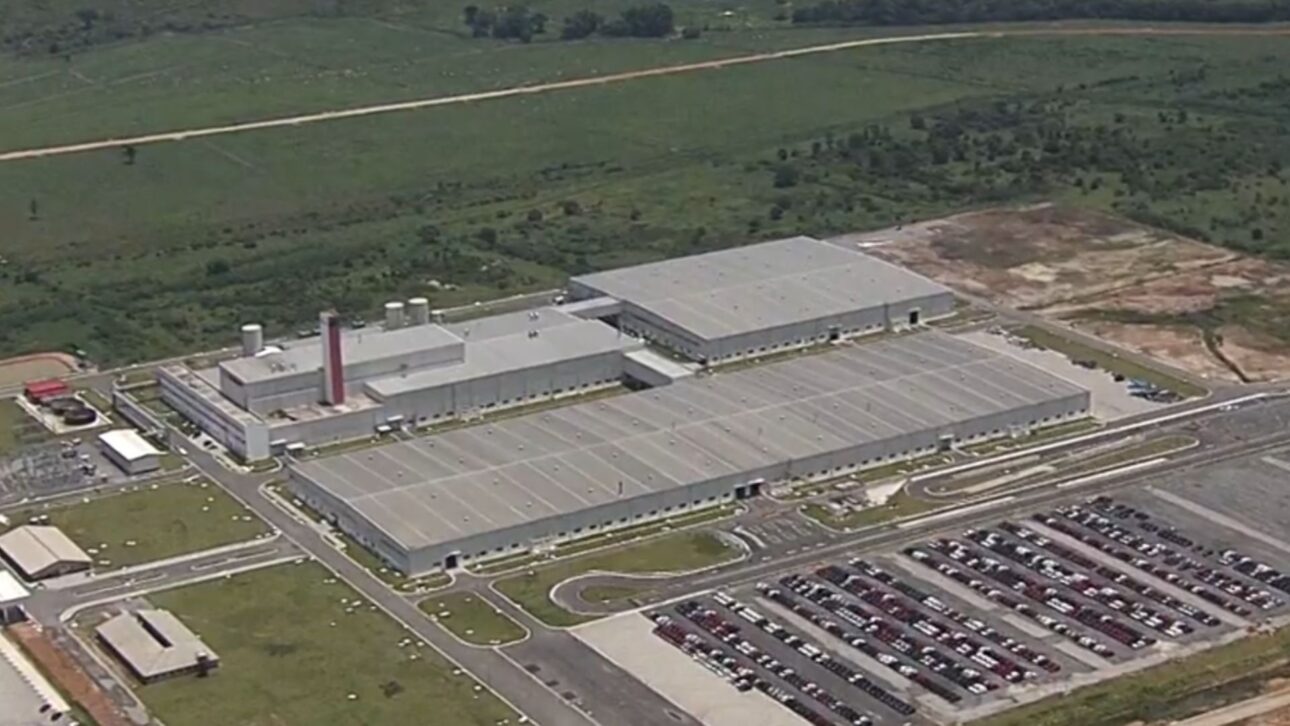
The statement from the automaker presidents calls for industrial policy to prioritize local manufacturing, proposing that incentives for the importation of disassembled or fully assembled vehicles from abroad with subsidies be banned.
The companies argue that, without protective measures for the national industry, the domestic market could suffer structural losses, with economic and social consequences for different regions of Brazil.
The letter was also addressed to Rui Costa, head of the Civil House, and Vice President Geraldo Alckmin, who occupies the position of Minister of Development, Industry, Commerce, and Services.
Rui Costa, a politician with a strong presence in Bahia, a state that currently receives one of BYD’s largest investments in the country, plays a central role in the discussion of the new rules.
Incentives for Chinese Vehicles and Government Decisions
According to information recently released by the newspaper O Estado de S. Paulo, the Gecex-Camex (Executive Management Committee of the Chamber of Foreign Trade), a collegial body composed of representatives from 11 ministries, will meet extraordinarily this Wednesday (30) to deliberate on the tariff reduction requests made by BYD.
In February of this year, BYD requested the federal government to lower the import tariffs for SKD and CKD (Completely Knocked Down) kits used in the production of electric and hybrid cars.
Currently, the tax for electric vehicles is 18%, and for hybrids, it is 20%.
The company is seeking a reduction to 5% and 10%, respectively, claiming that the change would be essential to stimulate the electrified car segment in Brazil.
Risks and Challenges for Jobs and Brazilian Suppliers
The scenario, according to traditional automakers, is concerning.
In this sense, they claim that the adoption of incentives for imports could jeopardize not only the planned investments but also technological development and the generation of qualified jobs.
The companies’ fear is that the massive entry of Chinese vehicles, especially through regimes like SKD, puts the competitiveness of the national industry at risk and leads to a contraction of the Brazilian supplier park.
The executives reiterate that the competitiveness of the automotive industry in Brazil depends on public policies that strengthen local production, encourage research and the development of new technologies, and ensure stability for investors.
According to sector data, each direct job in factories corresponds to at least ten indirect jobs, illustrating the potential impact of a contraction in the segment.

Expectation for Responses and Future Impacts
So far, President Lula has not publicly commented on the letter sent by the automakers.
According to experts, the silence concerns representatives of the sector, who fear unilateral decisions that could significantly alter the business environment and the future of employment in the Brazilian automotive industry.
Likewise, there has been no formal response from Vice President Geraldo Alckmin or Minister Rui Costa.
The decision on tax reduction and new rules for importing disassembled vehicles is expected to be discussed later this month, and the result is awaited with anticipation by the entire sector.
Do you believe that incentivizing the entry of cars from China could really threaten the employment of thousands of Brazilians or is it an opportunity to modernize the automotive industry in the country?
Check the Full Letter:
Most Excellent President Lula,
With our compliments, we wish to express the content of our concerns regarding the future of the Brazilian automotive industry. The sector has been, since the 1950s, an important vector of industrialization and economic growth for Brazil. It was born out of a developmentalist vision, driving with its expansion one of the largest and most diverse global parks of vehicle and auto parts manufacturers.
The automotive production chain exhibits consistent numbers that attest to the effectiveness of the strategy of localizing vehicle production and its components. There are 26 vehicle manufacturers established in the country and 508 auto parts producers, forming a production chain responsible for 2.5% of Brazil’s GDP, 20% of the industrial processing GDP, generating 1.3 million jobs, and an annual revenue of US$ 74.7 billion.
Our industry plans to invest R$ 180 billion in the coming years, with R$ 130 billion in the development and production of vehicles, and another R$ 50 billion in the auto parts sector.
This solid industrial chain has been consolidated over more than 70 years of presence in Brazil. Successive waves of investment over this historical period have deeply rooted the industrial, technological, and product development capacity of our sector, positively impacting the economy and society. Industrialization has urbanized the country, expanded the labor market, driven education and science, and combined economic development with social progress. In addition to resulting in an industrial base like few others in the world, it has facilitated the consolidation of national engineering.
It is our duty to alert you, Mr. President, that this virtuous cycle of strengthening the national industry is being put at risk and will suffer strong shock if the incentive for the importation of disassembled vehicles to be finished in the country is approved.
Contrary to what is sought to be implied, the importation of sets of parts and pieces will not be a transitional stage to a new model of industrialization but will represent an operational standard that tends to consolidate and prevail, reducing the scope of the national production process and, consequently, the added value and level of job generation.
For a matter of fairness and search for competitiveness, this harmful practice may spread throughout the industry, directly affecting the demand for auto parts and labor. It would be a strong regression that would contribute nothing to the technological level of our industry, to innovation or national engineering. It would represent, in fact, a legacy of unemployment, imbalance of the trade balance, and technological dependence.
We bring our arguments to your analysis, Mr. President, with the expectation that your government ensures equal conditions in the competition for the market, banning privileges for the importation of disassembled or externally produced vehicles with subsidies. We trust in Your Excellency’s sensitivity to preserve competitive fairness and protect the industry that produces in Brazil.
Our ongoing investments will result in new industrial plants, more jobs, added value, and a new generation of increasingly sustainable vehicles. Thus, we reaffirm our commitment to strengthening the national industry and the economic and social development of Brazil.
Signed the letter: Ciro Possobom, from Volkswagen; Evandro Maggio, president of Toyota; Emanuele Cappellano, from Stellantis; Santiago Chamorro, from GM (General Motors)









Não adianta! A linha de ação do Pt e aliados, é favorecer os seus aliados, em detrimento do Brasil e dos brasileiros.
Quando vemos **** acusando a direita de entreguismo e traição, somente estão cumprindo o preceito **** de auto defesa com o dito: Xingue- os do que você é; acuse- os do que você faz.
É SEMPRE assim, sem exceções!
Os Países do primeiro Mundo movimentam-se em uma direção, o Brasil, meu País, trilha o camibnho oposto, desde o “Reinado” FHC.
Hoje, o Presidente semi-****, parece mais interessado em entregar a que ainda resta de Trabalho no Brasil, nasm mãos dos Chineses, Povo com o qual temos muito pouca afinidade.É lamentável que um Governo que se diz “do povo”, trabalhe justamente “contra o povo” !
O carro produzido no Brasil paga 48% de imposto e o carro chinês paga 18%. Isso causa um estrago na indústria brasileira. O carro chinês é altamente subsidiado pelo governo chinês, para arrecadar dólares no mundo inteiro. Em suma o fato é; CARRO CHINÊS AQUI, EMPREGOS NA CHINA.