





 Português
  Inglês
  Espanhol
  4 min de leitura
  1 comentário


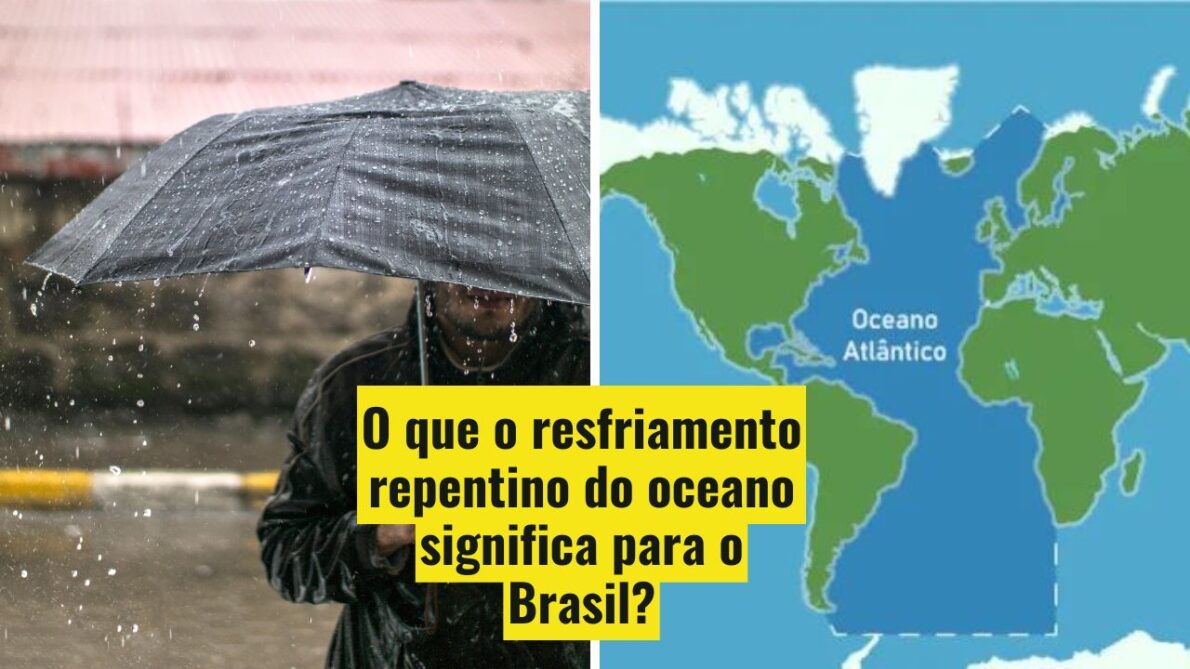

Atlantic La Niña: What the Sudden Ocean Cooling Means for Brazil?
In the last three months, the equatorial Atlantic Ocean has shown a surprising drop in temperature, leaving meteorologists and scientists on alert. This phenomenon, called Atlantic La Niña, emerges at a crucial moment and can have significant climatic consequences for Brazil and the world.
What Is Atlantic La Niña and Why Is the Ocean Cooling?
After more than a year marked by record temperatures in the oceans, both on land and at sea, the equatorial Atlantic is experiencing an abrupt cooling. This phenomenon, now known as Atlantic La Niña, occurs at a critical time, just before the expected transition to a La Niña in the Pacific Ocean. The combination of these two events can cause profound global climatic impacts, including significant changes in Brazil.
End of an Extreme Heat Cycle
According to Pedro DiNezio from the University of Colorado Boulder, global average ocean temperatures have finally begun to fall, ending a streak of 15 months of heat records. The NOAA (National Oceanic and Atmospheric Administration) reported that in July 2024, the global sea surface temperature was slightly lower than in the same period last year, indicating a possible end to a cycle of extreme heat.
-
Found in one of the most radioactive places on Earth, this Chernobyl fungus may be doing something with radiation that no one has been able to explain to this day.
-
A bright yellow mushroom imported from Asia escaped from a cultivation farm in the United States in 2010 and is now aggressively spreading across 25 states, destroying entire communities of native fungi in American forests.

-
Buried under China, a colossal machine weighing 20,000 tons began operating as the largest neutrino detector on the planet and, in just 59 days, surpassed results that science took half a century to achieve.

-
Iran enters the center of a climate alert after the war emitted 5.6 million tons of CO2 in two weeks, surpassing the annual pollution of entire countries.


How Can Atlantic La Niña Impact Brazil?
The Atlantic La Niña phenomenon can have significant effects on Brazil’s climate, especially regarding rainfall patterns. If the Atlantic Ocean temperatures remain 0.5°C below average for another month, Atlantic La Niña will be officially recognized, and this may increase rainfall in some regions of Brazil, such as the Southeast and the South.
The interaction between La Niña in the Pacific and Atlantic La Niña can result in opposing effects during the Atlantic hurricane season. While La Niña in the Pacific tends to increase the likelihood of hurricanes, Atlantic La Niña may weaken some of the conditions necessary for the formation of these storms, providing relative relief but not completely eliminating the risks.
Surprise at the Rapid Cooling of the Atlantic Ocean
The speed at which the Atlantic Ocean is cooling has surprised scientists, especially since the trade winds, typically responsible for driving this cooling, have not intensified as expected. The year 2023 was marked by “Niño” conditions in the Atlantic, with sea surface temperatures reaching unprecedented levels in decades. However, in the last three months, there has been accelerated cooling in this region, the fastest recorded since 1982.
Franz Philip Tuchen from the University of Miami commented that, although several hypotheses have been raised, none of them have fully explained the phenomenon so far, leaving the scientific community in search of clearer answers.
Atlantic La Niña Is Not an Isolated Phenomenon
Atlantic La Niña is not an isolated phenomenon and can interact in complex ways with La Niña in the Pacific. There is a possibility that this interaction delays the full development of La Niña in the Pacific Ocean, thus delaying its cooling effects on the global climate. As suggested by Michael McPhaden from NOAA, there may be a kind of “dispute” between the Pacific trying to cool and the Atlantic trying to warm it, creating an even more uncertain global climate scenario.
The Climatic Future of Brazil and the World
The coming months will be crucial for understanding the impacts of Atlantic La Niña on Brazil and the world. With the sudden cooling of the Atlantic Ocean and the possible interactions with other oceanic cycles, it is essential that climate monitoring continues to be a priority. The Brazilian population should be aware of potential climate changes, especially regarding rainfall patterns and the hurricane season, as these alterations can directly affect the daily lives of millions of people.
Once again, the ocean demonstrates its importance in regulating the global climate, and Brazil, with its vast Atlantic coastline, is at the center of these changes.
What did you think of this news about the impact of Atlantic La Niña on Brazil’s climate? Have you felt any changes in the weather recently? Leave your comment and share your opinion!







Há 20 anos o climatologista brasileiro Luis Molion vem alertando para o resfriamento global. Vocês não deram importância!