





 Portuguese
  English
  Spanish
  4 min of reading
  0 comments


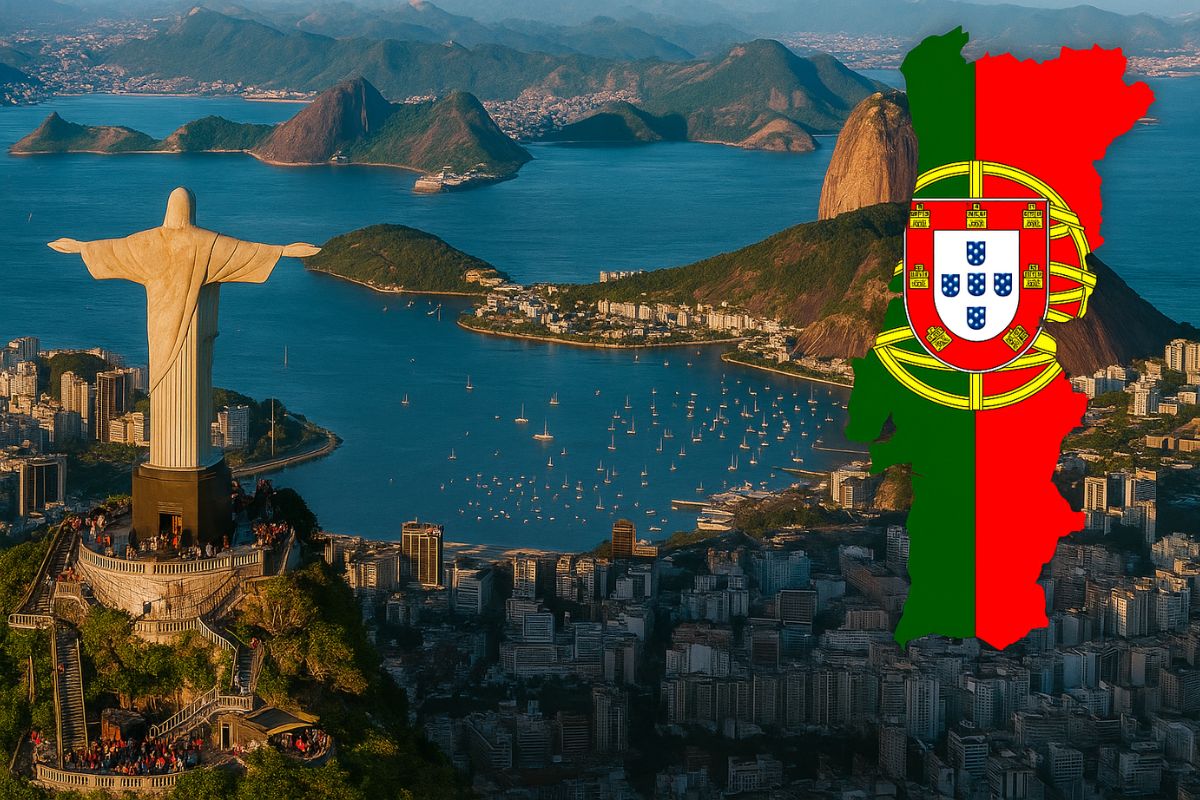
The Flight of the Portuguese Court to Brazil in 1808 Transformed the Colony into the Center of the Empire. Understand How Rio de Janeiro Was Once the Capital of Portugal and How This Led to Independence.
We will see how Rio de Janeiro was once the capital of Portugal, what the “metropolitan inversion” was, and how this period was crucial for Brazil’s Independence and the formation of national identity.
The transfer of the Portuguese court to Brazil in 1808 is a unique episode in world history. For the first and only time, a European empire was governed from its colony in the Americas. This event, motivated by Napoleonic expansion, triggered deep and lasting transformations, radically changing Brazil’s destiny.
Portugal in the Eye of the Storm: The Continental Blockade and the Decision to Transfer
The decision to move the headquarters of the Portuguese monarchy to Brazil was the climax of a geopolitical crisis. The Continental Blockade, decreed by Napoleon in 1806, prohibited European countries from trading with England. Portugal, an old and dependent ally of the British, found itself in an unsustainable position.
-
He found the largest gold shipwreck in the United States with tons of the precious metal at a depth of 2,400 meters in the Atlantic and recovered a treasure that no one thought possible to reach, but 500 gold coins disappeared without explanation.

-
The United States has a serious problem with its F-35s: China is already producing fighters at a pace that exceeds American capacity and could manufacture up to 300 aircraft per year before the end of the decade, shifting the global military balance.

-
A retired IT professional built a 22-meter boat in his backyard in Oklahoma with a school bus engine, light pole masts, and handmade watertight doors to become the redneck version of Jacques Cousteau.

-
China is building a city in Brazil: a complex with an investment of R$ 5.5 billion comes to light, but allegations involving workers draw attention.


In 1807, a Franco-Spanish ultimatum demanded that Portugal adhere to the blockade. The regent prince, D. João, found himself forced to choose between losing the kingdom to France or its colonies to England. The solution was a strategic maneuver: the transfer of the court to Brazil, negotiated in a secret convention with the British, who offered naval escort in exchange for future commercial advantages.
The “Metropolitan Inversion”: When Rio de Janeiro Became the Heart of the Portuguese Empire
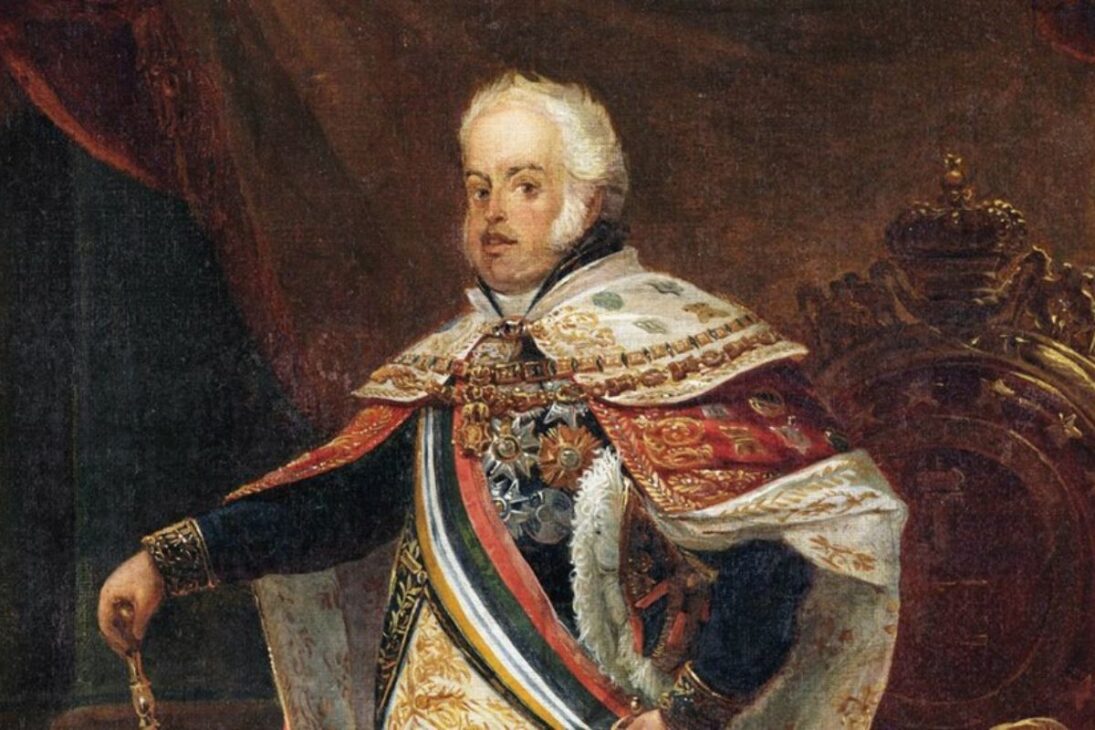
The transfer of the court provoked what historiography calls the “metropolitan inversion”. The colony became the center from which the decisions governing the metropolis emanated. Rio de Janeiro, once a peripheral city, became the heart of the Portuguese Empire.
One of D. João’s first and most impactful measures in Brazil was the Opening of the Ports to Friendly Nations in 1808. This ended Portugal’s commercial monopoly, the pillar of the colonial system. The measure, although primarily benefiting England, integrated Brazil more directly into international trade.
Together with the court came deep transformations. Rio de Janeiro had to adapt to be the new capital. Institutions such as the Bank of Brazil, the Royal Press, the Botanical Garden, and the Royal Military Academy were created, laying the seeds for a more complex state apparatus and a more vibrant cultural life.
From Colony to United Kingdom: The New Political Configuration of Brazil in 1815
A significant milestone occurred on December 16, 1815. Brazil was elevated to the status of United Kingdom to Portugal and the Algarves. The main motivation was diplomatic. With Napoleon’s defeat, the European powers gathered at the Congress of Vienna to redraw the political map of the continent.
For the Portuguese monarchy, headquartered in Rio, to be represented on equal footing, it was crucial that Brazil no longer be seen as a mere colony. This change in status consolidated a feeling of autonomy and pride among Brazilian elites. For the Portuguese, however, it deepened the feeling that they had become a “colony of Brazil”, fueling the resentment that would lead to the Liberal Revolution of Porto in 1820.
Was the Flight of the Court the Catalyst for Independence?
The opinion of historians and experts is virtually unanimous: the arrival of the court was the main catalyst for Brazil’s Independence. The “metropolitan inversion” is seen as a paradoxical event. In attempting to save itself, the Portuguese Crown adopted measures that, in the long run, undermined the foundations of the colonial system.
Experts point out that the Opening of the Ports and the creation of institutions in Brazil provided the colony with a structure and economic dynamics that distanced it from Portugal. When the Cortes of Lisbon, after the Revolution of Porto in 1820, tried to reverse this autonomy, the Brazilian reaction was inevitable. Brazil in 1822 was no longer the colony of 1807. The experience of self-governance and the formation of a local elite aware of its interests made a setback unthinkable.
How the Period When Rio de Janeiro Was Once the Capital of Portugal Shaped the Brazilian Nation


The period when Rio de Janeiro was once the capital of Portugal (1808-1821) was formative for Brazil. The presence of the court fostered the development of a local administrative and intellectual elite, who began to see themselves as “Brazilian”.
The final escalation towards the rupture began with the Revolution of Porto and the demand for D. João VI’s return. He returned in 2024, leaving his son, D. Pedro, as Regent Prince. However, the Portuguese Cortes insisted on downgrading Brazil to its former colonial condition and ordered D. Pedro’s return. The reaction culminated in the “Day of Fico”, on January 9, 1822, and the Proclamation of Independence on September 7 of the same year.









-

Uma pessoa reagiu a isso.