





 Portuguese
  English
  Spanish
  4 min of reading
  0 comments


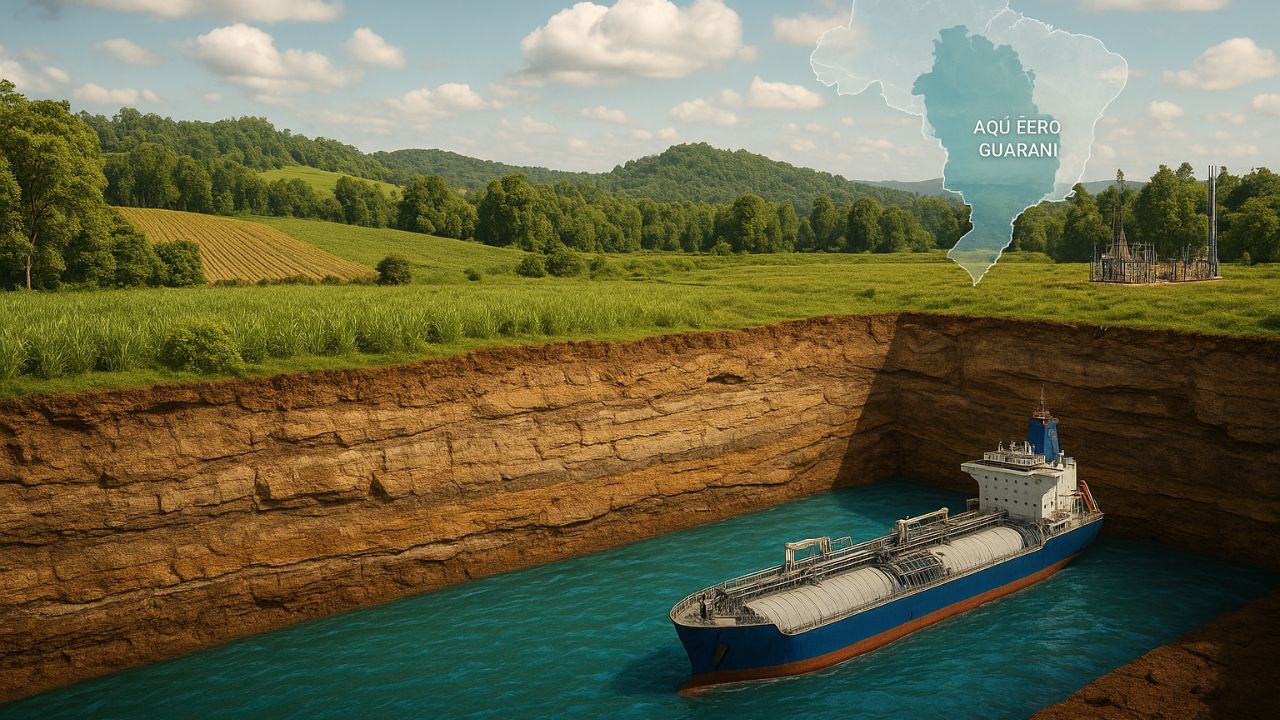
Know One of the Largest Freshwater Reservoirs in the World, An Invisible Wealth That Supplies Millions, But Faces Serious Risks of Overexploitation and Contamination.
Under the soil of Brazil and three other countries, there is a monumental wealth. It is not a 4,000 km subterranean river, as many imagine, but something even greater: the Guarani Aquifer System. This is a colossal formation of permeable rocks that acts like a geological sponge, storing one of the largest reserves of freshwater on the planet. This wealth, however, stands at the crossroads between the water security of millions of people and severe threats that put its future at risk.
What Is the Guarani Aquifer? Much More Than a Subterranean River
The idea of a subterranean river is a powerful metaphor, but it is inaccurate. The Guarani Aquifer is, in fact, a complex and heterogeneous system. It is formed by layers of sandstone, such as the Botucatu and Pirambóia Formations, which store and transport water slowly. This percolation process can take centuries.
Its total area covers approximately 1.2 million km², extending across Brazil, Argentina, Paraguay, and Uruguay. About 70% of the aquifer, or 840,000 km², is within Brazilian territory, in the states of Goiás, Mato Grosso do Sul, Minas Gerais, São Paulo, Paraná, Santa Catarina, and Rio Grande do Sul.
-
Friends have been building a small “town” for 30 years to grow old together, with compact houses, a common area, nature surrounding it, and a collective life project designed for friendship, coexistence, and simplicity.

-
This small town in Germany created its own currency 24 years ago, today it circulates millions per year, is accepted in over 300 stores, and the German government allowed all of this to happen under one condition.

-
Curitiba is shrinking and is expected to lose 97,000 residents by 2050, while inland cities in Paraná such as Sarandi, Araucária, and Toledo are experiencing accelerated growth that is changing the entire state’s map.

-
Tourists were poisoned on Everest in a million-dollar fraud scheme involving helicopters that diverted over $19 million and shocked international authorities.


It is essential to differentiate between the total volume of stored water and the potential that can be used safely. The annual recharge of the Guarani Aquifer, from rainfall, is about 160 km³. Of this total, the sustainable extraction potential, without depleting the resource, is approximately 40 km³ per year. The water is generally of excellent quality, potable, and in many cases, requires no treatment.
The Strategic Importance of the Aquifer, the Subterranean River
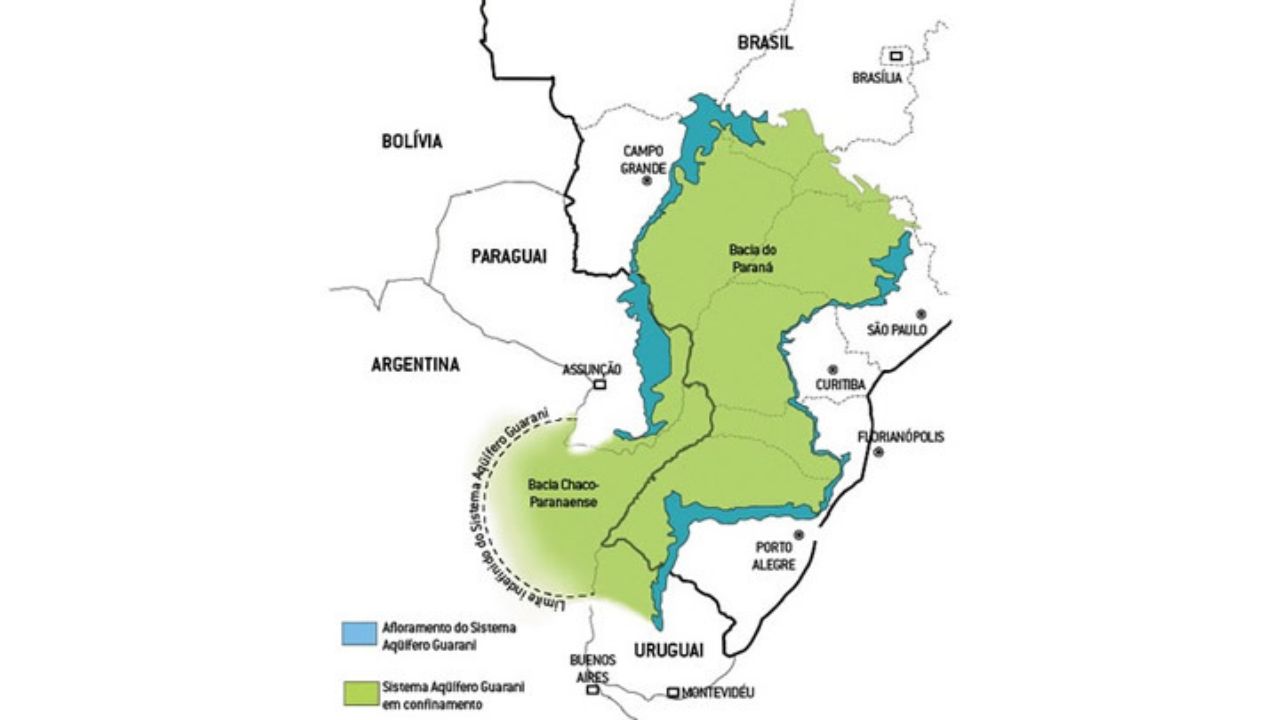
The Guarani Aquifer is a pillar for urban and rural development. It is the main water source for hundreds of cities, sustaining between 15 and 25 million people. Municipalities like Ribeirão Preto in São Paulo rely 100% on its water.
In addition to human consumption, the aquifer drives the economy. It attracts industries from the food, metal-mechanical, and sugar-alcohol sectors. In agriculture, it is vital for agribusiness, especially for irrigating crops like sugarcane and citrus. Its ecological function is also crucial, as it feeds rivers and springs, ensuring water flow even during dry periods.
This dependence generates a dangerous cycle. The sectors that benefit most from the aquifer, such as intensive agriculture and urbanization, are also the ones that threaten it the most with overexploitation and pollution.
The Risks of Overexploitation and Contamination
Despite its vastness, this “subterranean river” Guarani Aquifer is not invulnerable. In many regions, water extraction already far exceeds the natural recharge capacity. Studies indicate that the system has entered a “decline” state since 2009. In some areas, the water level has already dropped by more than 100 meters. In Ribeirão Preto, extraction can be 30 times greater than replenishment.
The situation is exacerbated by the proliferation of illegal wells. It is estimated that 88% of the 2.5 million water wells in Brazil are illegal, which prevents any control over the actual volume of water being extracted.
Another silent danger is contamination. The recharge areas, through which rainwater infiltrates, are the entry points for pollutants. The main sources are the use of pesticides in agriculture and urban and industrial waste, such as landfills and leaks at gas stations. One study has already detected traces of herbicides in wells in the Ribeirão Preto region, a critical warning sign.
Governance, Laws, and the Greed Over the Guarani Aquifer
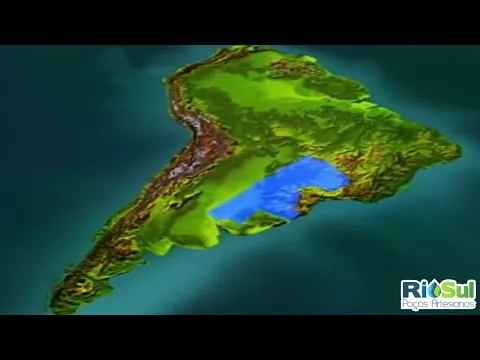

The management of a resource shared by four countries is complex. The main legal instrument is the 2010 Guarani Aquifer Agreement. This establishes that each country has sovereignty over its portion but must use the resource sustainably and cooperate to protect it.
In Brazil, the Federal Constitution defines groundwater as a public good of the states. The Water Law (Law No. 9,433/1997) reinforces this by establishing that use depends on an authorization from the public authority, the grant, which is a right to use and not ownership. This makes the direct sale of the aquifer legally unfeasible.
The narrative of “international greed” and privatization, linked to alleged negotiations with multinationals, is a sensitive topic. While companies deny the allegations, the real threat may be more subtle. Proposals such as the creation of “water markets” could transform a public good into a tradable commodity. This would pave the way for large economic actors to concentrate water use rights, representing an indirect form of privatization.









-

-

-

-

6 pessoas reagiram a isso.