





 Português
  Inglês
  Espanhol
  3 min de leitura
  0 comentários


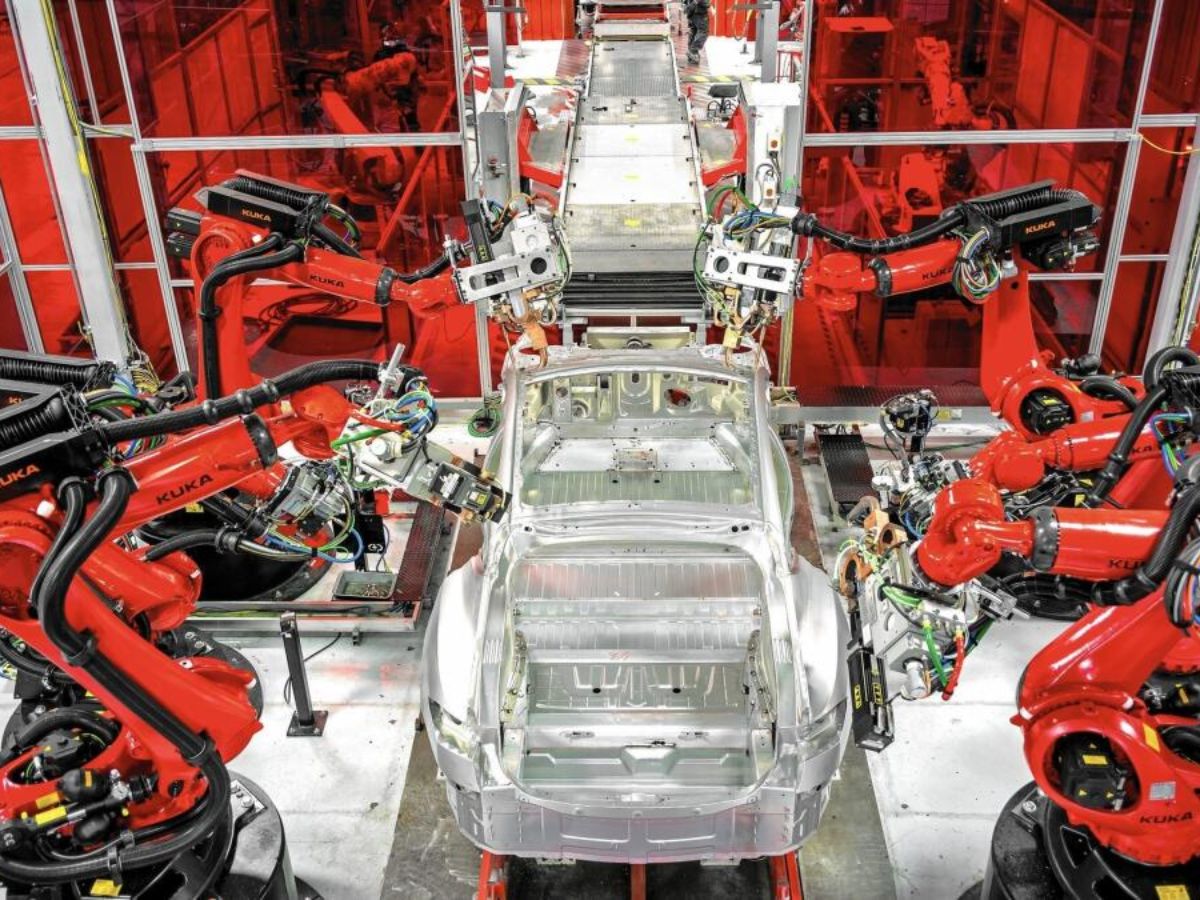
Know The Technology Behind 6-Axis Industrial Robots, The Backbone Of Factories Like Tesla And BYD That Ensure The Quality And Safety Of Modern Vehicles
The car assembly line robot is today the pillar of the automotive industry. In an environment where efficiency and precision are crucial, these machines perform thousands of welding points on each car body with an accuracy that would be impossible for a human, operating 24 hours a day, seven days a week.
These robots are not just a competitive advantage; they are a necessity. The structural integrity and safety of a vehicle depend on the quality of its welds. With the arrival of electric cars and increasingly complex designs, the role of robotic welding has become even more indispensable for mass manufacturing.
Who Are The Giants Behind The Technology, FANUC, KUKA, And ABB
The technology behind the car assembly line robot is dominated by a few global manufacturers. Companies like Japan’s FANUC, Germany’s KUKA, and Switzerland-Sweden’s ABB are the leading suppliers of these advanced systems. Their 6-axis articulated robots are the backbone of smart factories.
-
Drought may be creating stronger superbugs in the soil and helping antibiotic resistance reach hospitals, warns a study highlighting a problem that could grow alongside extreme weather.

-
The biggest scam in history: Napoleon’s France deceived the United States by selling them a territory that was Spanish.

-
Why is the Danakil Desert so dangerous? It has unstable terrain and how extreme temperatures and toxic gases turn the region into one of the most hostile environments on Earth.

-
With a height of 221 meters and a capacity for trillions of liters, Hoover Dam still holds a trick that makes water defy logic.


These machines are essential in high-tech production plants, such as those of BYD and Tesla. The flexibility of a 6-axis robot allows it to reach complex welding points and perform tasks in intricate geometries, ensuring the perfect assembly of each vehicle.
The Precision That Exceeds The Requirement, Far Beyond 0.1 Millimeter
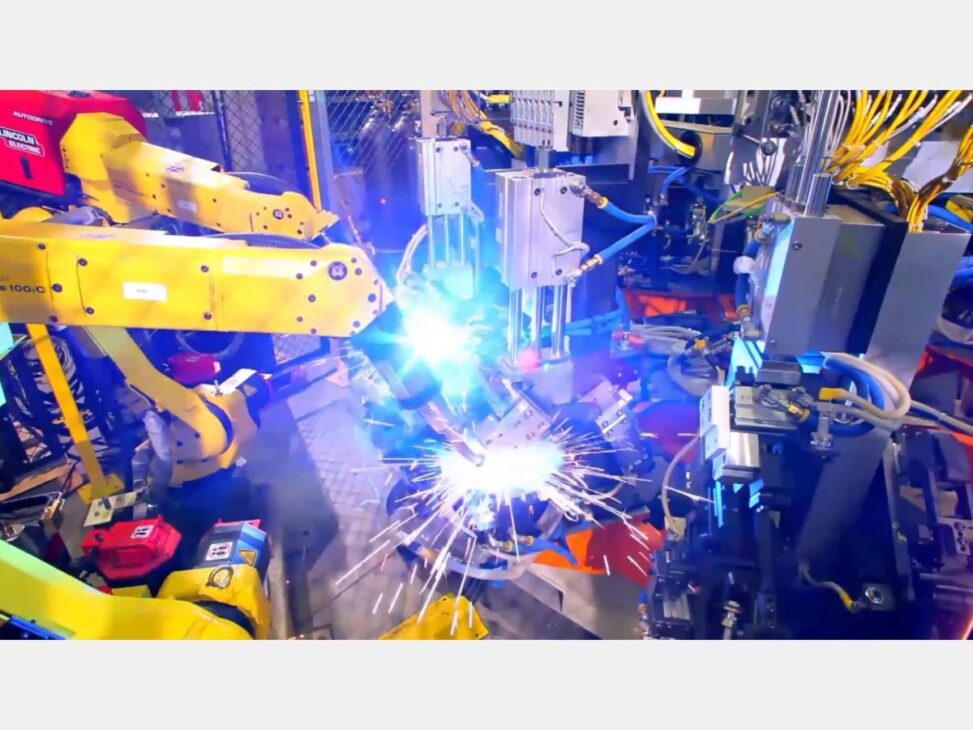
The requirement for a precision of 0.1 millimeter is easily surpassed by modern robots. The most important metric for these machines is “repeatability,” meaning their ability to return exactly to the same point multiple times.
Models from FANUC, KUKA, and ABB offer impressive repeatability, which can reach ±0.02 mm. This micron-level precision is far superior to human capability and ensures that each welding point is identical, eliminating errors and increasing the quality and safety of the car.
More Than 2,000 Welds? The Reality Of A Modern Car Body
The idea that a car assembly line robot performs 2,000 welding points is, in fact, a conservative estimate. A common car today has between 5,000 and 7,000 welding points to join all the metal sheets and structural components.
With the popularization of electric vehicles, this number is even higher. The architectures of electric cars may require 30% more welds due to the complexity of battery trays and the use of materials such as aluminum. Only robotic automation can handle this volume with the required quality.
How A Car Assembly Line Robot Operates 24 Hours A Day?
The ability to work continuously is one of the greatest advantages of automation. To ensure that a car assembly line robot operates 24/7, factories invest heavily in strategic maintenance. Preventive maintenance, with scheduled checks and replacements, is crucial.
Additionally, the industry employs predictive maintenance. With the use of artificial intelligence and sensors, the system can anticipate failures before they happen, proactively scheduling repairs. This increases the robots’ uptime by up to 25% and prevents unexpected production downtimes.
The Backbone Of Industry 4.0 In Automotive Manufacturing
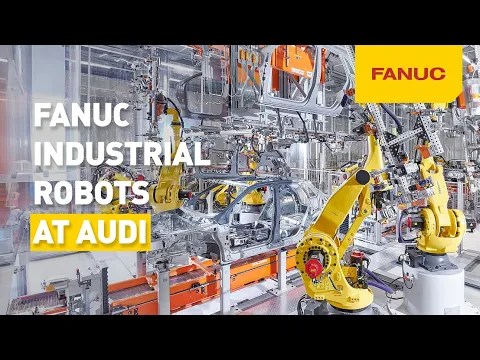

The use of robots in the automotive industry is not new. General Motors was already using a spot welding robot in 1961. However, the evolution of control systems, computer vision, and artificial intelligence has transformed these machines into the heart of Industry 4.0.
Today, robotic welding is what enables mass production and customization of vehicles at an impressive pace. A modern factory can produce a car every 53 seconds, a feat that is only possible thanks to the speed, precision, and reliability of thousands of robots working in perfect synchronization.









-

2 pessoas reagiram a isso.