





 Portuguese
  English
  Spanish
  4 min of reading
  0 comments


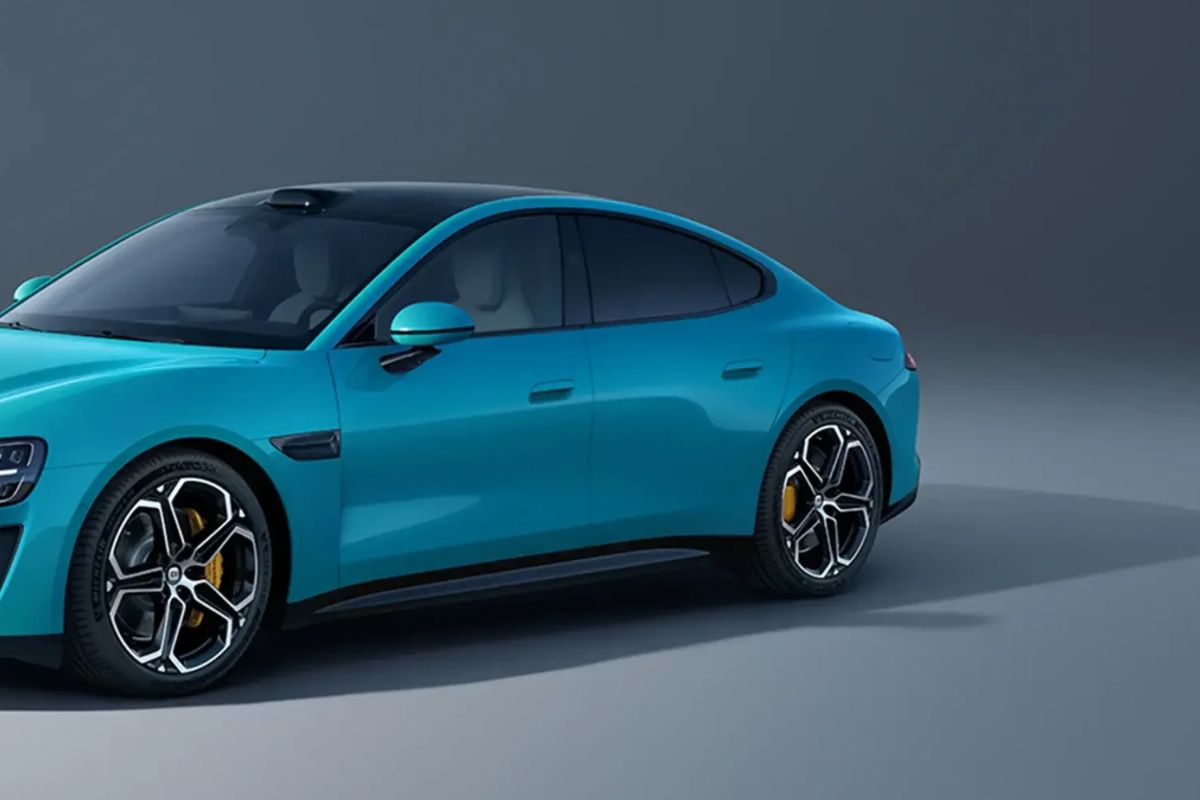
With a 673 Hp Version, Xiaomi’s Electric Sedan, the SU7, Sold Out in 24 Hours in China and Prepares for Global Expansion, Targeting Brazil.
Imagine a giant in the cellphone industry deciding overnight to invade one of the oldest and most complex industries in the world: automobiles. This is the story of Xiaomi’s electric sedan SU7, the car that embodies this boldness. It’s the first time a global cellphone giant designs and mass-produces a car under its own brand, achieving what has been speculated about Apple for years.
Launched in March 2024 in China, the Xiaomi electric sedan made an immediate impact, with demand that exceeded all expectations and sold out the first year’s production in just 24 hours. With an aggressive strategy that combines high performance, technology, and a competitive price, Xiaomi is now preparing for global expansion and Brazil is on the radar.
The Technology Giant’s Bet: The Strategy Behind the SU7 Launch in 2024
Xiaomi’s strategy with the SU7 is a direct application of the disruption manual from the tech world to the automotive sector. The approach is based on offering an extreme relationship between performance and price to quickly gain market share, in addition to integrating the car into a vast ecosystem of products that consumers already possess.
-
Rigid bags with their days numbered: new trend prioritizes comfort in 2026.

-
YouTuber creates an excavator equipped with a giant 4.5-meter sword to challenge his brother to a rematch, and the invention quickly goes viral on social media.

-
The U.S. Army surprises the world by presenting the UH-60MX Black Hawk helicopter capable of flying without pilots, controlled by a tablet, featuring the MATRIX system, smart sensors, and full autonomy in real combat and rescue missions.

-
Heineken’s factory in Brazil produces 300 million beer cans in just 4 months, reaches 1 million hectoliters, received R$ 2.5 billion, and is already projecting an annual capacity of 5 million with sustainable technology.


The launch, on March 28, 2024, was a phenomenon. The company received 88,898 firm orders in the first 24 hours, which pushed delivery times to nearly a year for some versions. The success was so great that the production target for 2025 was raised to 350,000 units. To meet the demand, Xiaomi built a state-of-the-art factory in Beijing. The plant uses the ‘gigacasting’ technique (popularized by Tesla), which molds large parts of the chassis as a single piece, eliminating hundreds of components and welds. The result is a car that is stiffer, cheaper to produce, and which is completed every 76 seconds.
The Engineering of the SU7: The “Modena” Platform, the “HyperEngine” Motors, and the Batteries from BYD and CATL
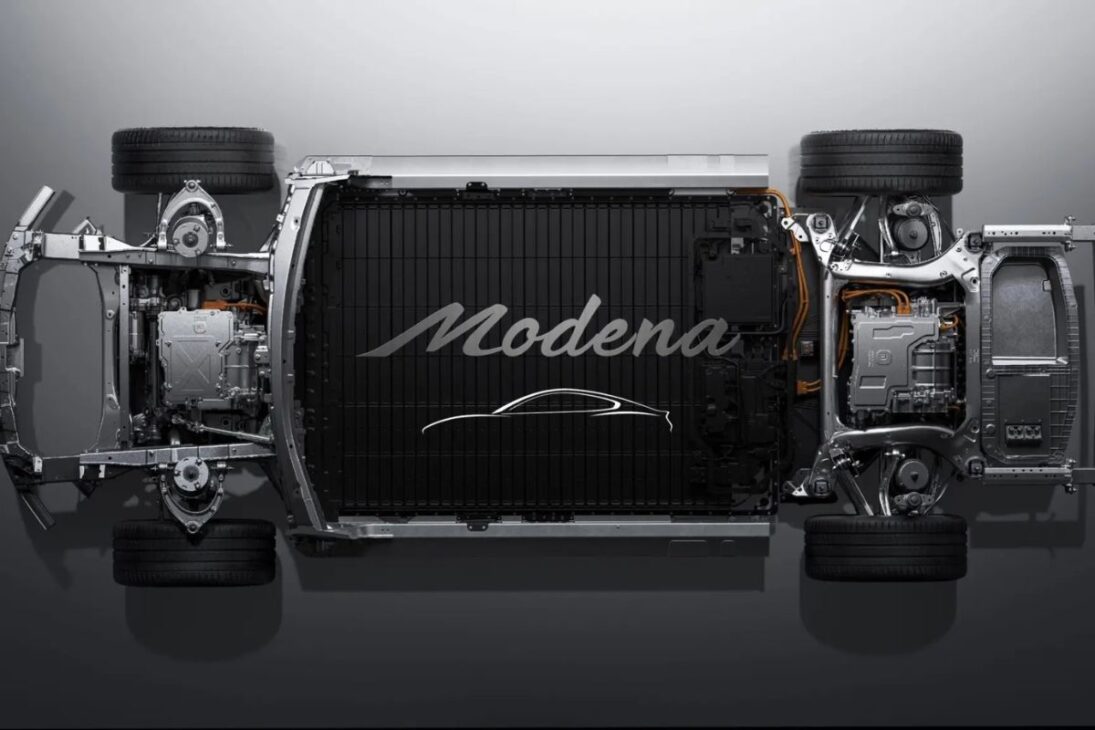
The Xiaomi electric sedan is built on the “Modena” platform, developed by the company itself to be flexible and support different configurations of motors and batteries, with 400V and 800V architectures.
One of Xiaomi’s strengths is the development of its own motors, the “HyperEngine” family:
- SU7 and SU7 Pro (RWD): Use a rear motor delivering 299 Hp and 400 Nm of torque.
- SU7 Max (AWD): Combines two motors that deliver a total power of 673 Hp and 838 Nm of torque, with an acceleration from 0 to 100 km/h in just 2.78 seconds.
The battery strategy is also sophisticated. Xiaomi uses multiple suppliers to optimize the cost and performance of each version. The entry-level model uses the Blade battery (LFP) from BYD, while the more powerful versions use the Qilin batteries (NMC) from CATL. The 800V architecture of the SU7 Max allows for ultra-fast charging, adding 510 km of range in just 15 minutes.
The “Human x Car x Home” Ecosystem and the HyperOS System
The biggest asset of the Xiaomi electric sedan is not just in its mechanics, but in its “brain.” The car is the center of the “Human x Car x Home” ecosystem, all connected by Xiaomi’s proprietary operating system, HyperOS.
In practice, this means that your car ‘talks’ to your home. As you approach, it can not only open the garage but also turn on the air conditioning at your preferred temperature and turn on the living room lights, transforming the act of arriving home into a continuous automation experience. The cabin features a central 16.1-inch screen, a rotating instrument panel, and support for connecting Xiaomi tablets and even iPads.
The Battle of Electric Sedans: Xiaomi’s Electric Sedan Against the BYD Seal and the Tesla Model 3

The Xiaomi SU7 Max enters a fight of giants, competing directly with performance versions of the BYD Seal and Tesla Model 3.
The direct comparison shows that Xiaomi’s sedan has the advantage in power and acceleration. But here, Xiaomi applies its checkmate. While Tesla and BYD sell excellent cars, Xiaomi sells a ‘super device’ on wheels, fully integrated into the ecosystem that millions of people already use. For Xiaomi, the competition is not about the car, it’s about controlling your daily life.
The Global Future and Brazil: When Can Xiaomi’s Electric Sedan Arrive in the Country?
Xiaomi has already confirmed its global expansion plan, aiming to start sales in international markets by 2027. Although the 2026 date for Brazil is market speculation, it aligns with this strategy.
The arrival in Brazil, however, is a complex chess game. BYD not only arrived first but is also building a factory. For Xiaomi, the challenge is twofold: it is not enough to just import a competitive car; it is necessary to build a dealership network from scratch and, most importantly, to gain the trust of Brazilian consumers that a cellphone and a car can indeed come from the same brand with the same quality. The European debut of the SU7 at the Mobile World Congress in 2025 was an important step, and success in that market will be a thermometer for the arrival of the Xiaomi electric sedan in other countries, including Brazil.









-

-

-

-

-

12 pessoas reagiram a isso.