





 Portuguese
  English
  Spanish
 5 min of reading
  0 comments


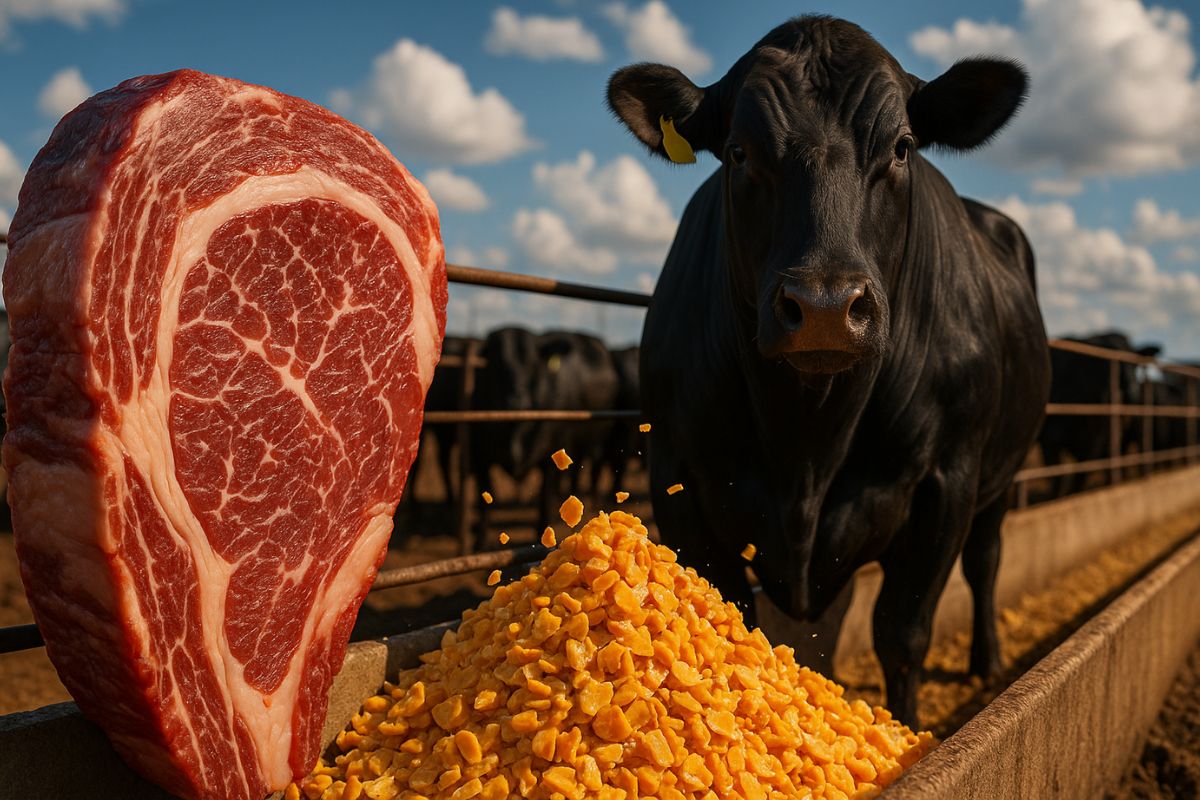
In RS, A Precision Feeding System Shows How The Finest Meat In The World Is Born From The Combination Of Genetics (Wagyu And Angus), Welfare Management, Carcass Ultrasound, And Flaked Corn That Enhances Feed Conversion
The search for the finest meat in the world has gained an open-air laboratory in the interior of Rio Grande do Sul. In Frederico Westphalen, a reference feeding operation — presented by Richard Rasmussen — explains, step by step, how consistent marbling and superior flavor are not a matter of chance: Wagyu and Angus enter the system at controlled age and weight, undergo a high-precision diet, and exit with a carcass standard that meets the most demanding cuts.
According to Richard Rasmussen, the process integrates genetics, nutrition, animal welfare, and technology: heated water, a stable thermal environment, monitoring through carcass ultrasound, and a feed factory that produces flaked corn — a technique that improves digestibility and consequently the performance in feedlot. When every detail works favorably, marbling appears.
Wagyu And Angus: Why These Two Define The Top
The Wagyu is the global reference in marbling: intramuscular fat appears finely interspersed in the meat, ensuring juiciness and flavor. It is not cattle that looks “pretty” — it is cattle designed to deliver texture and tenderness, emphasizes Richard Rasmussen. The Angus, in turn, adds growth, yield, and standardization of cuts, forming a duo that meets premium niches and high-turnover shelves.
-
The water that almost everyone throws away after cooking potatoes carries nutrients released during the preparation and can be reused to help in the development of plants when used correctly at the base of gardens and pots, at no additional cost and without changing the routine.

-
The sea water temperature rose from 28 to 34 degrees in Santa Catarina and killed up to 90% of the oysters: producers who planted over 1 million seeds lost practically everything and say that if it happens again, production is doomed to end.

-
An Indian tree that grows in the Brazilian Northeast produces an oil capable of acting against more than 200 species of pests and interrupting the insect cycle, gaining ground as a natural alternative in soybean, cotton, and vegetable crops.

-
The rise in oil prices in the Middle East is already affecting Brazilian sugar: mills in the Central-South are seeing their margins shrink just as ethanol gains strength.


In the feedlot visited by Richard, the Angus enters at around 12 months and the Wagyu at 18 months. Both reach nearly 300 kg and undergo controlled finishing. Declared goal: increase marbling without sacrificing weight gain and carcass yield — a balance that requires precision in diet and environment.
Precision Feeding: Environment, Water, And Management That Yield Results
Welfare Is Not Just A Discourse, It’s Productivity. The barn was designed to ventilate gases, take advantage of natural light, and protect against the cold in the gaucho winter, maintaining thermal comfort that reduces stress. Less stress means more weight gain and better meat quality.
A decisive detail is the heated water. As Richard Rasmussen explains, bovine prefer warm water (around 36 °C); this preserves the ruminal microbiota, improves digestion, and prevents drops in performance typical of cold water consumption. It may seem small, but it weighs on the scale.
From Diet Adaptation To Total Diet: How Premium Meat Is “Built”


Entry into the feedlot occurs in two phases. First, adaptation with roughage (silage/hay) and concentrate. Then, the transition to a total diet based on grains, in which the nutritional protagonist enters: flaked corn.
According to the technical team shown by Richard, flaked corn can yield up to 20% more utilization than finely ground corn. Practical translation: same energy, more meat. In four months, Angus evolves from ~300 kg to ~500 kg; Wagyu stays longer in finishing to mature the marbling. Each day in the feedlot is planned, with automatic dosages and feed always available.
Carcass Ultrasound And Traceability: Measure Before Slaughter
Quality Is Not Guessed, It Is Measured. The team performs carcass ultrasound at two moments: mid-finishing and on the way to the slaughterhouse. The exam estimates the percentage of marbling and the yield of cuts, allowing selection of lots, diet adjustment, and ensures quality to the buyer.
Everything is tracked animal by animal: medications, vaccines, weight gain, and ultrasound images accompany the lot until slaughter. For premium cuts, predictability is valuable. This is how it is ensured that the finest meat in the world arrives exactly as the customer expects — every time.
Biodigester And Closed Cycle: Energy, Fertilizer, And Costs Under Control
The feeding operation runs a biodigester that transforms waste into biogas for electricity generation and into fertilizer for the fields. Richard Rasmussen highlights the closed cycle: corn becomes feed, manure becomes energy and fertilizer, and the crops return to feed the operation.
This arrangement reduces energy costs, stabilizes the operation, and lowers environmental footprint. When the feedlot energy comes from the cattle itself, the accounts close better — and opens space to invest more in what differentiates premium meat: nutrition and management.
Flaked Corn: The “Invisible Gear” Of Flavor
The flaker applies heat and pressure to gelatinize the starch, making it more accessible to the enzymes and microorganisms in the rumen. Result: superior absorption, lower risk of digestive disturbances, and higher feed conversion. In practice, marbling “is born” in the feedlot — energy available at the right time becomes intramuscular fat, not just cover fat.
The factory also flakes soybeans and wheat, adjusting energy density and effective fiber according to the finishing phase. A diet tailored to the cut the market demands is what allows charging — and delivering — the finest meat in the world.
Premium Is Process, Not Label: Selection, Window, And Cutting Destination
Not Every Wagyu Or Angus Becomes Super Premium Cuts. It Is The Process That Elevates The Lot: entry with the appropriate age, consistent daily gain, environmental comfort, heated water, diet with flaked corn, and ultrasound verification. When these gears align, marbling appears where it matters — in the sirloin, ribeye, and T-bone.
Richard Rasmussen reminds: the market pays a premium for consistency, and this consistency starts at the gate. For gourmet retail, what counts is verifiable history: origin, diet, welfare, and carcass standard. Without this, the “premium” price becomes just an expensive label.
The finest meat in the world is the result of many small corrections added every day. In RS, Wagyu and Angus show that the right genetics, precision feeding, heated water, carcass ultrasound, and flaked corn turbocharge marbling and flavor — exactly as Richard Rasmussen presented. When the system is closed and nutrition is intelligent, the flavor shows up on the plate.
Have you tried Wagyu or Angus cuts with high marbling? In your opinion, what weighs the most in the result: genetics, diet with flaked corn, or welfare management (such as heated water)? If you are in production, which of these steps have you already adopted — and what was the impact on yield and carcass standard?










Seja o primeiro a reagir!