





 Portuguese
  English
  Spanish
  6 min of reading
  0 comments


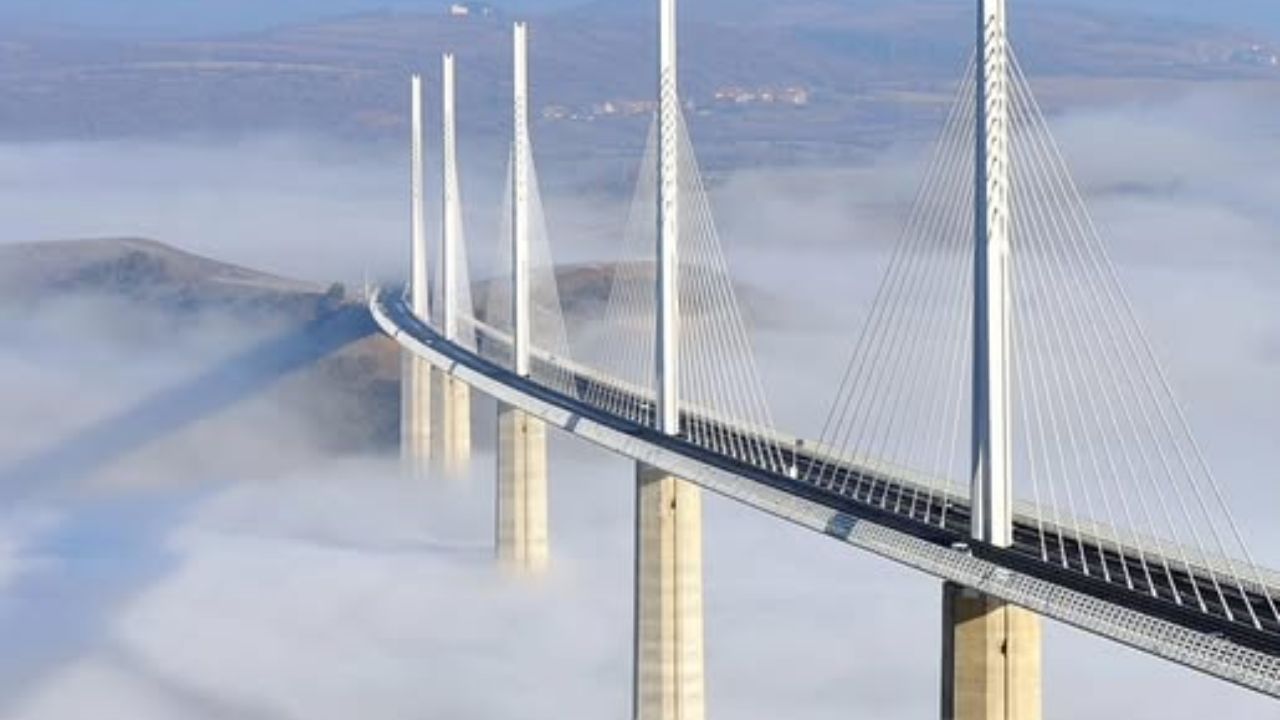
343-Meter Structure Redefines Limits and Solves Critical Logistical Bottleneck in Southern France. Official Data from the Concessionaire Reveals Innovations and Economic Impact.
The apex of civil engineering in France is not a tower, but a bridge. The Millau Viaduct (Viaduc de Millau), which spans the deep and complex valley of the Tarn River, is a paradigm of structural innovation that surpassed the height of the Eiffel Tower, establishing itself as the bridge with the tallest pylon-pier set on the planet. Opened in 2004, this megaproject not only completed the last link of the crucial A75 motorway, known as La Méridienne, but also resolved a national logistical problem that lasted for years, the infamous “Millau Bottleneck“.
The magnitude of the work, which spans 2,460 meters and required the development of unprecedented metallurgical and construction techniques, lies in its ability to unite functionality, aesthetics, and extreme resilience. The precision required for the foundation on fractured rocks, the lightness of the 36,000-ton steel deck, and the incremental launching process are mandatory case studies. This in-depth analysis, based on official data from the Compagnie Eiffage du Viaduc de Millau (CEVM) and technical reports from AFGC, details how the vision of Michel Virlogeux and Lord Norman Foster came to fruition above the clouds of the Massif Central.
The Imperative Need and the Audacity of the Route
The A75 motorway, designed to create a direct and free route between Paris and the Mediterranean, faced a colossal natural obstacle: the Massif Central and the deep Tarn Valley, which separates Causse Rouge from Causse du Larzac. Historically, this geography of limestone plateaus and deep valleys posed a formidable barrier to north-south transport.
-
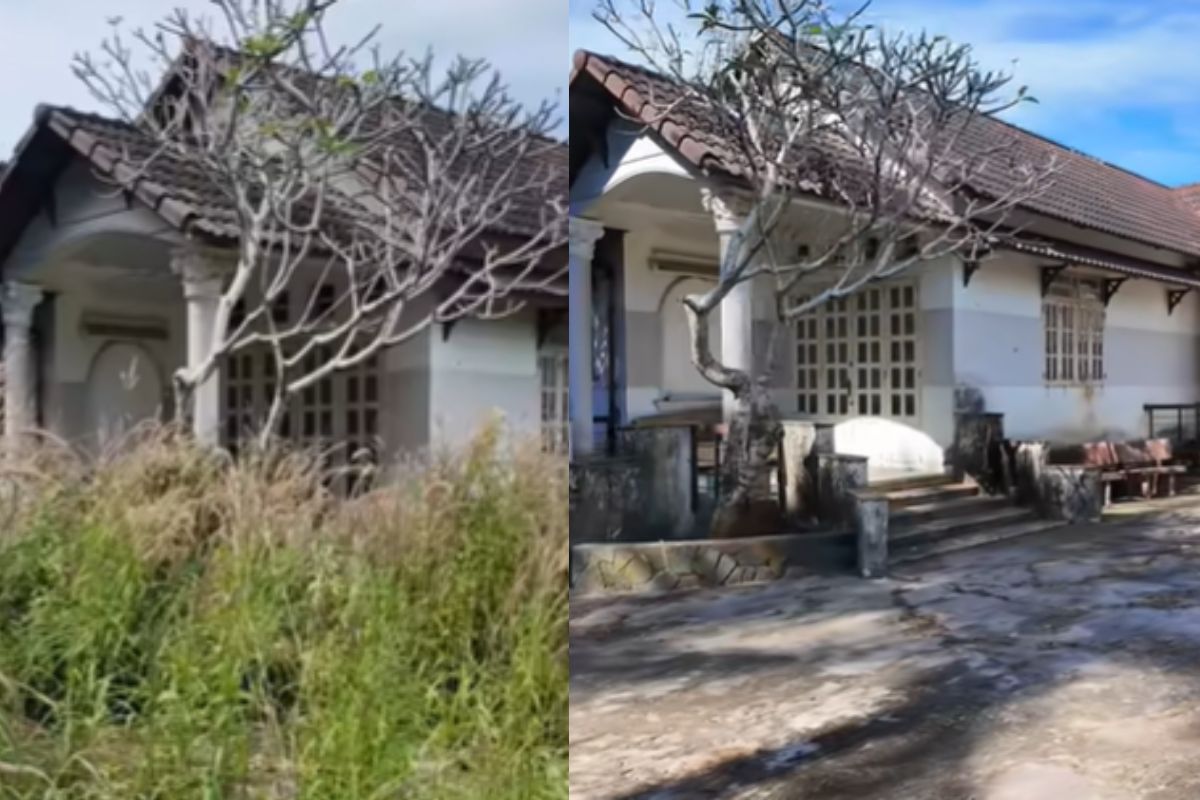
Abandoned house for 15 years disappears in the woods, shocks owner with unrecognizable scenery and is reborn in an intense transformation after almost 90 hours of work in just 10 days.
-
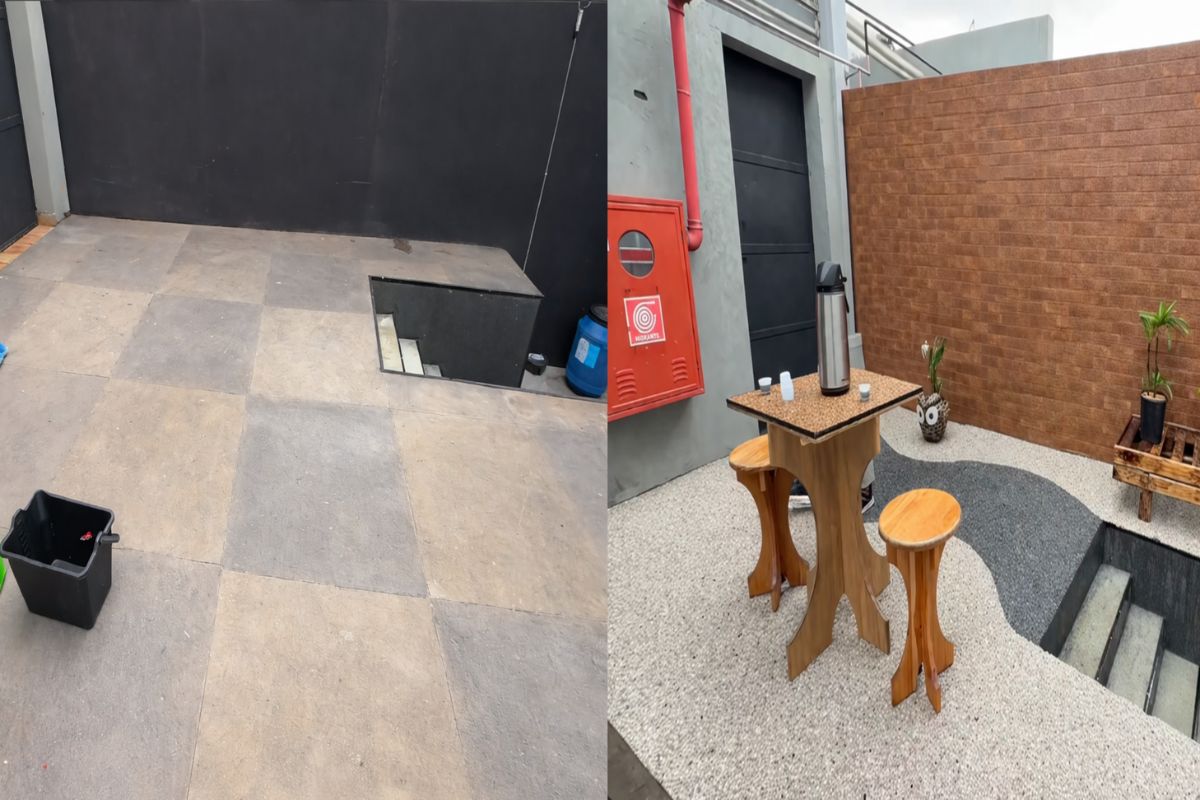
In just three hours, a natural stone floor transforms the entrance of the house with an organic effect, immediate drainage, and a sophisticated non-slip finish that doesn’t puddle water, dries quickly, and impresses with the final result.
-
‘Interlocking brick’ made of earth arrives in the construction industry with cost reductions of up to 40% on the project.

-
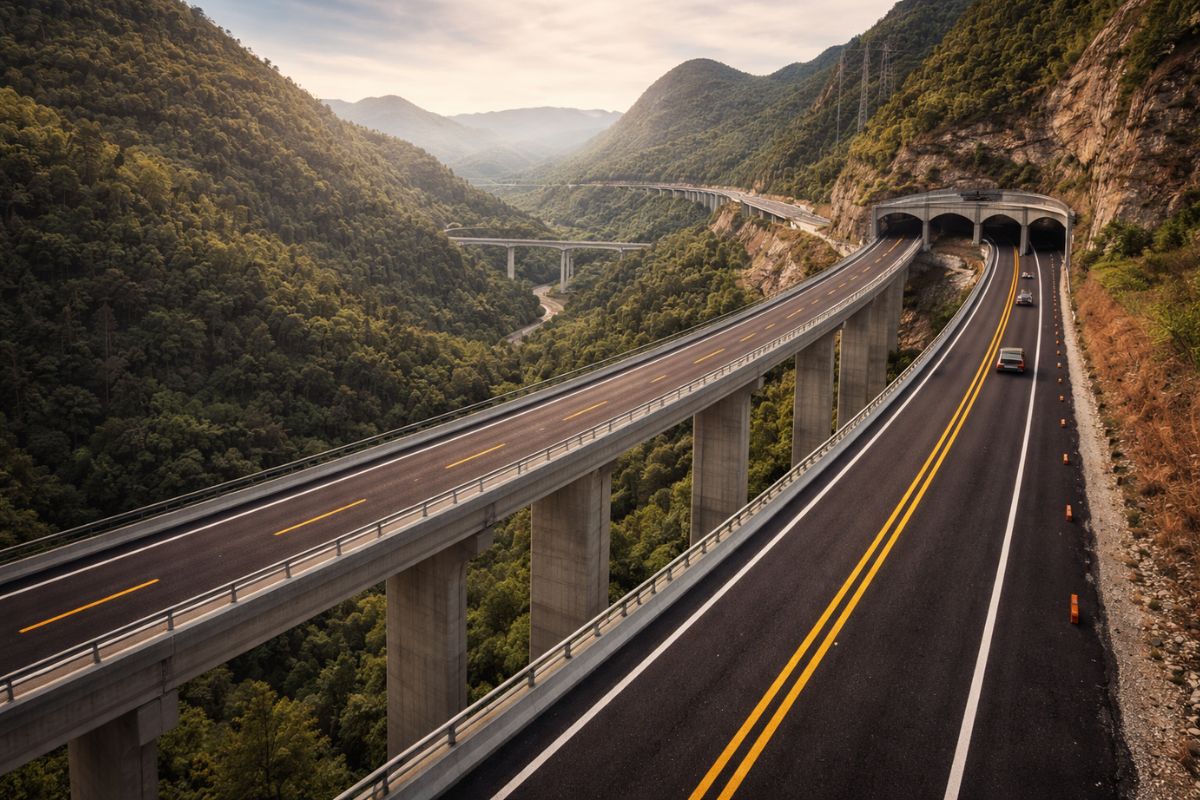
Espírito Santo will receive the largest engineering project in its history with the duplication of BR 262, which will have 50 viaducts, 28 bridges, and 2-kilometer tunnels cutting through the most challenging mountainous region of the entire state.

Before the bridge, traffic on the A75 was forced to descend and ascend the steep slopes of the valley, converging on the small town of Millau. This detour, known as the “Millau Bottleneck” (Bouchon de Millau), created congestions of up to 30 kilometers and required three to four hours of waiting during the summer peak. According to academic reports, this logistical inefficiency had a significant environmental impact and made the route unviable for “just-in-time” commerce. Thus, resolving this bottleneck was a national strategic priority.
The selection of the route was a rigorous process, as per technical studies from CETE. Among four options (Grand East, Grand West, Close to RN9), the Medium Route (La Méridienne) was chosen. This was the most audacious option, which envisioned crossing the valley at its highest and widest point, requiring a structure of 2.5 km at nearly 300 meters high. In 1996, the winning design, which would give rise to the apex of engineering, resulted from the collaboration between French engineer Michel Virlogeux and British architect Lord Norman Foster, with the philosophy that the structure should possess “the delicacy of a butterfly.”
Structural Innovation: Split Piers and High-Strength Steel

To support a continuous deck of 2,460 meters in length, the structure demanded radical innovations, especially in concrete pillars and the superstructure material. The bridge’s stability relies entirely on its base, which rests on deep foundations, with wells of 5 meters in diameter that vary from 9 to 17 meters deep, excavated directly into Jurassic rock, as detailed in geotechnical reports.
The Tallest Pier (P2) reaches 245 meters of concrete, a world record. Its geometry is evolving: tapering as it rises for aerodynamic purposes and, crucially, branching out in the last 90 meters, forming a ‘Y’. This innovation, according to technical articles from AFGC, is essential for managing thermal expansion. The steel deck, subject to temperature variations, expands and contracts massively. The flexible arms of the split pier absorb this movement without imposing excessive rigidity that could fracture the concrete.
The Triumph of Steel
The choice of deck material was crucial for the aesthetic lightness and constructability. The use of steel was preferable to concrete, which would have made the structure much heavier. The 36,000 tons of steel were supplied by the German steelmaker Dillinger Hütte, which used thermomechanically rolled fine-grain steel, in grades such as DI-MC 460 (S460) for the most critical areas. This type of steel offers superior mechanical strength with lower weight and excellent weldability, speeding up in-situ assembly.
In addition to the material choice, the deck features an orthotropic slab design and, more importantly, an inverted foil profile in the cross-section. Exhaustive wind tunnel tests, cited in engineering documentation, confirmed that this shape generates negative lift under strong winds. This means that instead of oscillating or “taking off” (as in the Tacoma Narrows disaster), the wind pushes the bridge down, keeping it stable over the piers. The bridge was tested to withstand winds of up to 225 km/h.
Incremental Launching: The Choreography of Precision
The construction of the Millau Viaduct, completed in just 3 years by Eiffage TP, is a milestone in megaproject management. The technical challenge lay in how to place a 36,000-ton deck over 245-meter-high piers. The answer was Incremental Launching (Poussage).
The deck was pre-assembled in segments at “field factories” atop the plateaus, using high-precision welding. It was then pushed horizontally into the void. According to data from CEVM, this was made possible by:
- Temporary Piers: Seven temporary steel towers (the “red towers”) were erected in the middle of the 342-meter spans. This reduced the effective construction span to 171 meters, allowing the deck to support its own weight before the cables were installed.
- Hydraulic Translators: Hydraulic systems installed on each pier lifted the deck, advanced it 600 mm (about 4 minutes per cycle), and lowered it again.
- GPS Precision: The advancement was monitored in real time. At the moment of Clavetage (the meeting of the two halves over the Tarn River, in May 2004), the misalignment was less than 1 centimeter, a testament to the precision of satellite topography.
Economic Model, Monitoring, and the Experience of “Flying”
The Millau Viaduct is an example of a Public-Private Partnership (PPP). The group Eiffage fully financed the work, about € 400 million, through its subsidiary CEVM. In exchange for financial and technical risk, the concessionaire has the right to charge tolls until 2079. This model has proven successful, with financial data indicating the viaduct quickly reached operational break-even.
Toll Rates 2025 (Peak Season)
| Vehicle Category | Summer Rate (2025)* | Variation (Winter) |
| Class 1 (Light Vehicles) | € 13.70 | +22% |
| Class 2 (Medium Vehicles) | € 20.60 | +22% |
| Class 4 (Trucks) | € 47.30 | 0% |
The summer rate applies from June 15 to September 15, according to official data from the Compagnie Eiffage du Viaduc de Millau (CEVM).
To ensure its 120-year project lifespan, the viaduct is a “cybernetic organism” under constant surveillance. It is equipped with hundreds of sensors, including accelerometers and strain gauges. A fiber optic network transmits terabytes of data to the control center, allowing real-time detection of material fatigue or microcracks. The expansion joints, vital for accommodating movement of up to 1200 mm caused by thermal expansion of steel, are monitored with the same rigor.
The Phenomenon “Above the Clouds”
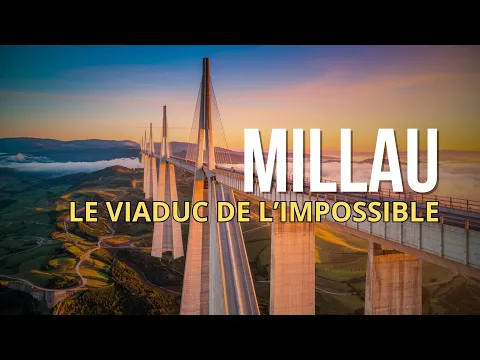

The most iconic image of the viaduct, with its piers piercing a sea of fog, is a recurring meteorological phenomenon explainable by the physics of radiation fog. The Tarn Valley accumulates cold and dense air that drains down the slopes. This air, saturated with the river’s moisture, condenses into dense fog. As the deck is approximately 270 meters above the river, it often stands above this layer of thermal inversion. For the driver, the effect is the surreal experience of driving over a white ocean of clouds, confirming the prowess of the apex of engineering that touched the earth with the “lightness of a butterfly“.
The Millau Viaduct has transcended its utilitarian purpose to become a global icon of how engineering and architecture can solve complex infrastructure problems with beauty and sustainability. By eliminating the “Millau Bottleneck“, France not only saved 40,000 tons of CO₂ annually by avoiding congestion but also transformed the region into an industrial tourism hub, attracting over a million visitors each year, according to impact reports.
The project validated innovations such as the split piers and incremental launching on an unprecedented scale, proving that the apex of engineering is not just in height but in the intelligence with which the structure interacts with its environment.
Which technical innovation of the Millau Viaduct (split piers, ultra-high-strength deck, or incremental launching) do you consider the most impressive for civil engineering history? Leave your opinion in the comments below; we want to know which of these achievements, in your view, defines the true apex of engineering.








-

2 pessoas reagiram a isso.