





 Portuguese
  English
  Spanish
  4 min of reading
  0 comments


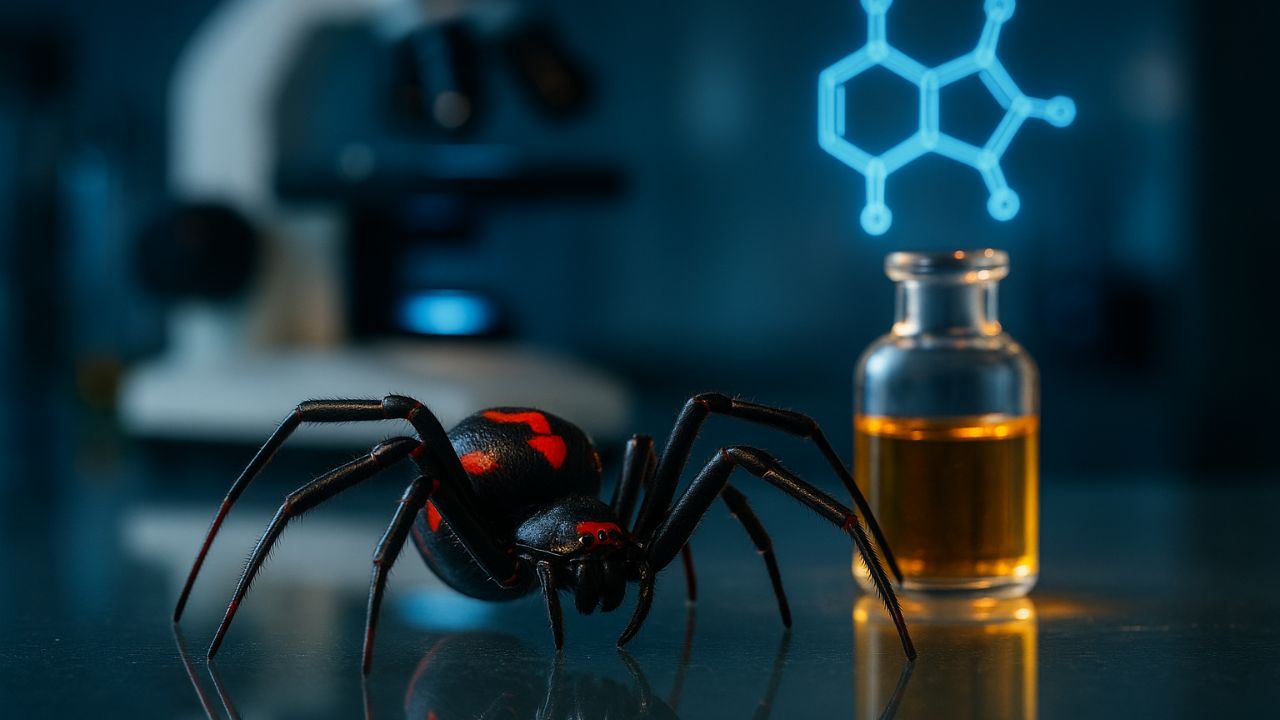
Brazilian Scientists Uncover the Potential of Toxins from the Wandering Spider and the Tarantula, Creating an Innovative Gel for Erectile Dysfunction and a New Front Against Leukemia.
The idea that spider venom can be worth more than a diamond and cure both cancer and erectile dysfunction has captured the public’s imagination. However, this notion simplifies an even more fascinating scientific truth. In reality, it involves two distinct and innovative lines of research in Brazil. One of them has resulted in a revolutionary treatment for erectile dysfunction. The other has opened a new promising path for oncology. This article unveils the facts behind these discoveries, based solely on consolidated scientific information.
Research with the Wandering Spider
The journey begins with the Phoneutria nigriventer, the feared wandering spider. Native to Brazil, it is known for its aggressive posture and the potency of its venom. A bite causes intense pain, sweating, and cardiac changes. However, a side effect in men sparked scientific interest: priapism, a painful and prolonged erection.
This clinical observation, made over 30 years ago by physician Carlos Ribeiro Diniz, was the starting point. He questioned which component in the spider venom caused this effect. From there, an exemplary collaboration between Funed and the Federal University of Minas Gerais (UFMG), led by Professor Maria Elena de Lima, initiated a meticulous search for the responsible molecule.
-
China has created a mass-produced hypersonic missile that costs the same as a Tesla, and this is changing everything in modern warfare because the United States cannot defend itself without spending millions.

-
100% Brazilian technology transforms agricultural waste into a meat-scented ingredient using fungi from the Amazon rainforest. The process does not use excessive water or chemicals, and it also increases the nutritional value of the final product.

-
Psychology reveals that adults who avoid conflicts at all costs are not balanced individuals, but rather children who learned in the worst way that expressing emotions brought punishment and now live paralyzed by the fear of expressing themselves.

-
Goodbye pet hair on clothes: a washer with an internal filter promises to remove up to 5 times more hair than regular machines and uses an XL trap dryer system to capture what remains.


The Gel That Promises to Revolutionize the Treatment of Erectile Dysfunction

After decades of research, scientists isolated the toxin PnTx2-6. It was effective but highly toxic for human use. The true innovation was to use bioinformatics to create a synthetic, smaller, and safe version. Thus was born BZ371A, a molecule with only 19 amino acids, designed in the lab.
BZ371A works differently than current medications like sildenafil. Instead of acting at the end of the biochemical process, it works at the beginning, stimulating the production of nitric oxide, the molecule that initiates the erection. This makes it a potential solution for patients who do not respond to conventional treatments, such as those with severe diabetes and men who have had their prostate removed.
Administered as a local application gel, BZ371A has shown to be safe in Phase 1 trials. The results of Phase 2, in patients with severe erectile dysfunction after prostate surgery, were impressive. The combination of the gel with tadalafil (Cialis) proved to be almost ten times more effective than standard treatment alone. The expectation is that the product will reach the market by 2026.
A Story of Two Distinct Spiders
It is crucial to clarify: the molecule BZ371A is not a direct treatment for cancer. Its connection to oncology is indirect. The fear of erectile dysfunction after prostate removal surgery leads many men to delay treatment. By offering an effective solution for sexual rehabilitation, BZ371A may encourage more men to undergo surgery, improving outcomes in the fight against prostate cancer.
Research on a direct anticancer agent comes from another source: the venom of the tarantula, Vitalius wacketi. A collaboration between Butantan Institute and Albert Einstein Hospital in São Paulo identified a synthetic molecule, based on this venom, capable of eliminating leukemia cells in the laboratory.
The major differentiator of this molecule is its mechanism of action. It kills tumor cells through apoptosis, “programmed cell death”. This is a clean process that does not cause the severe inflammation associated with traditional chemotherapy. This opens the way for a therapy potentially as effective as current ones, but with far fewer side effects.
The Real Value of Brazilian Innovation
The comparison of the value of spider venom to that of a diamond is a metaphor. The true value does not lie in the raw substance, which is difficult to obtain. It resides in the information contained in the toxin and, importantly, in the intellectual property that protects it.
The company Biozeus, which licensed the molecule from UFMG, has already secured 22 international patents for BZ371A. These patents are the true jewels. They protect the innovation and ensure market monopoly. Considering that the global market for erectile dysfunction generates billions of dollars, the financial return from an innovative product like this could far exceed the value of a diamond.









-

-

-

13 pessoas reagiram a isso.