





 Portuguese
  English
  Spanish
  4 min of reading
  0 comments


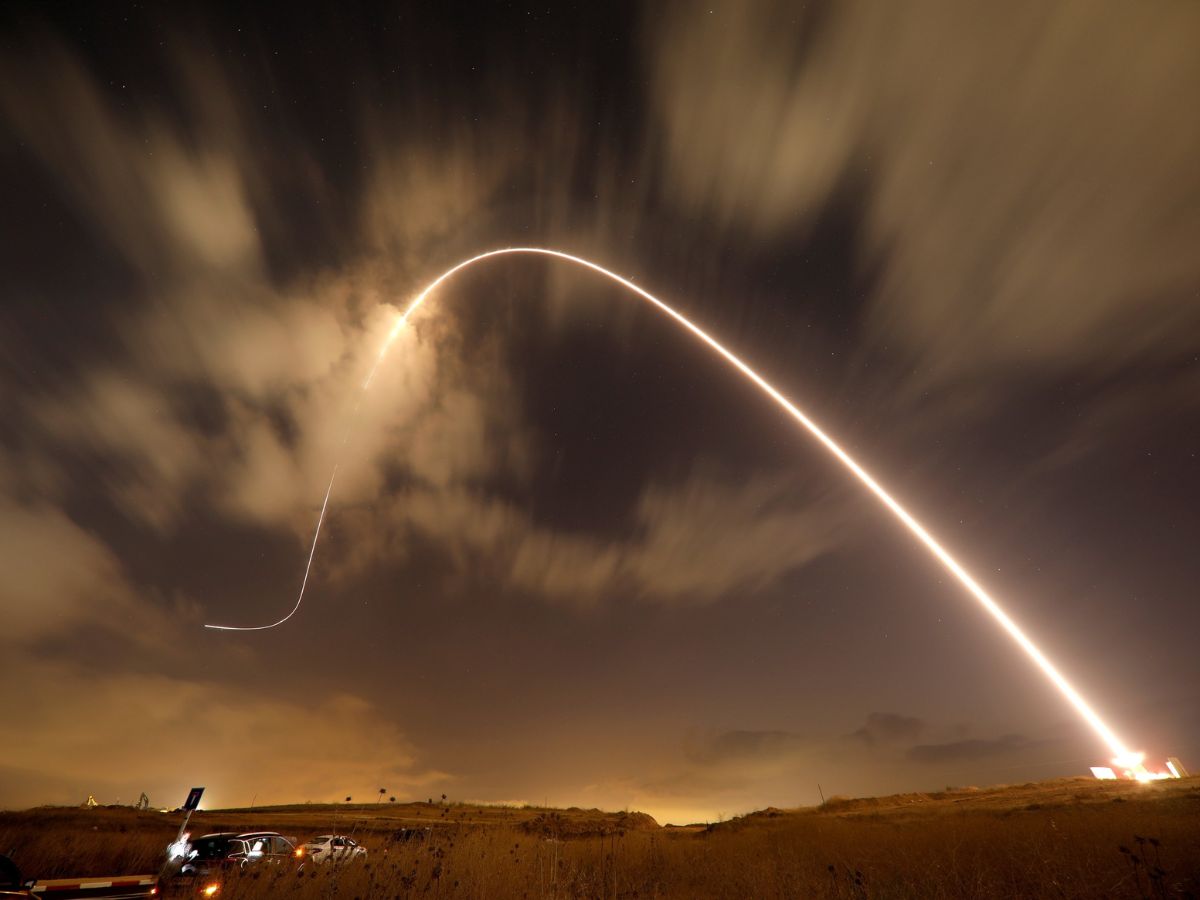
Developed To Protect Cities From Short-Range Attacks, Israel’s Iron Dome Has Become One Of The Most Famous And Effective Air Defense Systems In The World. Understand How It Works, Its Success Rate, And Its Limitations
Understand in detail the technology behind the Iron Dome of Israel. We analyze how it works, its impressive combat performance, and the challenges and limitations it faces in a constantly evolving threat landscape.
The “Iron Dome” defense system is a landmark in modern military technology. Designed to protect the population and critical infrastructure of Israel from rockets, artillery, and mortars, this system has become a pillar of the country’s defense strategy.
Primarily developed by the Israeli company Rafael Advanced Defense Systems, with support from the U.S., the Iron Dome was first deployed in 2011.
-
After 14 years of waiting, a rammed earth mansion built in 1702 in the North Zone of São Paulo will become a park with leisure facilities and green areas, with a million-dollar investment.
-
With 2 unfinished nuclear reactors, up to 25 billion in costs, and proven fraud, the Nukegate case has left 800,000 consumers still paying today for energy that will never be produced.
-
The household appliance that consumes the most energy in Brazilian homes is not the air conditioner; it is located in the smallest room of the house, is used daily, and can account for up to 25% of the electricity bill, while an alternative in the same outlet can reduce this cost by up to 75%.

-
Son of a seamstress from the rural area of Ceará who did not speak English wins a scholarship of over 2 million reais at Williams College, one of the top 10 universities in the United States, covering everything including dormitory, meals, and annual trips to Brazil.


What Is The Iron Dome And How Does It Work?
The Iron Dome of Israel is an air defense system designed to operate in all weather conditions.
Its necessity became urgent after the Lebanon War of 2006, when thousands of rockets were fired at the country.
The system was developed in record time and became operational in 2011.
A Battery of the Iron Dome is composed of three main elements that work together:
Detection and Tracking Radar: uses the advanced EL/M-2084 radar to detect the launch of a rocket and track its trajectory.
Battle Management System (BMC): is the “brain” of the system. This computer analyzes radar data in seconds to calculate the rocket’s impact point.
Missile Firing Unit (MFU): are the launchers that fire the Tamir interceptor missiles. Each battery has three to four launchers, each with up to 20 missiles.
The Interception Process, An Intelligent Defense Decision In Seconds
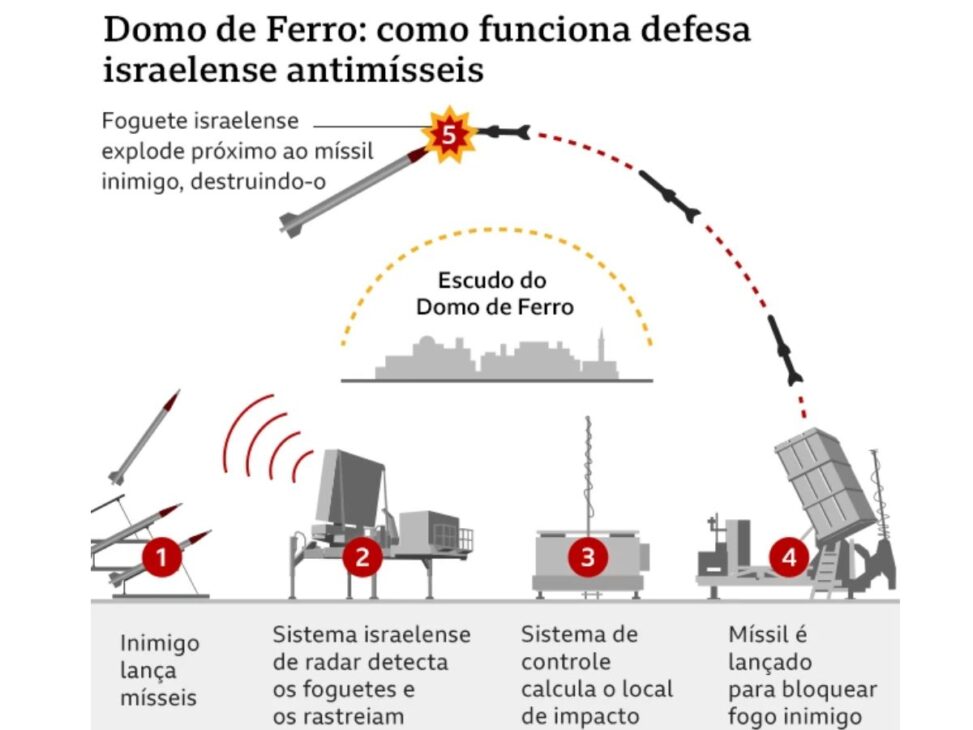
The genius of the Iron Dome of Israel lies in its fast and selective interception process.
Detection: the radar identifies a rocket shortly after launch.
Analysis: in seconds, the BMC calculates the trajectory and impact point. Here comes the “intelligent defense”: the system only fires an interceptor if the rocket is on a collision course with a populated area or critical infrastructure. Rockets that would land in open areas are ignored to save expensive missiles.
Interception: If the threat is confirmed, a Tamir missile is launched. It guides itself to the target, and its warhead detonates the enemy rocket in the air, over a neutral area to minimize collateral damage.
All of this process, from detection to launch, is completed in less than 30 seconds.
What Is The Real Success Rate Of The Iron Dome Of Israel?
Since its deployment, the Iron Dome has demonstrated remarkable effectiveness. The system has successfully intercepted more than 5,000 rockets, with a success rate consistently reported as over 90% against the targets it aims to destroy.
In conflicts such as Operation Pillar of Defense (2012) and Operation Guardian of the Walls (May 2021), the system neutralized the vast majority of rockets threatening populated areas, saving countless lives and preventing massive damage. In May 2021, the accuracy in urban areas reached 96%.
The Limitations And Challenges Of The Israeli Shield
Despite its effectiveness, the Iron Dome of Israel is not infallible and has significant limitations.
Saturation Point: the system can be overwhelmed by a massive barrage of rockets fired simultaneously. The Hamas attack on October 7, 2023, which launched around 5,000 rockets within a short period, is an example where the system was saturated.
Cost Asymmetry: each Tamir interceptor missile costs between US$ 40,000 and US$ 50,000. In contrast, many of the rockets it intercepts are low-cost and mass-produced. This cost asymmetry presents a significant economic challenge in prolonged conflicts.
Specific Threats: the Iron Dome was designed for short-range rockets and is not effective against ballistic or hypersonic missiles. For these threats, Israel utilizes other systems, such as David’s Sling and the Arrow, in its layered defense.
The Future Of Air Defense, From The Iron Dome To The “Iron Beam”
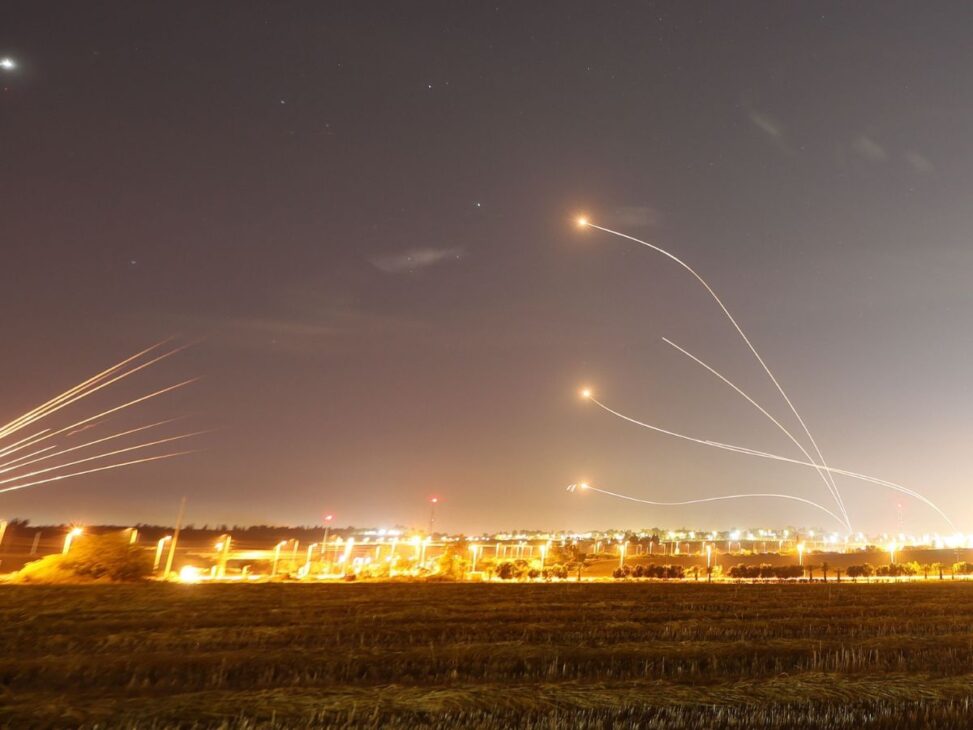
The Iron Dome of Israel is an evolving system. Variants such as the C-Dome (naval version to protect ships) and the I-Dome (an “all-in-one” system mounted on a single truck for rapid deployment) have already been developed.
To face the challenge of cost asymmetry, Israel is developing the “Iron Beam”, a laser defense system.
The promise is that each laser shot will cost only a few dollars, making the interception of low-cost threats economically sustainable.
The Iron Dome has revolutionized short-range air defense, proving to be a vital shield to protect the civilian population of Israel.
However, its history also demonstrates that in modern warfare, defense is a continuous arms race, where technology must constantly evolve to stay ahead of new tactics and threats.






-

-

3 pessoas reagiram a isso.